Haplogroup G2a2b2b1

– 5 min read


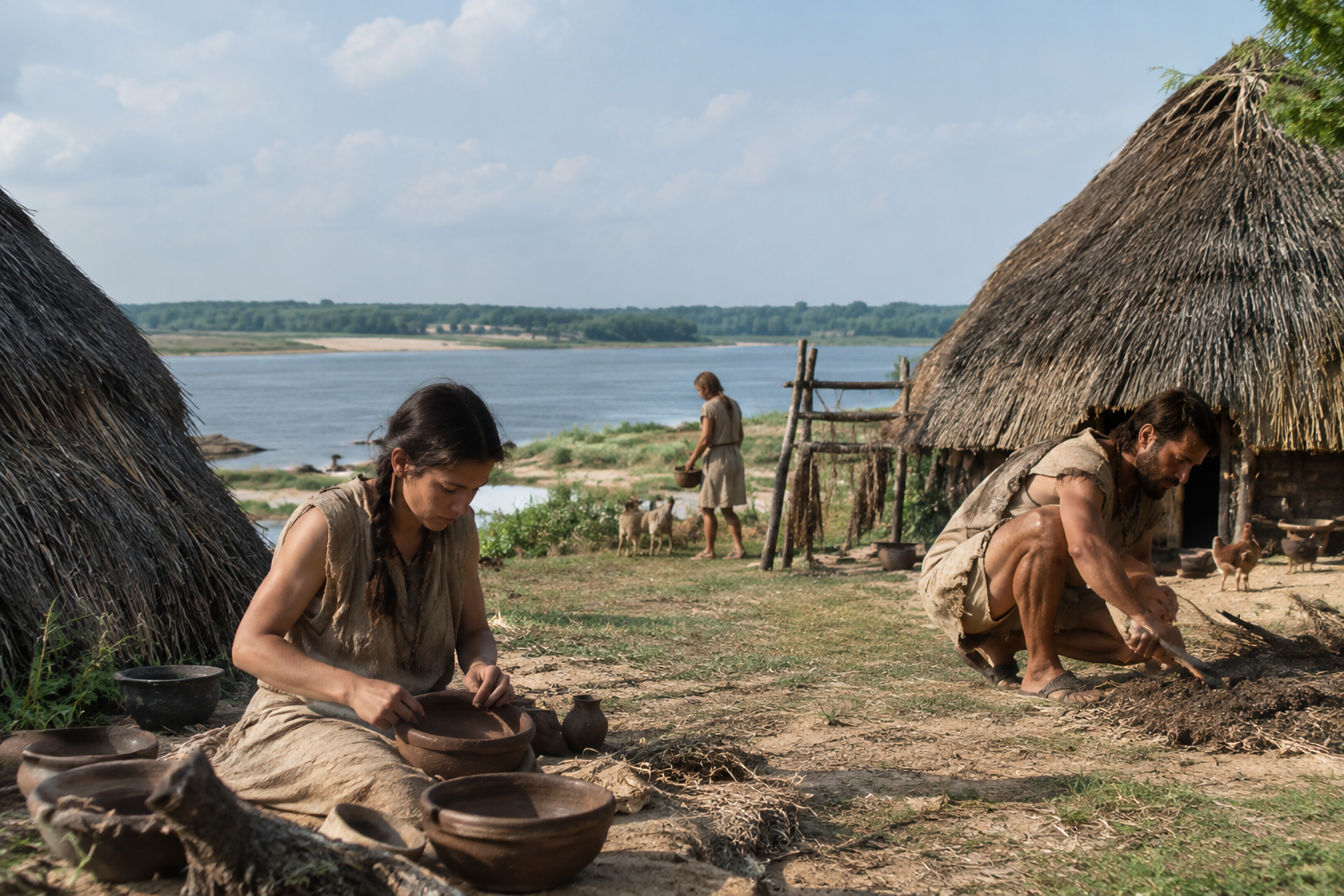
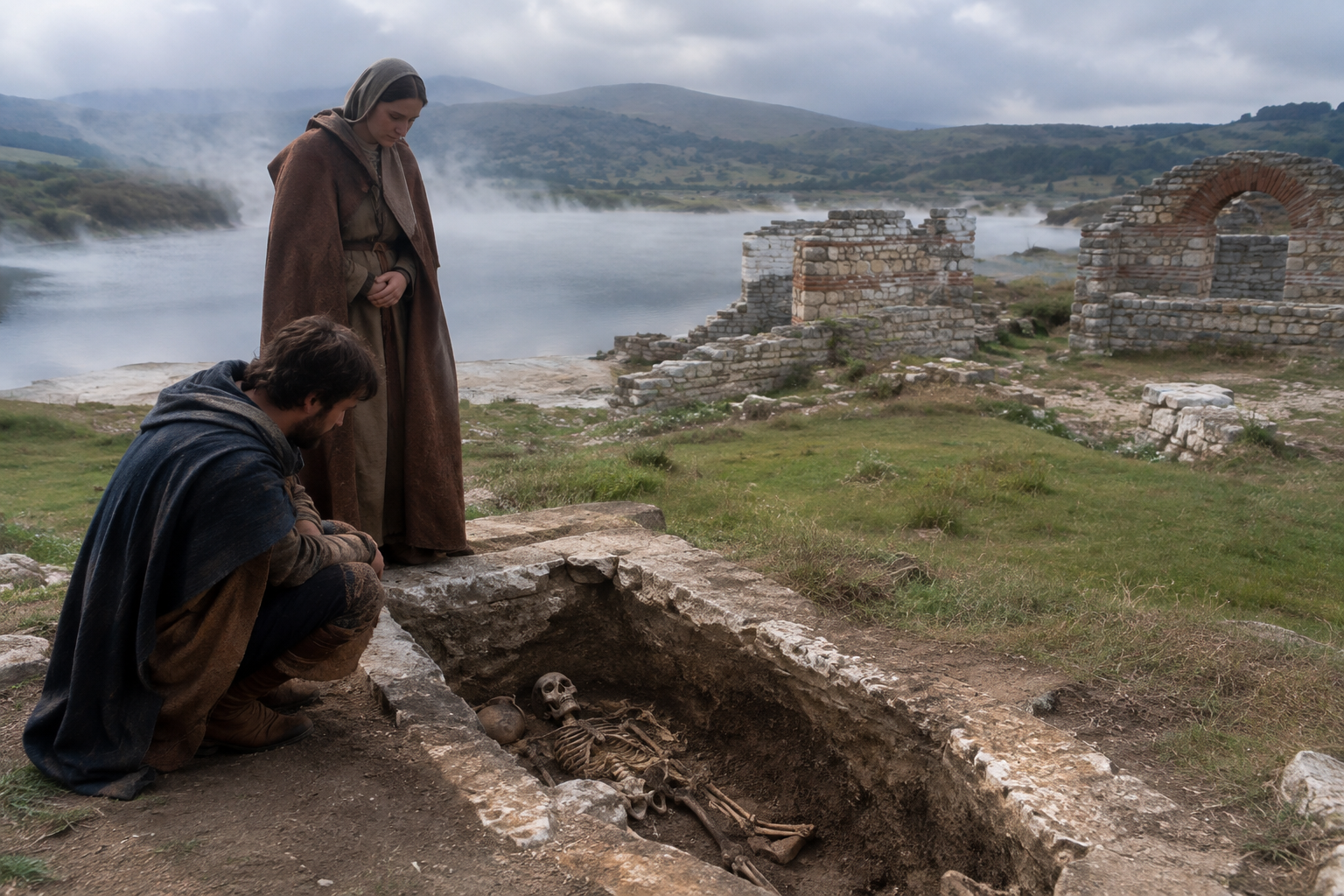
At Alsónyék-Bátaszék in southern Hungary, archaeologists uncovered one of the great landscapes of Europe's early farming world: a vast Neolithic settlement and cemetery in the Carpathian Basin. Among the ancient men identified there is sample I2739, dated here to around 5127 BC and associated with the Y-DNA haplogroup G2a2b2b1. That may look like an austere string of letters and numbers, but it points toward a very concrete historical story: the paternal lines carried by some of the first agricultural communities to spread across much of Europe.
G2a in its broader sense is one of the best-known Y-chromosome lineages in early European farmers. The narrower branch G2a2b2b1 is more specific, and we should be careful not to load every big claim about all G2a men onto this one subclade. Still, the appearance of this lineage in Middle Neolithic Hungary places it squarely within a world of villages, cultivation, livestock, and expanding human networks that transformed Europe after the arrival of farming. Because Y-DNA follows one direct paternal line only, it does not sum up a whole person's ancestry, but it can illuminate how male lineages were structured within ancient communities.
Alsónyék-Bátaszék matters because it is not a lone grave in isolation. It belongs to a region that, during the Neolithic, was one of Europe's major crossroads. The Carpathian Basin linked the Balkans, the middle Danube, and the routes leading west and north into central Europe. When a lineage such as G2a2b2b1 appears here, it appears in exactly the sort of place where archaeologists expect to see the consolidation and movement of early farming populations.
Sample I2739 therefore sits in a very informative setting. This was not the age of kingdoms, castles, or written dynasties, but of settlements whose inhabitants were reshaping the land through cultivation and animal husbandry. In genetic terms, Middle Neolithic Hungary is central because it captures populations after the first arrival of farming in southeast Europe, but before later prehistoric upheavals changed much of Europe's paternal landscape.
A genetic study associated with ancient individuals from this wider Neolithic world is linked through this research resource. Even without over-claiming details that are not explicitly given here, the broader significance is plain enough: sites in Hungary have repeatedly helped researchers trace how early farming populations formed, mixed, and spread.
Neolithic Carpathian Basin DNA
If one wanted a shorthand for the paternal history of Europe's first farmers, G2a would be high on the list. Across many early and middle Neolithic contexts, men from G2a branches turn up again and again. That does not mean every farmer belonged to G2a, nor that every G2a branch had the same history. But it does tell us that these lineages were deeply embedded in the agricultural populations that moved out of Anatolia and the Balkans into Europe.
That larger pattern gives I2739 its importance. G2a2b2b1 is not interesting because it was rare and isolated; it is interesting because it seems to belong to a paternal landscape once far more visible in Neolithic Europe than it would later become. In many regions, the Y-chromosome profile of Europe changed dramatically after the Neolithic, especially with major Bronze Age population shifts. So when someone today matches a branch like G2a2b2b1, the deep historical resonance may lead back not to later tribal confederations or medieval elites, but to the world of Europe's first long-settled farming communities.
Hungary's prehistoric importance is easy to underestimate if we think only in terms of later national borders. In the Neolithic, this was one of the great connective zones of the continent. Ideas, crops, animals, pottery traditions, and people moved through it. That is one reason ancient DNA from the region has become so valuable: it helps show how local continuity and incoming ancestry interacted over long periods.
For a paternal lineage like G2a2b2b1, that setting matters enormously. A man buried in Middle Neolithic Hungary was living in a society already built on generations of farming life, yet still tied into wider regional contacts. The significance of I2739 is therefore less about a single individual biography, which we do not possess, and more about the historical placement of his direct male line in a region that helped transmit farming lifeways into the European interior.
Mesolithic-Neolithic Transition
With only one named ancient sample in view here, the task is to be precise rather than grandiose. I2739 demonstrates that G2a2b2b1 was present in Middle Neolithic Hungary around the early 6th millennium BC. That is already valuable evidence. It anchors the lineage in a major archaeological heartland of Neolithic Europe.
What it does not do, by itself, is prove a neat migration route for every later carrier of the haplogroup, or establish an unbroken father-to-son chain from this man to any modern family. Ancient DNA is at its best when it lets us place lineages in real times and places. In this case, the place is one of Europe's most consequential early farming regions, and the time is deep enough to remind us how old many surviving paternal branches really are.
There is also a wider historical point here. Much public imagination about Y-DNA tends to gravitate toward Iron Age warriors, medieval kings, or named clans. But some haplogroups are more powerfully explained by an earlier revolution: the spread of agriculture itself. G2a2b2b1, at least in the evidence represented by I2739, belongs naturally in that older chapter.
One of the striking features of European genetic history is that early farmer lineages did not simply vanish, but neither did they remain dominant everywhere. Later prehistoric movements, especially those associated with steppe-derived ancestry in the Bronze Age, changed the paternal map across large parts of the continent. That makes a lineage like G2a2b2b1 historically revealing: it can preserve a trace of an older male ancestry layer that was once much more common in Neolithic Europe.
Seen in that light, I2739 is not merely a technical classification. He represents one of the paternal strands present before those later turnovers. For present-day testers, this can be a useful corrective. A surviving G2a branch may connect, in deep time, to the settled farming populations of southeastern and central Europe rather than to the later expansions that dominate many other European Y lineages.
The most distinctive thing about haplogroup G2a2b2b1 in this article is not a royal surname or a heroic grave, but its quiet appearance at Alsónyék-Bátaszék in the age when farming communities were firmly taking root in Europe. Sample I2739 places this paternal branch in Middle Neolithic Hungary, one of the key regions for understanding how early agricultural populations lived and spread. For anyone researching this haplogroup today, that is a meaningful clue: your direct male line may preserve part of the legacy of Europe's first farmers, whose descendants built the village worlds that long predated later states, tribes, and dynasties.


Comments