Haplogroup G2a2b2a1a1b1a1a2a

– 6 min read


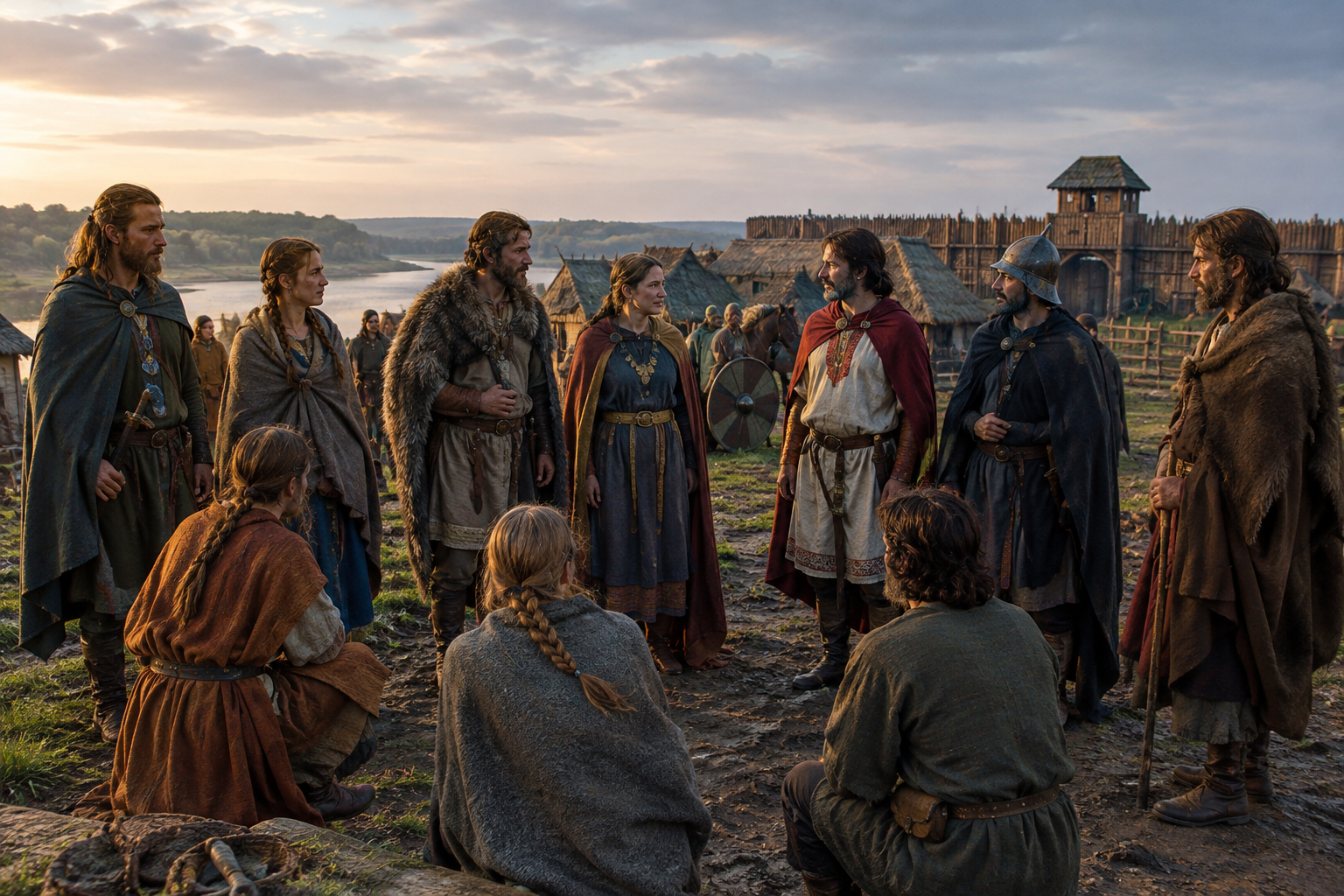
Some Y-DNA lineages are loud in the historical record because they turn up in obvious places: royal tombs, famous dynasties, or well-known prehistoric expansions. Others are more interesting precisely because they refuse to stay in one box. Haplogroup G2a2b2a1a1b1a1a2a belongs to that second category. Its ancient trail, at least from the evidence supplied here, appears in Iron Age Celtic settings, in Roman frontier worlds, in Wielbark-associated burials in Poland, in post-Roman Britain, and even in a Viking Age context in Denmark. That is not the story of a single tribe marching neatly across a map. It is the story of Europe itself: connected, mobile, and untidy.
As ever with Y-DNA, a caution comes first. A Y-chromosome haplogroup traces only one narrow line of ancestry: the direct paternal line, father to son across time. It does not describe a person's full ancestry, culture, language, or identity. Still, paternal lineages can be extraordinarily useful. They let us track the long survival of certain male lines across changing archaeological cultures and political worlds. In the case of G2a2b2a1a1b1a1a2a, the evidence points to a lineage moving through central and northern Europe in ways that illuminate both continuity and mixture.
Haplogroup G is one of the old and important Y-chromosome lineages of western Eurasia. In broad terms, branches of G are often discussed in connection with early farming populations and later regional survivals across Europe and the Near East. But one must be careful here: the very specific branch G2a2b2a1a1b1a1a2a is far narrower than haplogroup G as a whole. We should not simply pour the entire deep history of G into this one terminal subclade as if nothing changed along the way.
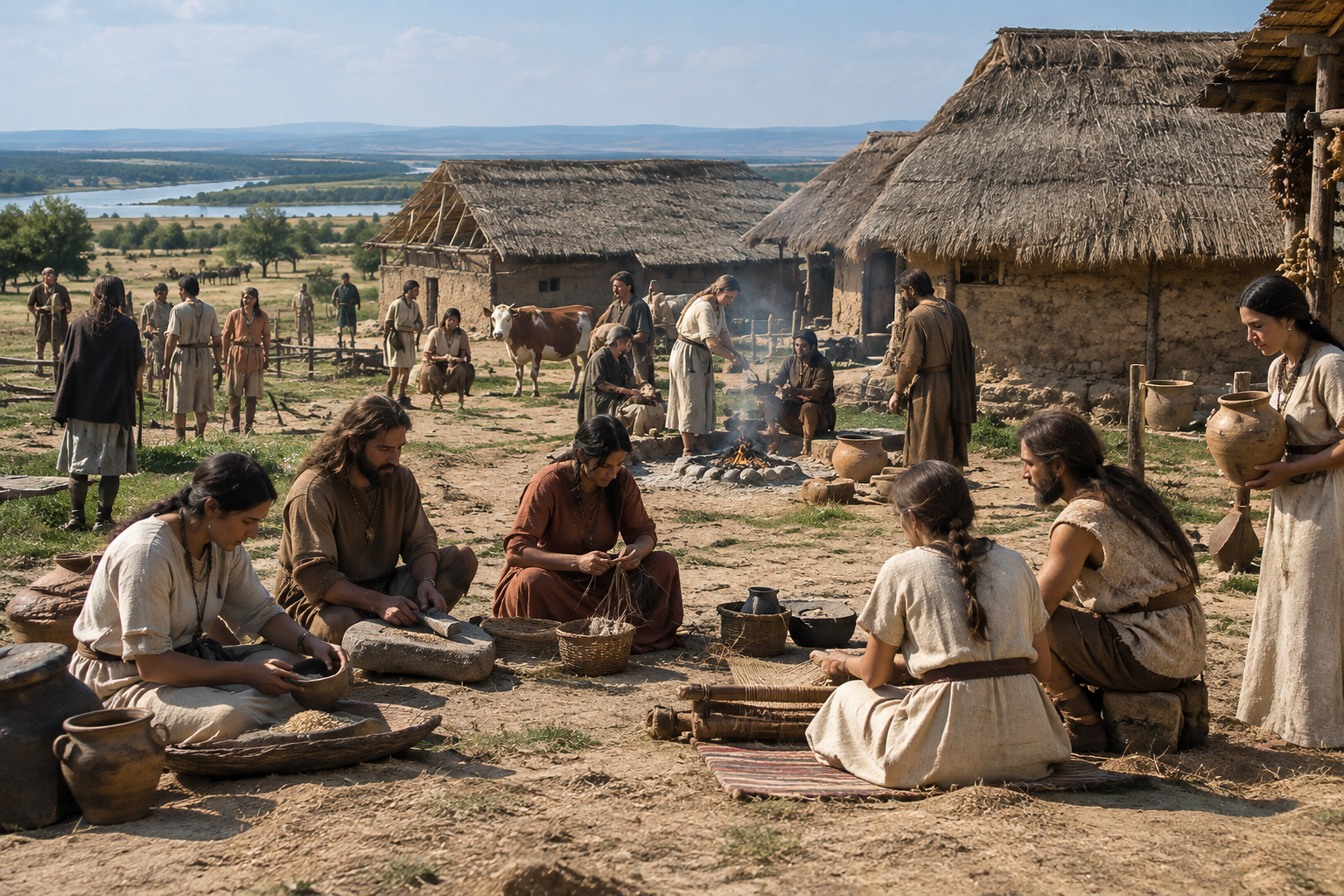
What the ancient finds do suggest is that this branch, or a very close paternal neighborhood around it, had a notable presence in later prehistoric and historic Europe, especially in central European and trans-regional settings. Instead of belonging exclusively to one people, it seems to appear in zones where communities met, traded, fought, and intermarried.
The supplied ancient samples place this lineage firmly in Iron Age Europe, and that is where the story becomes especially vivid. Two striking examples come from elite Celtic Germany at Eberdingen-Hochdorf Biegel: HOC002 and HOC002b, both dated to 515 BC. Hochdorf is one of those places that reminds us Iron Age Europe was not some dim prelude to history. It was a world of aristocratic display, long-distance exchange, and political ambition. A paternal lineage found in such an elite setting immediately tells us that this branch had entered, or persisted within, socially prominent circles in early Celtic central Europe.
There is more. In Bohemia, the sample I16327 from Celtic Hallstatt Stradonice Czech Bohemia, dated to 675 BC, places the lineage in another crucial central European zone. Stradonice is associated with the broader cultural landscapes from which later La Tene Celtic societies emerged. Then there is I25516 from Iron Age Zamardi Somogy Hungary, dated to 200 BC, showing the same paternal signal in the Carpathian Basin.
To the west, the lineage also appears in ancient France. CGG023724 comes from Gallic France Sequani Tribe Iron Age Les Moidons and is dated to 500 BC. Another French sample, CGG023644 from Celtic Iron Age France Tumulus de La Forat de Chatillon, also dates to 500 BC. These are not trivial appearances. Together, they suggest that this paternal branch was part of the human background of Iron Age Celtic-speaking or Celtic-associated regions stretching across central Europe into Gaul.
And then it turns up across the Channel. I21981, from Celtic Parisi Iron Age England East Yorkshire Pocklington, dated to 225 BC, places the lineage in Iron Age Britain. Pocklington has become one of the best-known windows into late Iron Age eastern Yorkshire, and the Parisi have long intrigued historians because of possible continental links. A shared haplogroup does not prove migration by a named tribe, of course. But geographically, this is exactly the sort of pattern one would expect if paternal lines were moving within the larger networks that linked Britain to the continental Celtic world.
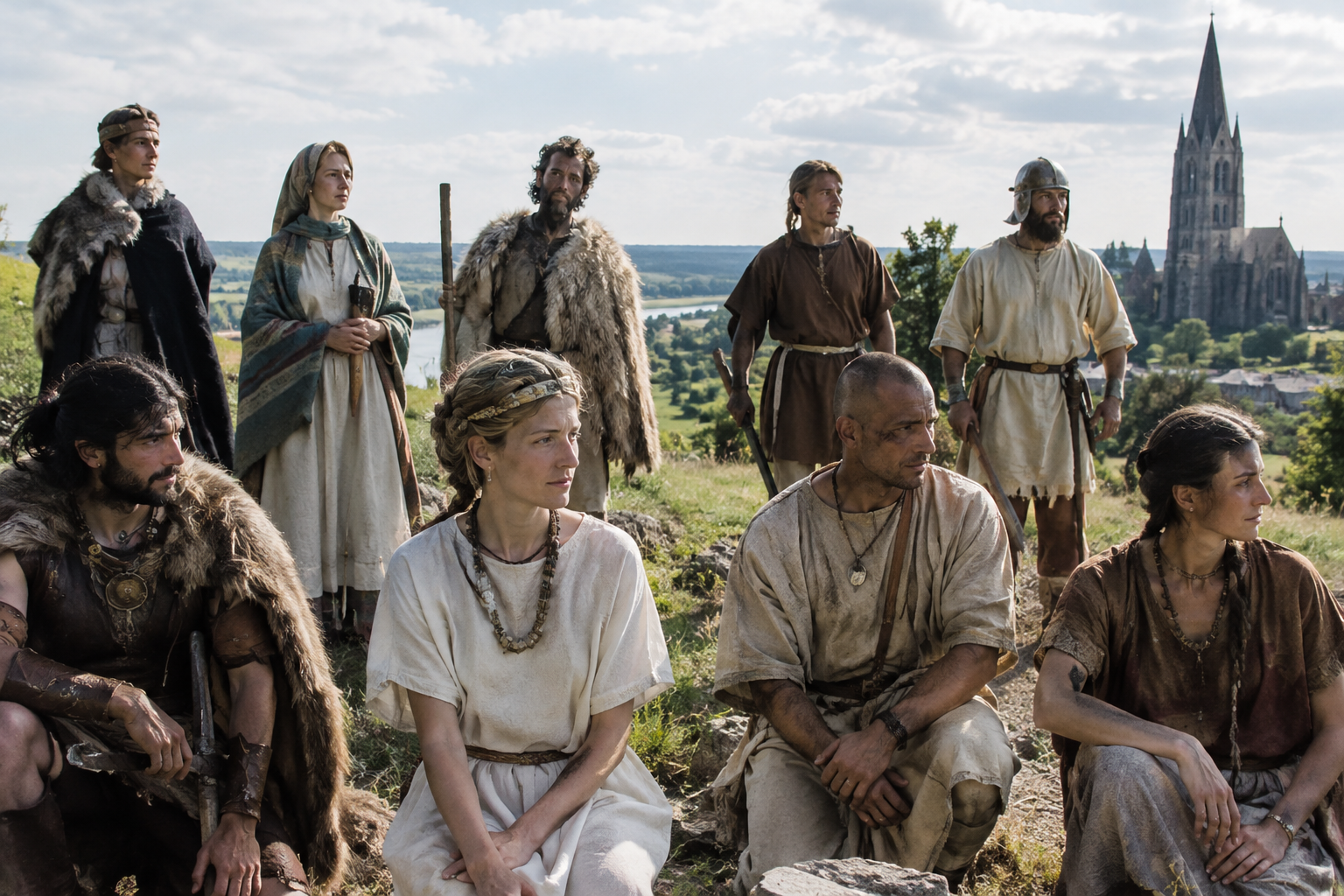
By the first centuries AD, the same lineage appears in a rather different setting: the complicated human geography of Roman and post-Roman Europe. In Poland, three samples from the Wielbark cultural sphere are especially revealing: PCA0063 from Iron Age Pommerania Kowalewko Wielbark Year:45 AD, PCA0015 from Gothic Wielbark Poland Kowalewko Oborniki Year:153 AD, and PCA0062 from Iron Age Pommerania Kowalewko Wielbark Year:200 AD.
The important point here is not to declare this a "Gothic haplogroup" in some simplistic sense. That would be bad history and bad genetics. What these burials show is that this paternal line was present in populations associated with the Wielbark horizon in the southern Baltic world. That is a significant clue, because this region stood at the crossroads of local continuity, mobility, and the later movements that Roman authors and archaeologists associate with Gothic groups.
The Roman frontier world appears again in GYS041, a Late Antique Roman Pannonia Arrabona Szechenyi Square Hungary sample dated to 425 AD. This is exactly the period when the western Roman world was fragmenting and the Danubian frontier had become a zone of military service, migration, resettlement, and improvisation. A lineage already seen in Iron Age central Europe and the Baltic now appears in late Roman Pannonia. That does not surprise me at all. These frontiers were not walls; they were filters, markets, and recruiting grounds.
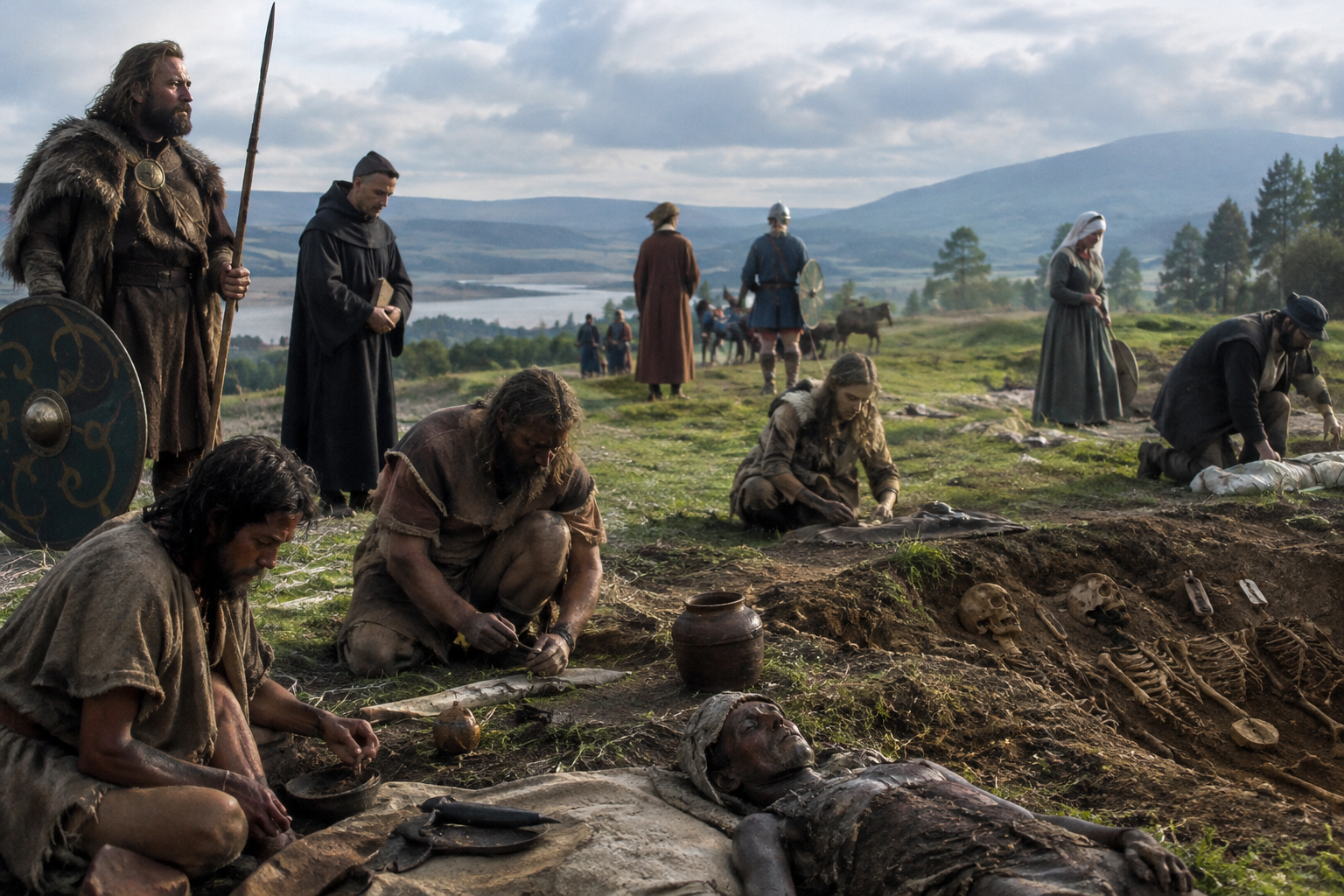
Britain offers a matching case from the other end of the Roman world. CGG020724, from Post-Roman Britain Randwick Long Barrow, dated to 437 AD, shows the lineage in western Britain after Roman rule had ended. Again, we should not force a neat ethnic label onto it. But it does suggest that this paternal line survived the wrenching transition from Roman province to early medieval Britain.
One of the most striking later appearances is CGG106833 from Viking Age Trelleborg Kingdom of Denmark, dated to 965 AD. Trelleborg is no obscure farmstead. It belongs to the great ring-fort world of the Danish kingdom in the age of Harald Bluetooth, a landscape of royal power, military organization, and North Sea connections.
That matters because it shows that the paternal line did not vanish with the end of the Iron Age. It continued into the Viking Age in Scandinavia, or at least in a Scandinavian political setting. This is a splendid reminder that haplogroups do not belong to one historical moment. A lineage can move from Hallstatt and La Tene Europe to the Baltic, to Roman borderlands, and then into a Viking Age fortress environment. The men carrying it may have spoken different languages and served different rulers over the centuries, but the paternal marker remained.
For readers interested in how such finds complicate simple ideas about "Viking" ancestry, the broader Scandinavian picture is well worth exploring.
In this case, the supplied field for associated noble families and castles is effectively empty, which is actually a useful discipline. It means we should resist the temptation to bolt an attractive medieval pedigree onto the haplogroup without evidence. That matters. One of the common mistakes in popular DNA history is to leap from "this lineage appears in ancient Europe" to "therefore it belonged to such-and-such noble house." History is not that accommodating.
What can be said is that the geographical spread of this lineage overlaps regions that later became full of noble seats, fortified towns, and dynastic strongholds: Bohemia, Gaul, Britain, Pannonia, Poland, Denmark. Medieval castles in those lands were built atop older landscapes already shaped by Iron Age elites, frontier soldiers, trading corridors, and post-Roman communities. Genetics cannot identify a specific castle-owning family here, but it helps populate the deeper past beneath those stones.
So what does G2a2b2a1a1b1a1a2a reveal? First, that paternal continuity can survive astonishing cultural change. The same lineage appears in elite Celtic contexts, in Gaul, in Iron Age Britain, in Wielbark-associated Poland, in late Roman Hungary, in post-Roman Britain, and in Viking Age Denmark. Second, it shows why ancient DNA is so valuable. Written sources usually divide the past into tribes, kingdoms, and empires. DNA often shows something messier and more human: lineages crossing those boundaries, persisting through them, and sometimes ignoring them altogether.
That is not proof of direct descent from any one ancient man, still less from a later noble family. But it is a powerful historical perspective. If your own paternal line falls near this branch, the interest lies not in claiming a costume identity - Celt, Goth, Roman, or Viking - but in seeing how one lineage could be carried through many different worlds.
If you want to explore that larger intersection of archaeology and paternal ancestry, MyTrueAncestry lets you compare your DNA with ancient individuals and historical populations from across the past. Those matches may open remarkable windows onto your ancestry, even while they do not by themselves prove direct genealogical descent from any particular ancient sample or medieval dynasty.
Comments