Haplogroup G2a2b2a1a

– 4 min read


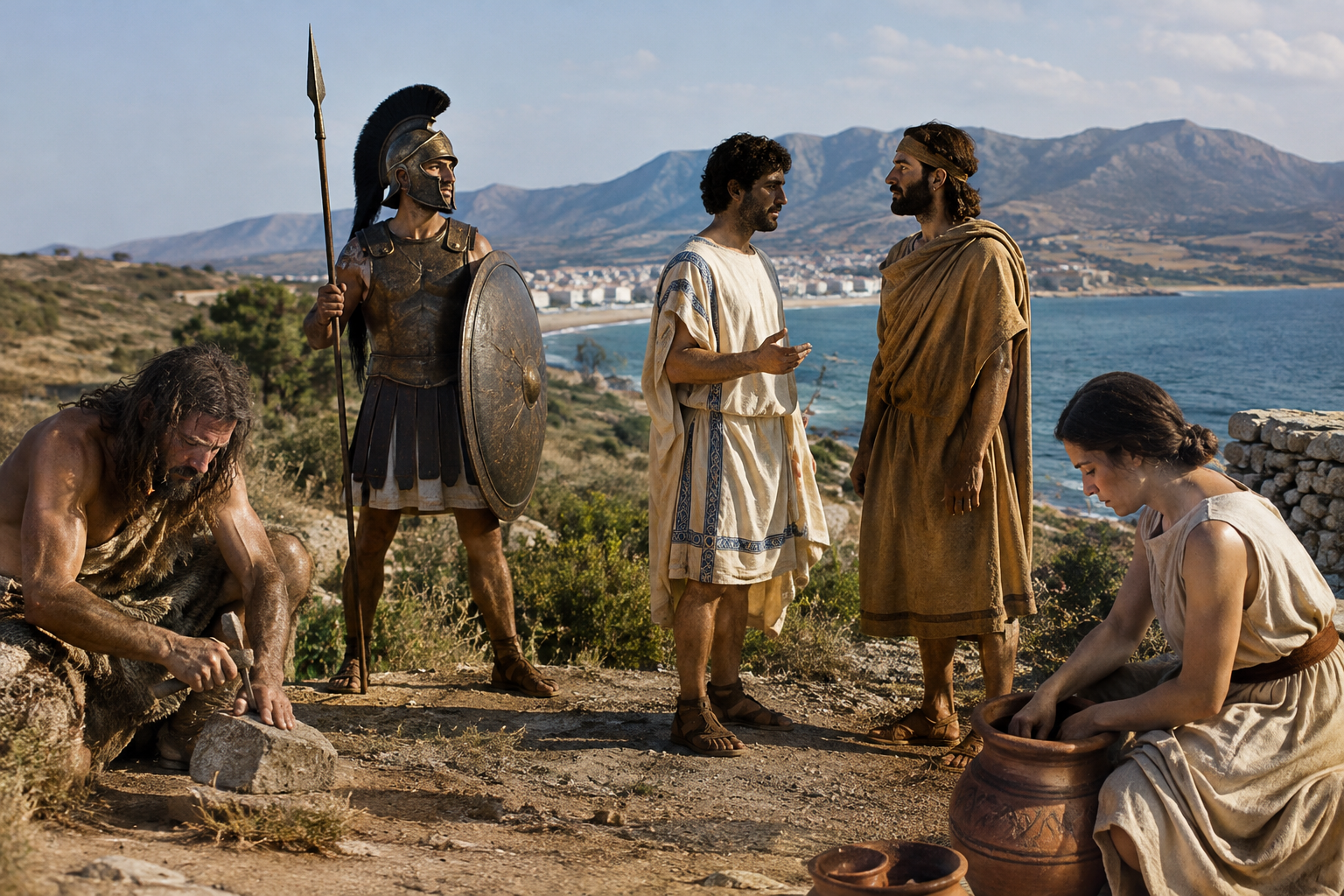
At Himera on the north coast of Sicily, one of the most famous battlefields of the ancient Greek world has also become a genetic archive. Among the burials linked to the First Sicilian War is an ancient warrior, sample I7219, dated to around 480 BC. For anyone tracing the Y-DNA haplogroup G2a2b2a1a, that matters because it places this paternal line not in an abstract map of migrations, but in a very specific historical setting: a Greek colonial city caught in Mediterranean war.
That is the first useful thing to say about G2a2b2a1a. It is a Y-chromosome lineage, so it follows one direct paternal line only, not a person's whole ancestry. Yet even that narrow line can be remarkably informative when it appears in very different ancient contexts, and here the evidence stretches from Neolithic France to Bronze Age Iberia and then into the Greek world of Sicily.
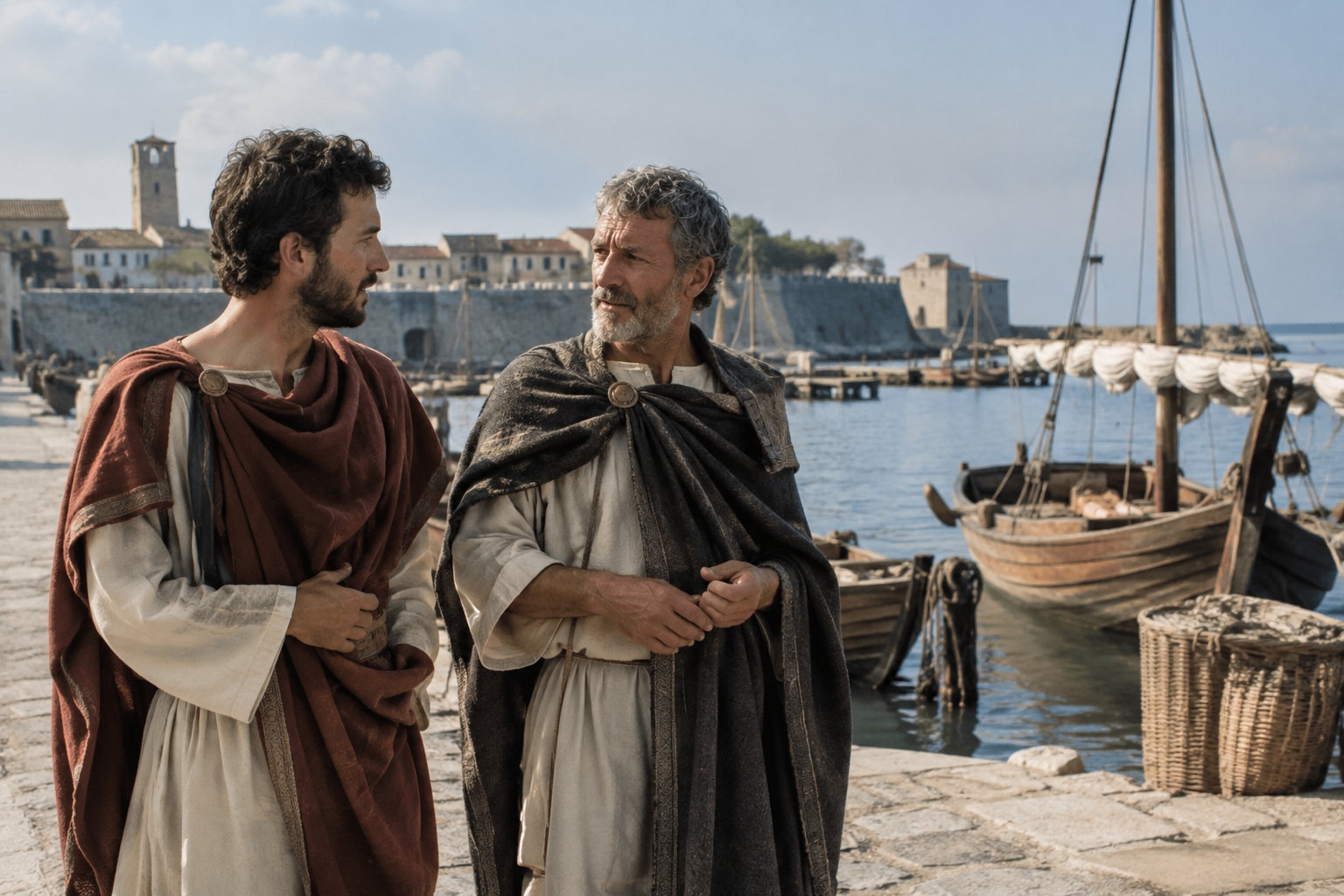
Himera was founded by Greeks in Sicily, but like many colonial cities it was never a sealed ethnic box. It sat in a contested landscape of Greek, indigenous, and Punic interaction. The appearance of G2a2b2a1a in the Himera material is therefore interesting not because it proves a simple "Greek haplogroup" - it does not - but because it shows this paternal branch present within the population of a major Greek colonial centre in the central Mediterranean.
Two individuals in the supplied evidence help anchor that point. One is the warrior I7219, associated with the First Sicilian War around 480 BC. The other is I17432, an ancient citizen of the Greek colony of Himera, dated around 550 BC. Taken together, they suggest that this branch was present at Himera across more than one social setting: not just in a wartime burial horizon, but also in the city's civilian population.
An ancient DNA study examining these burials and the wider population history of Himera and Sicily was published in PNAS. Even without forcing every individual into a neat origin story, the broader historical point is clear enough: paternal lineages in Greek Sicily could be locally rooted, mobile, and mixed into the colonial world in ways that written sources only partly capture.
Long before Himera's wars, the same haplogroup appears in southeastern Iberia. Sample CDM002 comes from Camino del Molino, near Caravaca in Murcia, and is dated to around 2460 BC. This is Bronze Age Spain, a period when communities across Iberia were reworking older Neolithic traditions while also taking part in new regional networks of exchange, settlement, and kinship.
Camino del Molino has become notable in archaeogenetics because collective burial sites of this kind can reveal how communities were structured over time. A lineage like G2a2b2a1a appearing there matters because it shows continuity of paternal lines associated with Europe's earlier farming populations into later prehistoric Iberia. That does not mean every Bronze Age Iberian male belonged to this branch, nor that the site represents the whole peninsula. It does mean that the branch was still very much part of the human landscape of Iberia well after the first spread of agriculture.
That Iberian setting is especially worth noticing because haplogroup G, in its broader forms, is often tied in public discussions to early European farmers. The Murcia evidence fits that broad picture in a cautious way: not as a slogan, but as a concrete case of a descendant branch turning up in later prehistoric Spain, where Neolithic ancestry remained important even as populations changed over time.
The deepest point in this small cluster of evidence comes from GRG052, dated to around 3500 BC in Neolithic France. Here we are in a much earlier world: one shaped by the long establishment of farming lifeways in western Europe, with communities building monuments, burying their dead in varied ways, and maintaining local traditions over generations.
This is where G2a2b2a1a becomes historically suggestive. In western European Neolithic material, paternal lineages within the broader G family appear often enough to remind us that the first farmers were not an anonymous mass. They were structured into lineages, local groups, and regional traditions. A branch such as G2a2b2a1a belongs in that discussion because it links one later historical presence in Sicily and one Bronze Age presence in Spain to an older Neolithic background in France.
Research on Neolithic France has helped make that background clearer, including work published in Science Advances. The larger lesson is not that one uninterrupted family can be tracked from Neolithic France to classical Sicily. That would be fantasy. The real lesson is more interesting: this paternal branch belongs to a lineage world already established in early farming Europe, and some of its descendants remained visible in later western Mediterranean populations for millennia.
With only four ancient individuals, it would be absurd to claim a grand empire of G2a2b2a1a. But the spread is still revealing. We have one Neolithic individual in France, one Bronze Age individual in Murcia, and two from archaic and classical Himera in Sicily. That is not a random scatter of famous places. It outlines a distinctly western Mediterranean and European pattern in which a paternal line associated with early farming horizons persists into later and more historically visible societies.
Just as important, the Sicilian evidence complicates any tidy separation between "prehistoric farmer lineages" and the populations of the classical Mediterranean. Greek colonial cities were not created on empty land, and their inhabitants were not genetically uniform. A man carrying G2a2b2a1a could stand in a Neolithic French context, a Bronze Age Iberian burial community, or the ranks of a Sicilian force in the age of Herodotus.
That sort of continuity through change is precisely what archaeogenetics is good at exposing. The same paternal branch can survive dramatic shifts in language, material culture, and political identity. Pottery changes, armies march, colonies rise, but some Y-lines persist quietly through it all.
The distinctive feature of G2a2b2a1a in this evidence is not sheer frequency but endurance across very different historical worlds. It appears in an early farming context in France, survives into Bronze Age Iberia, and is still present in a Greek colonial city centuries later. That gives this branch a particularly grounded archaeological profile: western, Mediterranean-facing, and deeply entangled with the long aftermath of Europe's Neolithic transition.
For someone researching this paternal line today, that does not promise descent from a warrior at Himera or a farmer in Neolithic France. What it does suggest, responsibly, is that the branch has ancient roots in the populations that helped build western Europe's farming societies and that some of its descendants remained part of the human story of Iberia and Sicily into recorded history.
Comments