Haplogroup G2a1a1a1a1a1a1a
– 5 min read


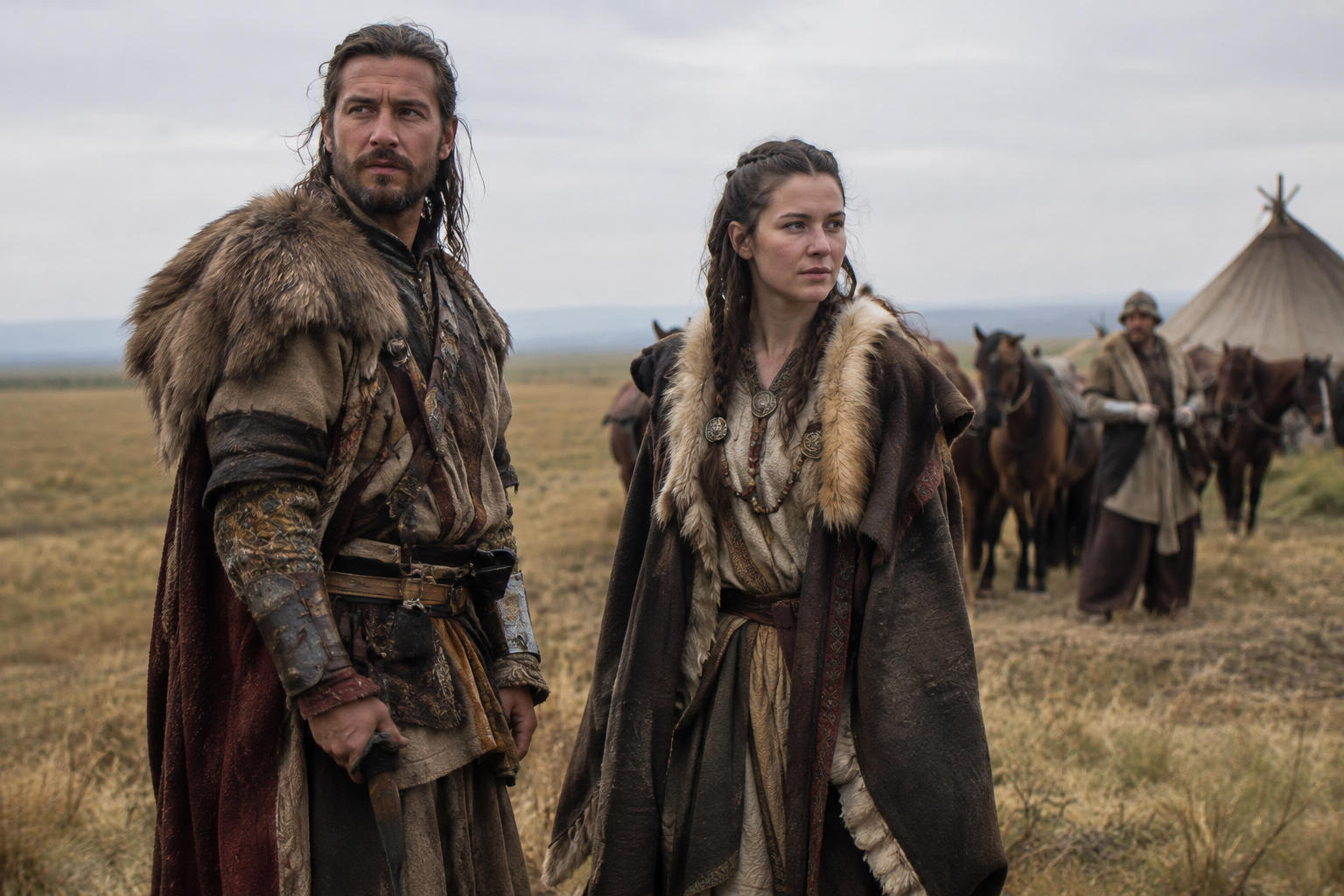
At Rakoczifalva in Migration Period Hungary, one excavated individual stands out for anyone tracing the paternal line G2a1a1a1a1a1a1a: sample RKO005, dated to around AD 650. It is a small, precise point of evidence rather than a grand saga, but that is exactly why it matters. In a period often described through sweeping movements of peoples across the Carpathian Basin, this sample reminds us that the men buried in early medieval Hungary did not belong to a single simple biological stream.
The haplogroup label here is very narrow. Y-DNA follows one direct paternal line only - father to son across generations - and does not describe a person's whole ancestry, language, or social identity. Even so, a find like RKO005 is valuable because it places this paternal branch in a real archaeological landscape: post-Roman, early medieval Hungary, in the centuries when old Roman frontiers had collapsed and new communities were taking shape.
Rakoczifalva lies in the Great Hungarian Plain, a region that had already seen centuries of demographic change before RKO005 was buried. By the mid-7th century, the Carpathian Basin was part of a world shaped by the aftermath of the Hunnic period, the presence of Gepids and Lombards, the expansion of the Avar Khaganate, and the continuing legacy of the Roman Empire just beyond and before it. Archaeology in this zone regularly shows that political labels and genetic lineages do not map neatly onto one another.
That is what makes a paternal lineage like G2a1a1a1a1a1a1a interesting in this setting. Haplogroup G is best known in European prehistory for its strong association with early farming populations, especially in the Neolithic. But an early medieval man in Hungary carrying a downstream branch of G is not a "Neolithic survivor" in any simplistic sense. He is a 7th-century individual, living in a society already shaped by millennia of mixing, mobility, conquest, and local continuity.
A major ancient DNA study of the region's transformation from late antiquity into the early medieval period explored just this kind of complexity, showing how communities in and around Hungary could combine local European ancestry with broader eastern and steppe-linked connections in varying proportions over time. That broader framework is important context for Rakoczifalva, even when one individual lineage must be interpreted cautiously: a large archaeogenetic study of the Carpathian Basin and surrounding populations.
It is tempting to imagine the Migration Period as a parade of neatly bounded peoples, each with its own fixed genetic signature. The actual evidence is much messier, and much more human. Cemeteries from the 5th to 8th centuries in Central and Eastern Europe often reveal biologically diverse groups living under shared political or cultural umbrellas.
In that context, G2a1a1a1a1a1a1a is a useful corrective. It is not one of the Y-chromosome branches most popularly associated with early medieval steppe elites or later medieval ruling dynasties. Its presence at Rakoczifalva suggests that the paternal landscape of 7th-century Hungary still included lineages with much deeper roots in the farming populations of western Eurasia, whether through local continuity, earlier regional admixture, or long-settled family lines absorbed into new political worlds.
This does not mean RKO005 belonged to a distinct ethnic enclave, nor that a single burial can stand for an entire population. But it does show that early medieval Hungary was not genetically uniform. One man with this lineage, buried around AD 650, is enough to demonstrate that older paternal branches persisted alongside lineages more commonly discussed in migration-era history.
The wider haplogroup G story in Europe begins much earlier than Rakoczifalva. Broad branches of G, especially G2a, appear again and again in Neolithic contexts associated with the spread of agriculture into Europe. In that deep background, G lineages were part of the demographic transformation that brought farming from Anatolia and southeast Europe into the continent's interior.
But the branch in this article is not simply "the Neolithic farmer haplogroup." That would flatten thousands of years of branching and movement into a slogan. The specific lineage G2a1a1a1a1a1a1a is a much narrower twig on that larger tree, and the evidence here does not let us chart its exact route from prehistory into the 7th century. What we can say is that RKO005 shows one paternal descendant line from that broad G heritage still present in the Carpathian Basin long after the Bronze Age, Iron Age, Roman period, and the upheavals of late antiquity.
This is one of the most useful lessons of ancient DNA. Lineages do not belong permanently to one archaeological culture. They persist, split, travel, disappear in some places, and reappear in others. A narrow G branch in Migration Period Hungary is therefore not an anomaly so much as a sign of long demographic layering.
The centuries around AD 650 were shaped by power shifts, but power shifts are not the same thing as total population replacement. Across the former Roman frontier zone, archaeologists and geneticists increasingly find evidence for communities built through mixture: locals, newcomers, descendants of earlier provincial populations, and families with steppe-linked ancestry living in the same broad social world.
That makes the Rakoczifalva evidence especially valuable for readers tempted to read one Y-DNA result as a complete ethnic badge. Avar-period and post-Roman cemeteries can include people with strikingly different paternal origins. The archaeological label assigned to a graveyard reflects time, place, and cultural setting; the Y chromosome preserves only one male line. RKO005 therefore fits a historical picture in which community formation in Hungary was inclusive, layered, and often biologically diverse.
This broader pattern can be seen elsewhere in the early medieval world too. Ancient DNA from 7th-century Iberia, for example, has shown how burial communities could contain individuals of quite varied ancestry within the same historical horizon, a helpful reminder that political boundaries and family histories rarely align perfectly.
For a present-day man who belongs to G2a1a1a1a1a1a1a, the Rakoczifalva burial offers something both modest and real: proof that this paternal branch was present in the early medieval Carpathian Basin by about AD 650. That is already meaningful. It anchors the lineage in a documented human context rather than leaving it floating as a string of letters and numbers on a chart.
What it cannot do, by itself, is identify a tribe, a language, or a noble descent. It does not prove that every modern carrier of this branch descends from Hungary, nor that RKO005 was an immigrant, a local, or a member of any historically named ruling group. Ancient DNA works best when it narrows possibilities and supplies context, not when it pretends to settle every genealogical question in one stroke.
Still, there is a quiet significance here. In a period famous for mobility and upheaval, this lineage appears not at the centre of a royal legend, but in the earth of an ordinary archaeological site. That is often where the best history lies: not in invented dynasties, but in the stubborn survival of real paternal lines across changing worlds.
G2a1a1a1a1a1a1a is, at present, represented here by a single ancient man from Rakoczifalva, sample RKO005. That may sound slight, but archaeology often advances through exactly such careful anchors. For anyone exploring this paternal branch today, the most responsible conclusion is also the most interesting one: your line belongs to a very old wider haplogroup with deep prehistoric roots, yet it was still part of the living, mixed, early medieval society of Hungary around AD 650.
Comments