Haplogroup F

– 6 min read


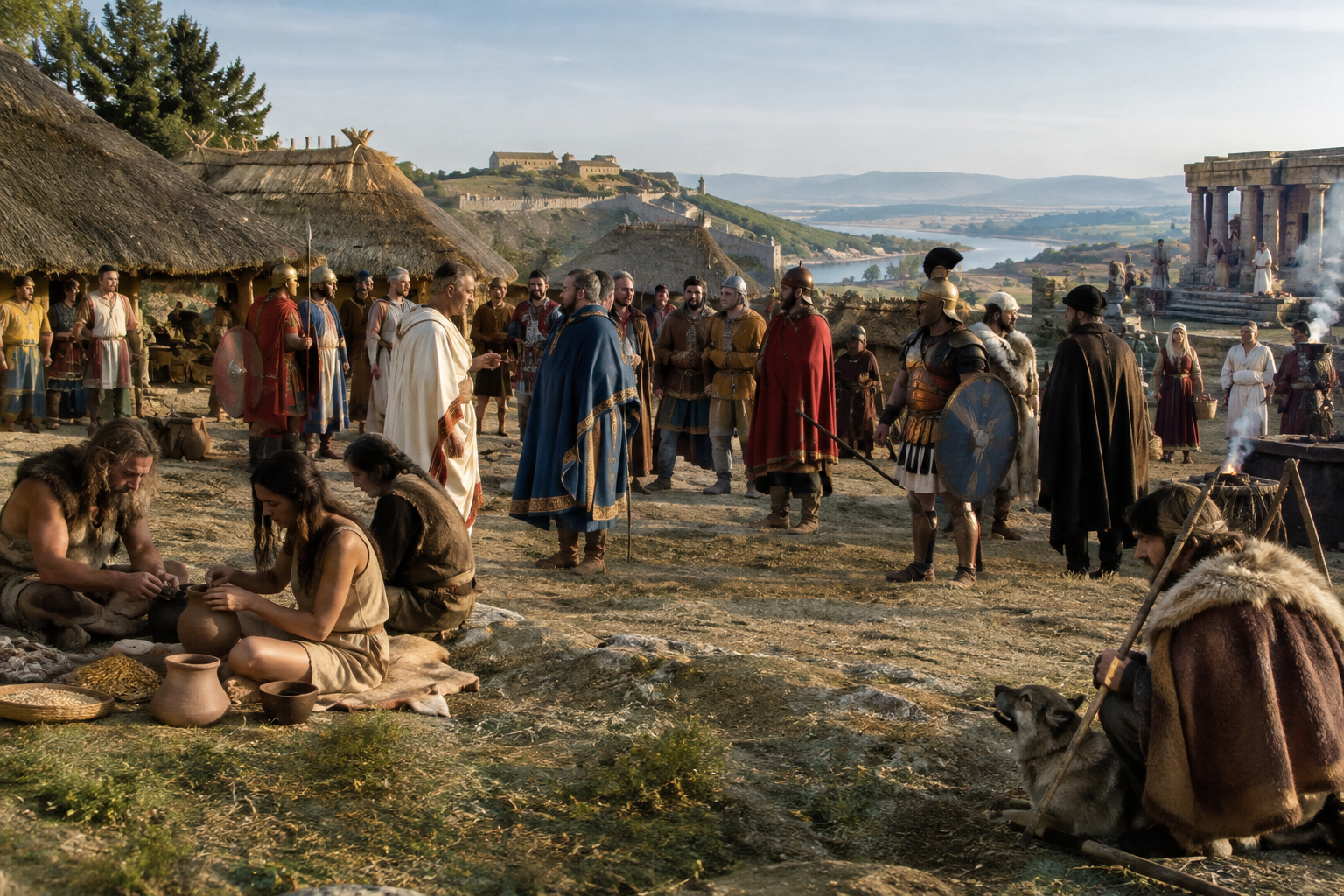
Haplogroup F is a slightly odd subject for a historical article, and that is exactly what makes it interesting. Most readers are more familiar with the great, populous branches that sit beneath it - lineages such as G, H, I, J, K and their many descendants - because those are the names that often turn up in family DNA results and ancient burials. But F matters because it stands near the root of an enormous part of the paternal story of Eurasia. In simple terms, this is one of the deep trunks of the Y-chromosome tree from which many later branches spread.
That also means a necessary note of caution. Y-DNA haplogroups trace one direct paternal line only: your father's father's father, and so on. They do not describe your whole ancestry, culture, language, or identity. And with a lineage as broad and ancient as F, we are often looking not at one tightly defined historical people, but at a deep framework within which many later societies emerged. If anything, Haplogroup F reminds us that the men buried in Neolithic farmsteads, Bronze Age palaces, Iron Age sanctuaries and medieval churchyards were connected by history in ways both broader and messier than neat ethnic labels suggest.
In the Y-chromosome tree, Haplogroup F is an early branching lineage ancestral to a vast number of later paternal clades found across Europe, western Asia, south Asia, and beyond. That makes it less a badge of one people than a signpost to very old paternal structure. When ancient DNA specialists encounter F or closely related placements in archaeological remains, it can point to very early layers of male ancestry before later subclades became regionally dominant.
The distribution of the samples supplied here hints at just how wide that long historical horizon may be. We see evidence linked to the Near East, the Balkans, the Aegean, central Europe, Iberia, Britain, Armenia, Siberia, and medieval Poland. That does not mean one uninterrupted tribe marched across all those places. It means that paternal lines within or near Haplogroup F appeared in many settings over many millennia, often as part of very different populations.
Some of the earliest evidence in this set draws us toward the world of the first farmers and the broad zone stretching from the Near East into southeastern Europe. The sample I3883, from Ancient Iraq Shanidar Outlier dated to 7900 BC, sits near the dawn of settled village life in a region central to early farming societies. From there, the story seems to fan outward into early agricultural Europe, where paternal lines linked to F appear in places like Neolithic Croatia Starcevo Vinkovci-Nama (I28427, 5650 BC) and Ancient Spain Els Trocs (I0411, 5218 BC).
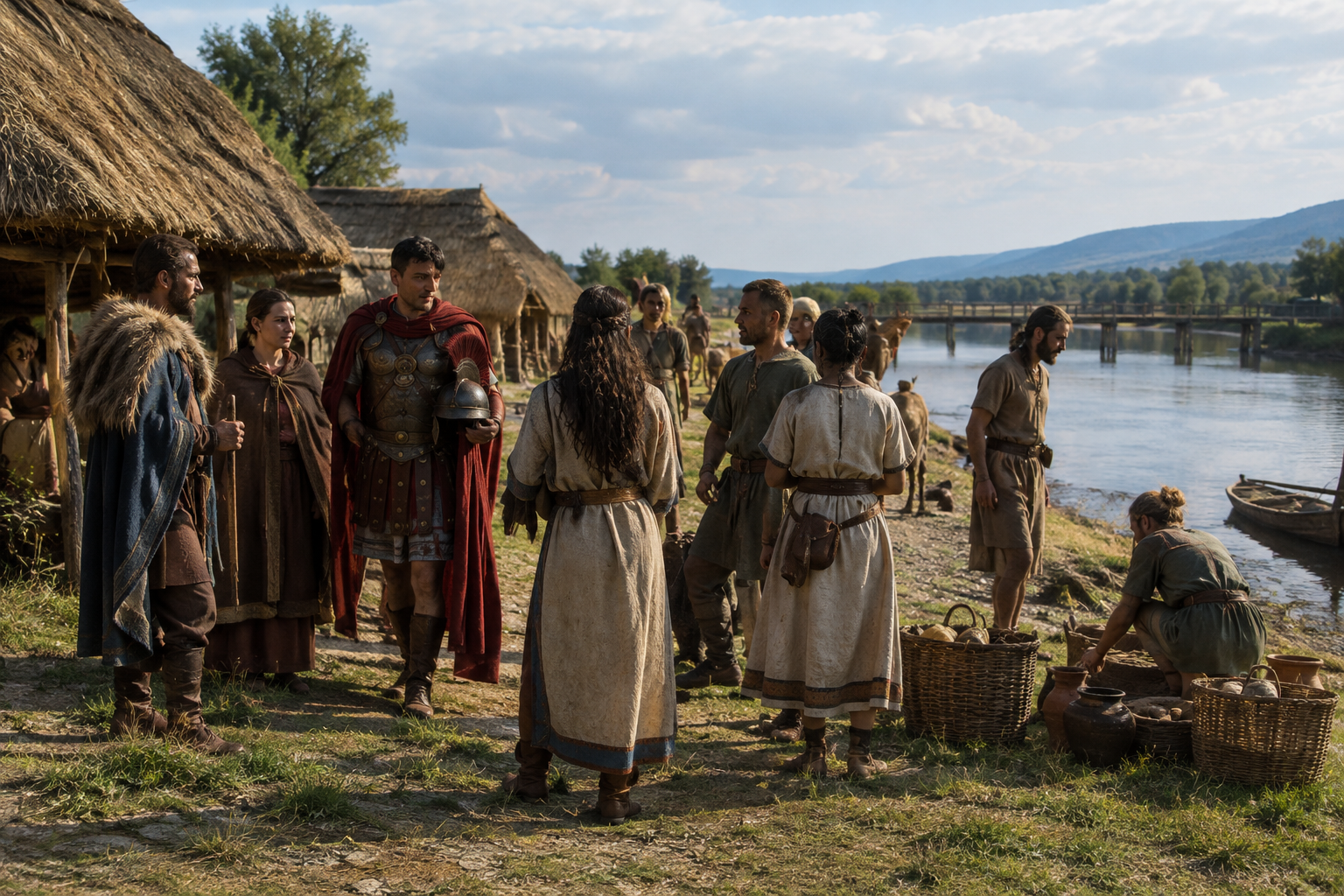
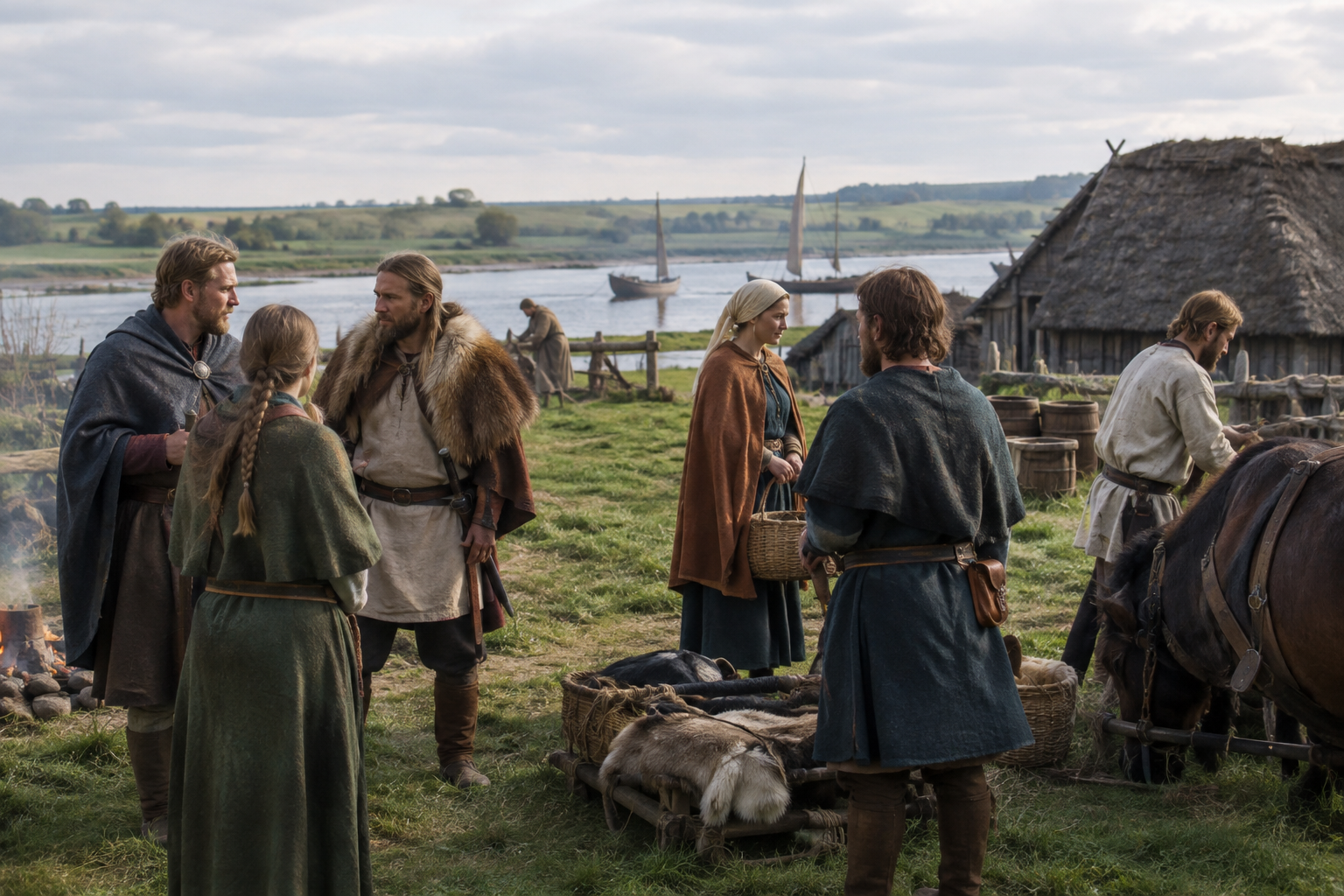
Explore the Neolithic Expansion
These early European finds matter because they place F-associated paternal ancestry in some of the continent's formative communities. I28427 from Starcevo-context Croatia belongs to the era when farming, new settlement patterns, and new foodways were reshaping the Balkans. Likewise I0411 from Els Trocs in Spain points to the westward reach of early farming populations into Iberia. Meanwhile I0807 from Neolithic Germany Baalberge dated to 3797 BC adds central Europe to the map.
Then the trail becomes even more intriguing. The sample I10900 from Neolithic Siberia Krasnoyarsk Krai Angara Kamenka-1 dated to 3500 BC reminds us that early paternal diversity cannot be boxed neatly into a single "European" or "Near Eastern" narrative. A lineage at this phylogenetic depth may appear in populations separated by very great distances, and that is why responsible interpretation matters so much.
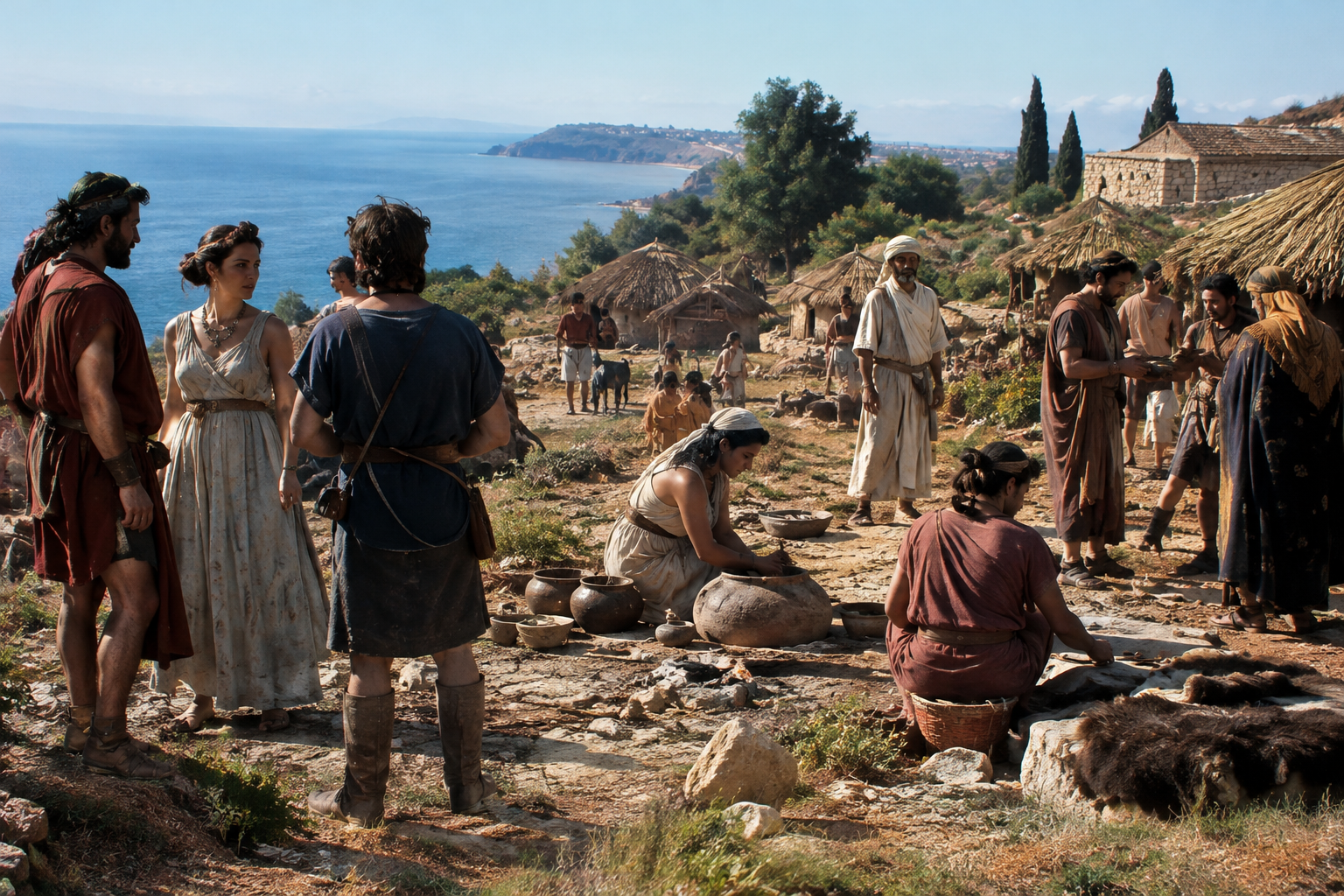
By the Bronze Age, we meet these paternal traces in elite and complex societies of the Aegean. The sample XAN007 from Minoan Period Crete Chania dated to 1575 BC places the story in the maritime world of palaces, ports, and eastern Mediterranean exchange. Then there is I13519 from Ancient Greece Palace of Nestor Pylos dated to 1480 BC, and the closely described I13519_d, the Griffin Warrior Elite Palace of Nestor Pylos Ancient Greece dated to 1440 BC. Here the paternal line appears not in a humble farming burial but in one of the best-known aristocratic worlds of Late Bronze Age Greece.
That is not proof that one paternal line "built Mycenaean civilization", of course. It is something subtler and more interesting: evidence that lineages at or within this deep branch were part of the human fabric of palace Greece, just as they had earlier formed part of the Neolithic world.
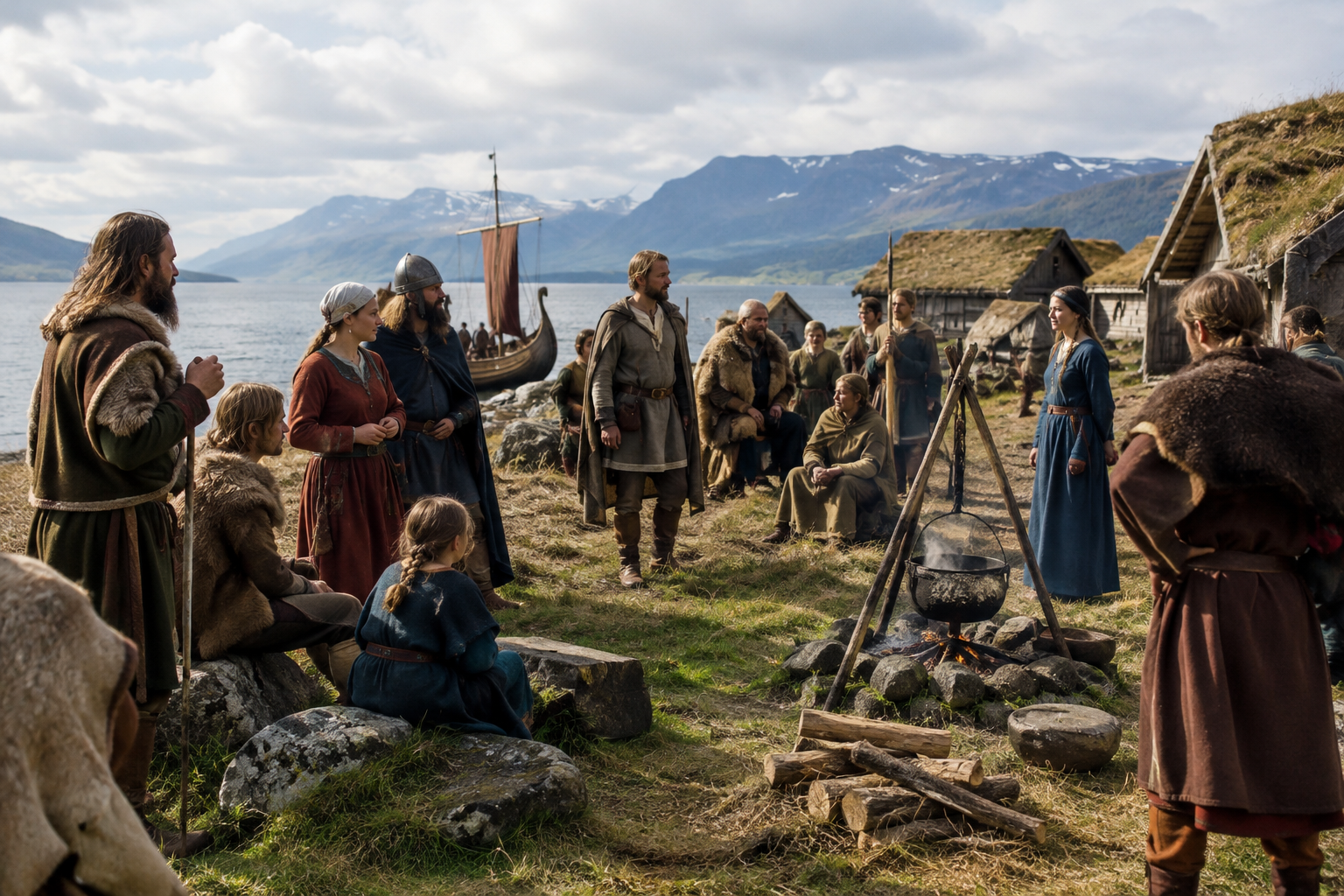
Discover Prehistoric Aegean DNA
By the Iron Age, the map grows busier still. In the eastern highlands, I16216 from Iron Age Urartian Armenia Bagheri Tchala dated to 800 BC places this paternal heritage within the orbit of the kingdom of Urartu. In central Europe, I16087 from Iron Age Hallstatt Northwest Bohemia dated to 550 BC evokes the wider Hallstatt sphere, often connected with early Celtic archaeological culture.
Move west and the picture becomes positively crowded. Britain offers I13690 from Iron Age Rowbarrow Wiltshire England dated to 560 BC, I16613 from Celtic Briton Hillfort Danebury Hampshire England dated to 200 BC, I16609 from Iron Age Middle Wallop Suddern Farm England dated to 190 BC, and I14359 from Late Iron Age West Yorkshire Wattle Syke dated to 50 BC. In southern France, I13720 from the Celtic Sanctuary Roquepertuse Bouches-du-Rhone France dated to 300 BC shows the same deep paternal horizon in a very different ritual and regional context.
And then there is Sicily, that wonderfully untidy crossroads of Mediterranean history. I20160, an Ancient Citizen Greek Colony Himera Sicily dated to 550 BC, and I17870, an Ancient Mercenary First Sicilian War Himera Sicily dated to 480 BC, suggest that men carrying such paternal ancestry could be found among both settled colonial populations and more mobile military actors. It is a fine reminder that haplogroups do not map tidily onto civic status, language, or political allegiance.
The Roman and post-Roman evidence is particularly revealing because it comes from worlds we know were highly mobile. I18204 from Roman Era Spain Almera Cuevas del Almazora Villaricos dated to 75 AD places this lineage in Roman Hispania. Later, I15427 from Early Medieval Spain Toledo Carranque Santa Maria de Abajo dated to 607 AD shows that such paternal ancestry persisted into the early medieval Iberian landscape.
Pannonia is especially rich here: GYS057 from Late Antique Pannonia Arrabona Szechenyi Square Hungary dated to 425 AD, SZL093 from Longobard Period Pannonia Savaria Szeleste Barbaricum Hungary dated to 525 AD, and MFC018 from Post Roman Period Pannonia Arrabona Menfocsanak Barbaricum Hungary dated to 550 AD. That cluster spans the end of Roman authority and the reshaping of central Europe by successor societies and incoming groups. It suggests not a single conquest lineage, but a paternal thread visible amid the complicated blending of frontier populations.
By the late Middle Ages, Skoki_S53 from the Kingdom of Poland Skoki Wielkopolska Vovoidship dated to 1400 AD reminds us that very old paternal branches can still surface in historically documented kingdoms. Again, this is not proof of direct descent from any earlier named sample. It is evidence of continuity at the level of broad paternal heritage across long spans of time.
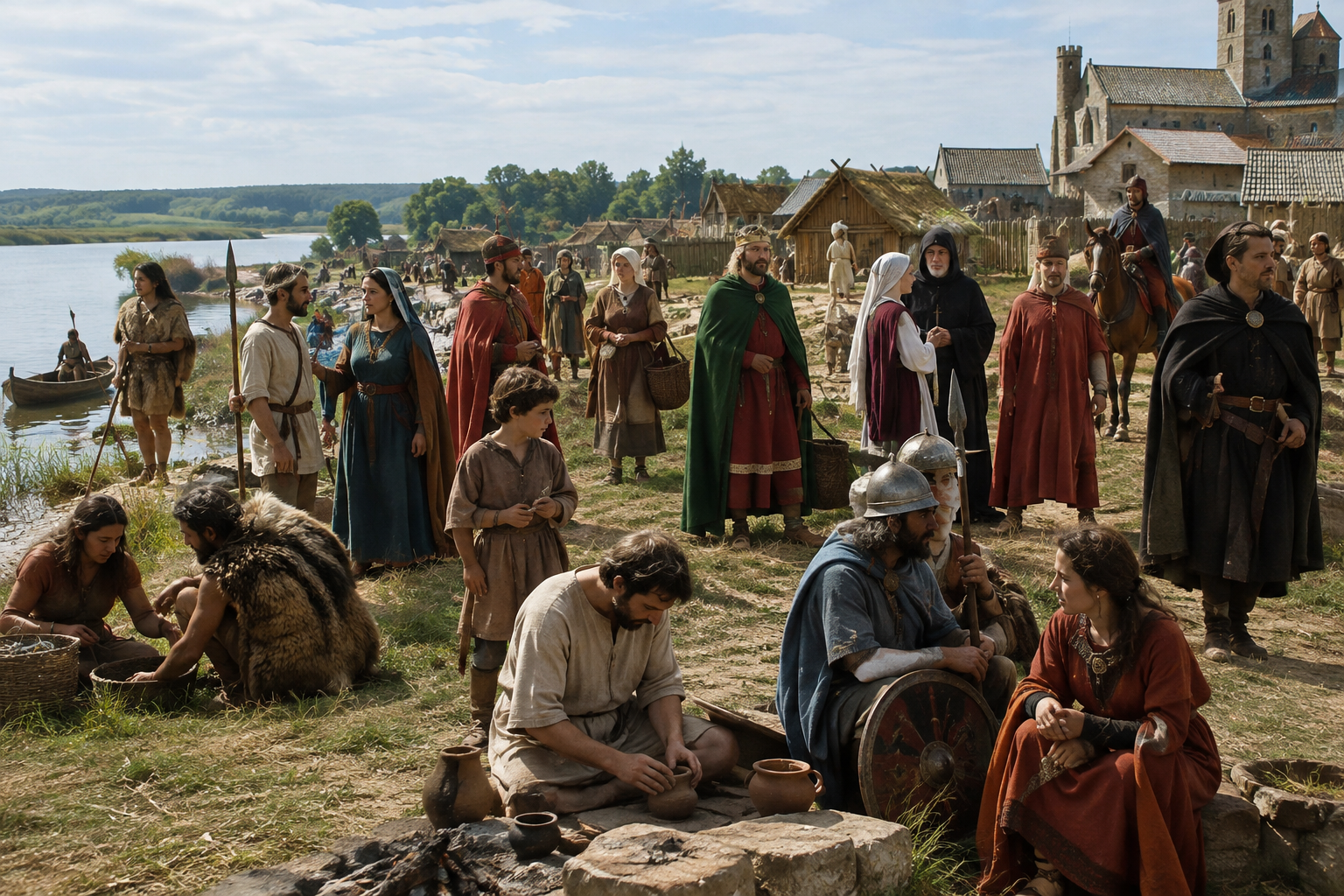
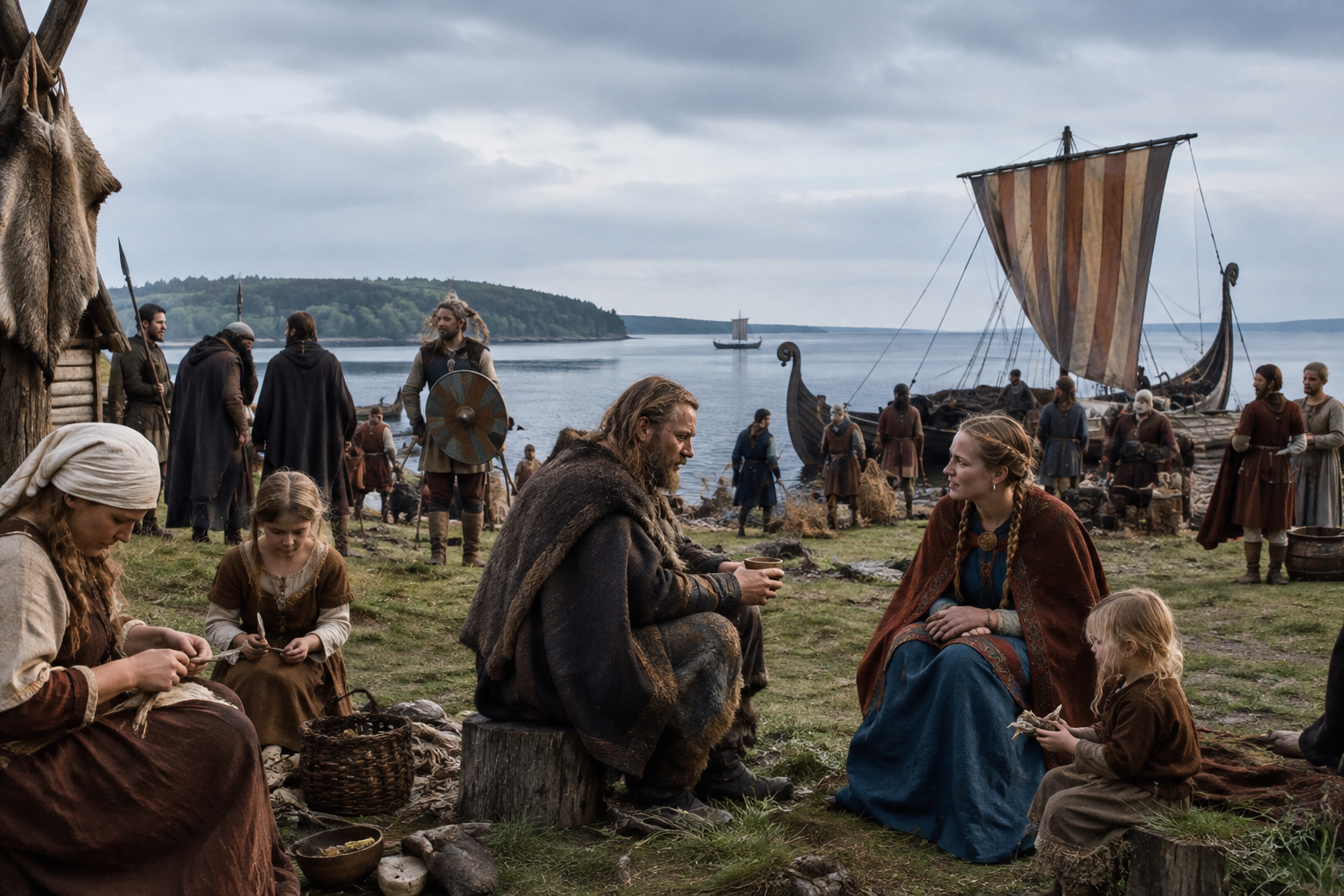
Read About Post-Roman Pannonia
In this case, the supplied noble family and castle field is empty, and that absence is worth stating plainly. We cannot responsibly invent dynasties, ancestral seats, or castle associations for Haplogroup F simply to make the story more medieval-looking. That would be bad history and worse genetics.
Still, the medieval implications are clear enough. A lineage as old and widespread as F forms part of the deep paternal background from which many later aristocratic houses, local lordships, and regional populations eventually emerged. If one were standing in a castle court in Poland, Hungary, Spain, or Britain in the later Middle Ages, the men around you would carry many different paternal lineages, some with roots stretching far back into the Neolithic or earlier. Ancient DNA helps us see that written genealogy and biological ancestry do not begin with heraldry. They begin long before coats of arms, charters, and keeps of dressed stone.
That is precisely why broad haplogroups must be handled with care. Sharing Haplogroup F, or a branch beneath it, would not prove that a medieval nobleman and a Neolithic farmer were close kin in any meaningful genealogical sense. But it can place them within a much larger paternal history of settlement, movement, and survival across Eurasia.
Haplogroup F is best understood as a deep foundation rather than a narrow badge. Its significance lies in the sheer sweep of history it touches: early Near Eastern contexts, the first European farmers, Aegean palace elites, Iron Age communities from Armenia to Britain, Roman-era settlements, post-Roman frontier societies, and medieval kingdoms.
That breadth also makes it a useful lesson in how archaeogenetics works. Ancient DNA does not simply confirm old legends. More often, it complicates them. It shows that paternal lines can persist through immense cultural change, and that the same deep ancestry can appear in very different archaeological settings. The result is not a fairy tale of unbroken dynasties, but something better: a more realistic human past, full of migration, mixture, local continuity, and surprise.
If you want to explore how your own paternal story may connect with the ancient world, MyTrueAncestry can help you compare your DNA with archaeological samples and historical populations. Those matches may offer remarkable context for your ancestry, while not by themselves proving direct descent from any one ancient individual or noble house.
Comments