Haplogroup E1b1b1b2a1b1a

– 5 min read


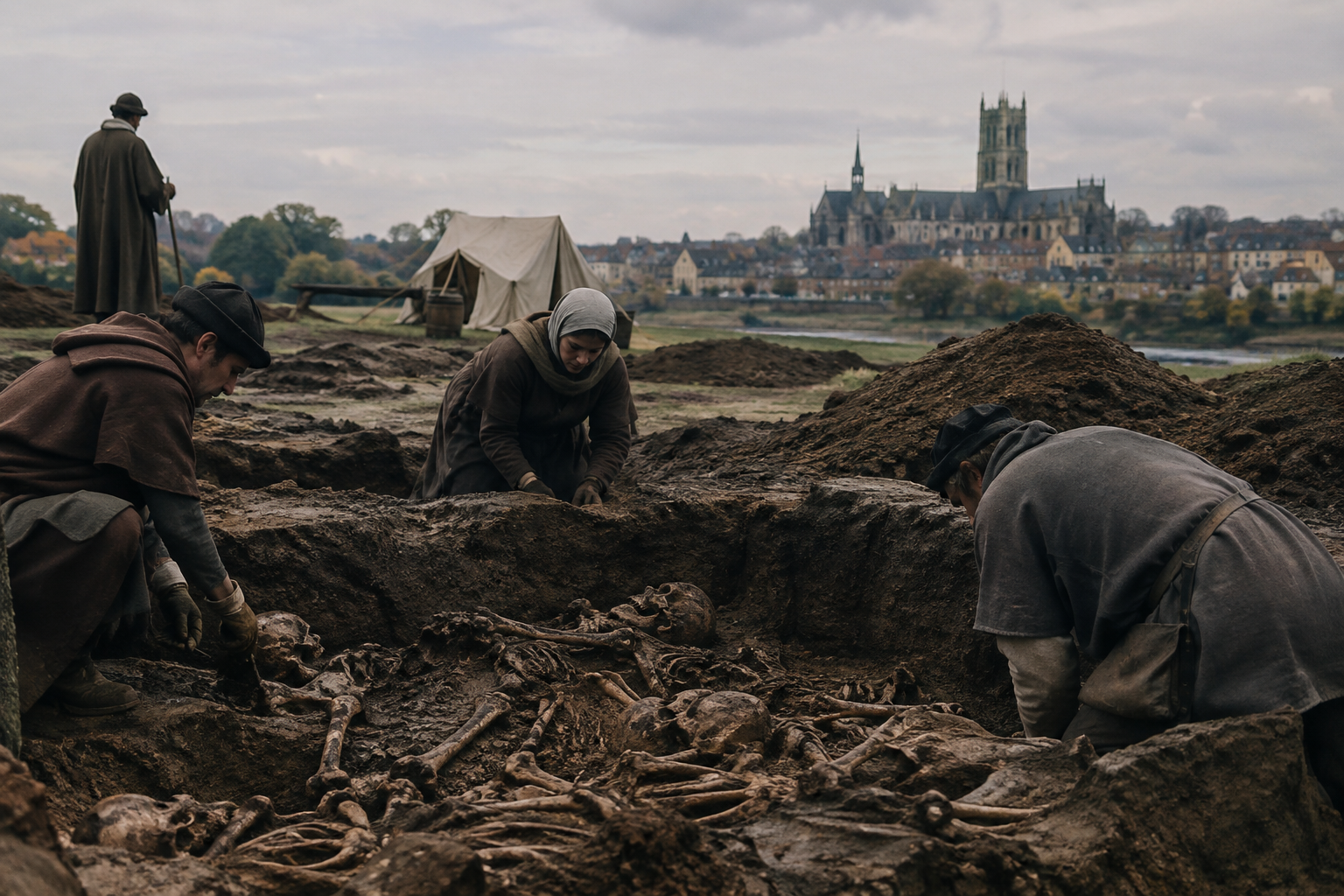
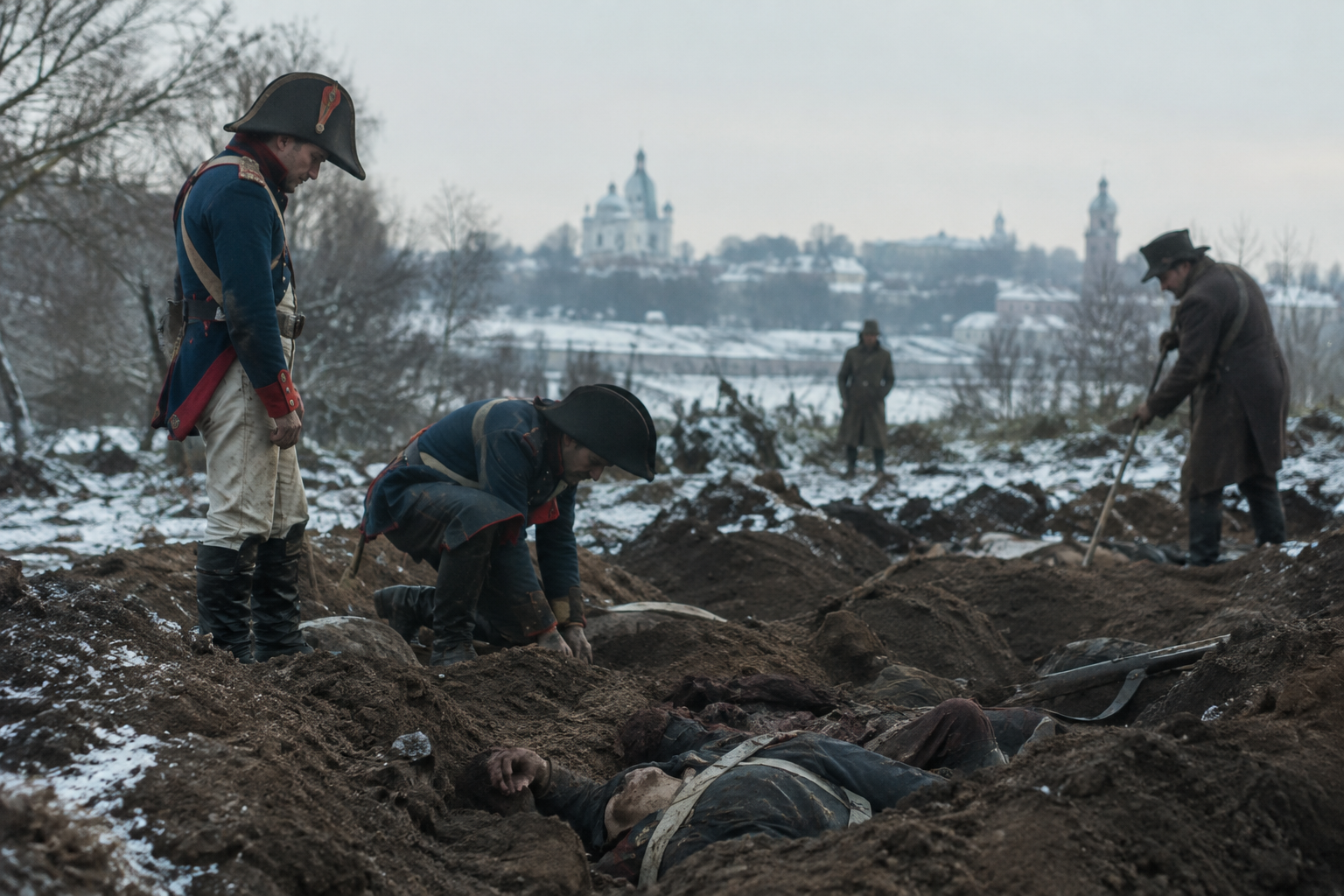
In 1190 AD, a group of Jews in Norwich met one of the worst endings medieval England could offer: not simply death, but violent death followed by hasty concealment. Their remains were later recovered from Chapelfield Well, a grim archaeological deposit now recognized as one of the clearest physical traces of anti-Jewish violence in Angevin England. Among the men identified from that well is sample SB676, associated here with the Y-DNA haplogroup E1b1b1b2a1b1a.
That is already enough to make the lineage historically interesting. Not because one Y-chromosome can stand in for a whole community - it cannot - but because this particular burial context gives a paternal line a rare and precise setting: medieval Norwich, an Ashkenazi Jewish community, and a catastrophe tied to the wider wave of anti-Jewish persecution around the time of the Third Crusade.
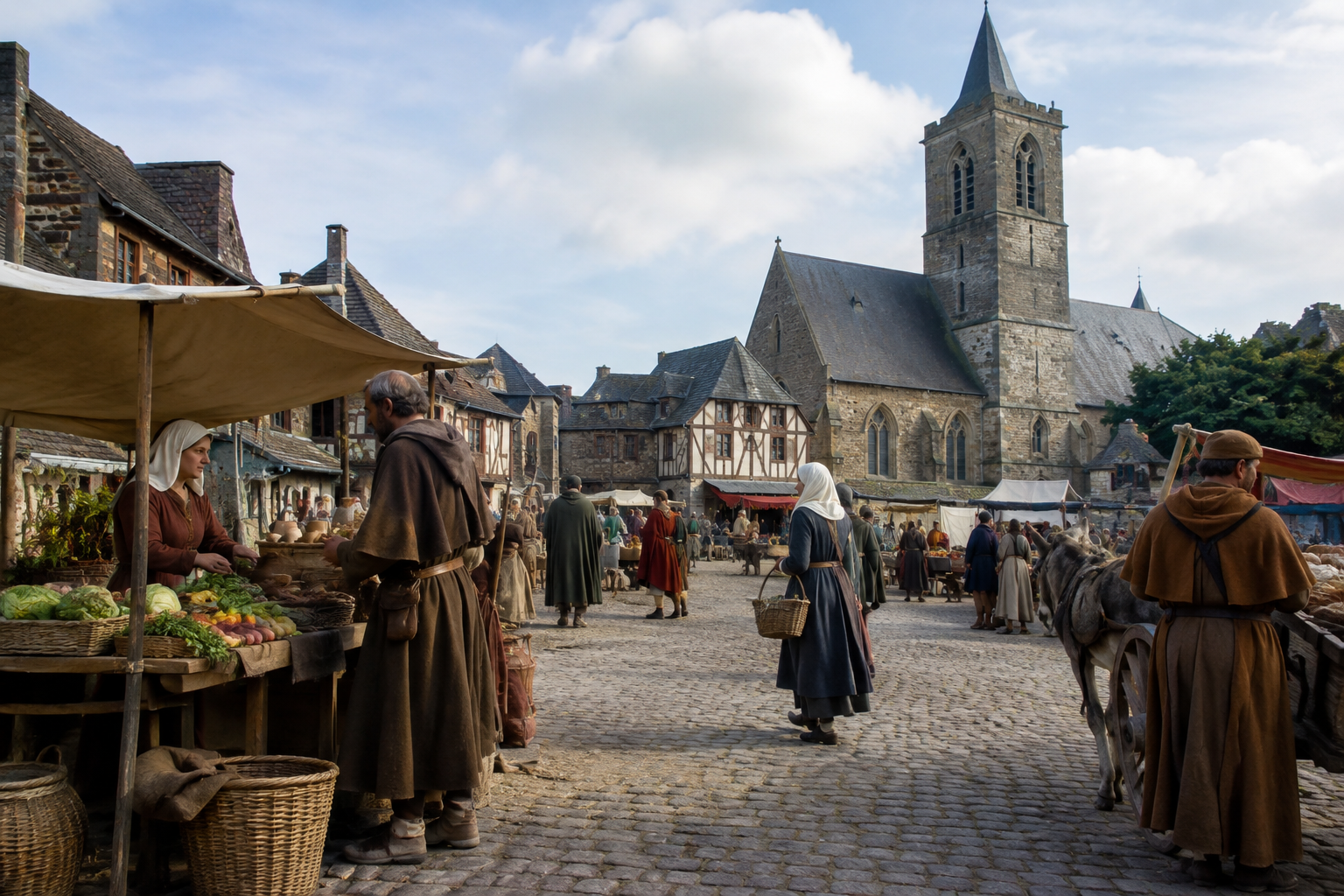
Norwich was one of the most important Jewish centers in medieval England. Its Jewish community was established after the Norman Conquest, like others under royal protection, and became deeply entangled in the economic and legal structures of the kingdom. That protection, however, was precarious. In moments of political strain, crusading fervor, debt resentment, and rumor could turn neighbors into targets.
The remains from Chapelfield Well have become so important because they move this history from chronicle and accusation into excavated reality. The dead were not laid out in a formal cemetery. They were deposited together in a well, and later genetic work helped identify them as members of an Ashkenazi Jewish population. Research on these individuals, including the study available at https://pmc.ncbi.nlm.nih.gov/articles/PMC10499757/, made the site one of the strongest ancient-DNA case studies for a medieval Jewish community in England.
Medieval Jewish Community at Tàrrega
Norwich is, of course, infamous for another reason as well: the 1144 death of William of Norwich, later weaponized in one of medieval Europe's earliest blood libel accusations. That event long predated the well deposit, but it helps explain the atmosphere in which English Jewish communities lived. By 1190, violence against Jews had broken out in several English towns. The best-known episode is York, yet Norwich belonged to the same world of fear, vulnerability, and sudden collective attack.
The haplogroup label E1b1b1b2a1b1a belongs to the broader Y-DNA family usually shortened to E1b1b1, a major paternal clade with deep roots outside northern Europe and a long history across the Mediterranean, the Near East, North Africa, and parts of Europe. The long string of letters and numbers matters because it marks a narrower branch within that large family. It should not be treated as if it automatically carries the whole history of every E1b1b1 lineage with it.
In practical terms, Y-DNA tracks one direct paternal line only: father to son to son across generations. A man buried in medieval Norwich carried far more ancestry than his Y-chromosome alone can show. But that one paternal line can still be historically revealing when it appears in a documented community such as the Ashkenazi Jews of England, whose ancestors had moved through continental Europe before some families crossed the Channel into towns like Norwich, Lincoln, and York.
That makes SB676 useful in a very specific way. He is not evidence for the origin of all Ashkenazi paternal lines, nor for all carriers of E1b1b1b2a1b1a today. He is evidence that this paternal branch, or an assignment associated with it, was present in a medieval Jewish community in England by the late 12th century.
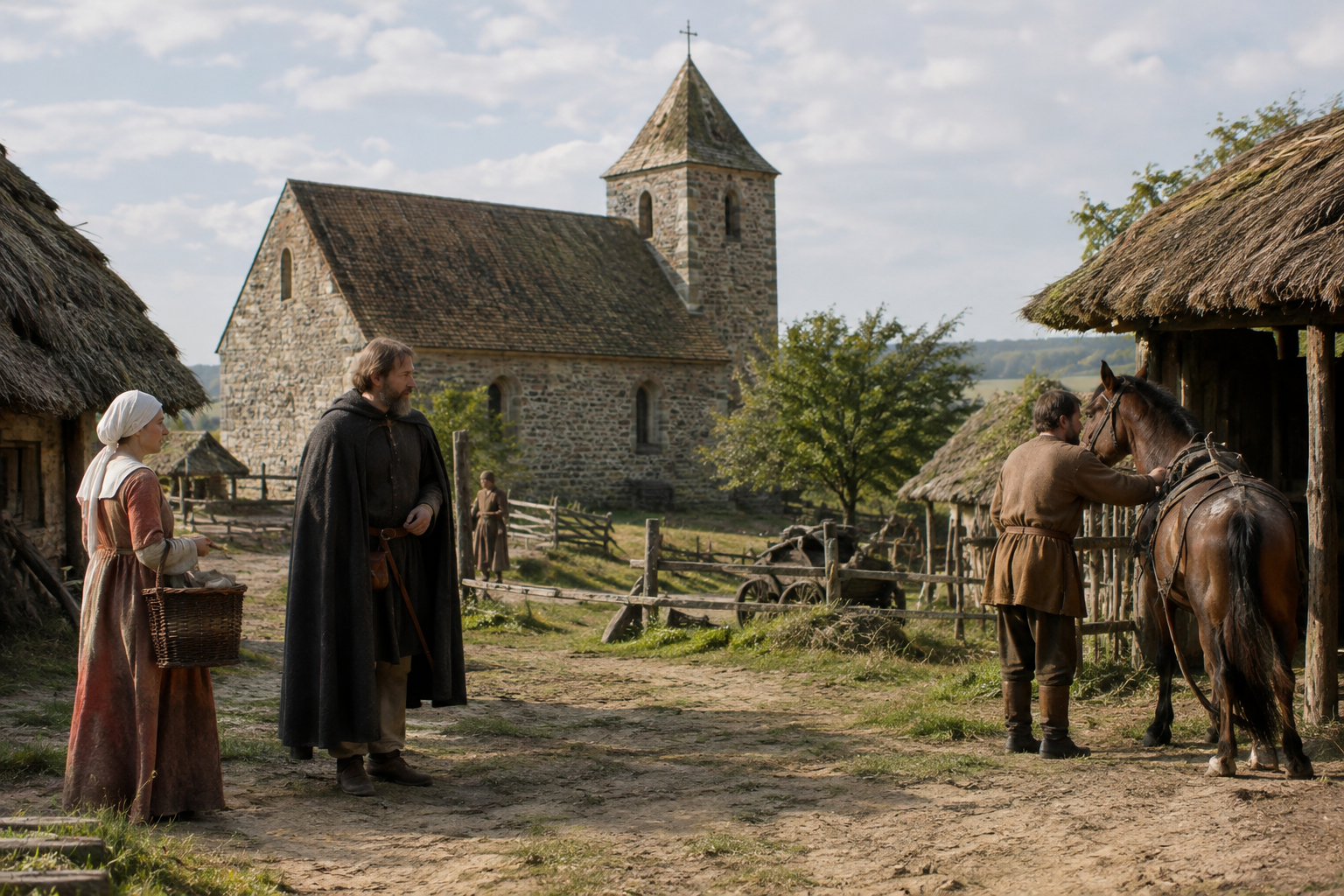
It is easy to imagine medieval English Jews as isolated, but archaeology and documentary history suggest something more connected. These communities were numerically small, concentrated in towns, and linked into wider Jewish networks stretching across northern France and the Rhineland. Their mobility was constrained by royal policy and local hostility, yet families, marriage ties, and learned traditions did not stop at the shoreline.
The Chapelfield Well individuals are important precisely because England rarely preserves medieval Jewish burials that can be studied in this way. Jewish law and later historical destruction have left major gaps in the archaeological record. So when a site like Norwich yields recoverable DNA and a coherent historical context, it gives us a rare glimpse into the biological history of a community that is often much better known from tax rolls, legal disputes, and hostile Christian narratives than from excavated human remains.
Roman and Early Medieval Britain DNA
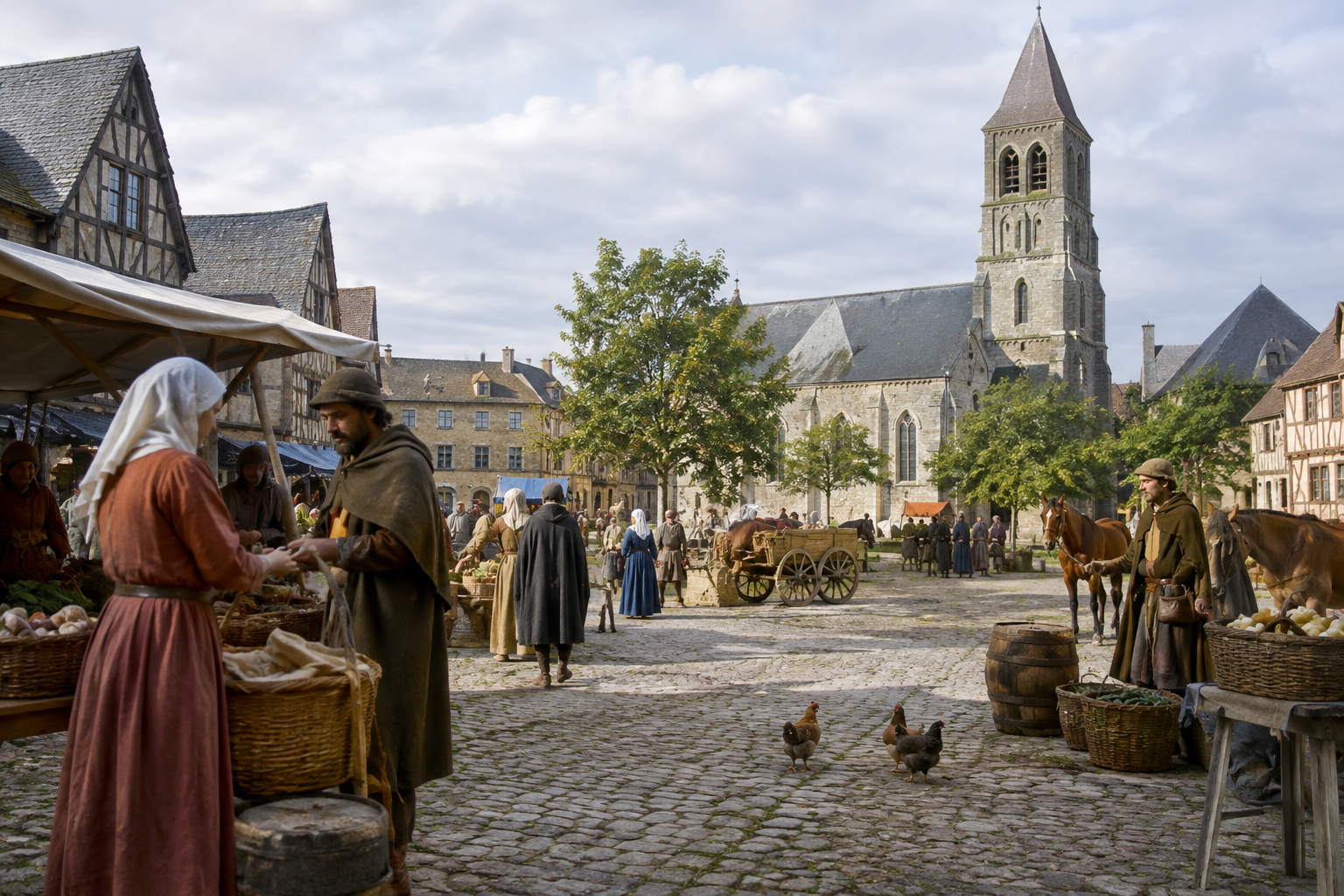
That is also why this sample should not be flattened into a story about "English" versus "foreign" ancestry. Medieval towns were more mixed than older textbooks once assumed, and Jewish communities in particular were part of transregional webs of movement. Norwich itself was a cathedral city, a market center, and a place tied into the politics of Norman and Angevin England. A paternal lineage found there may reflect generations of migration before the final burial setting ever came into being.
Some ancient Y-DNA assignments come from broad cemetery samples where the larger population story is the main point. Chapelfield Well is different. Here, the force of the evidence lies in the concentration of historical circumstance. The value of SB676 is not just that he belonged to a certain haplogroup, but that his remains come from a community under pressure at a known moment in English history.
In other words, the archaeology rescues these people from abstraction. Medieval anti-Jewish violence can otherwise be discussed in the passive voice, as if it were just a regrettable mood of the age. A well full of bodies does not let us get away with that. It insists on the physical fact of persecution. The Y-chromosome then adds another layer: one paternal line within a real Jewish population of medieval England, no longer visible only through records kept by others.
This is part of a wider shift in ancient DNA research. Increasingly, genetics is not merely identifying grand population movements from prehistory, but illuminating named or tightly dated historical communities. The same broad approach has helped scholars study diverse origins in medieval Iberia and other mixed societies around Europe.
Diverse Origins in Medieval Madrid
For someone researching E1b1b1b2a1b1a today, the Norwich evidence is a reminder that this branch can appear in settings shaped by diaspora history rather than by a single homeland narrative. Jewish paternal lineages, like Jewish communities themselves, were formed through long and uneven histories of movement, marriage, survival, and local adaptation. Medieval England was one small outpost within that much larger story.
That does not mean every present-day carrier of E1b1b1b2a1b1a has Jewish ancestry, still less Ashkenazi ancestry. Haplogroups cross religious, linguistic, and regional boundaries all the time. What Norwich does show is that this branch had reached, and was being carried within, a documented Ashkenazi population in 12th-century England.
Iberian and North African Medieval Links
The most distinctive thing about E1b1b1b2a1b1a here is not a sweeping claim about ancient origins, but its presence in one of the most poignant and historically specific burial assemblages in medieval England. Sample SB676 places this paternal line inside the lived world of Norwich's Ashkenazi Jews, a community tied to continental Europe, embedded in English urban life, and shattered by persecution in 1190 AD. For descendants exploring their paternal ancestry, that is the useful lesson: a haplogroup becomes most meaningful when archaeology can pin it to real people, real places, and real history.
Comments