Haplogroup E1b1b1b1a1f2a

– 5 min read


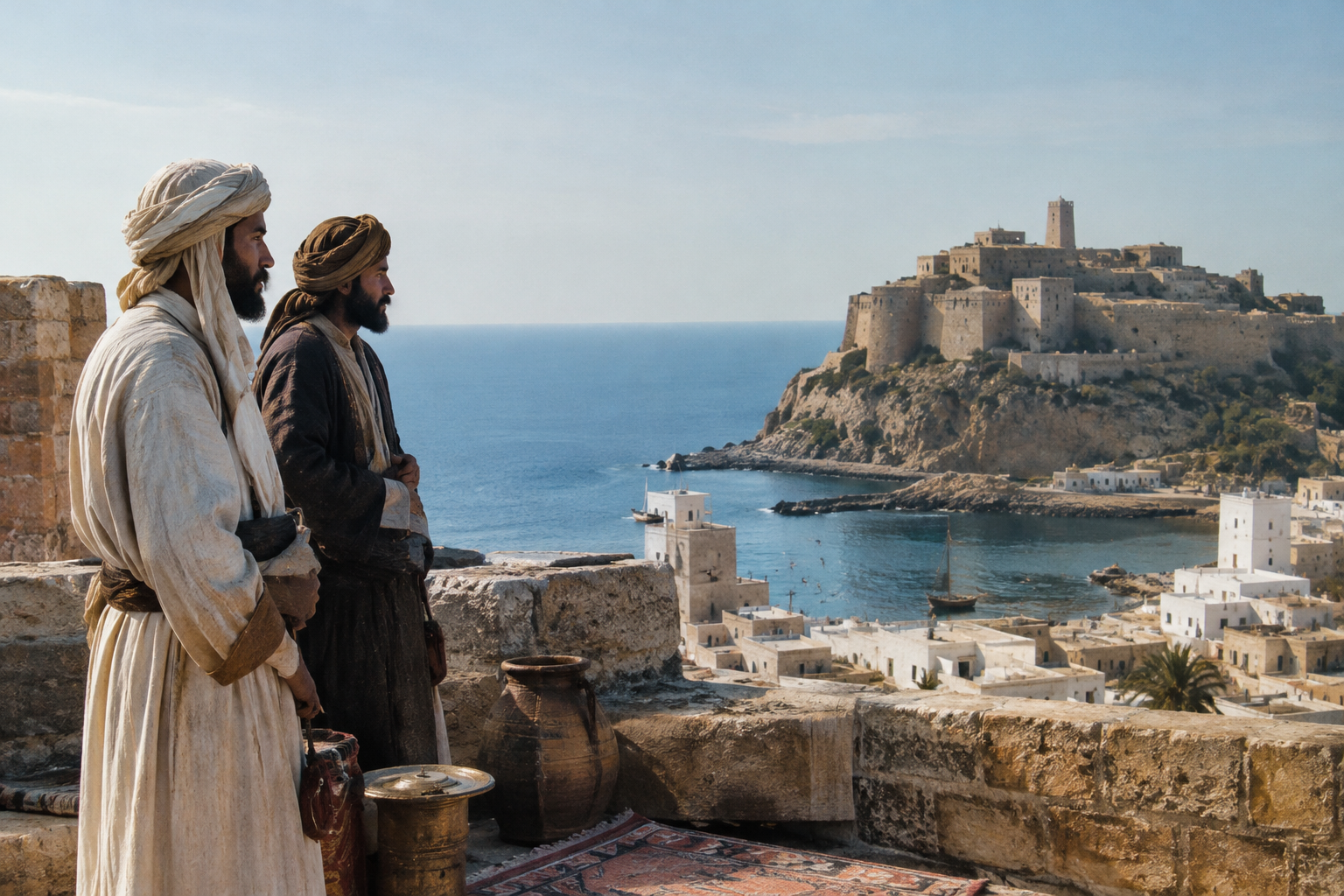
A man buried in medieval Ibiza around AD 950, identified as ldo123, offers a sharply focused glimpse into a much bigger Mediterranean story. He lived in the period when the island formed part of al-Andalus, within an Islamic world tied by sea lanes, trade, faith, and migration to Iberia, North Africa, and beyond. His reported Y-DNA association with E1b1b1b1a1f2a is interesting not because one skeleton can stand for a whole population, but because Ibiza was exactly the kind of place where paternal lineages from different shores could meet.
That is the right scale to think on here. A Y-chromosome branch traces one direct paternal line only, not a person's full ancestry, language, or identity. But in a port society such as medieval Islamic Ibiza, even one securely placed male line can tell us something valuable about movement, family continuity, and the human texture of a frontier island.
By the 10th century, Ibiza was no isolated backwater. It lay in the Balearic archipelago between Iberia and North Africa, in a zone shaped by Roman rule, late antique change, and then the incorporation of the islands into the Islamic political and cultural sphere. Communities here were connected to wider networks of sailors, merchants, settlers, scholars, captives, and soldiers. That matters when we consider a lineage like E1b1b1b1a1f2a, a very narrow branch nested within the wider E1b1b1 family, itself long associated with parts of the Mediterranean, North Africa, and the Near East in different times and places.
The medieval context is crucial. We are not looking at some primordial origin point of the lineage on Ibiza, nor can we simply label it "North African" and stop there. What the island gives us is a documented moment in which a man carrying this paternal line was living in an Islamic Balearic community around AD 950. That is a historical fact with far more texture than a map pin on a modern haplogroup chart.
The haplogroup name itself looks forbidding, but the basic point is simple enough: E1b1b1b1a1f2a is a fine-grained paternal branch, much narrower than the broader E1b1b1 umbrella familiar to many genetic genealogists. That distinction matters. Broad parent lineages can have deep and widespread histories; a much smaller subclade may have a more specific and still poorly documented past.
With the evidence at hand, the safest claim is modest. Sample ldo123 shows that this branch, or an assignment associated with it, appears in medieval Ibiza in an Islamic-era burial context. It does not prove that the branch arrived with the first Muslim conquest, nor that every man of similar ancestry on the island belonged to the same paternal line, nor that the man was recent immigrant, local islander, or descendant of families settled there for generations. Archaeology rarely hands us such neat answers.
But one sample can still be historically revealing when it comes from the right place. Ibiza was a crossroads, and crossroads are where Y-DNA findings become especially evocative. A paternal lineage in such a setting is less a badge of a single people than a reminder that medieval Mediterranean societies were made through repeated, ordinary acts of movement and settlement.
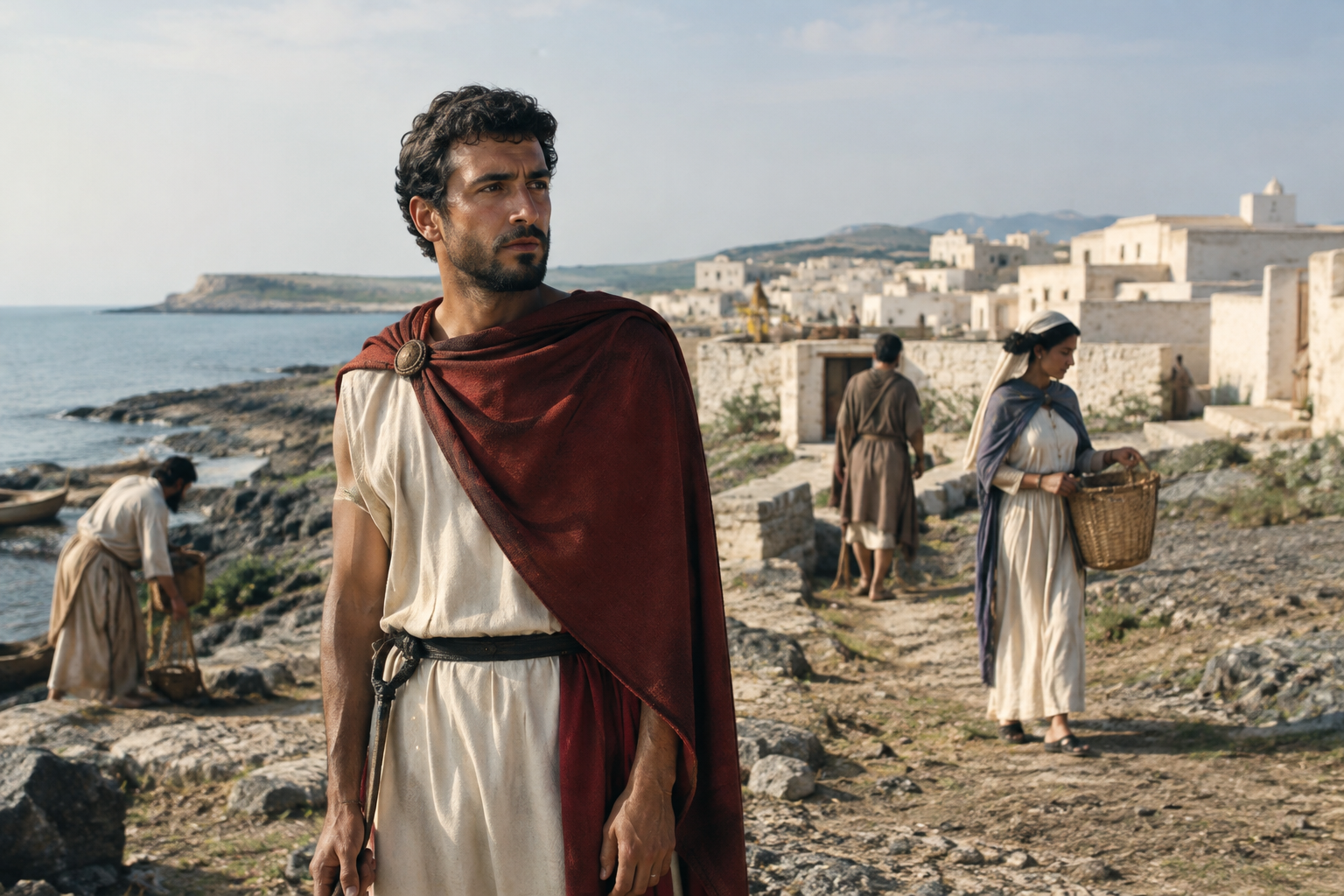
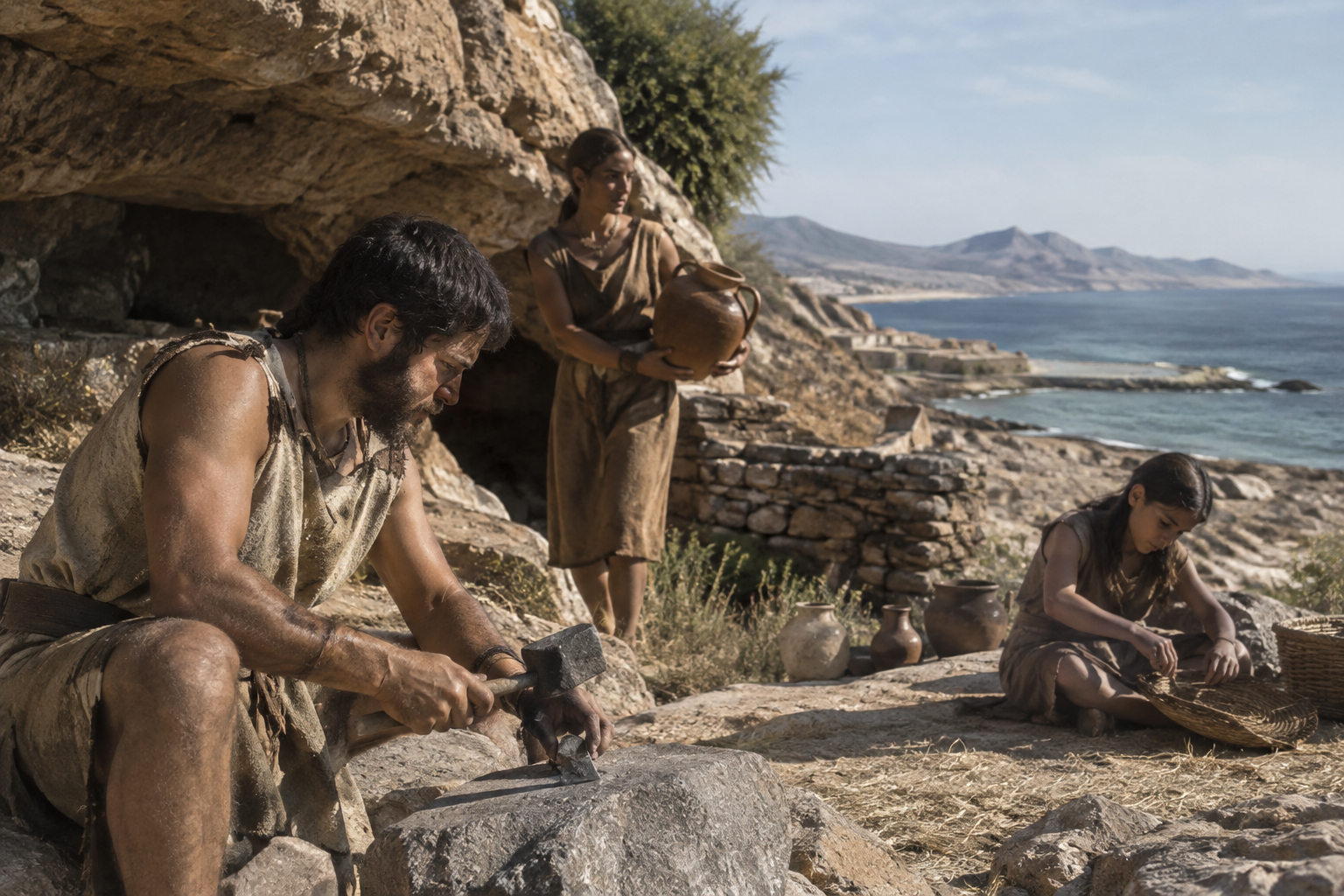
The Balearic Islands have a long record of population change. Prehistoric settlers, Phoenician and Punic influences, Roman integration, late antique transformation, and Islamic rule all left their mark. By the early medieval period, the islands sat within a world where sea travel could knit together communities that modern borders encourage us to keep mentally separate.
That is why Ibiza matters for a lineage like E1b1b1b1a1f2a. A branch found here need not belong to a single simple migration tale. It could reflect ancestry drawn from Iberian populations already shaped by earlier Mediterranean contacts; it could connect to North African movements in the Islamic period; or it could belong to a longer chain of exchanges spanning both shores. The point is not to choose the most dramatic route, but to recognise that the island's history makes several forms of connection plausible.
Research on the Balearic past has increasingly shown that island populations were not static curiosities. They were part of real historical circuits. For readers interested in the deeper background of these islands before the medieval period, MyTrueAncestry's piece on the archipelago's long-term population history gives useful context.
It is tempting, when a medieval Iberian sample carries a branch within E1b1b1, to leap straight to sweeping claims about conquest and replacement. History is more interesting than that. Al-Andalus was not a single incoming population dropped onto an empty map. It was a society formed through conquest, conversion, intermarriage, regional continuity, slavery, elite mobility, and the uneven integration of older local communities into new political and religious structures.
For that reason, the Ibiza sample is best read alongside the broader evidence for diversity in medieval Iberia. Different paternal lines could coexist in the same cemetery, town, or district, and similar political identities did not imply uniform biological ancestry. Studies of early medieval burials from central Iberia have likewise emphasized mixed origins and local complexity rather than a tidy ethnic sorting of graves. One useful comparison is the evidence discussed in MyTrueAncestry's article on a 7th-century Madrid burial site.
Diverse Origins in Early Madrid
The same caution applies to the genetic label itself. A narrow subclade like E1b1b1b1a1f2a is not a synonym for Arab, Berber, Andalusi, or any other historical category. Yet the appearance of this paternal line in Islamic Ibiza fits well with what historians already know about the western Mediterranean: it was a zone of durable links between Iberia and North Africa, especially under Muslim rule, when those connections were politically reinforced as well as commercially useful.
An ancient DNA study examining these Ibiza burials is linked through research on the medieval Islamic population of Ibiza. Even without overstating any single finding, that kind of work helps anchor genealogical interest in excavated people rather than guesswork.
There is a pleasing irony here. The narrower the haplogroup, the more some people want a grand and tidy origin story for it. Yet what makes E1b1b1b1a1f2a compelling in this case is not a vast theory but a small, well-placed fact: a man from medieval Ibiza, living in the world of al-Andalus, carried this direct paternal line.
That matters because islands often preserve history in concentrated form. Ibiza lets us see how lineage evidence intersects with a known historical setting shaped by maritime contact. Rather than imagining anonymous prehistoric wanderers, we can place this branch in a recognisable society of ports, farms, mosques, households, and regional exchange.
It also fits a wider pattern in Iberian studies: Roman and post-Roman history did not produce a single genetic template for the peninsula and islands. Instead, local communities remained varied, and fresh contacts continued to reshape them. Readers following that bigger story may also want to compare the long-term view in MyTrueAncestry's discussion of Roman-era legacies in Hispania.
Roman Hispania's Genetic Legacy
For someone researching E1b1b1b1a1f2a today, the strongest supported takeaway is not a royal claim or a single ethnic label. It is that this paternal branch is now tied, at least in one ancient case, to the lived world of medieval Islamic Ibiza around AD 950. That places the lineage within a historically rich Mediterranean setting where Iberian, island, and North African connections were part of everyday life. As more ancient Y-DNA evidence accumulates, this small clue may become part of a clearer map; for now, it is valuable precisely because it is real, specific, and archaeologically grounded.


Comments