Haplogroup E1b1b1a1b2

– 6 min read



Some Y-chromosome lineages seem to sit quietly in the record for centuries, then suddenly turn up in places that make historians stop and look twice. Haplogroup E1b1b1a1b2 is one of those lineages. It belongs within the wider E1b1b branch, a major paternal family with deep importance in the history of Africa, the Mediterranean, and the Near East. But this specific branch becomes especially interesting when ancient DNA places related paternal lines in Phoenician coastal towns, Punic settlements in Sardinia and Iberia, Byzantine Lebanon, Coptic Egypt, Nubia, early medieval Italy, Anglo-Saxon England, and even colonial Maryland.
That does not mean one single male line ruled all those worlds. It means something more historically useful: paternal ancestry can travel with merchants, soldiers, settlers, priests, captives, migrants, and families in ways that written sources only partly capture. As always, Y-DNA traces one direct paternal line only. It is not a person's whole ancestry, nor is it a shortcut to claiming a civilization, ethnicity, or noble house. But when handled carefully, it can illuminate the movement of men across the ancient world with extraordinary clarity.
The broader E1b1b family is widely associated with parts of Africa, Northeast Africa, the Levant, and the Mediterranean world. For a more specific branch such as E1b1b1a1b2, caution matters. We should not simply pour the entire story of E1b1b into this narrower subclade and pretend the details are all settled. What the evidence does suggest is that this lineage belongs to a paternal world long connected to movement between Africa and the eastern and central Mediterranean.
That helps explain why the archaeological trail for this haplogroup is so strikingly maritime as well as continental. It appears in places linked by sea lanes, imperial corridors, and old trade routes: the Levantine coast, Punic Spain, Sardinia, Egypt, Lebanon, Italy, and later Britain and North America. This is not the pattern of an isolated mountain lineage. It is the pattern of a lineage carried through connected worlds.
Readers interested in the larger archaeological backdrop to early paternal-line research may also enjoy this broader introduction to the field.
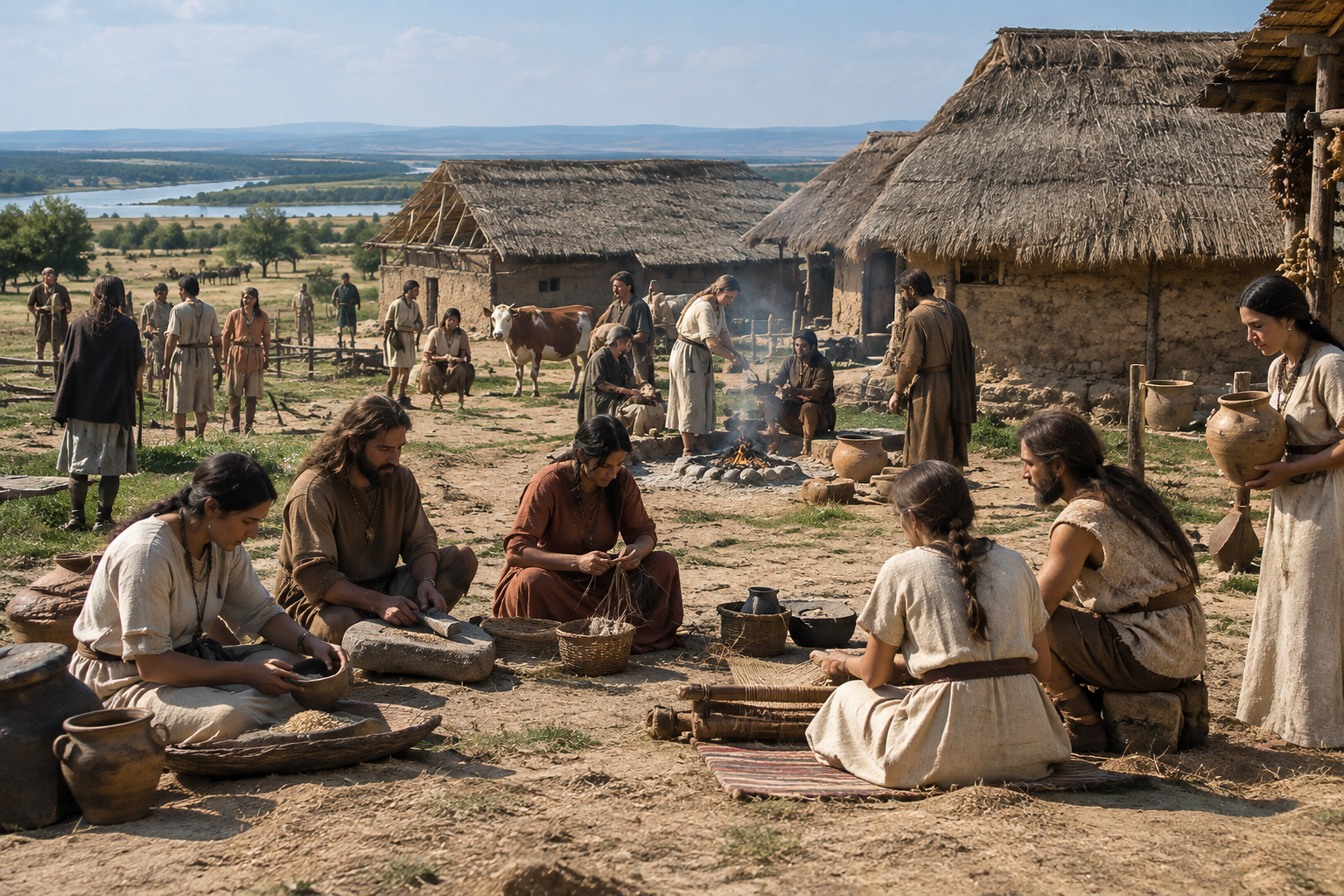
One of the most suggestive early data points is I22253, a Phoenician Achzib Coastal Israel Acre individual dated to 650 BC. Achzib sat in that Levantine seaboard world from which Phoenician merchants and colonists helped stitch together a Mediterranean network of ports, harbors, and trading communities. Finding this haplogroup in that setting does not prove it was a distinctively "Phoenician" lineage in any exclusive sense, but it does place it squarely in the eastern Mediterranean environment from which Punic expansion emerged.
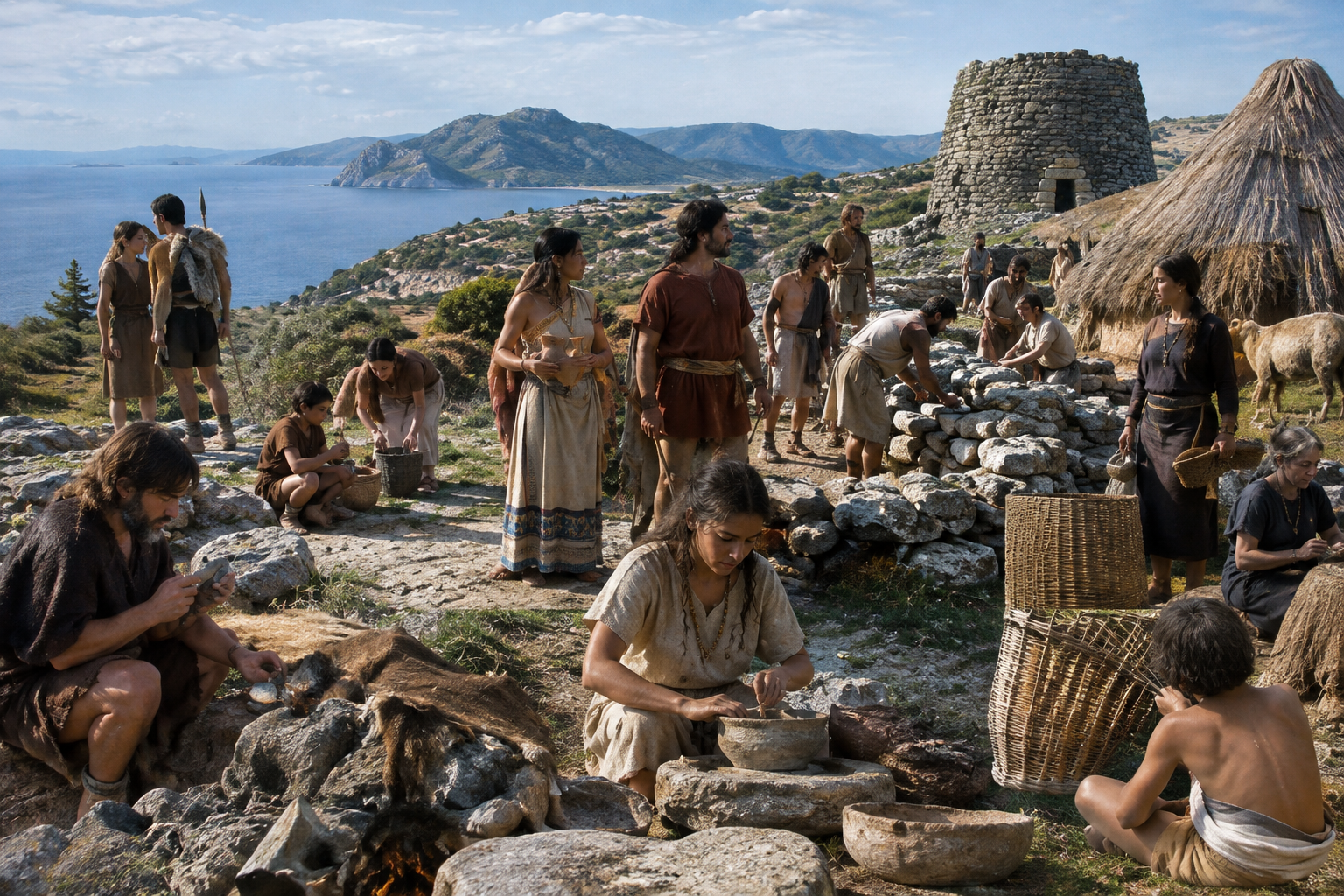
Then the trail moves west. I22122, from Carthaginian Sardinia Tharros dated to 472 BC, and I18199, from Carthaginian Spain Almera Cuevas del Almazora Villaricos dated to 276 BC, show related paternal ancestry present in Punic settlements at opposite ends of the western Mediterranean. Tharros and Villaricos were not backwaters. They were part of a trading and colonial system that linked North Africa, Iberia, Sardinia, and the Levant. In historical terms, these men belong to the world of ship-borne commerce, colonial expansion, and cultural blending that Greek and Roman authors saw but only partly understood.
If that westward spread interests you, this community article offers a useful companion on the mixed and mobile character of Punic populations.
The story does not end with Carthage. In fact, it becomes even more revealing in Late Antiquity and the early medieval period. C5_2287, from Coptic Period Egypt Thebes dated to 518 AD, places the lineage in Christian Egypt. This is an important reminder that paternal lines are not bound to one religious or political order. The same broad male ancestry that appears in the Phoenician and Punic sphere can also appear later in a Coptic community in Upper Egypt, under utterly changed cultural conditions.
Lebanon provides another cluster. R9818, from Byzantine Era Chhim Lebanon dated to 577 AD, and R9823, also from Byzantine Era Chhim Lebanon dated to 650 AD, show continuity or repeated presence in the Levant during the Byzantine period. Chhim was part of a Christianized eastern Mediterranean world still deeply shaped by older Roman and pre-Roman connections. These are exactly the sorts of sites where ancient DNA helps fill the gap between classical antiquity and the early Middle Ages.
Further south along the Nile corridor, I6139 from Kulubnarti Early Makurian Nubia dated to 750 AD and I19132 from Kulubnarti Makurian Nubia dated to 810 AD reveal this paternal ancestry in medieval Nubia. That matters enormously. It shows that this was not merely a Mediterranean coastal phenomenon. It also belonged to the Nile-connected world of Christian African kingdoms, where trade, pilgrimage, warfare, and diplomacy linked Egypt and Nubia over long periods.
For readers fascinated by the African side of this history, this article adds broader context to long-term settlement and adaptation on the continent.
Explore African Population History
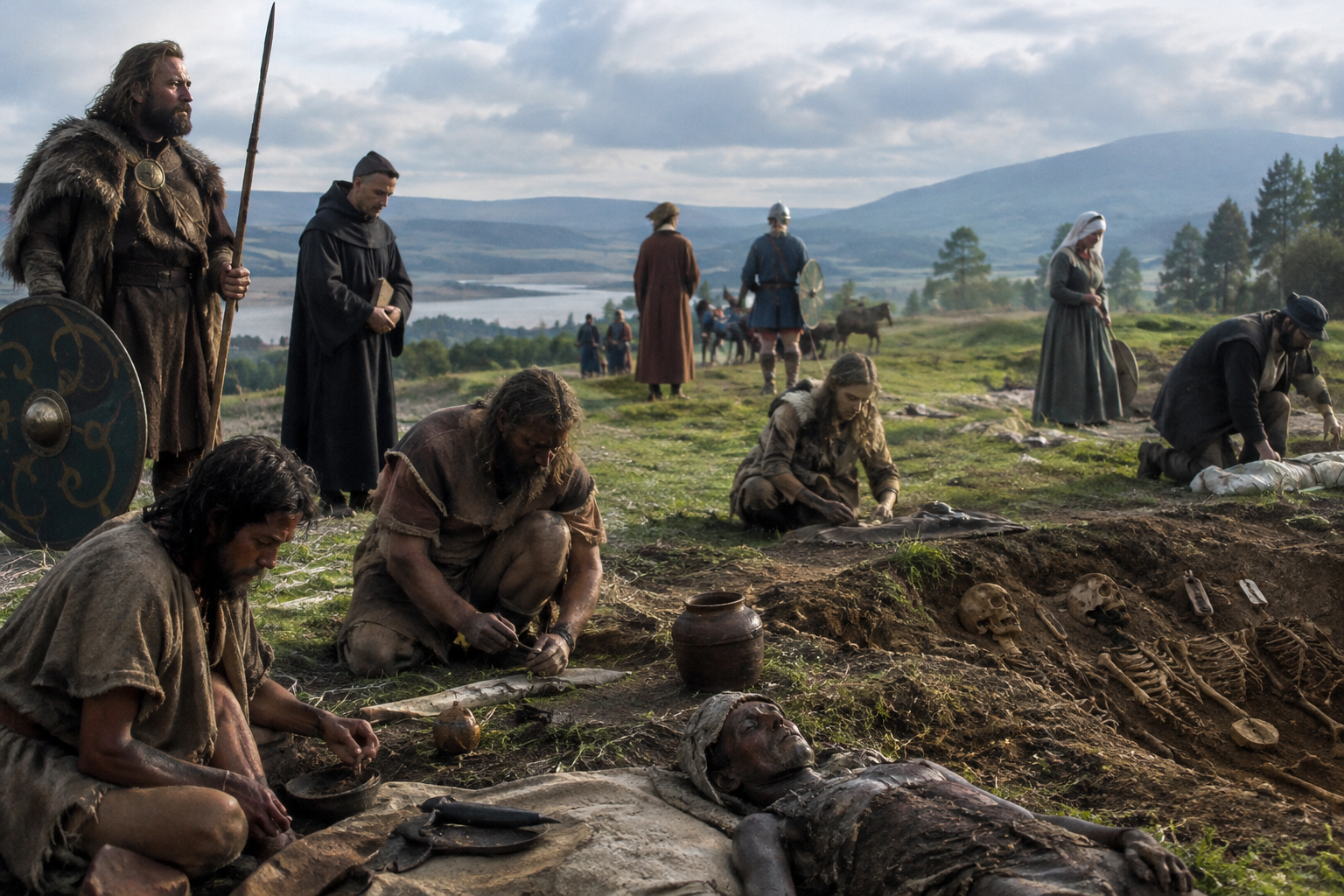
By the fifth and sixth centuries, this haplogroup also appears in parts of Europe where older textbook history once imagined much cleaner ethnic boundaries than really existed. 1895_1, from Dark Ages Italy South Tyrol Malles Burgusio Santo Stefano dated to 450 AD, places the lineage in the Alpine zone of post-Roman Italy. This was a frontier of movement, military change, and cultural overlap, not a sealed ethnic compartment.
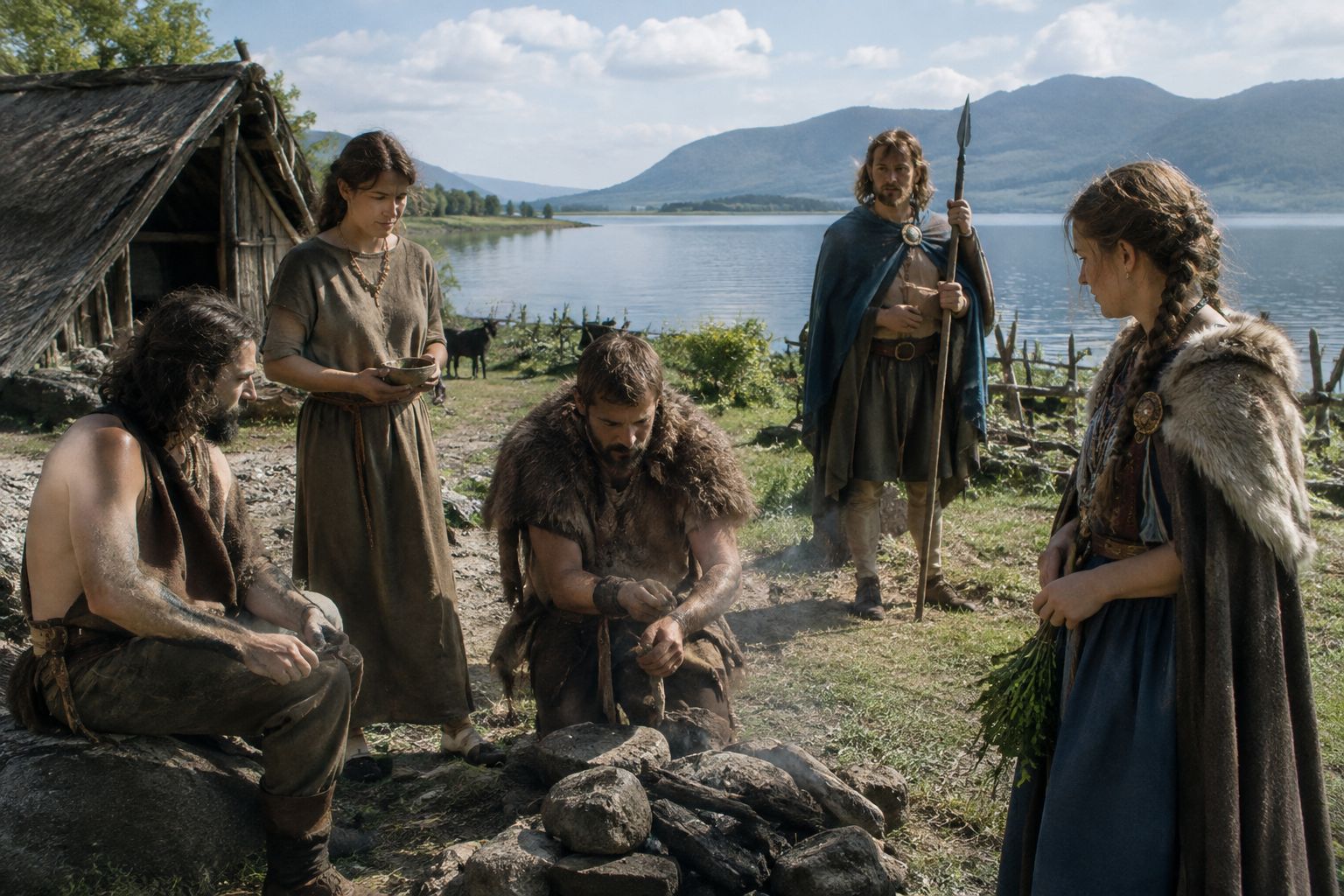
Even more arresting is BMN006, from Anglo Saxon Early Medieval England Norfolk Barnham Market dated to 600 AD. A paternal line in this branch showing up in early medieval England is a useful warning against simplistic ideas of "Anglo-Saxon blood." England in this period was connected to the North Sea, former Roman routes, and older Mediterranean circuits. One sample cannot rewrite the whole population history of England, but it can show how mobile and varied that world already was.
That theme is explored further in this related article on early medieval English population formation.
Some samples widen the picture still further. I13980, from Neolithic Tanzania Cushitic dated to 600 BC, and I8808, from Kenya Jawuoyo Rockshelter South-East African Hunter Gatherer dated to 250 AD, point to eastern African contexts relevant to the broader E-lineage landscape. These finds should be handled carefully, especially when discussing a narrow branch. Still, they fit the larger sense that paternal ancestry within the E1b1b world has long been entangled with eastern African history as well as Mediterranean one.
Then there is BUR002, from the Late Xiongnu Empire Mongolia dated to 100 AD. This is perhaps the most surprising appearance in the list. It would be rash to build a grand migration theory on a single sample, but it does remind us that imperial and steppe worlds could carry lineages vast distances. Ancient DNA repeatedly shows that the edges of the known world were often less isolated than historians once assumed.
Finally, I15315 from Historic St. Mary City Chapel Field Cemetery Maryland dated to 1667 AD brings the story into the Atlantic world. By the seventeenth century, lineages with roots in older African and Mediterranean networks could be found in colonial North America, carried there through migration, colonization, and the violent upheavals of the early modern world.
No associated noble families or castles were supplied here, and that absence is actually a useful reminder of method. Genetics does not need a castle to be historically important. In many cases, ancient DNA tells its clearest stories not through dynastic tombs, but through cemeteries, trading towns, chapels, and frontier settlements.
Still, the contrast is worth noticing. Medieval genealogies tend to move downward from named ancestors, heraldry, and estates. Ancient DNA works differently: it moves upward and outward from burials, populations, and paternal branches. Sometimes the two approaches meet. Often they do not. A shared haplogroup can place later families into a broad regional context, but it does not by itself prove descent from a particular ancient man, much less from a named noble house.
What makes E1b1b1a1b2 historically compelling is not that it belongs to one people, but that it does not. In the current evidence, it appears in Levantine coastal settings, Punic colonies, Christian Egypt, Byzantine Lebanon, medieval Nubia, post-Roman Italy, early medieval England, and colonial Maryland. That is a lineage moving through ports, kingdoms, empires, and faiths.
And that is precisely why Y-DNA matters. It can preserve a narrow paternal thread even when languages change, religions change, and political regimes collapse. But it remains only one thread. If you carry this haplogroup today, that does not make you Phoenician, Carthaginian, Coptic, Anglo-Saxon, or Nubian in any simple sense. It means your direct paternal line belongs to a branch with a documented history across some of the most connected regions of the ancient and medieval world.
MyTrueAncestry lets you explore that kind of connection for yourself. By comparing your DNA to ancient individuals, you may find links to the same broad historical landscapes discussed here, while remembering that genetic similarity is not the same thing as proven descent from a specific ancient person or noble lineage.

Comments