Haplogroup E1b1b1a1b1a6

– 4 min read


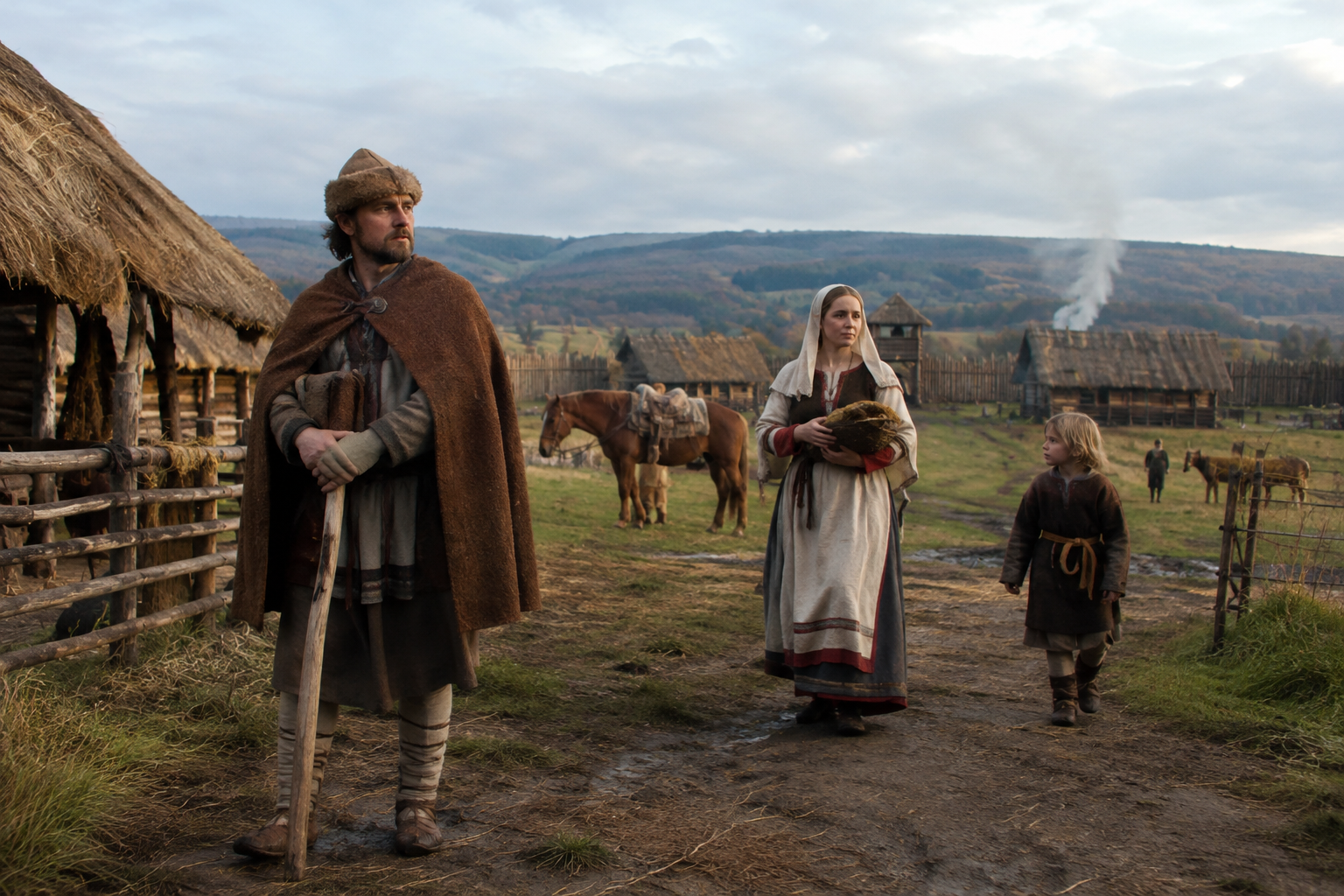
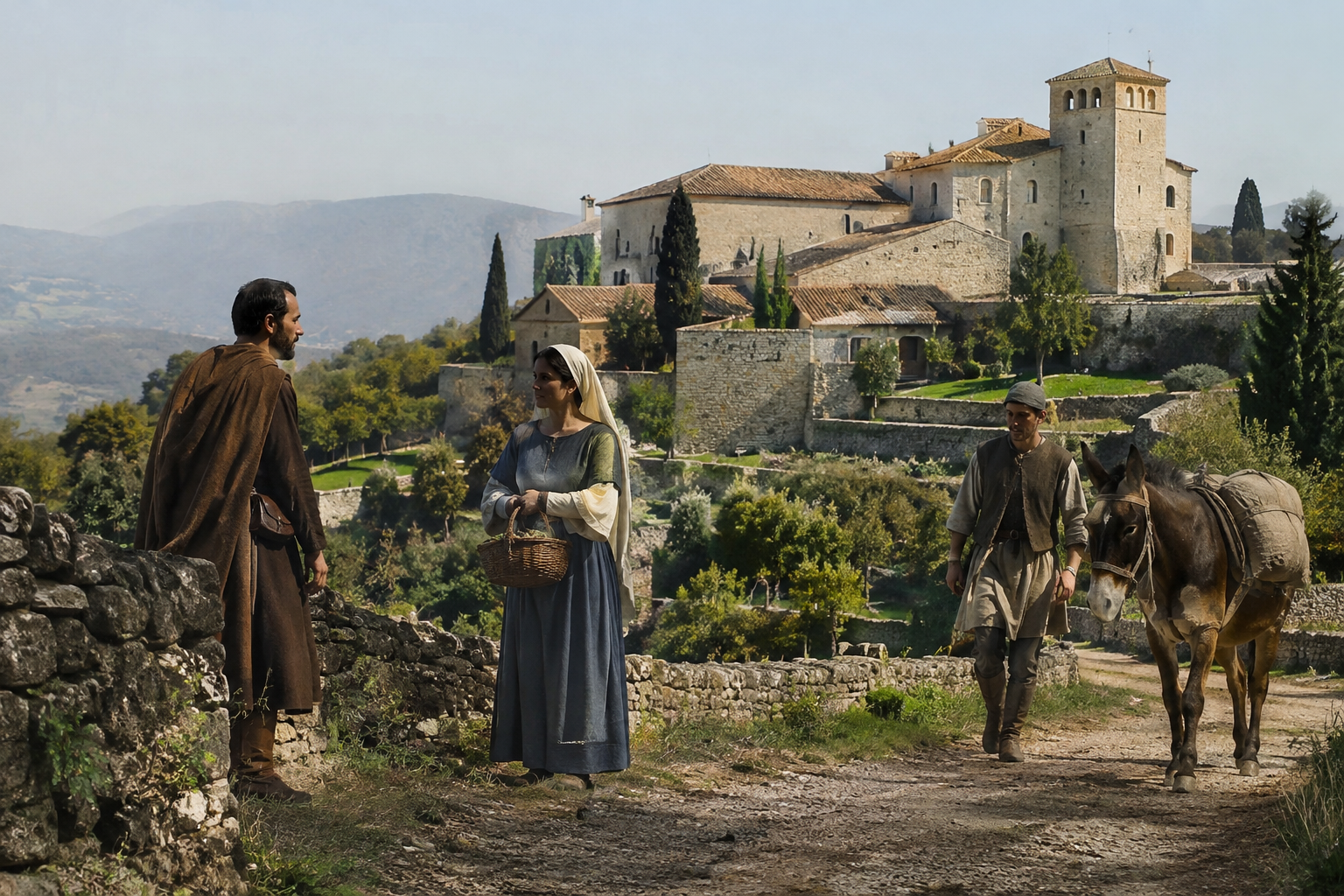
One of the more intriguing appearances of haplogroup E1b1b1a1b1a6 in the ancient record comes from medieval Poland: sample PCA0308, dated to around AD 1100, from the Końskie area in the Subcarpathian region. That is immediately interesting because this is not a lineage most readers would lazily expect to meet in a medieval Polish setting. And that, really, is the point of ancient DNA at its best: it forces us away from neat modern maps and back into the messier human reality of movement, marriage, service, trade, conversion, and settlement.
What the Y chromosome gives us is only one line of descent, the direct paternal one. It does not tell us a man's whole ancestry, language, or identity. But when a branch such as E1b1b1a1b1a6 turns up in a medieval burial from southern Poland, it adds a useful piece to a much larger story about how Central and Eastern Europe were populated not by sealed-off peoples, but by communities connected across very long distances.
The sample identifier PCA0308 is the anchor here: a documented medieval individual from Poland, placed broadly around the 11th to early 12th century. That was a period when the Polish lands were deeply entangled in wider European change: dynastic consolidation, church expansion, frontier mobility, military service, and the steady knitting together of local populations into larger political worlds.
Without inventing details that the record does not give us, we can still say something important. A paternal lineage assigned within E1b1b1a1b1a6 in this context shows that such lineages were present in the population of medieval Poland, not merely in the Mediterranean or the Balkans where broader E1b1b branches are often discussed. The archaeological lesson is modest but valuable: medieval Poland was not genetically uniform, and its paternal diversity could include lineages with deeper histories elsewhere in Europe and beyond.
A genetic study of early medieval and medieval central European populations has helped illuminate exactly this sort of complexity, showing that burials from the region often preserve evidence of mobility and mixed ancestry rather than neat ethnic blocks. See the research here: https://genomebiology.biomedcentral.com/articles/10.1186/s13059-023-03013-9.
The wider parent haplogroup E1b1b is an old and widespread paternal lineage with important branches in parts of Africa, the Mediterranean, the Balkans, and southwest Asia. But one must be careful here. The article's branch, E1b1b1a1b1a6, is a much narrower twig on that larger tree, and the ancient sample does not license us to dump the entire history of E1b1b onto one medieval man from Poland.
What is safer to say is that this branch belongs to a paternal family line with a distribution shaped by many centuries of movement around Europe and its neighboring regions. In a medieval Polish context, such a lineage could reflect older population processes, more recent migration, or the gradual absorption of men and families from quite varied backgrounds into local communities. Ancient DNA is powerful precisely because it catches these lineages in real places and periods, instead of leaving us to guess from present-day surname maps or national myths.
Southern and southeastern Poland sat in a zone of contact. This was a landscape linked to the Carpathians, to routes leading into the Hungarian basin, to the eastward and westward movements that shaped the medieval world, and to earlier prehistoric and late antique population changes. In other words, it is exactly the sort of place where one should expect surprising paternal lineages to appear.
The temptation is always to ask whether a lineage like E1b1b1a1b1a6 arrived with one dramatic event. Usually history is less theatrical. Lineages can persist quietly for generations, moving not as conquering banners but as households, retainers, clergy, merchants, craftsmen, or simply neighbors marrying neighbors in districts that had already become mixed. PCA0308 matters because it gives a fixed point: by around AD 1100, this paternal branch was part of the human landscape of medieval Poland.
Southwest Poland in transition
If one steps back from a single sample, the broader archaeological picture becomes clearer. Early medieval and medieval Europe repeatedly shows diversity in burial populations that older historical writing often flattened into labels like "Slav," "Germanic," or "local." Those labels can be useful historically, but they are not the same thing as a Y-DNA lineage. The men buried under the same cultural horizon could have come from rather different paternal backgrounds.
This is especially relevant for haplogroup E1b1b1a1b1a6. A find like PCA0308 does not turn medieval Poland into a colony of any one southern or southeastern homeland, and it certainly does not assign the buried man a ready-made ethnicity. What it does show is that the medieval population included paternal lines whose deeper stories likely stretched beyond the immediate region.
That pattern fits well with other ancient DNA work from Europe, where local communities often combine continuity with newcomers from strikingly different backgrounds. The old caricature of isolated medieval villages is giving way to something more plausible: communities that were local in daily life but connected, directly or indirectly, to a far wider world.
One reason this Polish sample is so useful is that it belongs to a growing body of evidence showing that medieval Europe contained more long-distance ancestry than older narratives allowed. Studies of burial grounds in Germany and surrounding regions have revealed people whose genetic profiles point to movement across substantial distances, sometimes alongside evidence of disease, care, and community membership. That is a helpful reminder that mobility was not exceptional in the Middle Ages; it was woven into the period.
So PCA0308 should not be treated as an oddity in a cabinet. It is better understood as one data point in a medieval European pattern: diverse paternal lines turning up in places where textual history once encouraged us to expect simple ancestry. The real historical value of E1b1b1a1b1a6 here is that it complicates the picture in exactly the right way.
If your direct paternal line belongs to E1b1b1a1b1a6, the medieval Polish sample PCA0308 offers a grounded historical clue rather than a grand claim. It suggests that this lineage was present in Central Europe by the High Middle Ages, and that men carrying it could be fully part of local medieval communities there. The most responsible conclusion is not a fantasy of one lost tribe or noble house, but something more interesting: your paternal line may belong to the long history of movement and mixture that made medieval Europe what it was.
Comments