Haplogroup C1b

– 4 min read



Haplogroup C1b is one of those paternal lineages that makes archaeologists stop and think, because it does not behave like the better-known West Eurasian branches that dominate so many ancient DNA discussions. When C1b turns up in human prehistory, it tends to point us toward a much deeper story: the earliest dispersals of modern humans into eastern Eurasia, Island Southeast Asia, Sahul, and ultimately the first settlement histories of Oceania and parts of the wider Pacific world.
That already tells us something important. A Y-DNA haplogroup follows one direct paternal line only - father to son, and so on - not a person's whole ancestry. But in the case of C1b, that single line is historically revealing, because it belongs to a very old branch of haplogroup C, one associated above all with early populations outside western Eurasia rather than later Bronze Age expansions that loom so large in European genetic history.
The wider haplogroup C is an ancient branch within the non-African paternal tree, and its different sub-branches ended up scattered across very different regions. C1b matters because it sits within an especially old pattern of eastern dispersal. In broad terms, lineages in this part of the tree are linked with populations that moved through Asia early, long before the later agricultural and steppe expansions that reshaped much of Eurasia in the Neolithic and Bronze Age.
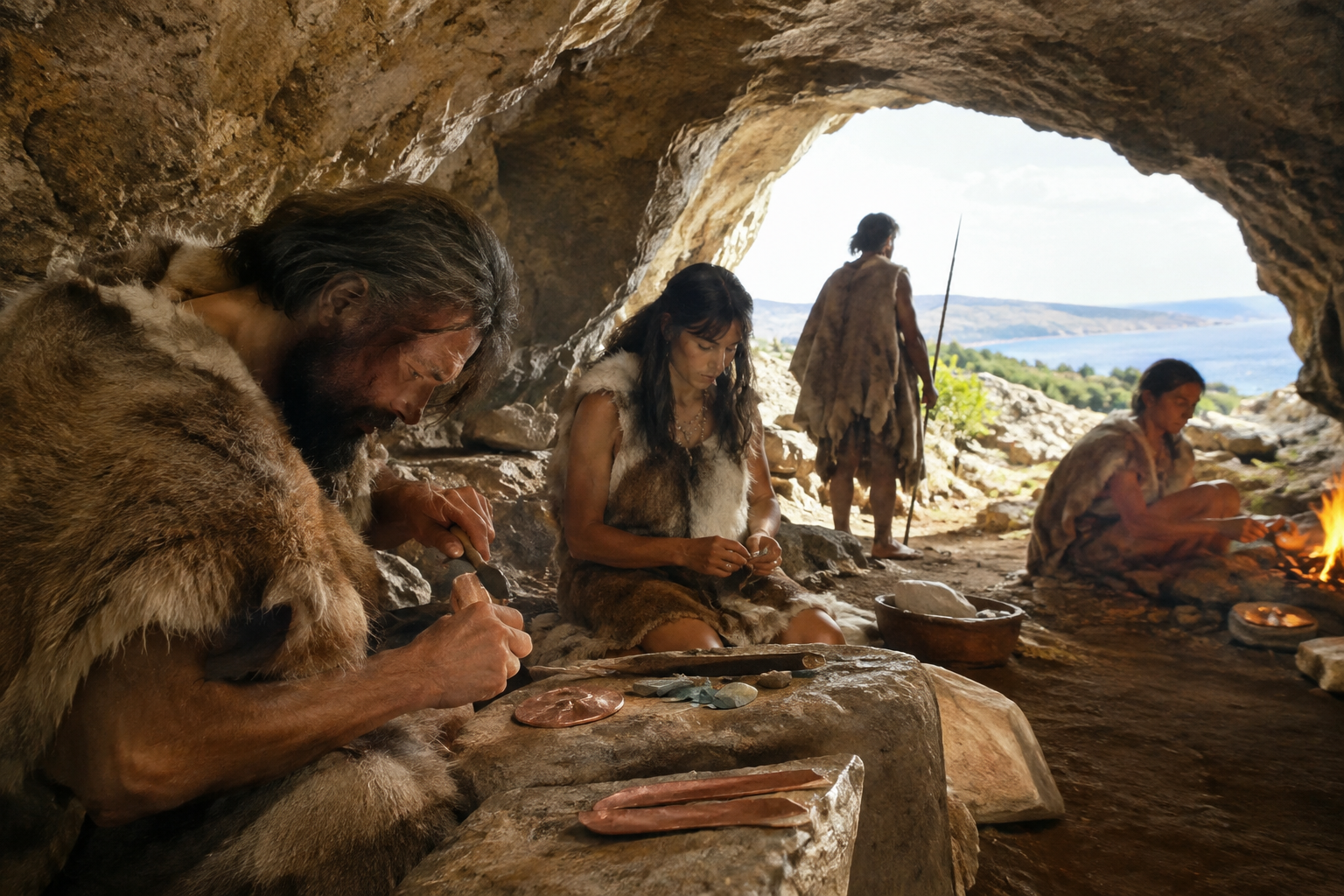
That does not mean every man with C1b shared the same language, culture, or way of life. It does mean that when this lineage appears, we are usually looking at a paternal history rooted in very old population layers. In archaeological terms, that often places C1b closer to hunter-gatherer and early coastal or island settlement histories than to later state societies.
Near Oceania and long isolation
Many familiar Y-chromosome stories in ancient DNA involve dramatic expansions in the last 5,000 to 8,000 years. C1b belongs to a different scale of time. Its importance lies in survival rather than domination: a lineage that can preserve evidence of very early human movements, especially in regions where later turnovers did not erase every older paternal branch.
That is why C1b is often discussed alongside questions of Pleistocene settlement, island colonization, and deep regional continuity. In parts of Wallacea, Near Oceania, and adjoining regions, ancient DNA and present-day diversity together suggest that some paternal lines remained locally important over immense timescales, even as later migrations introduced new ancestry components. The archaeological interest here is not a neat empire or dynasty. It is endurance.
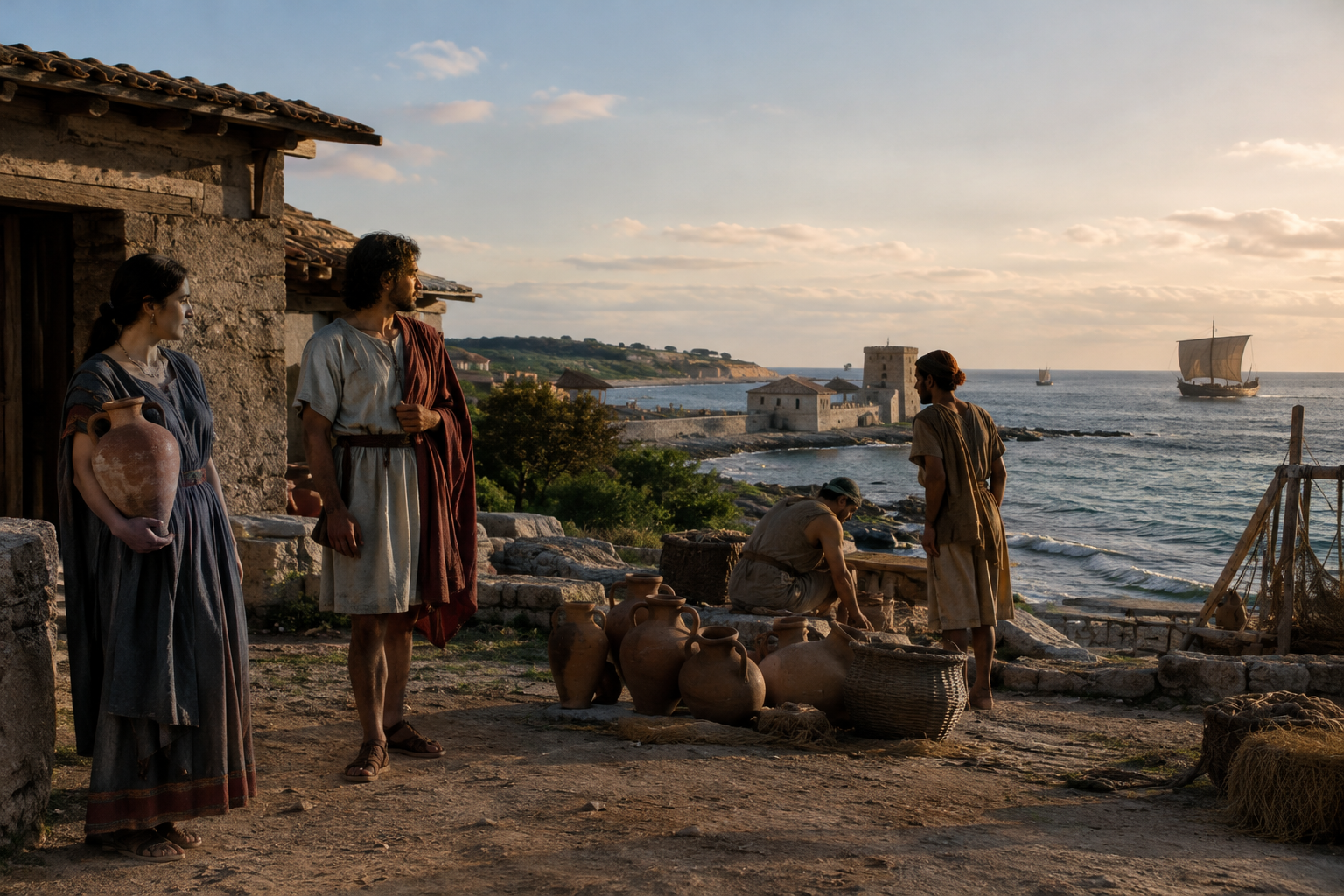
If one wants to understand why C1b matters, island archaeology is a good place to start. Islands preserve strange histories. They can be crossroads, but they can also be refuges. Populations arriving very early may remain partially isolated for millennia, leaving genetic signals that are much older than the political or linguistic maps we know from written history.
In that setting, a lineage like C1b becomes historically useful because it may mark descendants of some of the earliest successful male lines in those regions. That is especially relevant when archaeologists try to disentangle the relationship between the first settlers of Sahul and Near Oceania, later Austronesian-speaking expansions, and the patchwork of admixture that followed. A branch can survive through all of that without representing all of a population's ancestry.
One reason these questions matter so much is that ancient DNA from tropical and island contexts is often difficult to recover. Preservation is patchy; samples are limited; some regions are still only beginning to be studied at useful scale. So even broad paternal signals can be informative when they appear in a well-dated archaeological framework.
Papuan-East Asian mixing before Palau
That point is worth making plainly, because many readers first meet haplogroups through medieval or royal case studies. C1b is not chiefly famous for showing up in named kings, castle lineages, or historically documented noble houses. Its significance is older and, in a way, grander. It belongs to the human story before chronicles: before charters, before heraldry, before most of the things historians traditionally used to structure the past.
For that reason, C1b is best understood through population history rather than pedigree prestige. Its real importance lies in what it can preserve about early routes through eastern Eurasia and the complicated demographic history of island Southeast Asia and Oceania. Where later paternal turnovers were less complete, ancient branches such as this one can remain visible for astonishing lengths of time.
For someone who carries C1b today, the lineage may point toward a paternal history connected to very old eastern dispersals rather than to the better-known Holocene expansions that dominate much of Eurasian Y-DNA. That can be especially meaningful in regions where deep local ancestry survived later migrations. But the caution is straightforward: one paternal line is only one line among thousands in your family tree.
So C1b should not be read as a badge of ethnicity or a shortcut to a single ancient people. Archaeologically, it is more useful than that and less simple than that. It can suggest that your direct male line belongs to one of the old surviving branches that help map the earliest spread of modern humans across Asia and into island worlds beyond.
Wallace's Line and ancient Indonesia
The distinctive thing about C1b is not that it built a famous kingdom or appears in some glittering royal tomb. It is that this paternal branch seems to belong to the older human framework of the eastern world: early settlement, long continuity, and survival through later waves of migration. For family historians, that is a different kind of inheritance - less about named dynasties, more about belonging to one of the deep human lines that endured where the archaeological record is hardest to recover and most rewarding to interpret.

Comments