Elek Báthory

– 5 min read


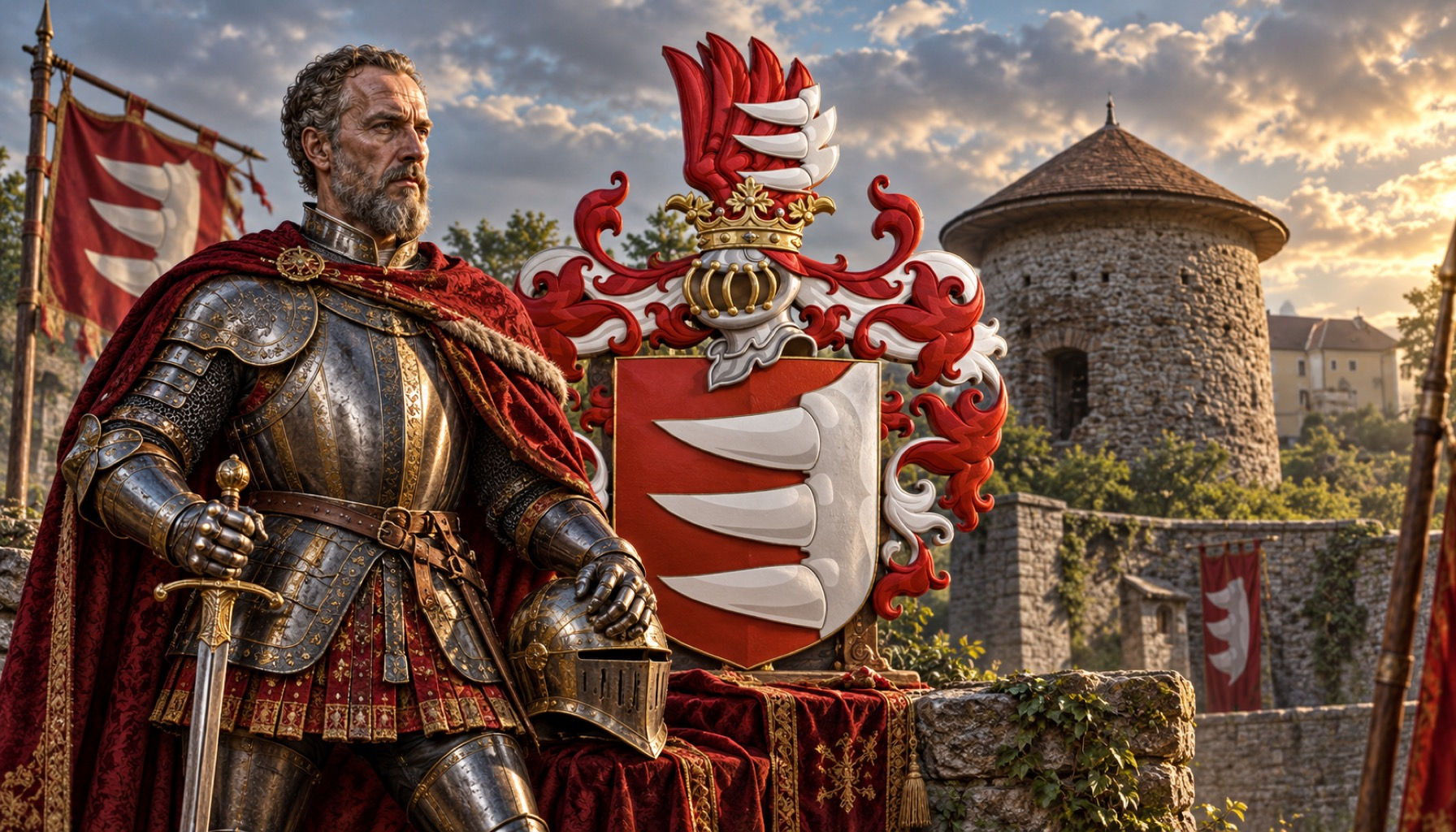
Elek Báthory was a 16th-century Hungarian nobleman from one of the most formidable aristocratic families of late medieval and early modern Central Europe. The Báthorys were not obscure local lords but a dynasty whose various branches supplied military commanders, leading magnates, princes of Transylvania, and most famously Stephen Báthory, who became King of Poland and Grand Duke of Lithuania. Elek belonged to the Báthory kin-group centered on Pericei, in present-day Romania, then part of the political world of the Kingdom of Hungary and Transylvania.
That matters because families like the Báthorys sat right at the hinge of history in a region under intense pressure. The 16th century in Hungary was marked by the Ottoman advance, the fragmentation of the medieval kingdom after Mohács, Habsburg ambitions, and the growing importance of Transylvania as a power in its own right. In that world, lineage was political capital. To know who belonged to a great family was not merely a matter of vanity; it shaped landholding, alliance, office, patronage, burial, and memory.
Read about the Princely House of Bathory
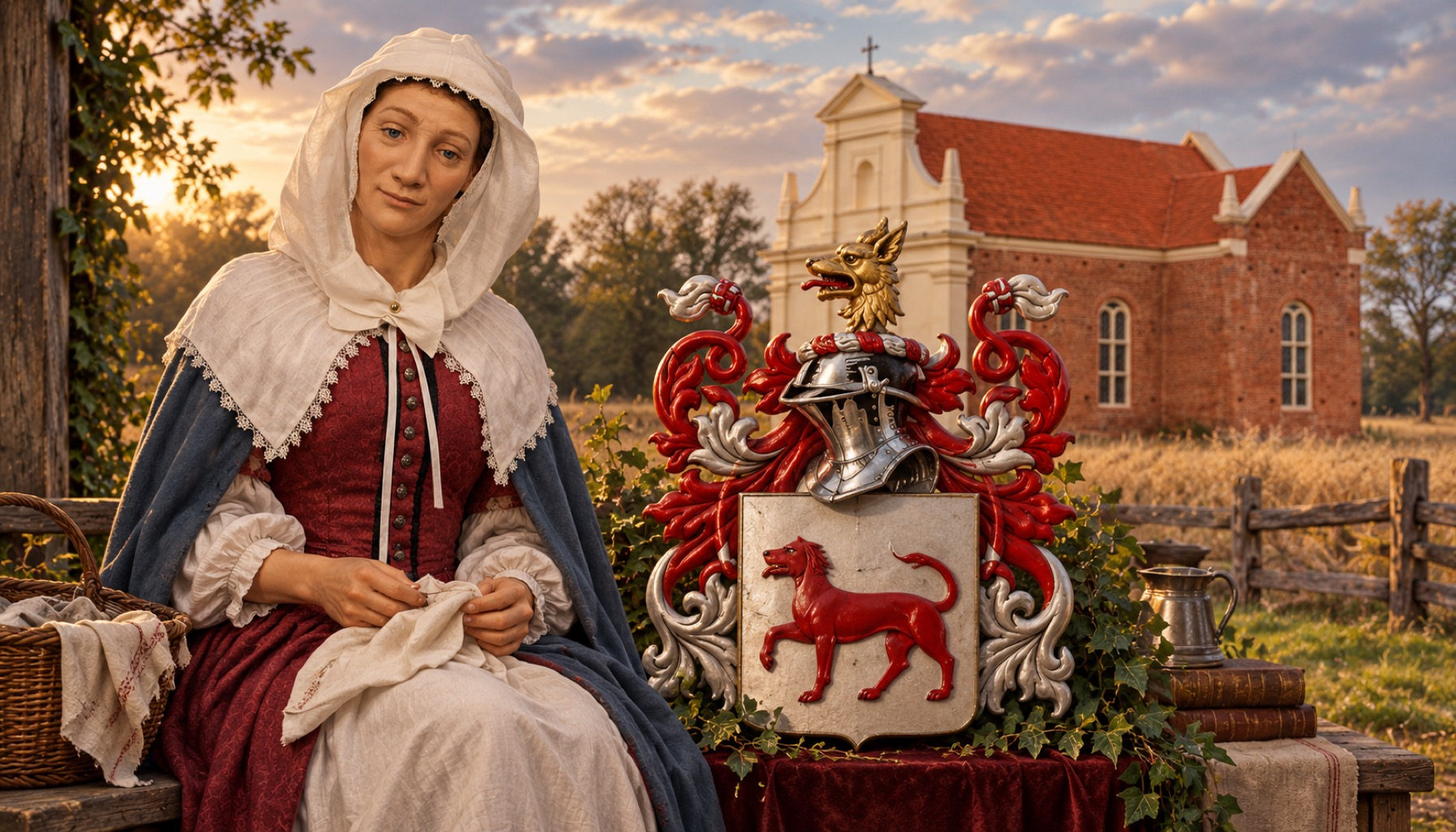
Historical records identify Elek Báthory and his relative Ferenc Báthory among members of the family buried in the Báthory chapel at Pericei. Elek is therefore important not because he ruled a kingdom himself, but because he offers something rarer in some ways: a direct, excavated, genetically studied member of a great noble house whose historical setting is already well documented. Instead of staring only at charters, coats of arms, and later genealogies, we can place one named individual into a grave, a chapel, a kin-network, and a genome.
This is where archaeology and history fit together rather neatly. Aristocratic chapels were statements in stone about status, continuity, and family identity. To be buried there, and especially near the altar, was to be placed inside a hierarchy of memory as well as faith. Elek’s case lets us see the Báthory family not just as names in dynastic history, but as a biological community with traceable relationships across generations.
The biological sample associated with him is listed as Elek Bathory Hungarian Knight Pericei, dated approximately to 1568 AD. Archaeologists investigating the Báthory chapel at Pericei discovered two richly furnished male burials near the altar. That location strongly suggests exceptional social standing, and the grave furnishings reinforce the point: these were not ordinary burials tucked away at the edge of the churchyard, but men treated as members of a very high-status family.
In this case, the identification of Elek Báthory is best described as strongly supported rather than casually assumed. The historical record already connected Elek and Ferenc Báthory to burial in the chapel, while ancient DNA analysis helped sort out the biological relationships among the buried individuals and confirm that one of the sampled men was Elek. That is an unusually satisfying convergence of evidence: written record, privileged burial place, and genomic kinship all pointing in the same direction.
The wider study published in iScience used these remains to investigate the Báthory lineage in a disciplined way. It did not simply announce a glamorous name; it compared genetic relationships among the individuals and set those findings against the known history of the family. That is exactly how ancient DNA is most useful when dealing with elites: not as a magic trick, but as another line of evidence tested against archaeology and documents.
Elek Báthory’s Y-DNA haplogroup was identified as R1b1a1b1a1a1c1a, while his mtDNA haplogroup was H13a1a1a. These two results illuminate different parts of his ancestry. Y-DNA follows the direct paternal line, from father to father to father. mtDNA follows the direct maternal line, passed from mother to child, though only daughters continue transmitting it. Neither result defines Elek’s whole ancestry, still less his identity, culture, or rank; each traces just one line out of many ancestors.
That said, these lineages are historically useful. For an aristocratic family such as the Báthorys, a Y-chromosome lineage can help test whether male burials in a family chapel are biologically consistent with a shared paternal background. It does not prove every detail of a written genealogy, but it can support or challenge claims of close paternal kinship. Likewise, Elek’s mtDNA tells us about one maternal line within his ancestry, but it should not be over-read as a summary of his family’s overall origins.
The paternal lineage R1b1a1b1a1a1c1a also appears in a wide scatter of ancient and medieval samples across Europe, which is a useful reminder of how deep and broad such lineages are. Related examples listed for comparison include PER01 itself, Medieval Jutland Denmark Vor Frue Kirkegård Aalborg (CGG100493), Iron Age Estonia Hiiemägi in Lääne-Viru County (0LS10/OLS10), several medieval burials from Sint-Truiden in Belgium (ST0052, ST0632, ST3006), the Batavi-associated Netherlands sample from Valkenburg Marktveld (CGG107745), Medieval Poland Piast Dynasty Łąd (PCA0193), St Mary’s Spital in medieval London (LM40), Saxon-period Dunum in Lower Saxony (DUN010), and early Anglo-Saxon Buckland Dover individuals (BUK059, BUK027). There are also deeper-time examples from Bohemia, the Netherlands, Italy, Anatolia, and Scandinavia. The point is not that these people were “the same” as Elek, still less that they belonged to the Báthory family, but that his paternal line sits inside a much older and geographically widespread European genetic history.
The maternal lineage H13a1a1a is much more narrowly represented in the sample list supplied here, with Elek Bathory Hungarian Knight Pericei (PER01) the relevant linked example. That makes the mtDNA result more modest in comparative reach from the evidence given, but still valuable. It anchors one specific maternal branch carried by this individual and may become more informative as additional comparable samples are published from Central and Eastern European noble, urban, and ecclesiastical burials.
What makes Elek Báthory so interesting is not simply that a nobleman has a haplogroup label attached to his name. Plenty of ancient samples have haplogroups. The real value here is that a named 16th-century member of a major Central European dynasty can be placed securely enough within an archaeological and familial framework for genetic evidence to speak to history directly. His genome helps connect the Báthory chapel burials to the documented family, confirms biological relationships within that circle, and provides a rare genetic reference point for one of the best-known noble houses of Hungary and Transylvania.
But there are limits. Elek’s DNA does not tell us whether every story later told about the Báthorys is true. It does not reveal personality, politics, or loyalty in the age of Ottoman-Habsburg conflict. And it certainly does not mean that anyone with a similar haplogroup today is descended from him. What it does do, and this is substantial enough, is add a human genome to the historical record of a family whose power shaped a large stretch of Central European history.
If stories like Elek Báthory’s intrigue you, MyTrueAncestry lets you compare your DNA with ancient populations and archaeological samples from the worlds that produced families like the Báthorys, the Piasts, and other historic dynasties of Europe. It is a way to explore genetic connections to the deeper human past without pretending that a shared lineage marker alone can prove direct descent from any one famous individual.

Comments