Clan Spence

– 3 min read


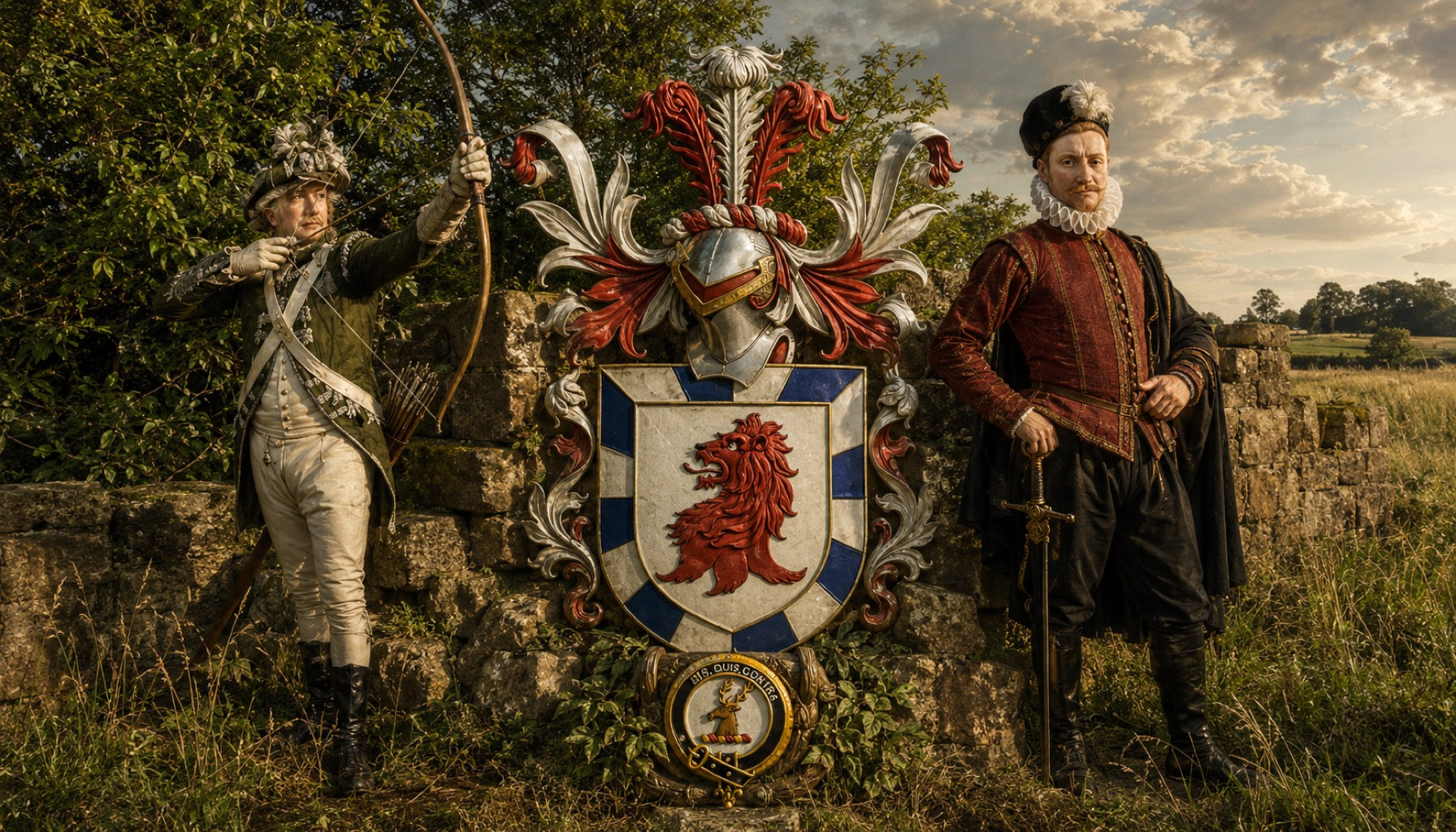
Clan Spence was not one of the great Highland war-clans in the popular imagination, but a very Scottish kind of family all the same: a surname tradition rooted in service, trust, and local standing. The name Spence is generally linked to the old role of dispenser or steward of provisions, in other words someone responsible for the pantry, stores, and household management of an important establishment. That may sound modest, but in medieval society it implied confidence, responsibility, and daily proximity to power. In that sense, Spence heritage belongs to a recognisable Scottish pattern: an occupational surname that became a family identity, then a lineage, then a heraldic memory carried across generations. Haplogroup tag: R1b1a1b1a1a2c1a4a, the primary family haplogroup linked here with Clan Spence.
The family's roots are Lowland, and that matters. The Lowlands produced many surname-families whose identity came not from a single dramatic clan legend but from continuity of name, place, office, and landholding. Spence developed within that world of burghs, estates, household administration, and regional belonging. One early named figure is Thomas de Spens, recorded in 1296, placing the family firmly in the documentary landscape of late 13th-century Scotland, a period of overlordship crises, oaths of fealty, and intense political rearrangement. Families like the Spences endured because they were useful, reliable, and locally embedded. Their history is therefore not merely about a name, but about the social value of service turned into inheritance.
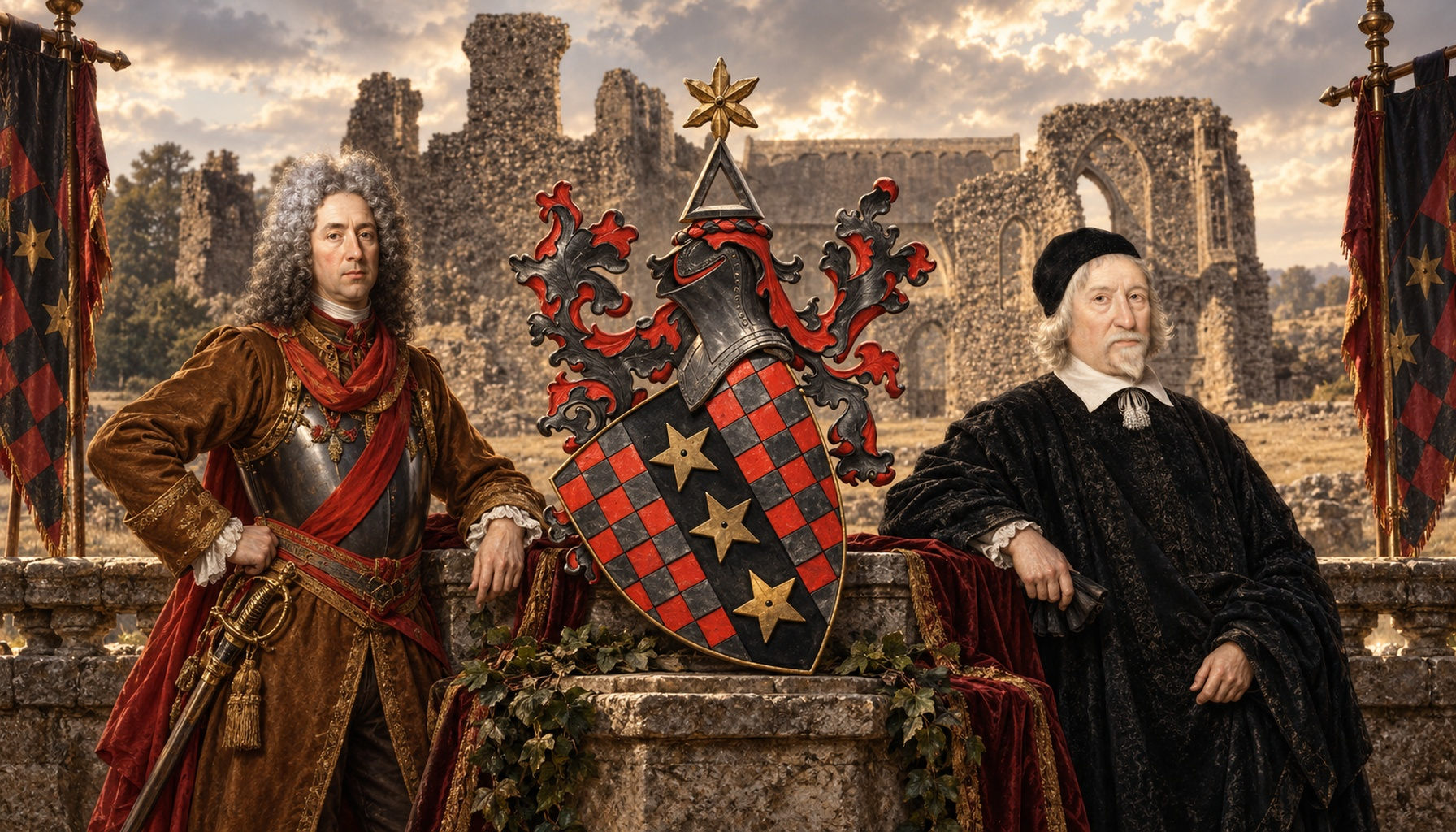
A key location anchor for Spence history is Kilspindie Castle in Perthshire, near the village of Abernyte, not far from the Firth of Tay. The castle is associated with the Spence family and gives the surname a solid geographical footing in eastern Scotland. What survives today is a ruined but striking late medieval tower house, probably dating to the 15th century, later altered and enlarged. Like so many Scottish towers, it was both residence and statement: defensible, local, and socially visible. The remains include a substantial oblong tower and traces of later work, enough to suggest a family of standing rather than mere obscurity. In other words, Kilspindie ties the Spences to that familiar Scottish story in which service, office, and trust could mature into landholding and architectural presence. As a ruin, it is still a place that can be visited from the outside and appreciated as part of the historic landscape, which is often the best way to understand such families: not as abstract names on parchment, but as people rooted in fields, roads, kitchens, halls, and towers.
The primary haplogroup linked here, R1b1a1b1a1a2c1a4a, sits within a broad northwestern European paternal landscape that appears in many ancient DNA datasets across Britain and beyond. This does not prove direct descent from any one excavated individual, and it should not be presented that way. What it does offer is context. Related or linked samples include a notable cluster from Celtic Durotriges burials at Duropolis, Winterborne Kingston in England, such as WBK12, WBK20, WBK29, WBK41, WBK05, WBK30, WBK43, WBK06, WBK08, WBK18 and WBK191. The same broader line also appears among ancient and early medieval individuals from Britain, Ireland, Scotland, Iberia, Gaul, the Low Countries, Germany, Scandinavia, and the Roman world, including examples such as Late Bronze Age Covesea Caves Moray Scotland I2859x, Pict-era Orkney Mine Howe CGG018915 and CGG018915x, Iron Age Applecross I3566 and I3567, Iron Age Broxmouth I16504 and I2695, Medieval Ireland Kilteasheen KIL012, KIL015 and KIL025, Saxon Hinxton 12880A and 12884A, Eastry EAS004, Buckland Dover BUK055, Lakenheath LAK010, Las Gobas ldo039, ldo052 and ldo242, Verona 3214 and 3214s, Zadar I26776, and even Viking Age and later contexts such as Hedeby SWG003 and Iceland KNS-A1. In plain terms, this is a lineage with deep prehistoric and historic roots around Atlantic and western European populations, very much at home in the same wider human landscape from which Lowland Scottish surname families like the Spences emerged.
If you carry the Spence surname, have Spence lines in your family tree, or simply want to see how your DNA connects to the ancient populations behind Scottish family history, upload your DNA to MyTrueAncestry. It is a lively way to place a surname story like Clan Spence into a much deeper historical frame.

Comments