Archaeological Bone Microbiomes and Bioerosion
– 5 min read


Microbial Decay and Preservation in Medieval Norwegian Burials
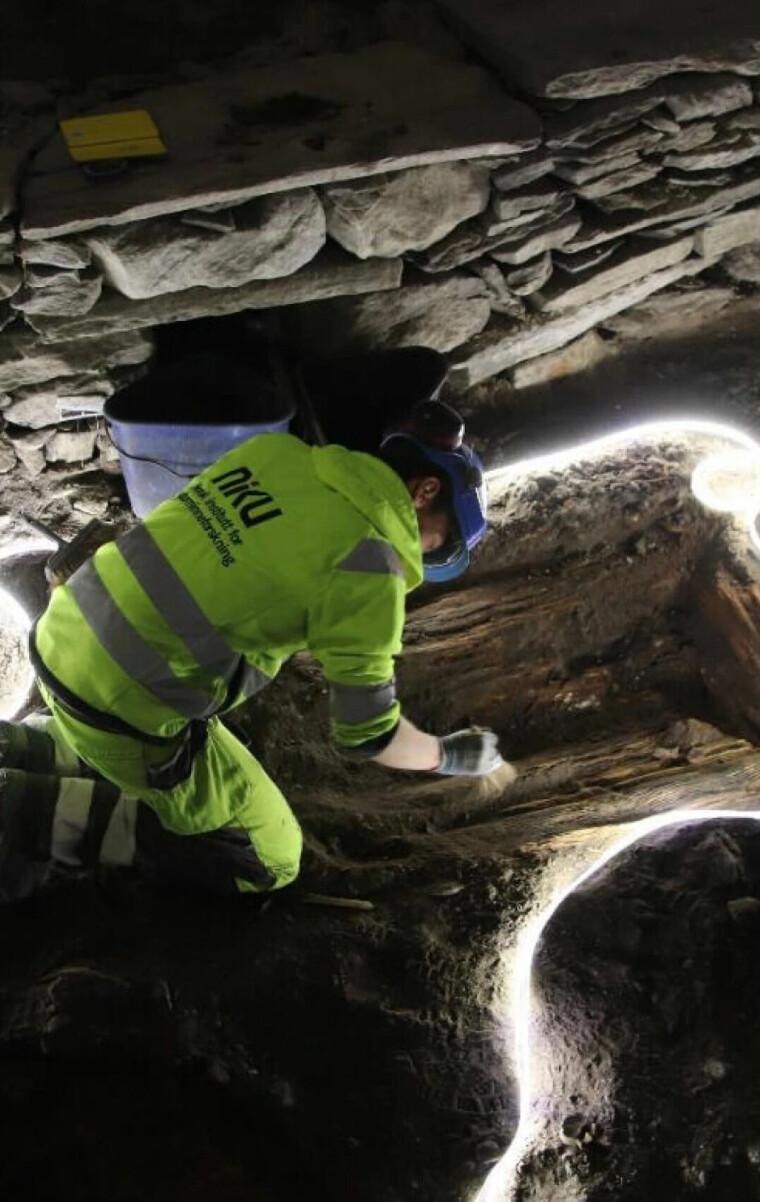
This comprehensive study examines one of archaeology's most compelling hidden narratives: the dramatic transformations that occur to human bone after burial, when the dead lie for centuries beneath church floors, in graveyards, and within ancient burial environments marked only by iron rivets and fragments of mineralised wood. The research focuses on bone bioerosion, the gradual damage caused by microscopic organisms that tunnel through skeletal material, dissolve structural components, and create a complex underground battlefield of decay and preservation.
Drawing on detailed analysis of 83 individuals buried across south-western Norway between the 11th and 19th centuries, this investigation follows remains from medieval and later cemeteries at historically significant locations including Stavanger Cathedral, Sola, Hausken, Ogna, Utstein Monastery, and the royal manor at Avaldsnes. These were not abstract laboratory specimens, but the actual remains of real people who were once laid in wooden coffins, interred in churchyards or beneath sacred floors, and in some remarkable cases moved long after death. The study demonstrates that these varied burial histories profoundly influenced how skeletal material survived across centuries.
Bioerosion manifests as a complex process wherein microorganisms attack bone by systematically breaking down organic components and destabilising mineral frameworks. Under microscopic examination, this damage appears as intricate networks of tunnels, holes, and sponge-like deteriorated areas where original bone architecture has been consumed. Some specimens were so extensively altered that virtually none of their original internal structure remained visible, while others demonstrated remarkable preservation with only initial hints of decay beginning to emerge.
This preservation variability carries profound implications because bone is neither permanently hard nor static. While archaeology often treats skeletons as enduring witnesses to past lives, this research emphasises that buried bone remains fragile, vulnerable, and continuously changing within underground environments. Even long after soft tissues have vanished completely, skeletal remains continue being reshaped by dynamic burial conditions surrounding them.
Among the study's most striking discoveries emerged from Stavanger Cathedral, where burials beneath the church floor differed dramatically from those in the external cemetery. Indoor bones, protected under the nave, demonstrated significantly superior preservation compared to outdoor burials, particularly older medieval interments that suffered extensive microbial decay. This contrast reveals archaeology at its most evocative: identical cathedral landscapes held vastly different fates for the dead.
Beneath the nave floor, environmental conditions remained drier and more protective of skeletal material. Outside in open burial grounds, remains faced harsher surroundings and much more aggressive bioerosion. These findings demonstrate that burial location represented far more than ritual prestige or ecclesiastical geography; it directly determined what survived of human bodies centuries later.
Among the most intriguing individuals were three people initially buried in 17th-century brick grave chambers under Stavanger Cathedral, then subsequently reburied outside during the 19th century. Their remains experienced unusually dry initial burial environments that created extraordinary preservation conditions. When excavated, these individuals retained remarkable evidence of their burial history: preserved hair survived, wooden coffin traces remained intact, and their bones showed no bioerosion whatsoever.
In archaeological terms, such preservation represents an astonishing phenomenon. While numerous bones from conventional soil graves had suffered deep alteration through microbial attack, these chamber-buried individuals escaped similar destruction. The research suggests their initial resting places created specialised microenvironments that provided exceptional protection. Even following later reburial, their skeletal remains still carried distinctive markers of that earlier, more sheltered burial history.
Grave furnishings also contributed significantly to these preservation narratives. Throughout many burial sites, wooden coffins had completely decayed, leaving behind only iron rivets and mineralised wood fragments. However, beneath the cathedral floor, numerous metal objects associated with elaborate coffins and earlier construction activity were recovered. The study suggests such surrounding materials may have influenced microbial activity affecting buried skeletal remains.
The research clarifies that microbial decay involves complex processes orchestrated by diverse microscopic organisms rather than single destructive agents. Certain bacterial groups proved especially prevalent in archaeological bone specimens. Streptomyces, detected in 86% of studied individuals, emerged as a leading suspect in bone degradation processes. This bacterial group has long been suspected of contributing to skeletal damage, and these findings strengthen such suspicions considerably.
Streptosporangium demonstrated particularly strong associations with heavily damaged bones. In severely bioeroded medieval burials from Stavanger Cathedral's North cemetery area, this microorganism often dominated microbial communities when other groups had largely disappeared. In practical terms, when skeletal material reached advanced stages of deterioration, these bacteria frequently dominated the microscopic landscape.
Lysobacter appeared most prominently in bones exhibiting moderate decay levels, suggesting dynamic microbial succession as burial conditions evolved. Rather than single destructive organisms, evidence points toward complex successions of microscopic colonisers establishing themselves as underground conditions shifted over time.
The study addresses one of archaeology's oldest debates regarding fungal involvement in bone decay. Under microscopic examination, researchers observed fungal threads, branching filaments, and spores in numerous specimens. These structures often appeared in cracks, natural pores, and vascular channels within skeletal material, particularly near surface areas.
This evidence proves particularly exciting because archaeologists have debated for over a century whether specific tunnel patterns in ancient bone resulted from fungal activity. The research identified structures appearing distinctly fungal, including traces linked to classic tunnel formations long discussed in academic literature. However, when investigators searched for fungal genetic evidence, they detected almost none. Only one fungal group appeared in genetic analyses from a single cathedral nave sample.
This mismatch between microscopic observations and genetic evidence presents a compelling archaeological puzzle. Fungi appear present under direct examination, yet remain elusive when sought through genetic analysis. This discrepancy represents one of the study's most intriguing aspects, suggesting that fungal involvement in ancient bone decay remains far from completely understood.
Research findings reveal surprisingly complex preservation patterns. Better-preserved bones often hosted more diverse microbial communities, while extensively damaged specimens supported much narrower microbial ranges. This evidence overturns simplistic assumptions that greater microbial presence necessarily correlates with increased decay. Instead, preservation and deterioration depend heavily on specific burial conditions including moisture levels, burial age, and indoor versus outdoor placement.
Dry, sheltered environments beneath church floors provided significantly superior skeletal protection compared to exposed cemetery soil. The most severely damaged specimens originated from older medieval burials in Stavanger Cathedral's North cemetery, while indoor nave burials demonstrated richer microbial diversity alongside better bone preservation. The redeposited chamber-burial individuals occupied intermediate preservation states, again reflecting their complex, layered burial histories.
This comprehensive investigation transforms understanding of medieval and post-medieval burial practices in Norway, revealing burial grounds as profoundly uneven preservation landscapes. Different microenvironments including church naves, graveyard layers, grave chambers, and drainage areas each produced distinct survival patterns. The deceased did not experience uniform preservation through time; some emerged from excavation as heavily altered skeletons while others retained coffin wood traces, hair, and remarkably intact bone structures.
These findings establish burial environment as a crucial historical actor shaping what archaeologists can recover centuries later. Indoor burials beneath church floors provided not only social prestige in life and death but also superior protection from gradual underground destruction. Outdoor churchyard burials, particularly older medieval interments, faced significantly harsher physical conditions during their extended underground existence.
The study's integration of ancient DNA analysis with traditional archaeological methods demonstrates how genetic evidence can illuminate burial environments and their long-term effects on human remains. This approach reveals how individual burial histories, environmental conditions, and microbial communities interact to determine preservation outcomes, offering new insights into the complex relationships between death, burial practice, and material survival in medieval Norwegian society. Original source article: https://journals.plos.org/plosone/article?id=10.1371/journal.pone.0340244




Comments