Ancient DNA Shows Song Dynasty China Used Imported, Non-Dessert Melons

– 6 min read


Shuomen Gugang: Ancient Melons and Maritime Trade in Song Dynasty China
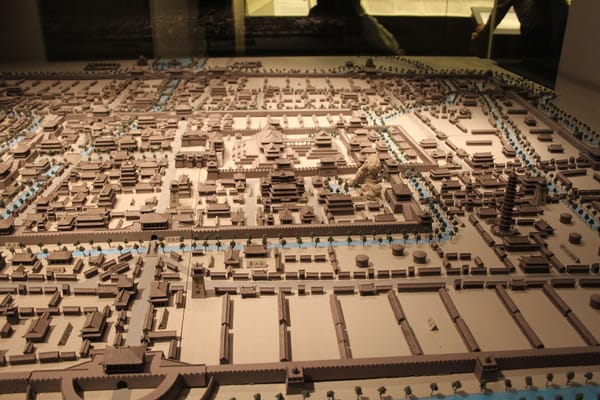
In the waterlogged deposits of Shuomen Gugang, an ancient harbor at modern Wenzhou on China's southeast coast, archaeologists have uncovered remarkable evidence of Song Dynasty maritime life. During the Song period (960-1279 CE), this was no sleepy backwater but a bustling maritime gateway that connected the Chinese economy to trade routes spanning the eastern Pacific and Indian Ocean. Excavations in 2024 peeled back the layers of this port settlement, revealing city walls, defensive works, wooden plank roads, a water gate, pier structures, and even the remains of a sunken ship.
The port emerges as a dense, working landscape filled with creaking ships, storehouses, workshops, customs officials, and dock workers. Woven through it all was the constant movement of foods and goods from both nearby farms and distant shores. Among the most significant discoveries were tiny melon seeds preserved in the harbor mud, which would prove to contain ancient DNA capable of revealing intimate details about Song Dynasty diet, trade, and aesthetics.
The wet, oxygen-poor harbor deposits preserved a remarkable collection of plant remains that reads like the inventory of a well-stocked Song-period market. Rice grains appeared in abundance, alongside peaches, apricots, cherries, grapes, olives, Chinese bayberries, jujubes, wax gourds, lychees, and kiwifruits. Many of these remains were either charred by ancient cooking fires or preserved waterlogged in the harbor silt, giving archaeologists and plant scientists an unusually rich window into what was being eaten, traded, and perhaps ritually valued in this thriving port.
Among these finds, researchers singled out several small, slightly swollen Cucumis seeds from a waterlogged Song Dynasty layer. Two of these seeds, labeled GG1 and GG4, proved especially precious as they still contained enough ancient DNA to be sequenced in detail. The layer containing these seeds was independently dated to the Southern Song period (1127-1279 CE) through radiocarbon analysis of a third seed from the same context, which calibrated to roughly 1020-1150 CE.
These melon seeds became key witnesses in resolving a long-standing debate about whether China had its own independent domestication of melons, separate from the known centers in Africa and India. For years, archaeologists had suggested that the lower Yangtze region might have been a cradle of melon domestication, based mainly on seed size and shape from Neolithic and later sites. However, the genetic analysis of GG1 and GG4 provided definitive evidence.
When researchers compared the ancient DNA with hundreds of modern melons and plotted them in evolutionary family trees, the Gugang seeds clustered firmly within a group of cultivated Cucumis melo varieties already known from China and broader Asia. They did not form a distinct, native Chinese lineage but instead belonged to the wider Asian domestication group. This evidence strongly suggests that by the Song Dynasty, melons reaching the Lower Yangtze region were part of a broader Asian domesticated pool rather than representing a separate Chinese domestication that had persisted in isolation.
The port of Shuomen Gugang, with its clear maritime connections, was precisely the kind of node where such introductions and reintroductions would have occurred. The presence of tropical fruits, imported olives, and these melons in one harbor-side deposit points directly to the role of maritime networks in circulating crops, tastes, and culinary fashions around the Indian Ocean rim and into the East China Sea.
The study accomplished something remarkably intimate: from these tiny, mud-stained seeds, researchers reconstructed the genetic code to imagine the actual fruits that once lay in baskets aboard ships or in storehouses at Gugang. By examining specific genes that control key traits in melons, they could infer detailed characteristics of these ancient fruits.
The genetic analysis revealed that both seeds lacked the variant associated with orange, highly sweet flesh common in modern dessert melons. Instead, they carried versions linked to white or green flesh. One seed showed markers pointing to light-green flesh, where chlorophyll is retained rather than lost as the fruit ripens. Evidence from genes controlling peel color suggested that at least one melon had a yellow rind rather than pale white skin. Additional genetic fragments hinted that these fruits may have been relatively low in acidity, providing a mild, gentle flavor profile.
These reconstructed melons were not the syrupy dessert fruits familiar from modern supermarket shelves. Instead, they resembled contemporary "oriental" or "culinary" melons found across East and South Asia: lightly sweet fruits often eaten fresh while still firm, cooked as vegetables, pickled when immature, or valued for their abundant edible seeds.
One of the most evocative aspects of this research involves connecting these ancient melons to Song Dynasty taste and aesthetics. The inferred pale green flesh and yellow rind echo the visual world of the time, particularly the famous Longquan celadon ceramics found at the same site. These jade-green glazed vessels were often fashioned in melon-like shapes, creating a remarkable parallel between the colors revealed by genetic analysis and the celebrated ceramic traditions of the period.
Song Dynasty potters frequently created melon-shaped bottles, bowls, and pouring vessels with celadon glazes that shimmered in blue-green shades reminiscent of the pale green melon flesh indicated by the DNA evidence. This suggests that the Song aesthetic celebrating jade and watery greens extended beyond ceramics into the realm of food, where households could serve slices of actual jade-green melon alongside elegant celadon vessels.
The abundant seeds of these melons would have carried additional cultural significance. In East Asian traditions, melons and gourds packed with seeds often symbolize fertility, prosperity, and family continuity. The Gugang melons, with their pale or greenish flesh and hearts full of seeds, would have resonated with long-standing ideas about abundance and lineage, making them both food and symbol in Song Dynasty households.
The Gugang discoveries fit within a longer archaeological narrative of melons in China. Earlier evidence includes melon remains from the royal tomb of Han prince Haihunhou, who died in 59 BCE, where cultivated Cucumis melo appeared in both gut contents and grave goods. This indicates that domesticated melons were already present in elite Chinese contexts centuries before the Song Dynasty, though the Gugang finds represent their integration into everyday commercial and domestic life.
The lower Yangtze valley provides an unusually continuous archaeological record stretching back about 7,000 years, with melon-family seeds appearing repeatedly throughout this sequence. However, the genetic evidence from Gugang demonstrates that by the Song period, these melons belonged to the broader Afro-Asian domestication story rather than representing a separate Chinese lineage.
Multiple routes likely brought melons into China over time. Early introductions may have occurred during the Han era along corridors skirting the Himalayan foothills, while later Song Dynasty maritime routes through ports like Wenzhou could have reinforced or diversified these introductions with new varieties from South and Southeast Asia.
The study treats the Gugang seeds as historical individuals, tracing each from specific stratigraphic contexts through laboratory analysis to their place within global melon diversity. GG1 emerges as representing a yellow-skinned, pale-fleshed melon, perhaps crisp and gently sweet, whose seeds someone spilled or discarded at the harbor's edge. GG4, with its suggestion of green flesh and low acidity, may once have been sliced for cooking, prepared as a vegetable, or eaten young and tender.
These seeds belonged to the practical, working world of harbor life - the meals of sailors, traders, dock workers, and townspeople rather than imperial courts. They represent anonymous individuals whose diets are rarely documented: perhaps a ship's cook preparing lightly sour melon stew for a crew, a merchant sharing fresh melon slices while negotiating cargo, or local households pickling immature fruits for storage.
The archaeological contexts reveal how melons were integrated into the rhythm of life in this dynamic maritime city. Found alongside ceramics, animal bones, and ship remains in waterlogged harbor deposits, these seeds illuminate the everyday foodways of a cosmopolitan port where local and exotic ingredients mingled in markets and kitchens.
The successful extraction and sequencing of ancient DNA from these waterlogged seeds represents a significant technological achievement. The team obtained approximately 4.5-fold coverage of the nuclear genome from one seed and nearly 2-fold coverage from the other, with excellent preservation of chloroplast DNA. These results demonstrate the potential for ancient DNA analysis to reveal detailed information about historical crops and diets.
This methodology opens new possibilities for understanding agricultural history, trade networks, and cultural practices through direct genetic evidence rather than relying solely on morphological characteristics of preserved seeds. The technique could be applied to other archaeobotanical remains to trace the movement and transformation of crops across ancient trade networks.
The melon seeds from Shuomen Gugang provide an unprecedented glimpse into Song Dynasty maritime life, revealing how global trade networks shaped local diets and cultural practices. Through ancient DNA analysis, these tiny artifacts illuminate the characteristics of fruits eaten over 800 years ago, demonstrating connections between China and distant domestication centers while revealing the integration of melons into everyday life at a bustling port.
The research demonstrates how scientific analysis can recover intimate details of past experiences - the colors, flavors, and cultural meanings of foods that sustained people in medieval Chinese ports. By connecting genetic evidence with archaeological context and cultural history, the study reveals melons not just as biological specimens but as participants in a wider Song Dynasty world of trade, taste, symbolism, and aesthetic appreciation.
The Gugang melons ultimately represent the intersection of multiple worlds: agricultural and maritime, local and global, practical and aesthetic. Their DNA carries not only genetic information but also traces of taste, trade, and daily life in one of medieval China's most important seaports, providing a unique window into the lived experiences of people who participated in some of the world's earliest global trade networks.
Original source article: https://www.biorxiv.org/content/10.64898/2026.02.10.704887v1

Comments