Neandertal Genomes from Denisova Cave Reveal Deep Population Structure and Denisovan Admixture
– 7 min read


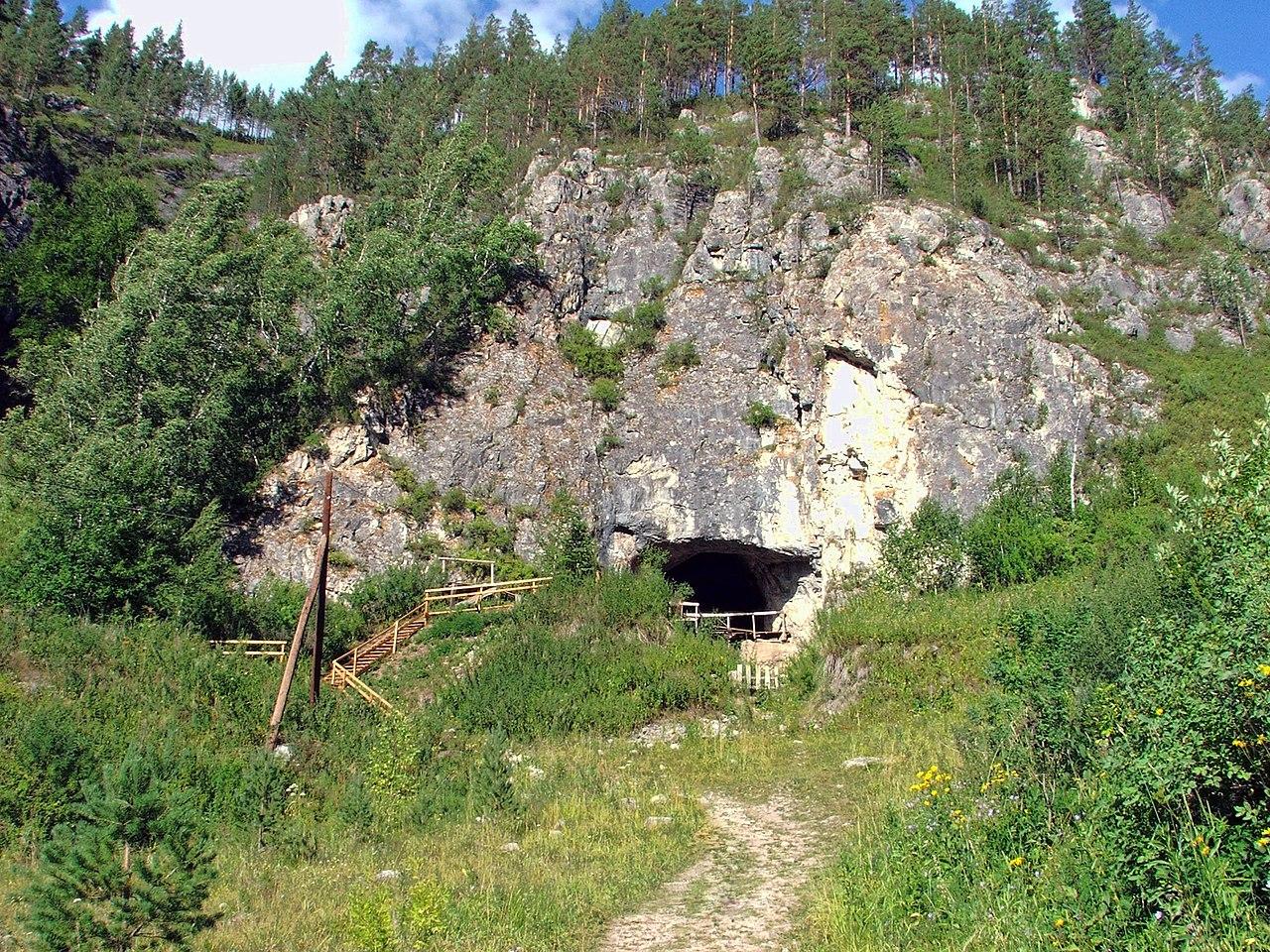
Altai Neandertals of Denisova Cave: A High-Coverage Genome from 110,000 Years Ago
This comprehensive study takes readers deep into Denisova Cave in the Altai Mountains of southern Siberia, where archaeologists and geneticists have pieced together the life and times of a remarkable bone fragment known as Denisova 17 – or simply Neandertal D17. Though the fragment itself is small and visually unremarkable, its DNA is astonishingly well preserved, allowing researchers to reconstruct a high-quality genome of a male Neandertal who lived around 110,000 years ago.
Denisova Cave sits in the forested foothills of the Altai Mountains, at the very edge of the steppe and taiga. It is a classic, multi-chambered cave site with thick archaeological deposits that accumulated over hundreds of thousands of years. Layer by layer, the sediment preserves traces of ancient human occupation spanning enormous stretches of time. The bone that became Denisova 17 was recovered from Layer 12 of the East Chamber during excavations in 2011. This layer is part of the deep Pleistocene sequence of the cave, associated with early stone tool industries and the long, cold climatic pulses of the Ice Age.
No grave goods or formal burial were found with this fragment – it was simply one among thousands of bones – yet it has turned out to be one of the most informative Neandertal remains ever studied. The cave's archaeological richness extends far beyond this single specimen, containing stone tools ranging from early flake industries to more refined blade and point technologies, bone and tooth artifacts hinting at symbolic behavior, and faunal remains documenting changing Ice Age environments and hunting strategies.
The specimen itself is a small, undiagnostic bone splinter – the kind that normally vanishes into storage and is never analyzed further. Here, however, it was selected for special analysis using a method called ZooMS (a form of protein fingerprinting), which revealed that this nondescript fragment came from a hominin rather than a deer, bison, or cave bear.
From just 14 milligrams of bone powder, the researchers extracted DNA and discovered extraordinary preservation. The DNA showed clear signs of ancient damage patterns while maintaining minimal contamination from modern sources. Because the preservation was so exceptional, the team could sequence the genome to an average depth of about 37 reads per position across the autosomes using only one DNA library. For comparison, other famous archaic genomes required many libraries and far more sequencing to reach similar coverage.
By comparing the coverage of the X and Y chromosomes, analysis shows that Denisova 17 was genetically male. His nuclear DNA clearly identifies him as a Neandertal, and more specifically as a member of the eastern branch of the Neandertal world that once occupied the Altai region. D17 is closely related to another Altai Neandertal from the same cave, a 120,000-year-old female known as Denisova 5. Both lived long before the better-known European Neandertals such as Vindija 33.19 from Croatia and specimens from Goyet Cave in Belgium.
These high-coverage Neandertal genomes sketch a story of successive waves of occupation across Eurasia: an earlier eastern population at Denisova Cave, later Neandertals in Europe, and a still later, western-derived Neandertal group pushing back east into the Altai, represented by Chagyrskaya 8 from nearby Chagyrskaya Cave.
One of the most striking findings from D17's genome is what it reveals about everyday Neandertal social life – the scale of their groups and how isolated they were. D17's genome contains only about 1.2 heterozygous sites per 10,000 DNA letters, considerably fewer than in early modern humans, which typically show 6 to 8 per 10,000. About one quarter of his genome lies in long, uninterrupted stretches where both copies of the chromosome are identical. These long runs of identical DNA are a clear signature of close relatedness among his recent ancestors.
When this pattern is compared to other Neandertals and Denisovans, it suggests that eastern Neandertals like D17 lived in extremely small groups – often fewer than about 50 breeding individuals under realistic scenarios. Later western Neandertals in places like Vindija Cave formed larger and more connected populations, more like some early modern human groups. The researchers model these patterns as evidence that eastern Neandertals, including those at Denisova Cave, often experienced strong isolation, with limited movement of individuals between groups.
Denisova Cave is already famous as the place where three kinds of humans – Neandertals, Denisovans, and modern humans – left their traces. This study adds new detail to how intertwined their histories were. The genome of Neandertal D17 carries clear patches of DNA that look like they were borrowed from Denisovans. The researchers identify these Denisovan-like segments along the chromosomes, focusing on those long enough that they are very unlikely to be ancient shared ancestry.
Crucially, these Denisovan segments in D17 and D5 are long and occur in many of the same genomic locations, suggesting their ancestors were involved in real, local encounters with Denisovans in the Altai region, probably in or around Denisova Cave itself. Later Neandertals from the same broader region, like Chagyrskaya 8, do not show such clear Denisovan ancestry; any Denisovan-like segments they carry are short and look older, as though inherited from distant common ancestors rather than from recent contact.
By comparing D17 to other high-quality Neandertal genomes, the study reveals that Neandertals were not a single, uniform population spread from Spain to Siberia. Instead, the high-coverage genomes allow researchers to distinguish at least three major groupings: Eastern Neandertals from the Altai (Denisova 5 and 17), Western Neandertals from Europe (Vindija and Goyet), and Western-derived Neandertals who later moved back into the Altai (Chagyrskaya 8).
Remarkably, when the differences in DNA variant frequencies between these Neandertal groups are measured, the contrast between eastern and western Neandertals is at least as great as the contrast between some of the most distinct present-day human populations, such as central African hunter-gatherers and Papuan highlanders. This level of differentiation developed over a much shorter time span than in modern humans, reflecting how small and fragmented Neandertal populations were.
The technical achievement behind this research demonstrates the remarkable power of ancient DNA analysis. The story begins with careful excavation in Layer 12 of Denisova Cave's East Chamber, where a tiny bone fragment was recovered among thousands of others. Back in the laboratory, protein-based screening identified it as hominin, leading to DNA extraction from just 14.1 milligrams of bone powder.
The ancient DNA showed characteristic damage patterns – around 30% of DNA letters had changed from C to T at fragment ends, a reliable signature of genuine antiquity rather than modern contamination. Multiple contamination checks confirmed that more than 99% of the recovered DNA belonged to the ancient Neandertal rather than to modern handlers.
Molecular dating using three independent approaches – nuclear genome mutations, mitochondrial DNA changes, and Y-chromosome evolution – all converged on an age around 110,000 years for D17, with Denisova 5 appearing some 4,000 to 9,000 years older. These dates rest on analyzing billions of DNA letters and comparing patterns across well-dated fossils and living populations.
The study reveals a dynamic prehistoric landscape in the Altai where different human groups arrived, interacted, and sometimes interbred across tens of thousands of years. Both D17 and D5 carry stretches of DNA clearly derived from Denisovans, with segments long enough to indicate relatively recent mixing rather than ancient shared ancestry. By measuring the length of these Denisovan blocks and applying models of how recombination breaks them down over generations, researchers estimate that Neandertal-Denisovan interbreeding occurred within several thousand years before these individuals lived.
The researchers also detected traces of contact with early modern human-like populations, suggesting that encounters between different human lineages began well before 100,000 years ago. Denisova Cave emerges not just as a remarkable archaeological site, but as a genetic crossroads where multiple human species met and left lasting traces in each other's DNA.
Against this backdrop of small, isolated Neandertal groups, the study repeatedly returns to modern humans as a comparison. Early modern humans like the 45,000-year-old individual from Ust'Ishim in Siberia show higher genome-wide diversity and far fewer long identical chromosome stretches, suggesting they came from larger, more interconnected populations.
When the same measures of genetic differentiation used on Neandertals are applied to modern human groups across time and geography, the contrasts are comparatively modest. This leads to one of the study's key insights: across time and space, modern humans maintained broader social networks and more continuous gene flow between groups than Neandertals did. Our species appears to have spread widely without fragmenting into the sharply separated local populations that characterize Neandertal history.
From an anonymous bone chip weighing less than a paperclip, this research reconstructs a remarkably detailed portrait of Neandertal life in the Altai Mountains over 100,000 years ago. Denisova 17 emerges as representative of a small, isolated eastern Neandertal population that regularly encountered Denisovans and occasionally interbred with them, creating genetic legacies visible today in their preserved DNA.
The study demonstrates how Neandertal populations were organized into small, often isolated bands that became strongly differentiated from each other across relatively short periods of time. This pattern contrasts sharply with modern humans, who maintained larger, more connected populations even in the ancient past. The work reveals Denisova Cave not just as an archaeological treasure trove, but as a window into a complex prehistoric world where multiple human species coexisted, interacted, and shaped each other's evolutionary trajectories.
These findings transform our understanding of human evolution from a simple linear narrative into a complex story of multiple populations, migrations, and interactions. They show how advanced ancient DNA techniques can extract extraordinary amounts of information from the smallest and most unpromising archaeological finds, opening new chapters in the deep history of our species and our extinct relatives.
Original source article: https://doi.org/10.1073/pnas.2534576123





Comments