Ancient DNA Clarifies European Dog Admixture and Guides Modern Dingo Conservation
– 11 min read


Ancient Dingo Genomes: Unraveling Australia's Canine Heritage
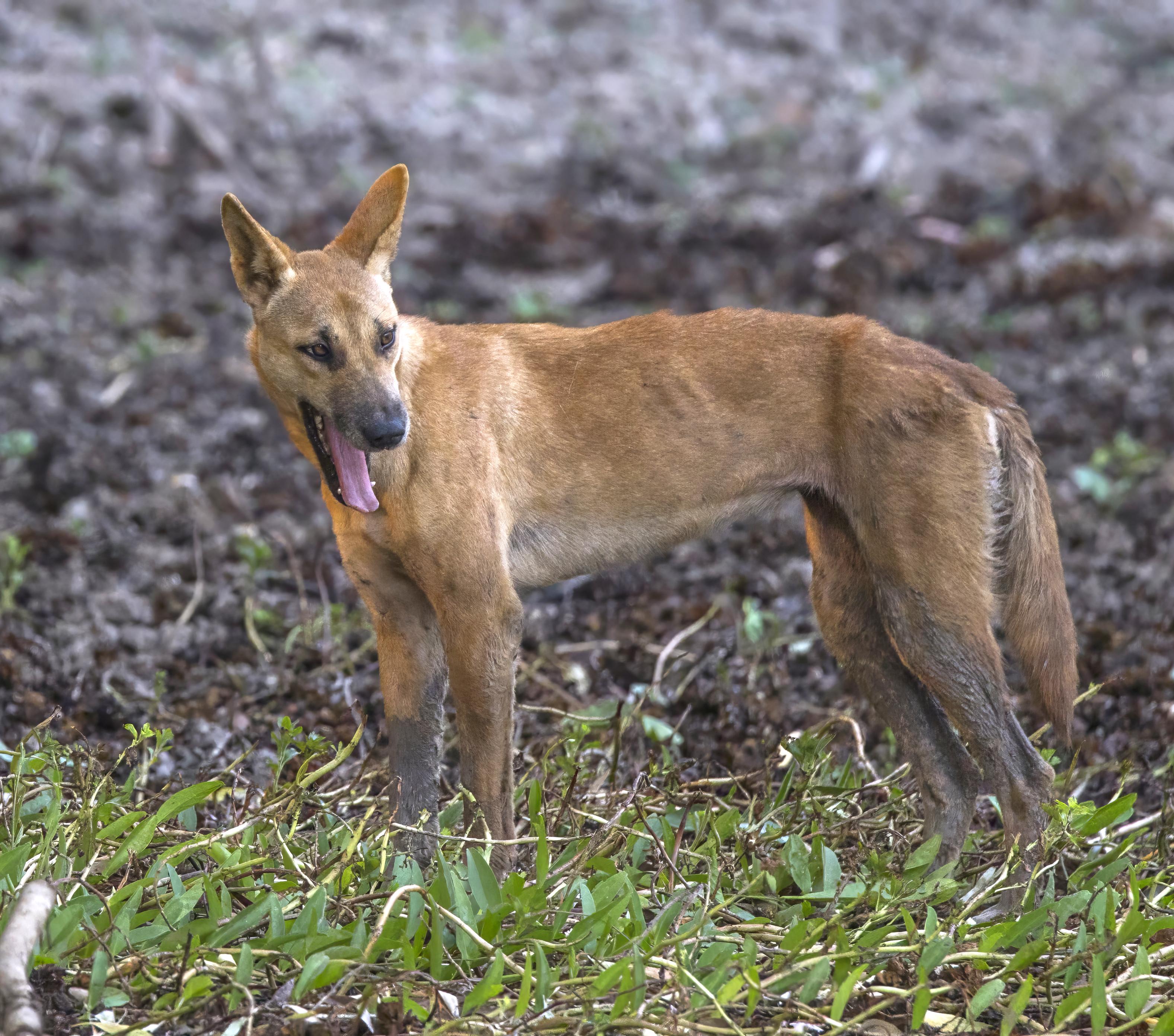
The study of ancient dingo genomes serves as archaeological time-capsules, buried for thousands of years and now reopened to answer a very modern question: what does a "true" dingo look like in genetic terms? These ancient genomes – palaeogenomes – come from carefully excavated dingo remains at sites that span thousands of years of Australian history.
Two ancient dingo lineages play a starring role in this research. One comes from the Nullarbor region, that vast limestone plain with its sinkholes and rock shelters, where bones can sit in the dark and dry for millennia. The other is from Curracurrang, a coastal rockshelter south of what is now Sydney, rich in archaeological layers of shells, stone tools, and animal remains. In both cases, dingoes were found in contexts that speak of long-term relationships with people: the remains are not just stray carcasses, but part of lived landscapes, hunting grounds, and camp sites.
The ancient Nullarbor and Curracurrang dingoes act as "reference anchors" for the study. Their DNA is used as a baseline to represent dingo ancestry before any European dogs set foot on the continent. Because these animals died long before colonisation, they capture what dingo genomes were like when dingoes were already established as top predators and important companions to Indigenous communities.
In the Curracurrang shelter, ancient dingoes are found alongside dense layers of shell and stone artefacts, evidence of repeated human use of the site over thousands of years. These are not anonymous wild animals. They are the dogs that watched firesides, trotted along songlines, and were sometimes buried with the same care given to humans elsewhere on the continent. Their genomes preserve that deep history in molecular form.
On the Nullarbor, caves and shelters act like natural archives. Dingo bones here sit among other faunal remains, in a landscape that would have been crossed by travellers, hunters, and their canine companions. From these bones, researchers extract DNA that reveals a distinct "western" dingo lineage. This lineage is still visible in many modern dingoes west of the Great Dividing Range, showing that population structure seen today has roots going back more than two thousand years.
By comparing modern dingoes to the ancient Nullarbor and Curracurrang animals, the study shows that Australia has been divided, genetically speaking, into at least two major dingo zones for millennia: a western group more closely related to the Nullarbor dingo, and an eastern group with stronger ties to the Curracurrang dingo. These genetic frontiers line up strikingly with real landscapes: the backbone of the Great Dividing Range and the vast Murray-Darling river system.
The study effectively treats the ancient dingoes like named individuals in a family tree. Modern western dingoes still "lean" towards their Nullarbor ancestor; eastern dingoes lean towards Curracurrang. Central Australian dingoes sit at the crossroads, carrying a blend of ancestries, as if they have long been part of a meeting-place where lineages from east and west have mingled. This is not just a snapshot of today's genetics, but a picture of population structure that has endured since well before European arrival.
The research paints a vivid, and rather unexpected, picture: the real story of European dog-dingo mixing is not some vague, timeless process, but a very specific historical event that tracks closely with mid-20th-century Australia – the boom years of post-war agriculture, expanding farms, and the tightening grip of lethal dingo control.
The genomic results re-draw the dingo map of Australia in ways that line up beautifully with geography and archaeology. Once European dog ancestry is stripped away, modern dingoes fall into several long-standing groups distributed across the continent according to ancient geographic barriers and corridors.
The famous Dingo Fence – over 5,000 kilometres of wire running across the continent – emerges in the study as a modern wall laid over much older patterns. To the north lies country where ancestral dingo diversity has been better preserved; to the south, especially in southeastern farming districts, dingoes show both lower ancestral diversity and higher traces of European dog genes.
One of the study's most striking findings is that the main wave of European dog-dingo admixture is surprisingly recent and historically pinpointed. Analysis of the length and arrangement of mixed genetic segments indicates that most gene flow from European dogs into dingoes dates to about 20-25 generations ago. Assuming a roughly three-year dingo generation time, that points to the 1950s and 1960s.
In other words, the key period of mixing coincides with massive post-war agricultural expansion, intensive lethal control programs targeting dingoes, and the proliferation of working dogs on farms and stations throughout rural Australia. This combination probably did three things at once: shrank local dingo populations, increased the abundance of European dogs around farms and settlements, and made it harder for dingoes to find dingo mates. Under those conditions, mixed pairings between dingoes and European dogs become far more likely, and the genetic traces of such encounters become fossilised in the genome.
Yet, even here, the genetic story is nuanced. The researchers find southeastern dingoes with relatively high European dog ancestry, but also western dingoes that show very recent European dog input (within a handful of generations) while still retaining overall European ancestry below 10 percent. These individuals look, genetically, like dingoes that have "absorbed" a dash of European dog DNA, then swiftly bred back into largely unadmixed dingo populations.
A puzzling pattern emerges when nuclear DNA (which comes from both parents) is set alongside mitochondrial DNA, which is inherited only from the mother. While the nuclear genomes across southeastern Australia bear clear traces of European dog ancestry, European dog mitochondrial lineages are conspicuously absent in dingo populations.
This mismatch strongly suggests sex-biased gene flow. The simplest explanation, consistent with the genetic evidence, is that European male dogs occasionally mated with female dingoes. Their offspring carried a mixture of European and dingo nuclear DNA, but retained dingo mitochondria from their mothers.
Over time, as these mixed animals bred back into dingo populations, European genetic material became sprinkled through the nuclear genome, but the maternal lineages remained overwhelmingly dingo. Archaeologically, this mirrors long-standing patterns in which dingoes are seen as part of Indigenous ecological and social systems, while European dogs arrive as intruders tied to new land-use regimes.
The study reveals a story written not only in soil and stone, but in dingo bones and genomes. From early colonial sheep stations to the vast dingo fence, human actions have left a clear imprint on the genetics of Australia's apex land predator.
When Europeans arrived with their own dogs in the 1800s, they entered a landscape where dingoes had already been present for more than 3,000 years. For millennia, dingoes had formed deep, regionally distinct lineages, as shown by ancient individuals excavated from archaeological sites across the continent. These ancient "ancestral" dingoes act as a kind of genetic time capsule: dingo DNA before European contact, before sheep stations, and before the great fence that cuts across the continent.
When the authors compare the DNA of these ancient individuals with over 300 modern dingoes, a pattern emerges that tracks very closely with historic land use. The genomes show that dingo ancestry drops south of the 5,615 km dingo fence, where poison baits, shooting, and fenced paddocks have been used for generations to protect livestock. Where towns, farms, and roads cluster, so too do traces of past interbreeding.
In effect, the map of European settlement and agricultural expansion in the 20th century is echoed back in the genetic map of the dingo.
The authors use simple but powerful measures: how close a dingo is to dense human settlement, and on which side of the dingo fence it lives. The results are striking. North of the fence, dingoes retain higher levels of ancestral diversity and lower European dog admixture. South of the fence, European dog ancestry increases significantly. Where people concentrate, so too does European dog ancestry. Whether this is due to the fence itself, or to different management regimes and land use on either side, the genetic split is clear.
Yet the ancient Curracurrang and Nullarbor dingoes remind us that these regional differences have deep roots as well. Long before Europeans arrived, natural barriers such as the Great Dividing Range and the Murray-Darling river system had already helped to shape distinct eastern and western dingo groups. Human land use has not created that east-west divide from scratch, but it has intensified and reshaped it.
The study treats dingo DNA rather like an archaeological site: layers of older and newer material, jumbled together by time and human activity. To make sense of this, the authors do not just look at modern dingoes; they bring in "ancient specimens" – palaeogenomes – in much the same way that a historian insists on going back to the earliest written sources.
Two ancient dingo lineages play the starring role. One comes from the Nullarbor region of southern Australia, the other from Curracurrang, a rockshelter site on the New South Wales coast. These animals lived more than 2,000 years ago and were excavated from archaeological contexts, much like human burials or midden deposits. Their bones have yielded ancient DNA that predates European arrival and, crucially, any interbreeding with imported dogs.
In effect, these ancient dingoes form a "reference collection" of what an unadmixed dingo should look like genetically. Just as an archaeologist compares a new pottery shard to a museum reference piece, the study compares every modern dingo's DNA to these Nullarbor and Curracurrang genomes to ask: how much of this animal's ancestry still looks like those old lineages, and how much looks like something else?
To move beyond conflicting stories from earlier methods, the authors use an approach called qpAdm. Rather than simply clustering DNA into vague "types", this method tries to fit explicit historical scenarios. In simple terms, it asks: if a modern dingo is a mixture of several ancestral sources, what combination of those sources best explains its genome?
The ancestry framework in this reconstruction is deliberately chosen to mirror archaeological realities: ancient eastern dingoes (represented by Curracurrang), ancient western dingoes (represented by Nullarbor), and European dogs as a known intrusive element. The method then tests many possible mixtures of these sources against each modern animal's DNA, rather like trying different recipes until one combination of ingredients reproduces the flavour of the dish in front of you.
Crucially, the palaeogenomic dingoes anchor the whole exercise in the pre-colonial past, just as a securely dated burial or stratified horizon anchors a site's chronology. The study shows that qpAdm produces stable ancestry estimates even when it uses relatively few DNA markers, making it practical for large-scale surveys.
Beyond global percentages, the study uses local ancestry methods to follow the ancestry signal along each chromosome, segment by segment. Rather than asking, "What proportion of this animal's genome is European?" it asks, "Where in the genome do the European segments sit, and how long are they?"
This is important because the structure of those segments carries a timeline. Long, uninterrupted stretches from European dogs point to recent interbreeding – the genetic equivalent of a clear, undisturbed occupation layer at the top of a site. Shorter, more fragmented segments suggest that several generations of dingo-to-dingo mating have broken up the original imported blocks, just as repeated building, digging and erosion chop up earlier deposits.
By applying these local ancestry tools across hundreds of free-roaming dingoes, the authors create a continent-wide map of where European dog ancestry sits in the dingo genome, and how it differs regionally. These patterns line up strikingly with historic processes: pastoral expansion, the great dingo fence that slices across the interior, and the clustering of people and their dogs around growing colonial settlements.
The research paints a vivid picture of the dingo as not just a single Australian "type" of dog, but as a patchwork of regional lineages that have been quietly taking shape for more than two thousand years. By combining the genomes of ancient dingoes dug from rock shelters and dune caves with those of modern animals, it reveals long-standing east-west divisions, a central mixing zone in the heart of the continent, and strikingly isolated groups.
When the study compares modern dingoes to the ancient individuals from Nullarbor and Curracurrang, a clear pattern emerges. Dingoes west of the Great Dividing Range and towards the interior deserts show stronger genetic links to the Nullarbor dogs. Those running along and east of the Great Dividing Range share more with the Curracurrang animals.
This genetic east-west split mirrors the great geographic barriers that archaeologists and historians already know shaped human movement: the mountain spine of the Great Dividing Range and the vast river network of the Murray-Darling Basin. The study shows that these same features have been quietly guiding dingo populations for millennia, just as they did people, trade, and storylines.
Between these two great dingo "families" lies central Australia, a land of sand dunes, stone arrangements, and long-used waterholes. The study shows that dingoes here do not sit neatly in either the eastern or western camp. Instead, they carry a blend of ancestries.
By carefully stripping away any traces of European dog DNA and looking only at ancestry inherited from ancient dingoes, the authors identify a Central group whose genomes look like a meeting point. They show mixed connections to the West, East, and a more northerly group. They do not strongly resemble either Nullarbor or Curracurrang alone. They hold some of the highest levels of ancestral dingo genetic diversity seen anywhere on the continent.
In archaeological terms, this makes central Australia look very much like a long-lived crossroads, where dingo lineages met and mingled just as trade routes linked stone quarries, ochre sources, and ceremonial grounds across the desert. The genetic evidence suggests that this region acted as a broad corridor for movement, rather than a barrier.
One of the most striking groups identified is found on K'gari (Fraser Island), the long sand island off the Queensland coast. K'gari's dingoes form a genetically distinct island cluster. Their genomes show a clear signal of long-term separation from mainland packs, with significantly reduced genetic diversity typical of isolated populations.
In other words, once dingoes reached K'gari, probably ferried in the company of people moving along the coast, they remained largely on their own. Over generations, with only a small founding group and no new arrivals across the surf, their genetic variation shrank. K'gari's dingoes are now a textbook example of island isolation, echoing patterns archaeologists often see in small, long-inhabited island communities around the world.
The Mallee region of south-eastern Australia, with its scrubby vegetation, sandy soils, and long history of agricultural expansion, also harbours a distinct dingo population. The study finds that Mallee dingoes have extremely low ancestral genetic diversity, in some measures even lower than that of K'gari. Despite this, they share strong ancestral ties with the Central group and sit geographically nearby, hinting at a past when movement between the two was easier.
This pattern looks, in genomic terms, like a once well-connected area that has been squeezed and fragmented by recent land use. The study suggests that modern landscape change and intense lethal control have likely carved the Mallee off from its neighbours, turning it into a kind of "mainland island" for dingoes.
The genomic work becomes a kind of archaeology in its own right – an excavation not of pots and bones, but of mid-century Australia's relationship with its apex predator, traced through the surviving genomes of the continent's enduring wild dogs. By combining palaeogenomic anchors with modern whole genomes, ancestry modelling and fine-scale local ancestry mapping, the study reconstructs a layered story of movement, isolation and colonial disruption across the Australian continent.
From a conservation perspective, the research suggests that continual lethal control in the southeast may be shaving away what remains of those deep ancestral lineages, even if small amounts of European dog DNA temporarily boost overall genetic variety. The identification of regions with high ancestral diversity, such as central Australia, versus areas of genetic impoverishment, such as the Mallee, provides crucial guidance for conservation priorities.
The study shows that most modern dingoes carry only modest amounts of European dog ancestry. The critical point is that most modern dingoes still retain their essential dingo character. The ghosts of 1950s farm dogs and station collies are there, but they are lightly sketched over a much older canvas of Nullarbor and Curracurrang lineages, desert crossroads, and island isolates.
Modern management policies can now be set against a backdrop of thousands of years of dingo history, written in bone, burial, and genome alike. The ancient DNA from carefully excavated individuals adds another layer to their story, confirming that by the time they were buried, dingoes were already distinct and regionally structured. The genetic line that runs from a dog interred in a rockshelter on the New South Wales coast to modern dingoes strung along the Great Dividing Range is a long one, winding through more than two thousand years of shared human-canine history on the Australian continent.
Original source article: https://www.biorxiv.org/content/10.64898/2026.04.08.717357v1

Comments