Reconstructing Complex Hominin Gene Flow from Single Genomes Using a New Two‑Locus Statistic
– 5 min read


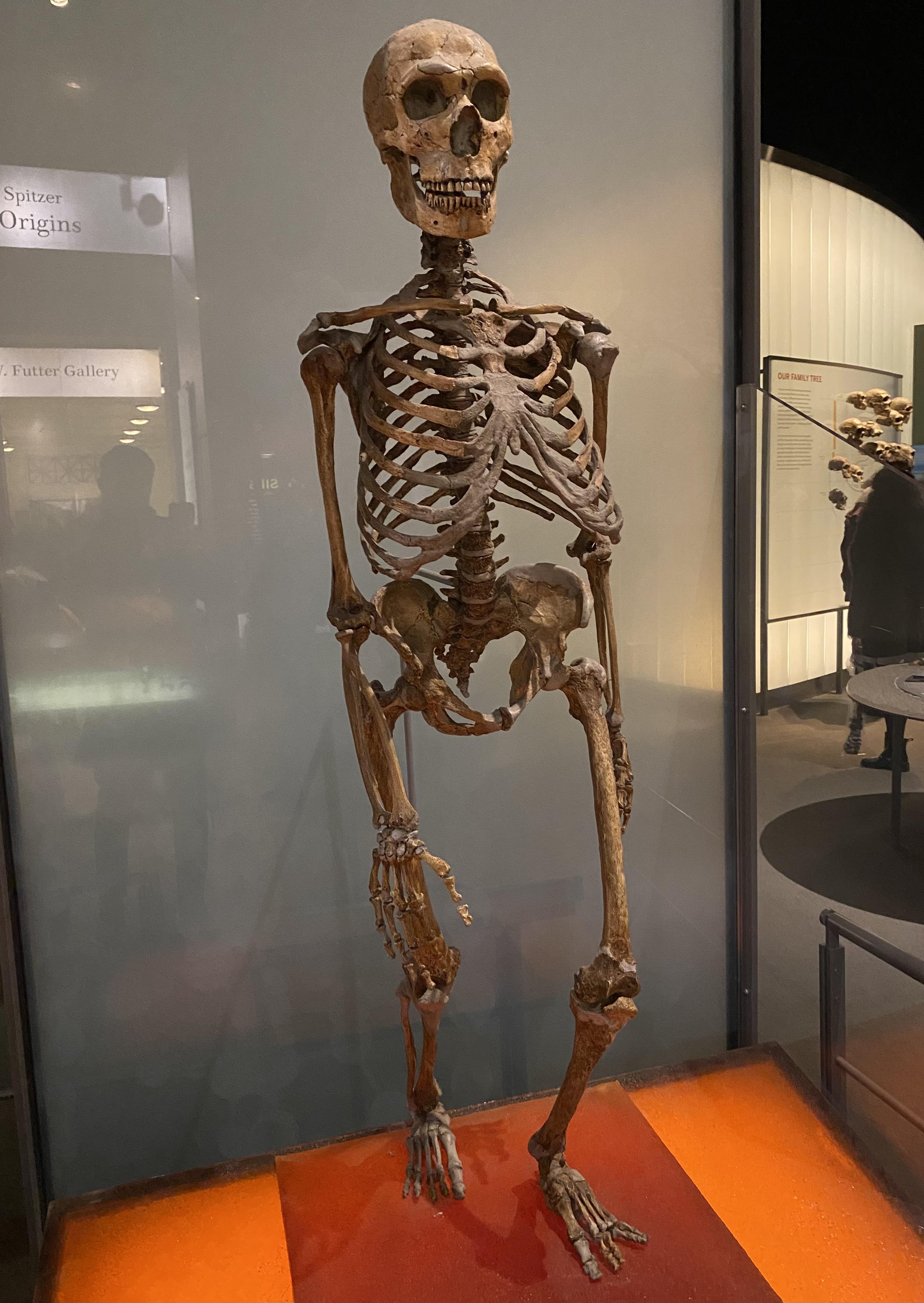
Ancient Human Population Dynamics in Eurasia
This comprehensive analysis reconstructs a surprisingly busy history of contact between early anatomically modern humans and Neanderthals, not as a single romantic encounter, but as a series of episodes spread over hundreds of thousands of years. By extracting genealogical information from just a handful of ancient genomes, it reveals that Neanderthals carried traces of much earlier meetings with modern humans than previously suspected.
The study centres on seven ancient individuals, each from specific archaeological contexts that represent crucial windows into our past. These include Neanderthals from Vindija Cave in Croatia, Chagyrskaya and Denisova caves in the Altai Mountains, early modern humans like the Ust'Ishim man from western Siberia, the Loschbour hunter-gatherer from Luxembourg, and the Stuttgart woman representing early European farmers. Alongside these ancient figures, the study also uses the genome of a present-day person from the Yoruba-speaking region of West Africa as a reference point, representing a population with no direct Neanderthal ancestry.
The research reveals evidence for at least two separate episodes in which early modern humans contributed ancestry to Neanderthal groups. An older pulse of gene flow occurred from early modern humans into an ancestral Neanderthal population approximately 250,000 years ago. A later pulse affected a more western branch of Neanderthals, the group ancestral to the Vindija and Chagyrskaya individuals, around 110,000 years ago. These pulses represent substantial contributions, with the older episode contributing roughly 5-6% of the ancestry of early Neanderthal populations, while the later western episode added about 1-2%.
What distinguishes this research is not just the claims, but the methodology. Rather than relying on large samples of modern people, the study exploits how pairs of genetic sites along single ancient genomes tend to be inherited together. These patterns of genetic linkage across genomes, when measured for each ancient individual, prove sensitive to very old demographic events, including short-lived pulses of interbreeding long before the classic out-of-Africa expansion. Because the technique works with single diploid genomes, it is especially well-suited to archaeology, where sometimes only one good skeleton from a site survives with enough DNA to study.
The familiar story suggests that modern humans left Africa around 50-60,000 years ago, encountered Neanderthals in the Levant or beyond, and from that point onwards non-Africans carry around 2% Neanderthal ancestry. While not wrong, this version is incomplete. The new evidence shows that early modern human groups contributed genes to Neanderthals in at least two pulses, with their own lineages later disappearing or being swamped, leaving traces primarily in Neanderthal DNA rather than in ours. Later, perhaps around 48,000 years ago, Neanderthal ancestry flowed back into early modern humans in Eurasia, with a Vindija-like Neanderthal population contributing about 2% ancestry to out-of-Africa human populations.
The three Neanderthals in the study reveal a population that was both geographically spread out and demographically fragile. The Altai Neanderthal represents a lineage that split from other Neanderthals roughly 123,000 years ago, while the Vindija and Chagyrskaya Neanderthals share a more recent common ancestor, diverging only around 60,000 years ago. Each local Neanderthal group maintained small effective population sizes, with evidence for demographic contraction before each individual's lifetime. Over an extended period from about 726,000 to 115,000 years ago, there was persistent but low-level gene flow between Neanderthals and Denisovans in central Asia.
Denisova Cave emerges as a crucial crossroads where very different kinds of humans met. The Denisova-3 individual, a young girl whose finger bone transformed our understanding of human prehistory, carries genetic traces not only of Neanderthal interactions but also of much older populations. The study identifies evidence for a "Superarchaic" lineage that may represent Asian Homo erectus, contributing roughly 1-3% of Denisovan ancestry. This ghost population appears to have split from the common human line around 2 million years ago, coinciding with the earliest secure evidence of Homo erectus in Asia.
The Stuttgart woman reveals that the story extends well into the Neolithic period. Rather than simply descending from the same out-of-Africa lineage as other early Europeans, she carries substantial ancestry from a "basal Eurasian" lineage that split away from other non-African humans before the main episode of Neanderthal gene flow. About half or more of Stuttgart's ancestry traces back to this basal Eurasian source, which carried little or no Neanderthal ancestry. This pattern helps explain why early farmers consistently show lower Neanderthal ancestry than most present-day Europeans.
The study introduces a novel approach using two-locus statistics called H2, which measures how often two positions along a genome are both different between an individual's chromosome copies. By examining how this probability changes with distance along the genome, researchers can reconstruct demographic events from single ancient genomes without requiring phasing or large sample sizes. This method proves particularly sensitive to ancient events, making it possible to detect population interactions that occurred hundreds of thousands of years ago.
From the vantage point of caves like Vindija in Croatia and Denisova in Siberia, we see not isolated bands but a continent-wide, thinly populated network of related groups occasionally intersecting with other kinds of humans. The genetic analysis reveals that Eurasia over the last 800,000 years was not a simple stage where one hominin replaced another, but a shared, repeatedly contested landscape where multiple human lineages interacted, separated, and came together again.
This research fundamentally challenges simple models of human evolution and migration. Instead of neat replacement scenarios, it reveals a complex web of ancient interactions spanning hundreds of thousands of years. The genetic legacy of these encounters persists not only in modern human genomes but also reveals how ancient DNA from single individuals can illuminate demographic events that occurred across vast temporal and geographical scales. Each ancient genome becomes a repository of information about population movements, interactions, and demographic changes that shaped human evolution across Eurasia.
The development of methods that can extract demographic information from single, unphased ancient genomes represents a significant technical advance. These approaches are particularly valuable for archaeological contexts where preservation is poor or sample sizes are necessarily small. The ability to detect ancient admixture events and population structure from individual genomes opens new possibilities for understanding human evolution in regions and time periods where genetic material is scarce.
The study reinforces an emerging view that the spread of modern humans across Eurasia was not a single, uniform expansion but involved multiple lineages that formed, split, and sometimes reconnected. The presence of basal Eurasian ancestry in early European farmers, the complex history of Neanderthal-modern human interactions, and evidence for ancient lineages contributing to Denisovan ancestry all point to a more nuanced understanding of human dispersal and evolution than traditional models suggested.
Comments