The Obrenovic Dynasty
– 3 min read


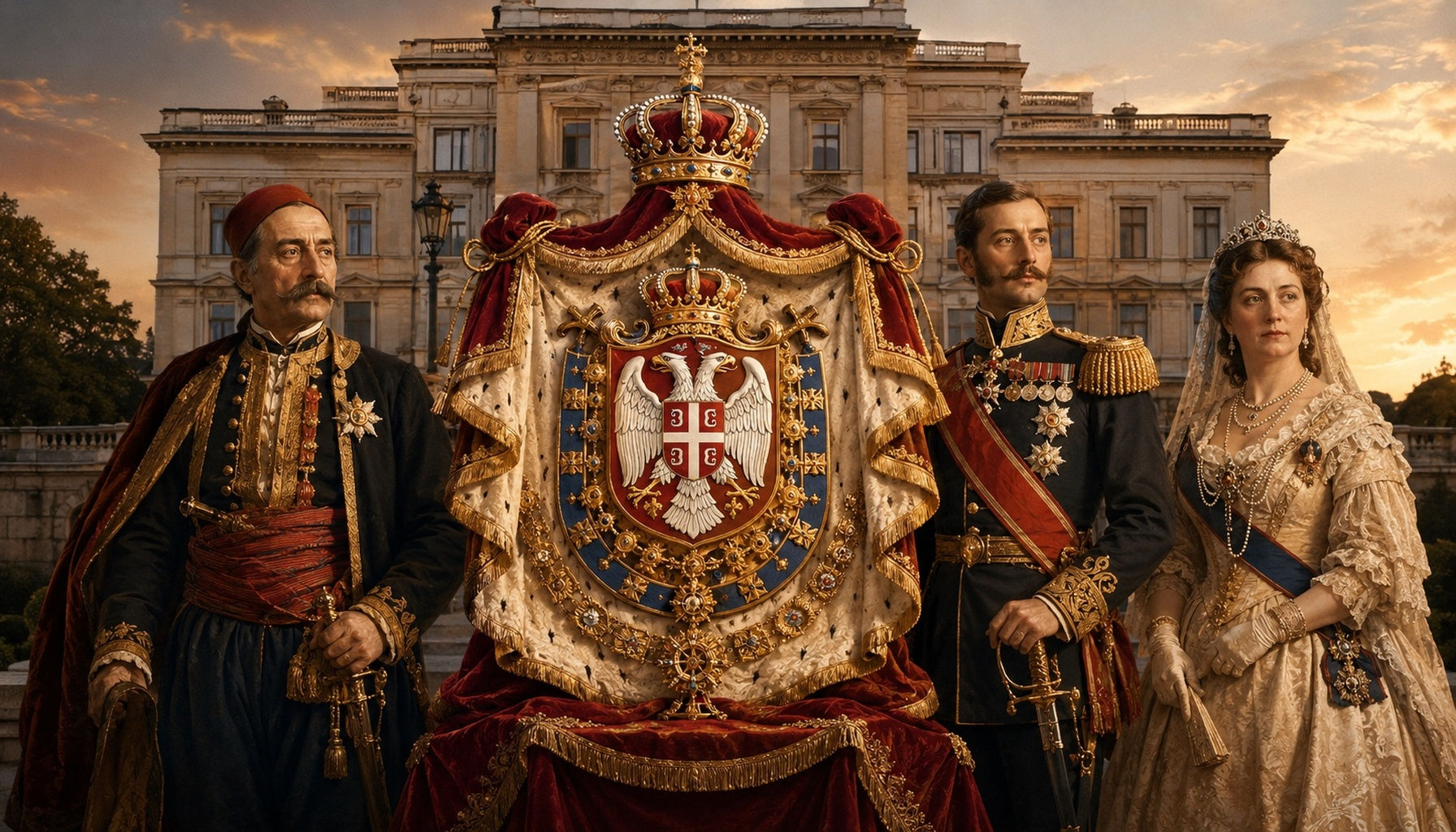
The Obrenovic Dynasty was one of the great ruling houses of nineteenth-century Serbia, a family that rose out of the upheavals of Ottoman rule and became central to the making of the modern Serbian state. Their story begins in the Serbian lands of the central Balkans, in a world of village elites, regional strongmen, imperial pressure, and repeated revolt. From that setting emerged a dynasty associated with autonomy, diplomacy, reform, and the slow, uneven transformation of Serbia from rebellious province to internationally recognised monarchy. In DNA tagging terms, the family is linked here with the haplogroup E1b1b1a1b1a6a1, used as the primary family haplogroup label for this heritage profile.
This is not just a tale of kings and courts, but of a family shaped by frontier politics and the peculiar pressures of Balkan history. The Obrenovic name became inseparable from the Serbian uprisings and their aftermath, especially through Milos Obrenovic (1780-1860), the formidable prince who helped secure hereditary leadership and wider autonomy for Serbia. Later came Milan Obrenovic IV (1854-1889), who presided over Serbia's elevation from principality to kingdom, and Aleksandar Obrenovic, King of Serbia (1876-1903), whose troubled reign ended dramatically and with it the dynasty's rule. Running through their history is the constant duel with the Karadordevic dynasty, the balancing act between Austria-Hungary and Russia, and the immense challenge of building stable institutions in a newly emerging Balkan state.
If one place captures the public face of the Obrenovic Dynasty, it is Stari Dvor, the Old Palace in Belgrade. Built in the nineteenth century as a royal residence, it became one of the best-known architectural symbols of the Serbian monarchy and especially of the Obrenovic court. Situated in the heart of Belgrade, Stari Dvor was closely connected with the ceremonial and political life of the dynasty, standing as a visible expression of Serbia's transformation into a modern European-style state. The building seen today reflects both royal ambition and later civic reuse, since after the fall of the dynasty and the changes of the twentieth century it passed into new state functions. It still stands and, as part of central Belgrade's historic core, can still be seen and visited from the outside, with public access depending on its present administrative use. As a location anchor, it is wonderfully apt: the Obrenovic story is not buried in legend alone, but written into the urban landscape of the Serbian capital.
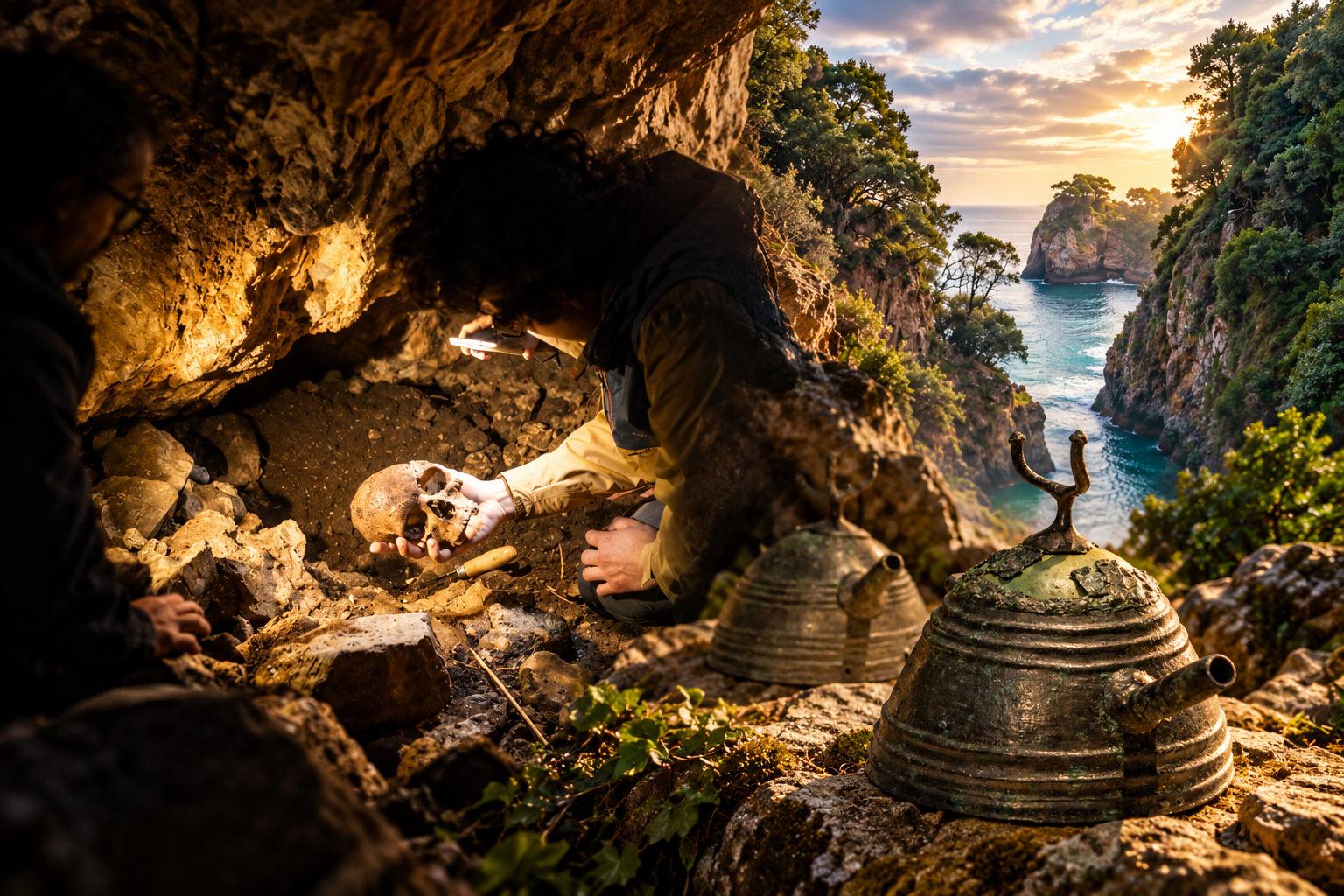
The Obrenovic Dynasty belongs to a region where lineages, peoples, and empires overlapped for centuries, and the haplogroup label E1b1b1a1b1a6a1 fits into that wider southeastern and central European genetic tapestry. Important to say plainly: ancient DNA samples do not prove direct descent from the dynasty unless specific evidence exists. What they do provide is a broader network of related or linked lineages across time and place. Examples connected to this haplogroup branch or close context include Late Imperial Roman and Medieval Serbian finds from Timacum Kuline Ravna Village such as I15553, I15554, and I15537, Imperial Roman Timacum Slog Necropolis sample I15544, and several Late Roman Viminacium Serbia burials including I15504, I15507, I15513, I15518, I15490, and I15525. Beyond Serbia, linked samples appear across Migration Period Hungary at Rakoczifalva with RKF026 and RKF027, Medieval Sicily Teatro di Segesta with SGBN10, Early Medieval Croatia with VEM022, Merovingian Bavaria with Alh_154, Piast-period Santok with PCA0400, Gothic Wielbark Pommerania with PCA0495, Saxony-Anhalt samples BRC043x and BRC014x, South Tyrol sample 2425, Carolingian and medieval Hungarian sites such as AHPS206W, AHS56, OBT-106, and SzKper239, as well as wider European and Mediterranean examples including EAS006 in Kent, VK362 in Denmark, I7498 from Cordoba, R1219 from the Cancelleria Basilica, IND009 from Alt-Inden, and Black Sea region samples CGG021473 and CGG021475. Even notable later burials such as Johannes Corvinus and Christopher Corvinus of the Hunyadi line, tagged here as CJM and CKM, help show how widely distributed related paternal signatures could be in the historic populations of Europe. In short, the dynasty's haplogroup label sits comfortably in a long Balkan and wider European continuum rather than in isolation.
The Obrenovic Dynasty reminds us how family history can sit at the crossroads of rebellion, monarchy, diplomacy, and national revival. If you are curious whether your own DNA connects with the deep population history of Serbia, the Balkans, or related haplogroup paths like E1b1b1a1b1a6a1, you can upload your DNA to MyTrueAncestry and explore ancient matches for yourself.


Comments