The Ottonian Dynasty
– 3 min read


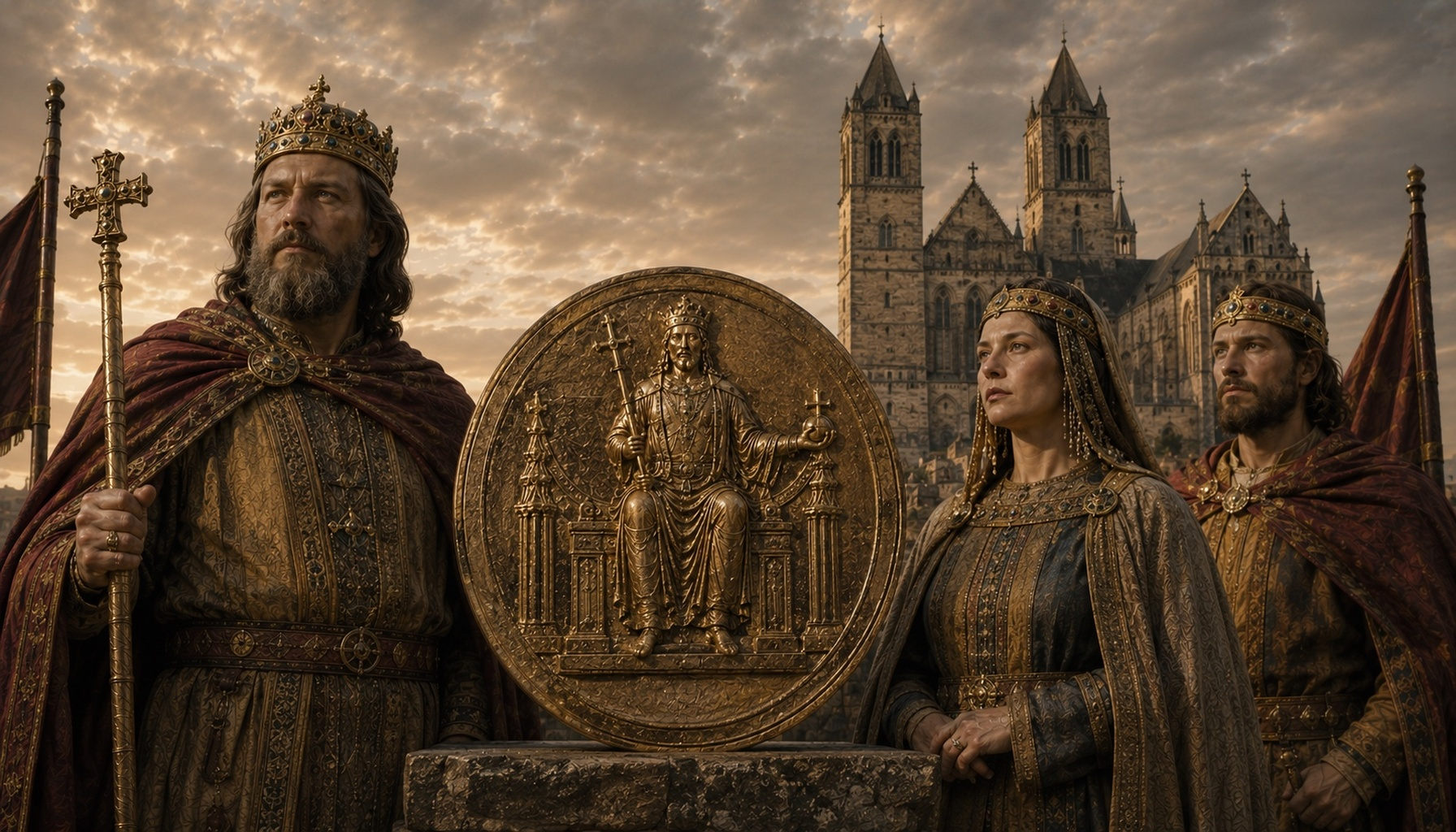
The Ottonian Dynasty was the great Saxon royal house that carried East Francia into the age of emperors, and in historical and genetic tagging terms it is here linked with haplogroup R1b1a1b1a1a2e1, the primary family haplogroup tag for this profile. They emerged from Saxony in what is now northern and central Germany, in a world still taking shape after the breakup of the Carolingian Empire. This was a hard-edged frontier society of dukes, bishops, fortified places, and shifting loyalties, and the Ottonians proved exceptionally good at turning regional power into kingship, and kingship into empire.
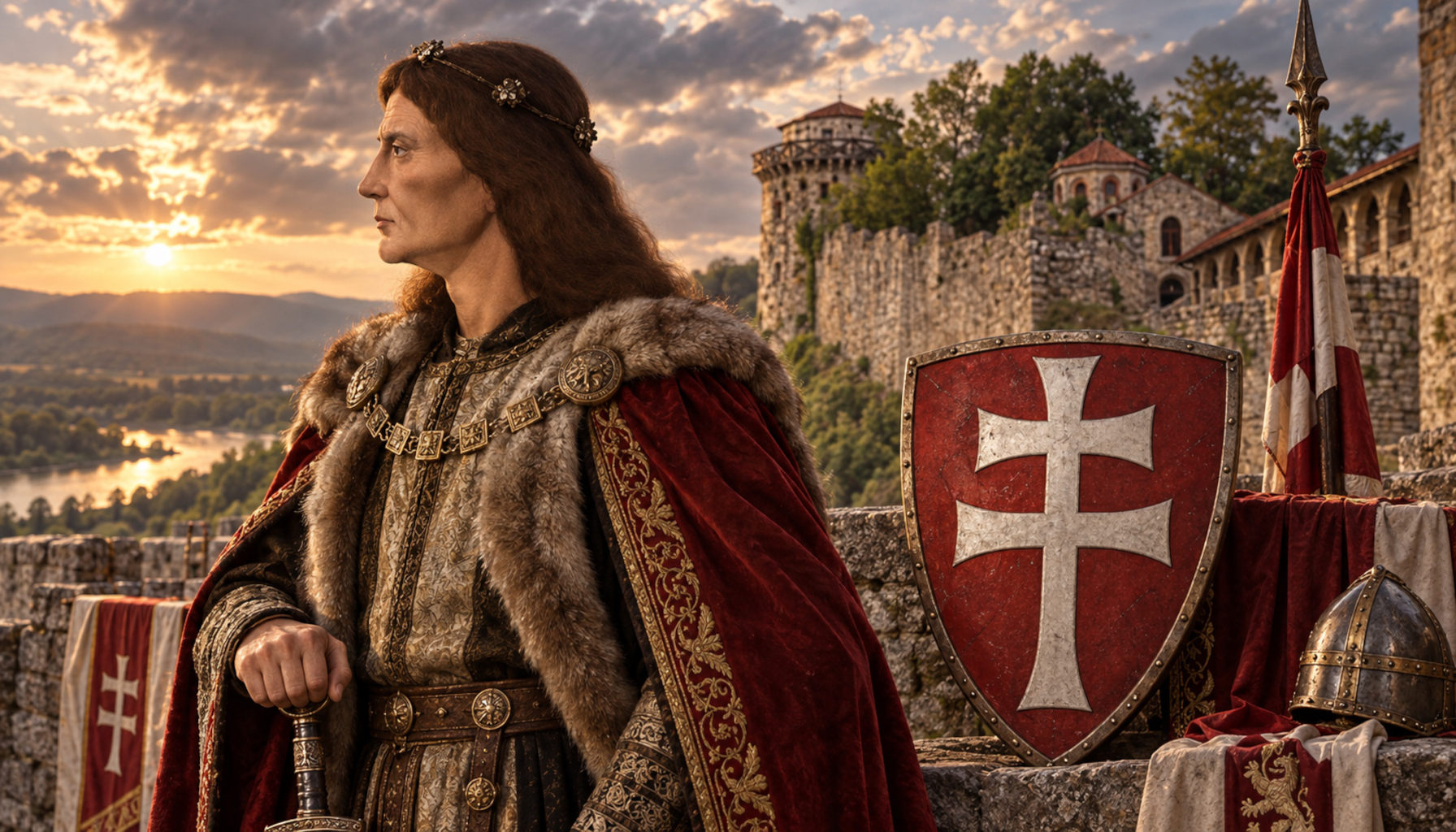
The family background is richer than a mere roll call of kings. Henry I the Fowler (876-936) built the foundations by securing the German kingdom and managing powerful dukes with a mixture of force, diplomacy, and political realism. His son Otto I the Great (912-973) became the dynasty's defining figure, defeating the Magyars at Lechfeld, strengthening royal authority through close cooperation with bishops and abbots, and reviving the imperial title in 962. Later, Heinrich II (973-1024), canonised after his death, stood at the end of the main Ottonian line and embodied that distinctive blend of sacred kingship, church patronage, dynastic ambition, and imperial rule. Taken together, the Ottonians helped create the political grammar of medieval Central Europe: Saxon roots, royal consolidation, marriage alliances, frontier expansion, and the fusion of German kingship with Roman imperial tradition.
If one place captures the Ottonian world in stone, it is Magdeburg Cathedral in Saxony-Anhalt. Magdeburg itself was one of Otto I's great favoured foundations, and he promoted it as a political, religious, and memorial centre for his dynasty and empire. The present cathedral, dedicated to Saints Catherine and Maurice, is best known as a later medieval Gothic building, begun in the thirteenth century, but it stands on the site of the earlier Ottonian church and preserves the memory of the dynasty with unusual force. Otto I was buried there, making it one of the most important dynastic sites of the age. The cathedral is also famous for its artworks, tomb monuments, and its role as the first Gothic cathedral built on German soil. In other words, this is not just a handsome church one happens to mention in passing; it is a place where the imperial imagination of the Ottonians was anchored, displayed, and remembered. Yes, it can still be visited today, and for anyone interested in the dynasty it remains one of the most tangible and evocative places to stand face to face with their legacy.
As with most early medieval dynasties, we should be careful not to claim direct descent from scattered ancient samples unless that has been specifically demonstrated. What we can say is that haplogroup R1b1a1b1a1a2e1 appears in a wide arc of related or linked ancient DNA contexts across western and central Europe, showing just how deep and widespread this paternal line became long before and long after the Ottonians. Examples include Medieval Northern Spain Las Gobas samples ldo066, ldo037, ldo046, ldo048, ldo062, and ldo040; elite Celtic burials in Germany such as Asperg-Grafenbuehl APG001 and APG003 and Ludwigsburg Roemerhuegel LWB001 and LWB002; Bronze Age Unetice individuals from Leubingen in Thuringia such as LEU040, LEU024, and LEU065; Migration Period and early medieval samples from Saxony-Anhalt and nearby regions including BRC055x, DRH046, DRH017, SDN031, and SDN032; as well as later medieval and early historic examples from Belgium, England, Ireland, Denmark, Portugal, Hungary, and beyond. That breadth does not make the Ottonians identical to all these people, of course, but it does place their tagged paternal line within a long European story stretching from Bronze Age and Iron Age communities through Celtic, Germanic, Roman, Migration Period, and medieval populations.
The Ottonians remind us that family history can sit at the crossroads of dynasty, region, faith, warfare, and memory. If you want to see whether your own DNA connects with ancient populations linked to haplogroup R1b1a1b1a1a2e1 or to the wider medieval world that shaped families like this one, upload your DNA to MyTrueAncestry and explore the past for yourself.
Comments