Kohanim Priestly Lineage
– 3 min read


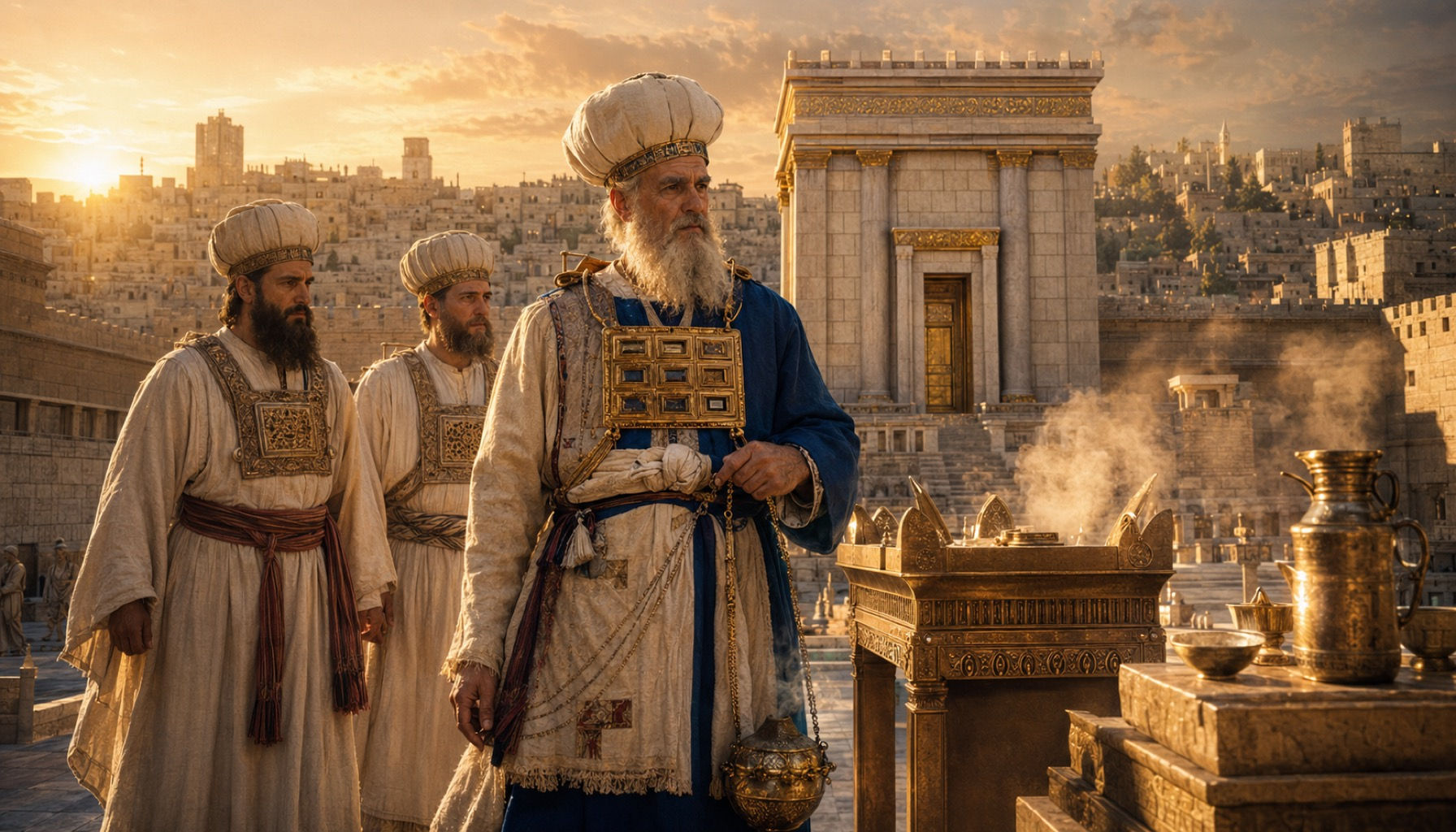
The Kohanim were, and in Jewish tradition still are, the hereditary priestly lineage of Judaism: families who traced their ancestry to Aaron, brother of Moses, in the world of ancient Israel. Their earliest remembered homeland lies in the southern Levant, in the historical landscape of ancient Israel and Judah, where priesthood, sacrifice, holiness, and kinship were tightly bound together. This is one of the most striking examples anywhere of a family identity that is at once sacred, social, and genealogical, carried forward not simply as legend but through ritual duties, synagogue honors, marriage customs, and communal memory over many centuries. In haplogroup terms, the primary lineage linked here is J1a2a1a2d2b2b2c2a, a branch within the broader J1 family often discussed in connection with Near Eastern paternal histories.
What makes the Kohanim so historically fascinating is that they were not just priests in a loose professional sense. They were priests by descent. In biblical tradition they descend from Aaron, and only his line held the full priestly role, while the wider tribe of Levi had related sacred duties. In the First and Second Temple periods, the Kohanim were associated with sacrifice, blessing, purification, and the maintenance of ritual order. After the destruction of the Second Temple by Rome in 70 CE, their world changed dramatically, but the identity did not disappear. It survived in synagogue life, in the priestly blessing, in laws of ritual status, in surnames and family traditions such as Cohen, Kohn, Kagan, Katz, and many others, and in a powerful sense of inherited memory. Aaron, brother of Moses, remains the great ancestral figure in this tradition: not a modern genealogical certainty in the documentary sense, of course, but the founding name around which one of the longest-lived descent identities in human history has been preserved.
The great location anchor for the Kohanim is the Temple Mount in Jerusalem, the hilltop platform revered in Jewish history as the site of the First and Second Temples. In ancient Israelite and later Jewish religious life, this was the center of priestly service, sacrifice, pilgrimage, and sacred authority. The present monumental platform was greatly expanded under Herod in the late first century BCE, and today it remains one of the most contested and symbolically charged religious sites in the world. It is also sacred in Islam, known as Haram al-Sharif, home to the Dome of the Rock and al-Aqsa Mosque. For the history of the Kohanim, this place matters because it was here that priestly lineage became visible in architecture, ritual, and public life: festivals, offerings, incense, blessings, and the whole drama of Temple religion were tied to this height above Jerusalem. The site can still be visited today, subject to current access rules, security conditions, and religious regulations, and even in its altered form it remains the clearest physical setting for understanding the historical world in which the Kohanim stood at the heart of sacred practice.
From a DNA perspective, the haplogroup J1a2a1a2d2b2b2c2a sits within a wider paternal landscape with deep roots across the Near East and neighboring regions. It is important not to claim direct descent from any excavated individual unless the evidence truly supports it. What we can say is that a number of ancient samples are linked or related at this branch level or nearby branches, helping sketch the broader historical setting in which such lineages moved. These include Migration Period Hungary Rakoczifalva samples RKF098, RKF110, RKF129, RKF147, RKF226, RKF124, RKF121, RKF182, RKF225, RKF192, RKF237, RKF117, RKF194, RKF053, RKF060, RKF062, RKF068, and RKF079; Avar Elite Hungary Rakoczifalva samples RKC009, RKC021, and RKC018; Roman Era Phoenician or Punic outlier Aquae Calidae Bulgaria I40570; Soldier of Napoleon Grande Armee mass grave Vilnius Latvia YYY083A; Phoenician or Punic Sardinia Tharros I22119; Late Bronze Age Armenia Dzori Gekh I16120; Yamhad Kingdom Kilis southeast Anatolia I14762; Kulubnarti Early Makurian Nubia I18520; Canaanite Alalakh ALA035; Amorite outlier child Alalakh ALA018; Amorite nobleman Alalakh ALA002; Early Israelite Megiddo I4517; and Imperial Rome Cluana Ancona R835. None of these proves a Kohanic pedigree by itself, but together they show how lineages in this wider J1-connected world appear across the Levant, Anatolia, the Mediterranean, and later mobility zones of Europe and inner Eurasia.
If you are curious whether your own family story might connect with this deep priestly and Near Eastern heritage, upload your DNA to MyTrueAncestry and explore the ancient populations, migrations, and archaeological matches linked to your results.



Comments