The Grand Princes of Kiev
– 3 min read


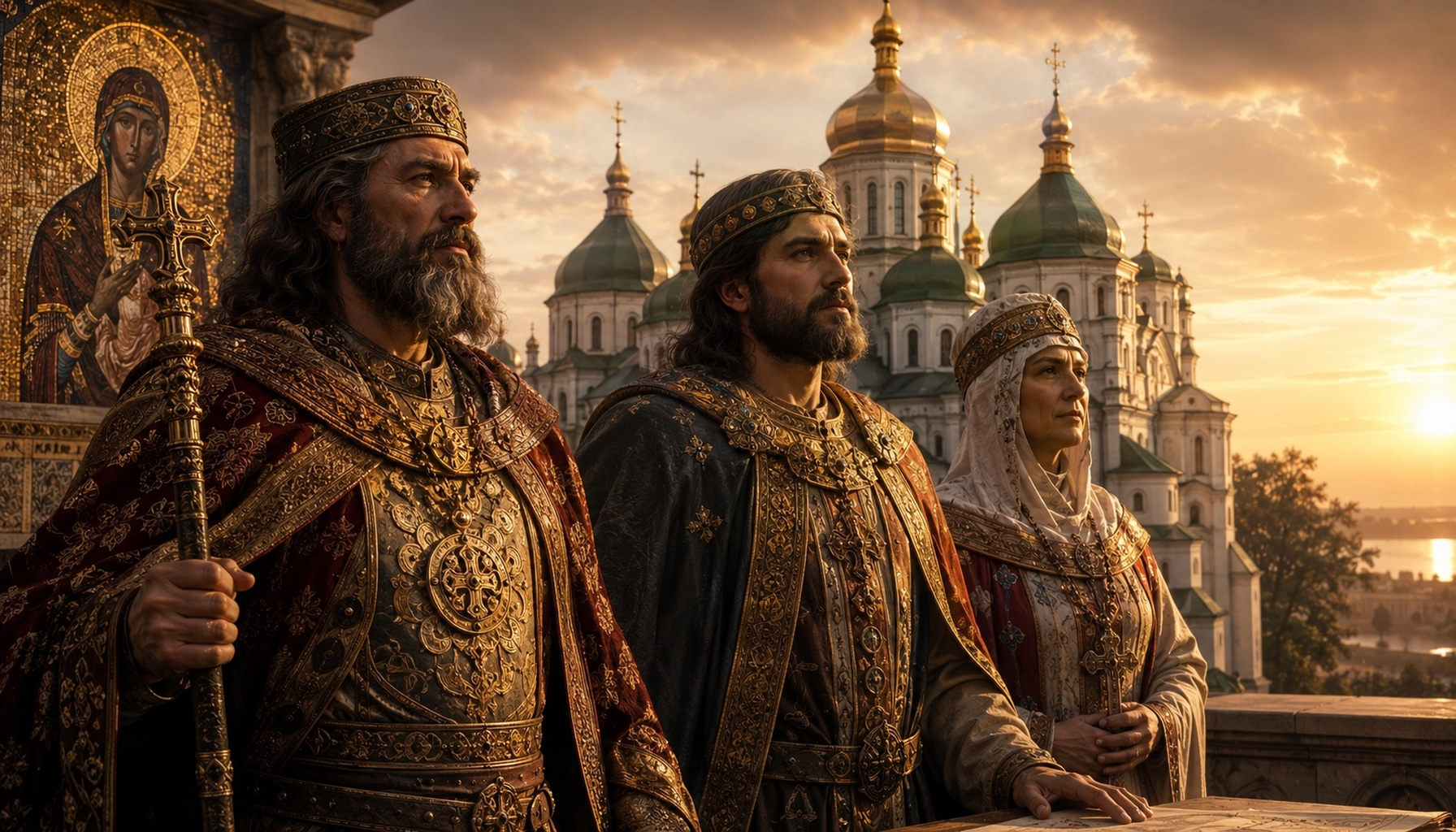
The Grand Princes of Kiev were the leading rulers of Kievan Rus, the medieval dynastic world that grew around Kiev and the great river routes of Eastern Europe. Their story begins in a frontier zone where Slavic communities, Norse adventurers, river traders, Byzantine influence, and steppe powers all met. From that mixture emerged a ruling tradition that was not merely local, but international in outlook: princes who fought campaigns, managed tribute, married into foreign courts, and helped shape the political culture from which later Rus, Ukrainian, Belarusian, and Russian traditions would develop. For tagging purposes here, the primary family haplogroup is listed as N1a1a1a1a1a1a, linking this dynasty thematically to a wider northern and eastern European genetic horizon.
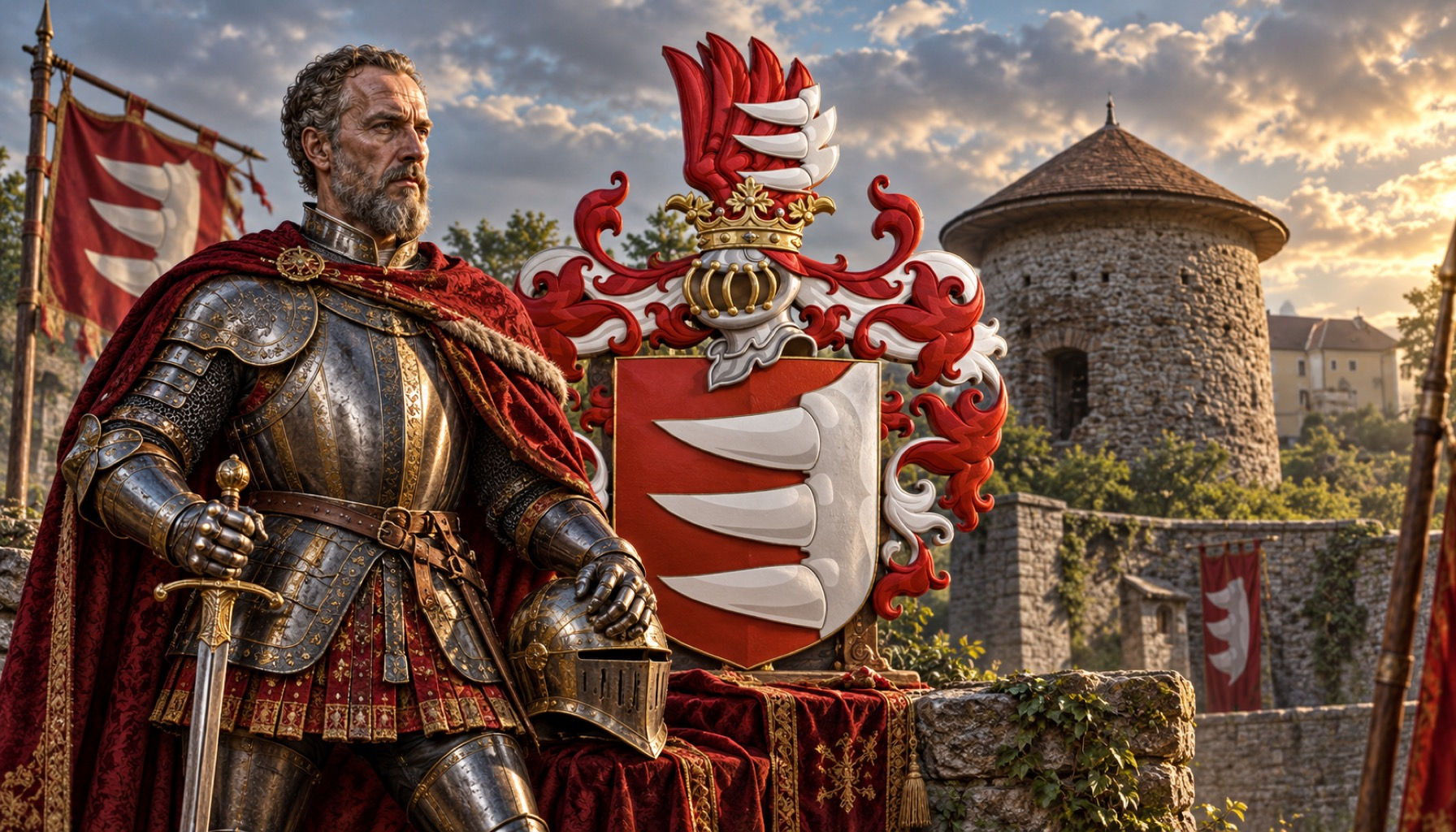
This was a family of princes, but also a system of rule. Authority in Kievan Rus rested on bloodline, military following, access to trade, and above all control of key towns and river arteries. The conversion to Orthodox Christianity under the ruling house gave princely power a sacred dimension as well as a diplomatic one, binding Kiev more closely to Byzantium. Over the generations, the dynasty produced a formidable cast of rulers: Vladimir II Monomakh, Mstislav I of Kiev, Yaropolk II of Kiev, Viacheslav I of Kiev, Yuri Dolgorukiy, Iziaslav II of Kiev, Rostislav I of Kiev, Yaroslav II of Kiev, Roman the Great, Rurik Rostislavich, Ingvar of Kiev, Mstislav III of Kiev, Rostislav II of Kiev, Vladimir IV Rurikovich, Daniel of Galicia, Alexander Nevsky, Lev I of Galicia, Yaroslav of Tver, Yuri I of Galicia, Andrew of Galicia, and Lev II of Galicia. Taken together, they show how the Kievan princely tradition did not vanish with one city or one reign, but ramified across the medieval East Slavic world.
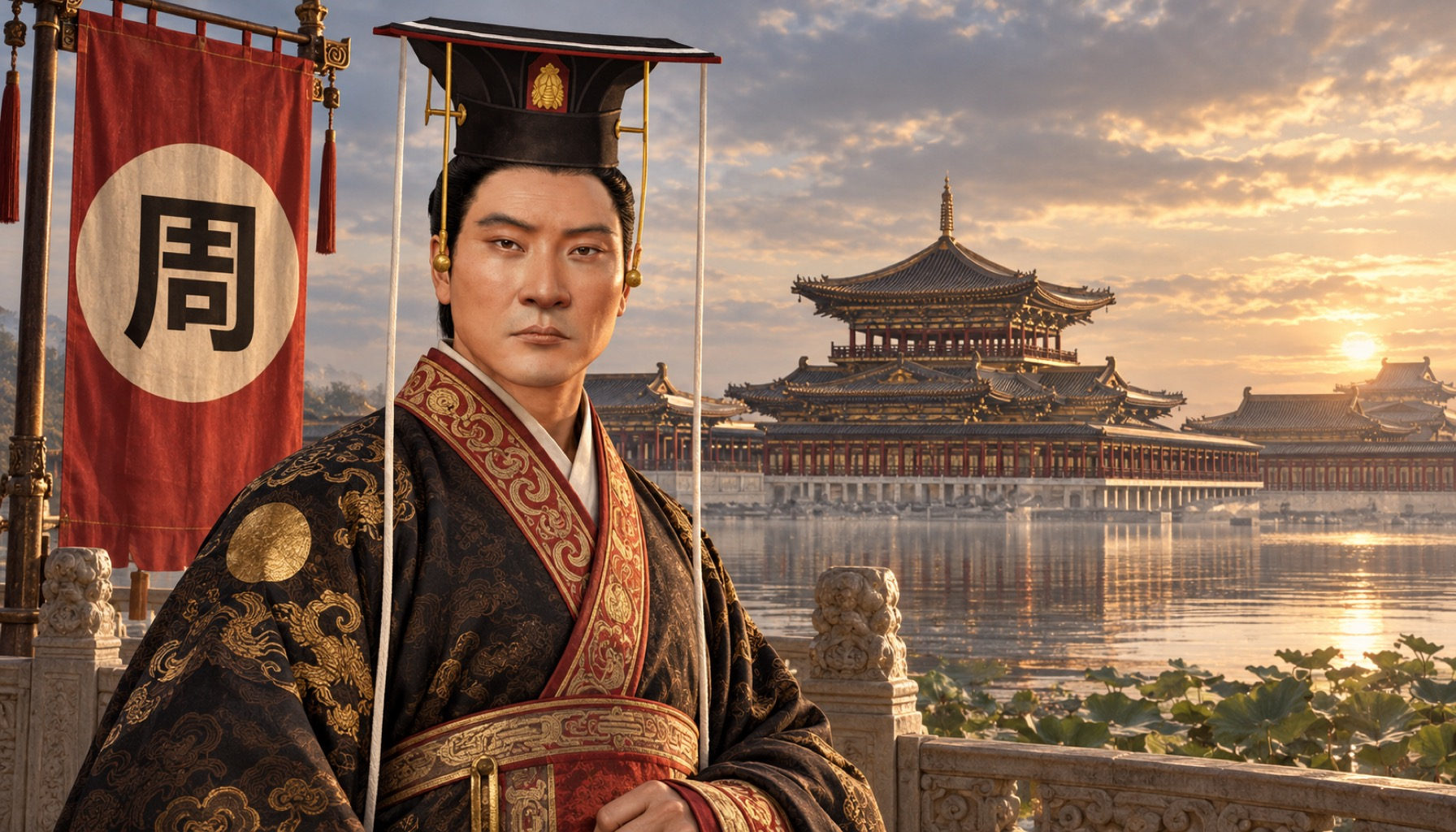
One of the most evocative places linked to this dynastic world is Yaroslav's Court, in Veliky Novgorod. Despite the name, it is less a single palace than a historic court and market complex associated by tradition with Prince Yaroslav the Wise and the wider princely presence in Novgorod. In the age of the Grand Princes of Kiev, Novgorod was one of the great urban centers of the Rus lands, tied to Kiev by politics, commerce, and dynasty, yet also proud, wealthy, and often resistant to princely control. Yaroslav's Court stood on the Trade Side of the city near the market, making it exactly the sort of place where princely authority, merchant wealth, and international contact would have collided. It later became central to the civic life of Novgorod as well, surrounded by churches and public spaces that still suggest the bustle of medieval exchange. The site survives as part of the historic cityscape of Veliky Novgorod and can still be visited today, which makes it a rare and tangible anchor for imagining the world in which the Grand Princes and their relatives moved.
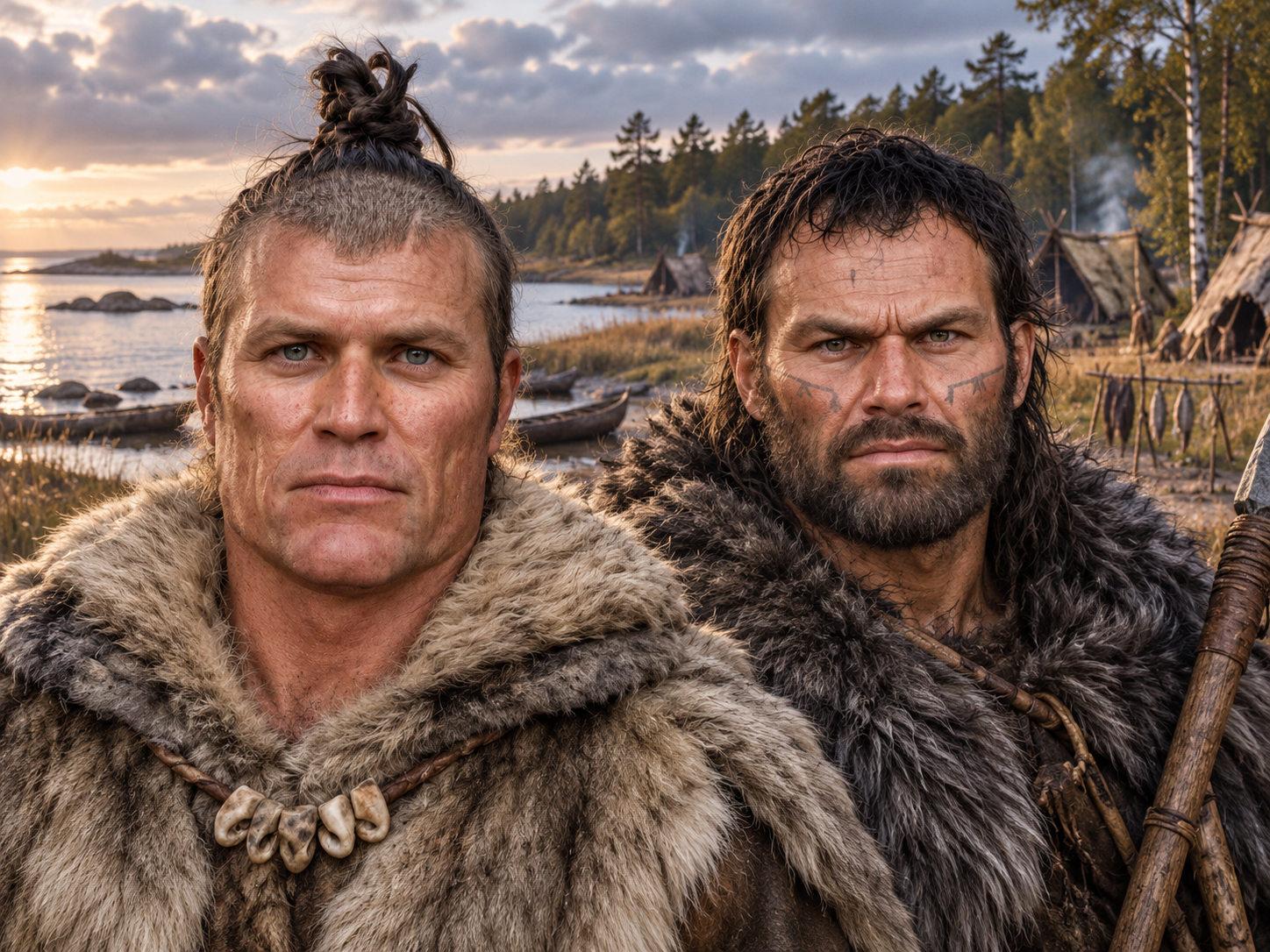
In ancient-DNA terms, the haplogroup tag N1a1a1a1a1a1a can be placed in a broader network of related or linked samples from northern, Baltic, Scandinavian, and eastern European contexts. These do not prove direct descent from the Grand Princes of Kiev, and should not be read that way, but they help sketch the genetic landscape around the wider world from which Kievan Rus emerged. Among the linked examples are Pre-Vendel Age Oland Sandby Borg Sweden samples snb014, snb019a, and snb019; Early Goth Pommerania Pruszcz Gdansk Pruszcz Wielbark PCA0522; Soldier of Napoleon Grande Armee Mass Grave Vilnius Latvia YYY089B; Early Medieval Croatia Velim-Velistak VEM032 and VEM003; Baltic Iron Age Denmark Bornholm Island Slusegard CGG106751; Iron Age Baltic Tribes Lithuania Berciunai CGG017690; Medieval Poland Piast Dynasty Lad PCA0417; Germanic Iron Age Sweden Uppsala Fullero ful001; Viking Age Skara Varnhem Sweden VK399 and VK406; Viking Age Gnezdovo Russia VK224; Vendel Age Saaremaa Salme II-IV VK481, Salme II-D VK550, and Salme I VK505 and VK508; Viking Age Oland Sweden VK533; Viking Age Gotland Frojel Sweden VK430; Viking Age Nordland Norway VK419; and Late Bronze Age Estonia VII4. Together these linked finds point to a world of mobility across the Baltic and into the river systems of the east, precisely the setting in which the Rus princely tradition took shape.
If the world of the Grand Princes of Kiev sparks your curiosity, you can explore how your own DNA may connect to the wider ancient populations of Europe by uploading your results to MyTrueAncestry. It is a fascinating way to place family history beside archaeology, migration, and the long human story behind medieval dynasties.
Comments