The Grand Dukes of Lithuania
– 3 min read


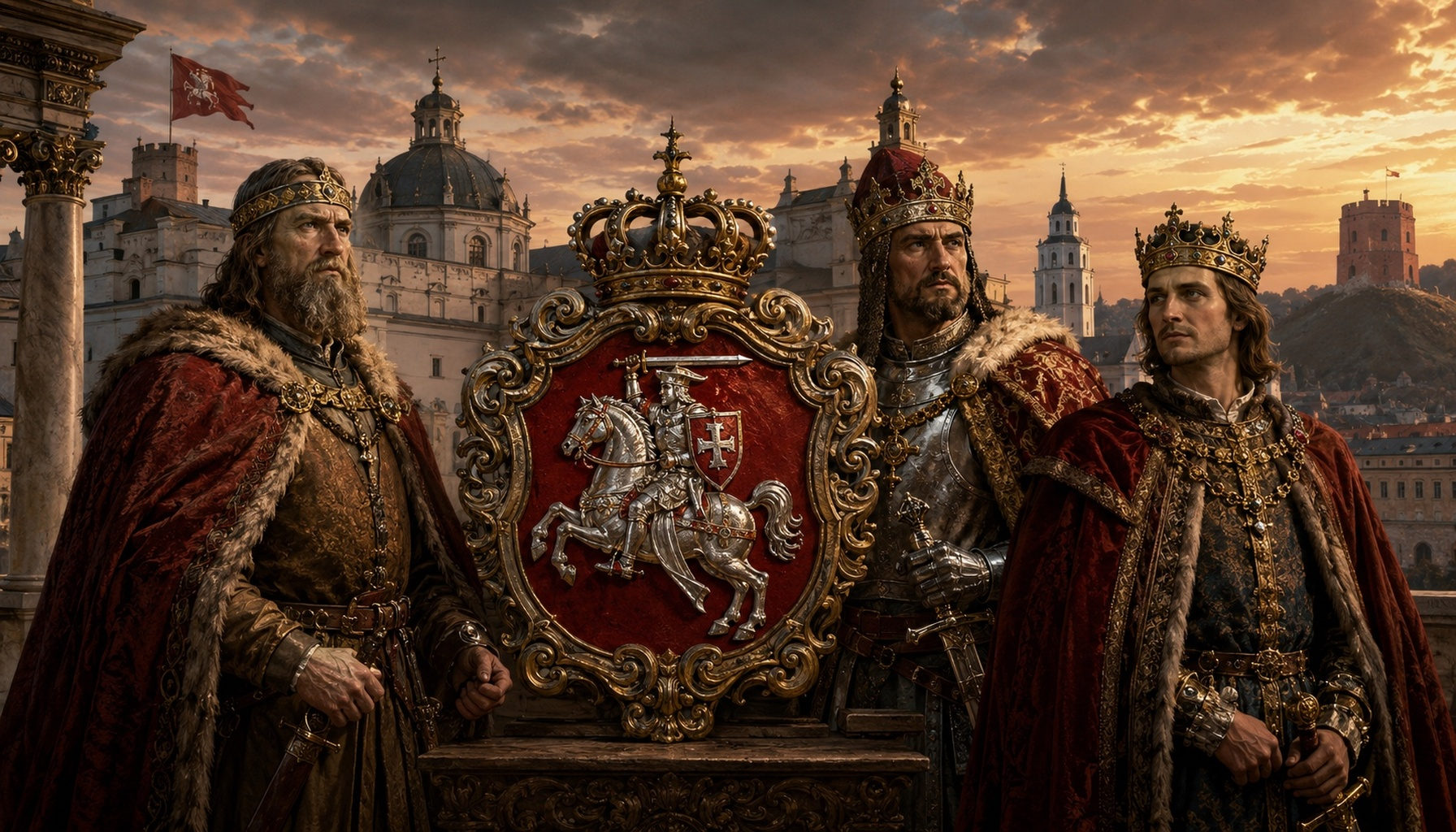
The Grand Dukes of Lithuania were the rulers of the Grand Duchy of Lithuania, a state that began in the Baltic world and grew into one of the great powers of medieval and early modern Eastern Europe. Their roots lay in the lands of ethnic Lithuania, in the wooded and river-crossed heart of the eastern Baltic, where local rulership, war leadership, and clan politics gradually hardened into dynastic power. From that base, the grand dukes expanded south and east across vast Ruthenian territories and built a realm that was never just one people or one language, but a political creation held together by force, negotiation, and a remarkably flexible style of rule. In haplogroup terms, this family is tagged here with N1a1 as its primary linked haplogroup, a lineage often associated with northern and eastern Eurasian population histories.
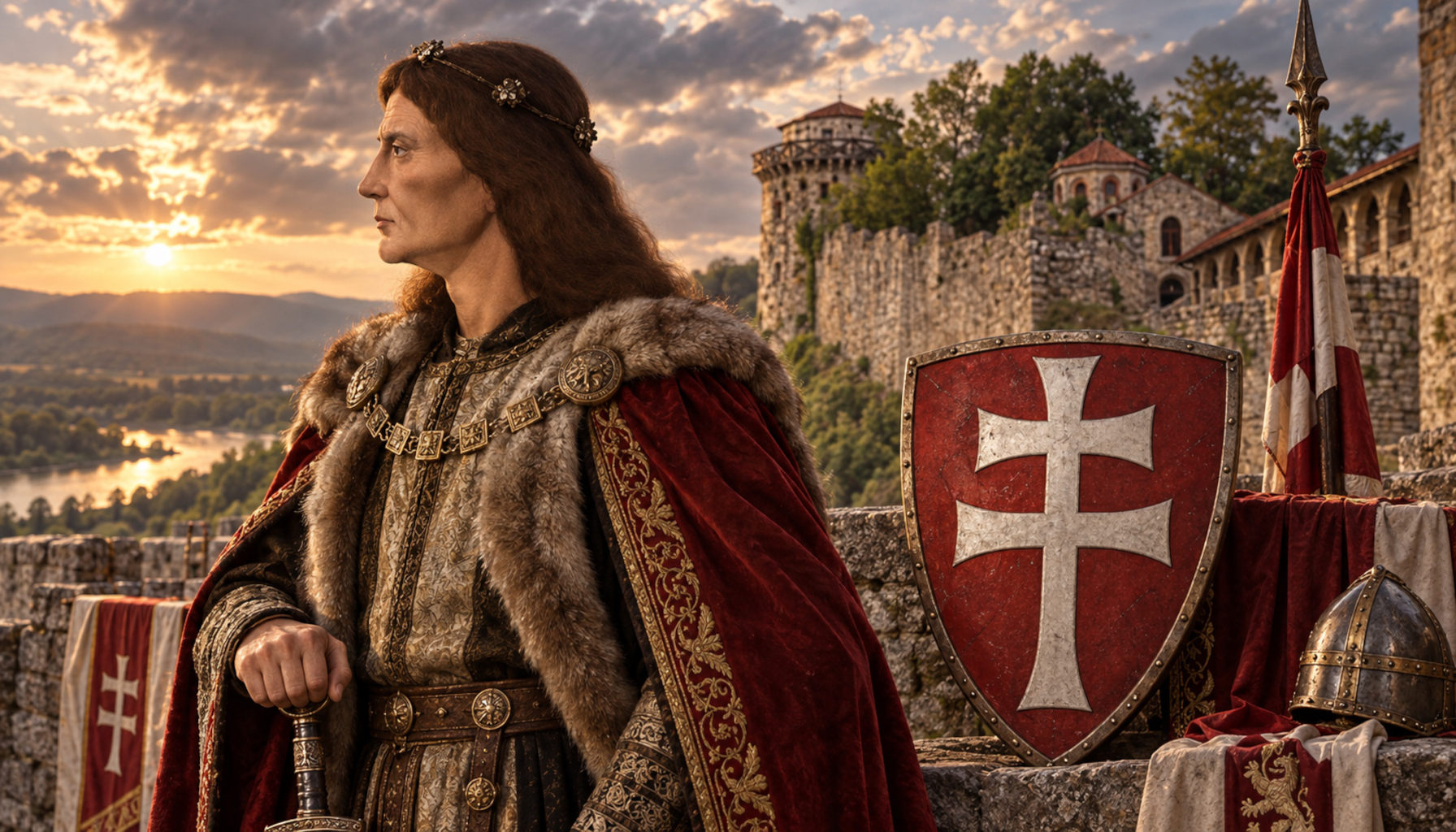
The dynasty most closely associated with this rise was the House of Gediminas, active roughly from 1285 to 1440, and it produced some of the best-known names in Lithuanian history: Gediminas himself, the great state-builder; Algirdas, who pushed Lithuanian influence deep into Ruthenian lands; Kestutis, the tireless defender against the Teutonic Order; Jogaila, whose union with Poland transformed the political map of the region; and Vytautas the Great, who brought the duchy to the height of its territorial power. What makes the Grand Dukes so fascinating is that they were not simply conquerors in armor. They were dynastic strategists, balancing pagan inheritance, Christian diplomacy, marriage alliances, noble privileges, and the pressure of formidable neighbors including Poland, Muscovy, the Teutonic Order, and the steppe powers. Their legacy is written not only in battles and borders, but in law codes, castles, court culture, and the political habits that later fed into the Polish-Lithuanian Commonwealth.
The clearest physical anchor for this story is the Palace of the Grand Dukes of Lithuania in Vilnius, standing in the lower castle complex beside the cathedral, at the political and ceremonial center of the old capital. Historically, this was the residence and administrative heart of the rulers of Lithuania, especially as Vilnius became the dynastic and governmental core of the state. Over centuries the site saw expansion, rebuilding, damage, and eventual destruction, reflecting the turbulent history of the region itself. The modern reconstructed palace now serves as a museum and cultural institution, presenting archaeology, state history, dynastic memory, and the material world of the Lithuanian court. In other words, this is not some vague symbolic site on a map: it is the place where visitors can still stand at the heart of grand ducal power and imagine the political theater of envoys, nobles, soldiers, and rulers moving through its halls. Yes, it can still be visited today, and it remains one of the best places to connect the dynasty to an actual landscape and built setting.
The N1a1 haplogroup linked here to the Grand Dukes of Lithuania should be understood as a broader population signal rather than a claim of proven direct descent from any specific ancient individual. Related or linked N1a1-bearing samples appear across a strikingly wide geographic arc, which gives a sense of the long background against which Baltic and eastern European elites emerged. These include Avar Period Hungary Kunszallas Fulop Jakab (KFJ001), Ancient Siberia Western Transbaikalia Zjindo (NEO115) and (NEO117), Bronze Age Central Asian Steppes Bazaiha (NEO70), Ancient Russia Minino Vologda (NEO538), Bronze Age Kazakhstan Sjauke (NEO900), Late Neolithic Russia Lake Baikal Fofonovo (I8535), Medieval Finland Outlier Tavastia Paelkaene (PKN009), Early Vendel Age Sweden Stockholm Viken Lovo (lov002), Medieval Russia Shekshovo (SHK002), Ancient Mercenary First Sicilian War Himera Sicily (I10944), Late Bronze Age Arbulag Soum Mongolia (ARS003), Uyelgi Trans-Ural Russia (Uyelgi16), Altai-Sayan Mongolia (BER002), Pre Bronze Age Fofonovo Buryatia Russia (FNO001), Hungary Avar Mounted Archer Mako-Mikocsa (MMper58_GE), and Hungary Elite Khagan Ruler (KBper300_GE). Together these samples do not prove a single royal line, but they do show how N1a1-linked ancestry connects to the wider northern Eurasian and steppe-connected human story that formed part of the deeper background of eastern Europe.
If the story of the Grand Dukes of Lithuania, the House of Gediminas, and the N1a1 haplogroup sparks your curiosity, you can explore your own deeper past as well. Upload your DNA to MyTrueAncestry to discover ancient samples, historical populations, and genetic connections that may help place your family story into the wider human past.
Comments