Haplogroup T1

– 4 min read


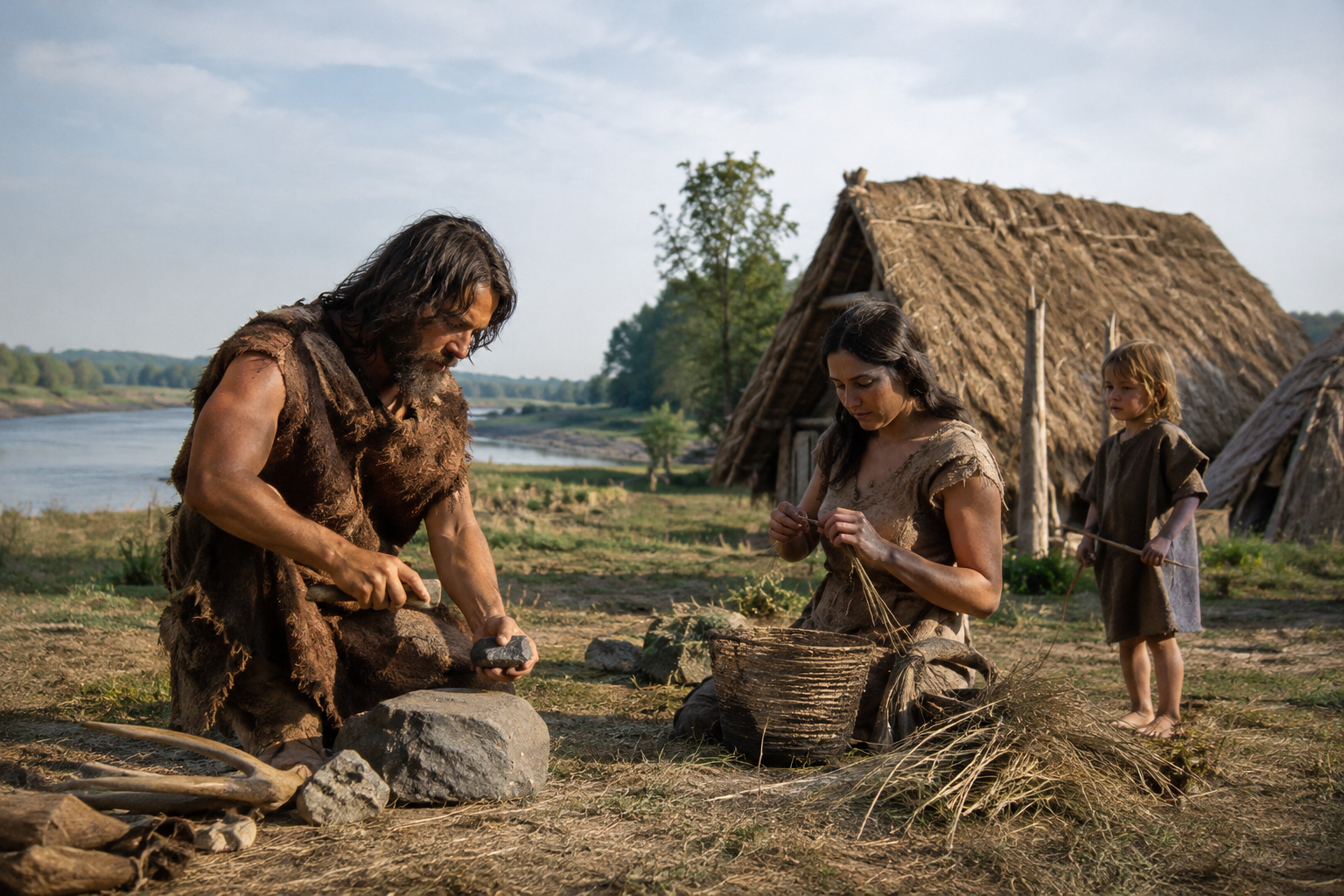
At Trebur in Hesse, in western Germany, archaeologists uncovered burials belonging to the Grossgartach horizon of the early Neolithic. One of the men from this community, sample TR34, dated to around 4800 BC, is associated here with the Y-DNA haplogroup T1. That is immediately interesting because T is not the paternal lineage most people expect to meet first in Neolithic central Europe.
The fascination of TR34 is not that he was somehow an outsider in a theatrical sense, but that he reminds us how varied the first farming societies of Europe could be. A Y-chromosome traces one direct paternal line only, not a person's whole ancestry, yet even that single line can reveal how surprisingly mixed early farming communities were. In a region that would later become deeply entangled in Bronze Age and Iron Age population shifts, this man stands much earlier, in the age when settled farming villages were still relatively new north of the Alps.
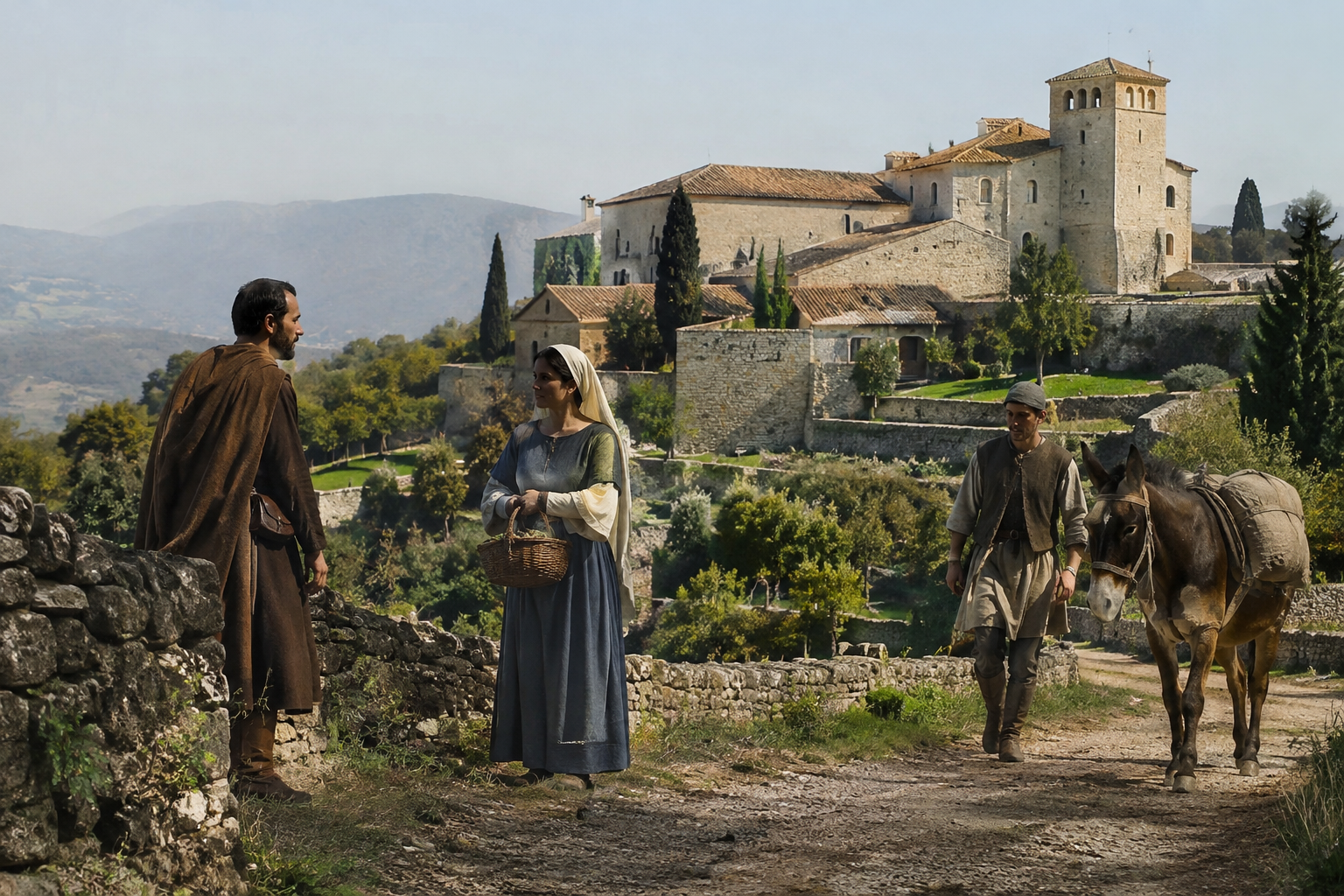
Trebur lies in the Rhine-Main area, one of the important corridors of early European farming. By 4800 BC, communities there were living in a landscape already reshaped by agriculture, animal husbandry, and village life. Grossgartach belongs to the Middle Neolithic sequence of central Europe, after the first Linearbandkeramik expansion and within a world of regional farming cultures that were locally rooted but still connected across wide distances.
That setting matters for understanding TR34. A haplogroup like T1 in Neolithic Germany does not need a melodramatic explanation. Early farming populations spread into Europe through movements of people as well as ideas, and those populations were never genetically uniform. Different paternal lines could persist side by side within the same settlement zone, and a lineage that is uncommon today in Germany may still have been entirely at home in a fifth-millennium-BC farming cemetery.
An ancient DNA study examining prehistoric individuals from this broad period and region has helped sharpen that picture of diversity in early European populations, even when single samples remain frustratingly brief in the public summary record. The research link associated with this find is here.
Haplogroup T is a wider paternal lineage with a long and complicated history across western Asia, northeast Africa, and parts of Europe. But this article is about T1, and it is important not to lazily pour the whole history of the parent haplogroup into one ancient grave in Germany. TR34 does not prove a single dramatic migration route, a specific language, or a neatly packaged ethnic identity.
What it does show is that paternal diversity within Neolithic Europe was broader than simplified textbook sketches sometimes suggest. When people imagine the Neolithic spread into Europe, they often picture one uniform stream of settlers. The reality revealed by ancient DNA is messier and much more human: villages, marriages, movement between nearby regions, and the survival of multiple lineages inside communities that shared pottery styles, farming practices, and burial grounds.
That is why a sample like TR34 matters beyond its single grave. Rare or less common Y-lineages in early burials are often the ones that force us to stop talking in blocks and start talking about individuals.
Trebur's location is part of the story. Western Germany sat within one of prehistoric Europe's great communication zones, linked by river systems and overland routes to the Upper Rhine, the Paris Basin, Alpine forelands, and the loess plains farther east. Long before the Roman frontier, before Franks and Alemanni, before medieval principalities, this was already a landscape in which people, livestock, tools, and marriage partners could move.
So T1 at Trebur is best understood in that broader Neolithic context: not as an anomaly dropped from nowhere, but as evidence that central European farming communities were open systems. Archaeology has long shown stylistic links among early farming groups; genetics now adds the useful complication that these linked worlds were not paternally identical.
This is also a salutary reminder that later regional histories should not be projected backwards too neatly. The Rhineland and adjacent regions would experience many later turnovers and admixture events, but TR34 belongs to a much earlier chapter. He lived in a world of early fields and village cemeteries, not in a proto-Germanic, Celtic, or Roman one.
Because the evidence here is concentrated in a single highlighted ancient individual, it is worth being precise. Sample TR34 gives us a documented ancient occurrence of T1 in Neolithic Germany, but one burial does not define the entire Grossgartach population, still less the whole Neolithic of Europe. Y-DNA is especially vulnerable to over-reading because it follows only the father-to-son line, which can rise, shrink, or disappear for reasons that have little to do with the rest of a community's ancestry.
Even so, single samples can be historically revealing. They show that lineages now thought of as geographically unusual may have deeper European roots than casual assumptions allow, or at least a much earlier documented presence. In that sense, TR34 belongs to a growing class of ancient individuals who complicate modern identity maps in the most useful way possible.
For MyTrueAncestry members, that is often the real value of a find like this. It does not hand you a ready-made heroic origin story. It gives you something better: a securely ancient point on the map, tied to a real archaeological culture, showing that your paternal line - or one very close to it - was already present among Europe's early farmers.
If your Y-DNA falls within T1, Trebur's TR34 offers a sober but genuinely exciting insight. This lineage was present in at least one early farming community in central Europe by around 4800 BC, in the cultural world of Grossgartach Neolithic Germany. That does not mean every modern T1 line descends from this man or this cemetery, but it does place the branch within the real, documented human landscape of early European agriculture.
In other words, T1 is not just a modern testing result on a screen. In the present evidence, it reaches back to a named ancient individual in a Neolithic burial ground on the Rhine-Main frontier of early farming Europe - a small, firm anchor in a very deep past.
Comments