Haplogroup R1b1a1b1a1a2d1a

– 5 min read


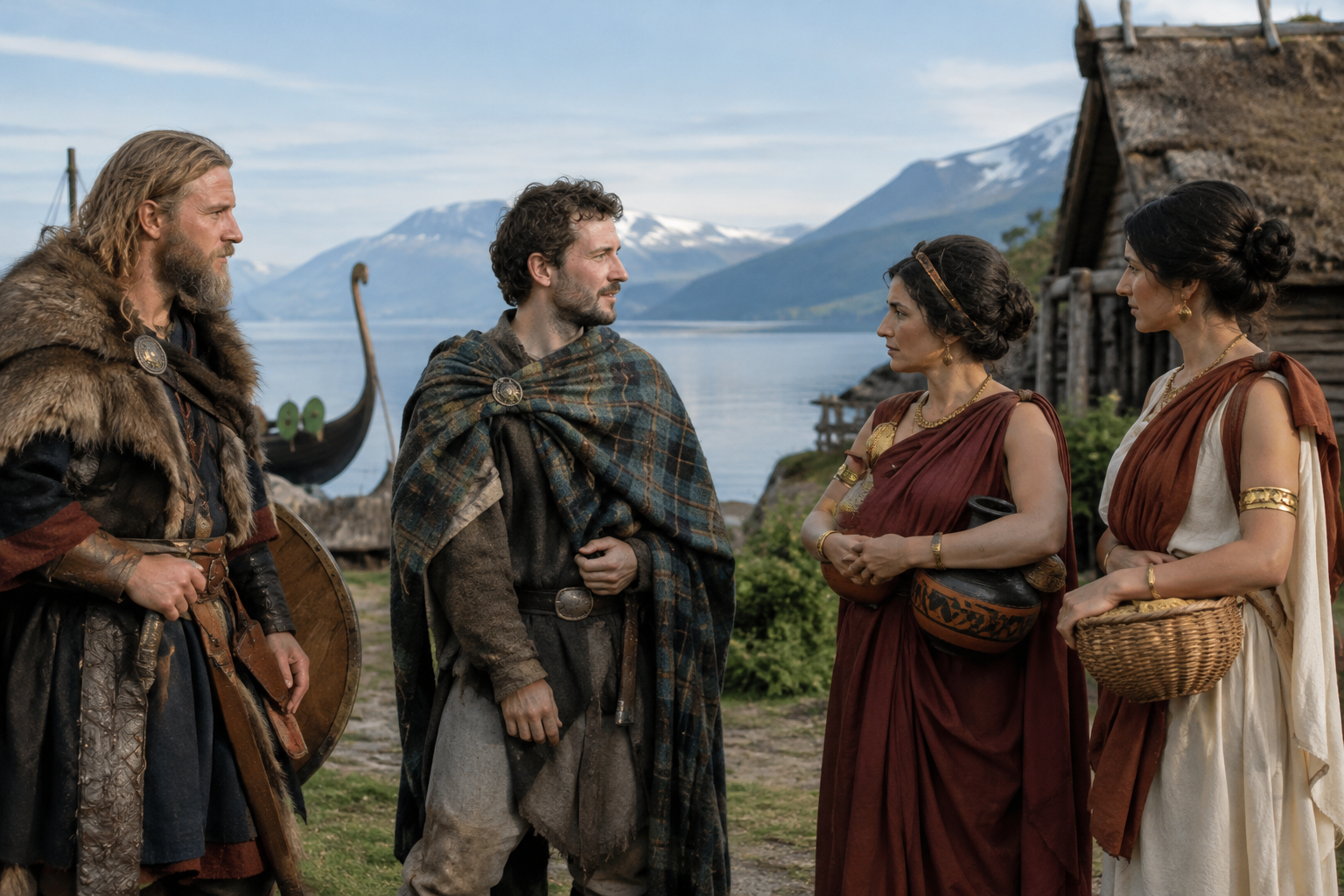
At Tomeide in Nesna, on the Norwegian coast, one Viking Age man dated to around AD 700 has been linked in MyTrueAncestry's ancient sample set to the Y-DNA haplogroup R1b1a1b1a1a2d1a. His identifier, CGG107023, is only a single data point, but it is an intriguing one. This is not the sort of lineage that appears here in isolation from history; the same article branch also turns up much earlier in Iron Age Italy and in pre-Roman Britain, which immediately raises a better question than "where did it come from?" Namely: in what kinds of societies do we actually see it appearing?
That is the useful scale for a Y-chromosome article. Y-DNA tracks one direct paternal line only, not a person's whole ancestry, language, or identity. But when the same branch is reported in an Etruscan context, a Celtic Briton, and a Viking Age Norwegian, it starts to look less like the badge of one people and more like a thread running through several connected worlds of Iron Age and early medieval Europe.
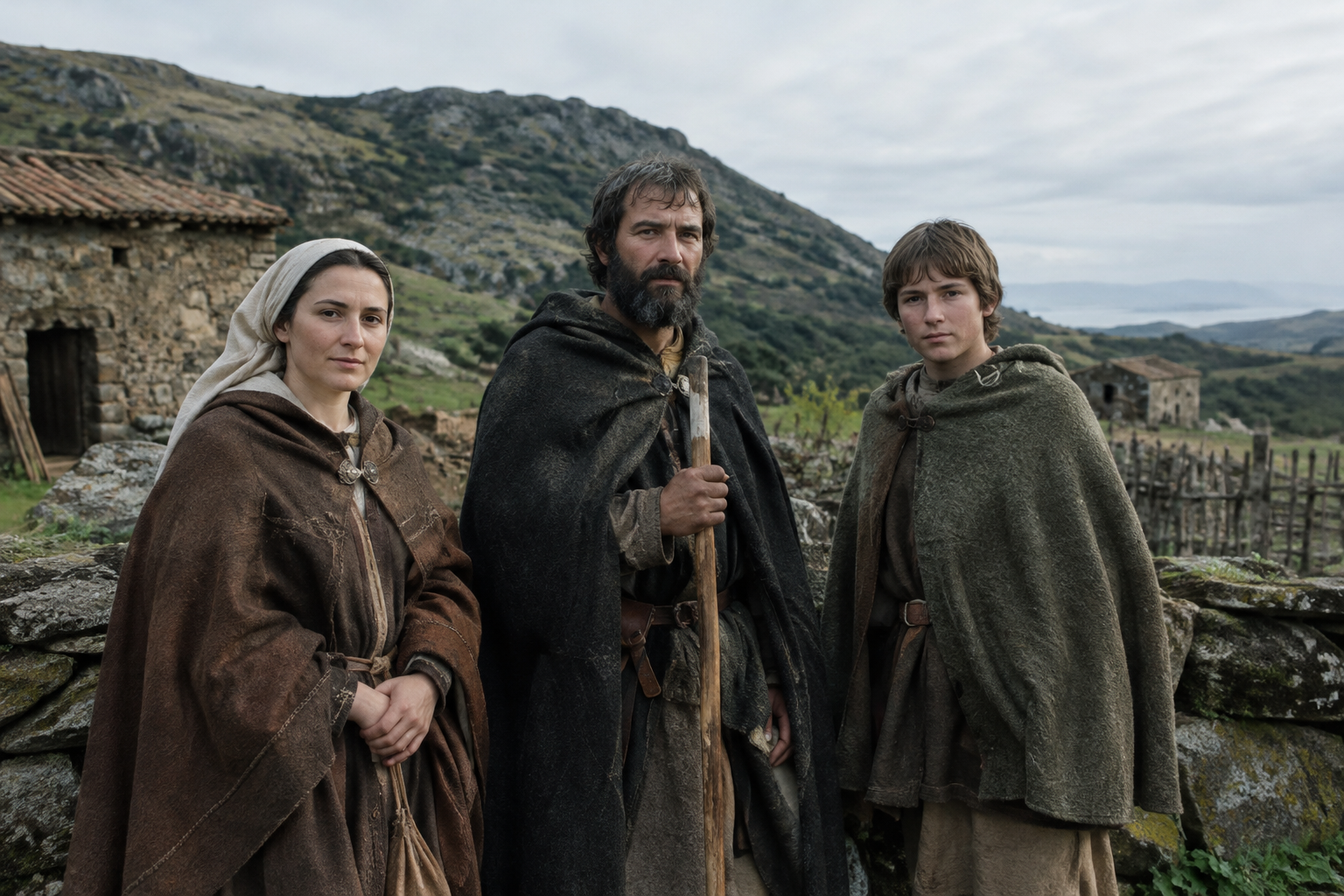
The northern Norwegian sample CGG107023, from Tomeide in Nesna and dated around AD 700, places this paternal branch in a Scandinavian setting just as the Viking Age was beginning. That date matters. It sits on the threshold of the period when seaborne mobility intensified across the North Sea, the Irish Sea, and the North Atlantic, linking Norway to Britain, the Frankish coast, and beyond.
On its own, one male lineage cannot tell us whether this man's paternal ancestors had recently arrived, had long been established in Scandinavia, or belonged to a family shaped by earlier movement around the North Sea. But the context is historically suggestive. Viking Age Norway was not an isolated backwater; it was part of a maritime zone where people, goods, marriages, and loyalties crossed water more easily than many modern readers imagine.
An ancient DNA study of early medieval Scandinavia and adjacent regions is one of the research trails behind this kind of evidence, including the preprint at https://www.biorxiv.org/content/10.1101/2025.02.28.640770v1. Even without forcing the exact sample into an oversized historical claim, the Norwegian occurrence shows that the branch was present within the social world from which Viking expansion emerged.
The older British evidence is especially valuable because it predates both the Roman Empire in Britain and the Viking Age. Sample I13754, described here as a Celtic Briton from Pocklington, Yorkshire and dated to around 225 BC, places the same haplogroup branch in Iron Age eastern Yorkshire.
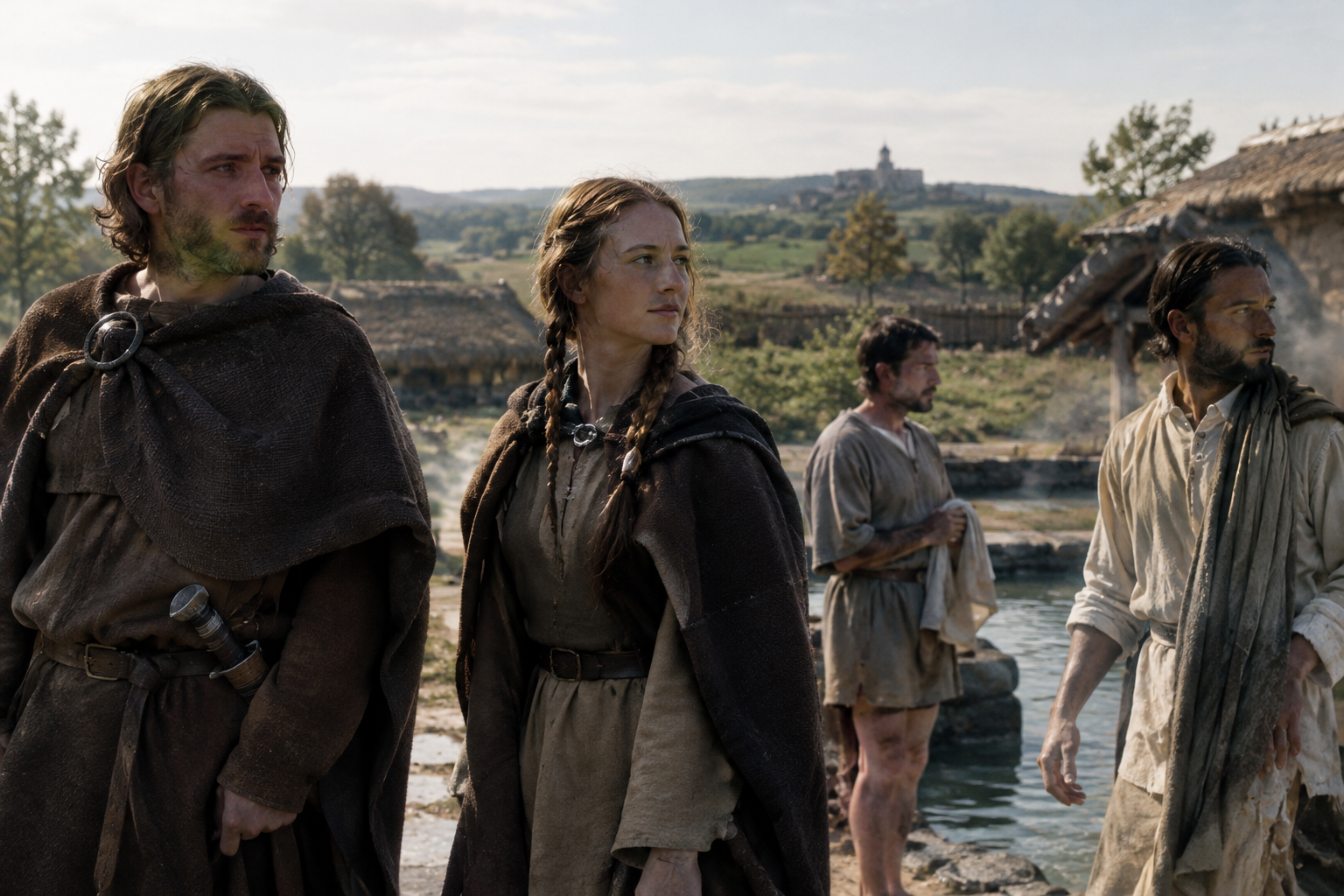
Pocklington has become one of the best-known windows onto later Iron Age Britain. Archaeologically, the region belongs to a world of local communities, elite display, and strong continental links across the North Sea. That does not mean every paternal lineage in Yorkshire came neatly from one migration event. It does mean that a branch later seen in Viking Age Norway was already present in Britain centuries earlier, in a landscape where sea routes, exchange, and cultural contact were already part of daily reality.
There is a wider genetic backdrop here as well. Research on Iron Age and Roman Britain has repeatedly shown that Britain before, during, and after Rome was neither genetically static nor reducible to simple tribal labels. The appearance of this branch in Yorkshire fits that broader picture: continuity in some lines, mobility in others, and a social map far more complicated than the old textbook version.
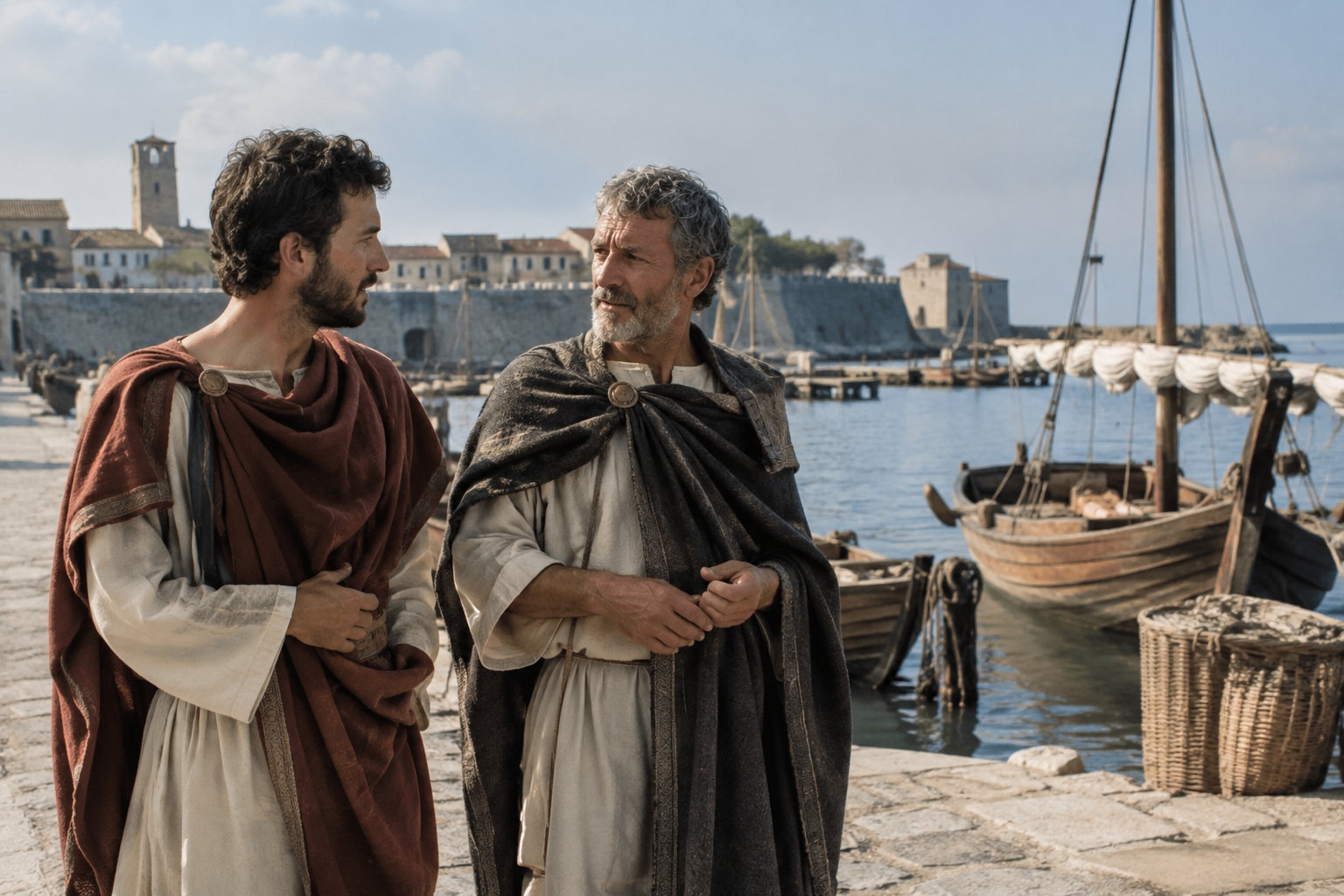
The strongest cluster in this article comes from Casenovole in Iron Age Italy, where two men dated to around 292 BC, CSN003 and CSN010, are both associated in the sample set with R1b1a1b1a1a2d1a. That matters because repeated appearances at one site are often more informative than a solitary outlier. They suggest that this paternal branch was not merely passing through but had some place in the local male population.
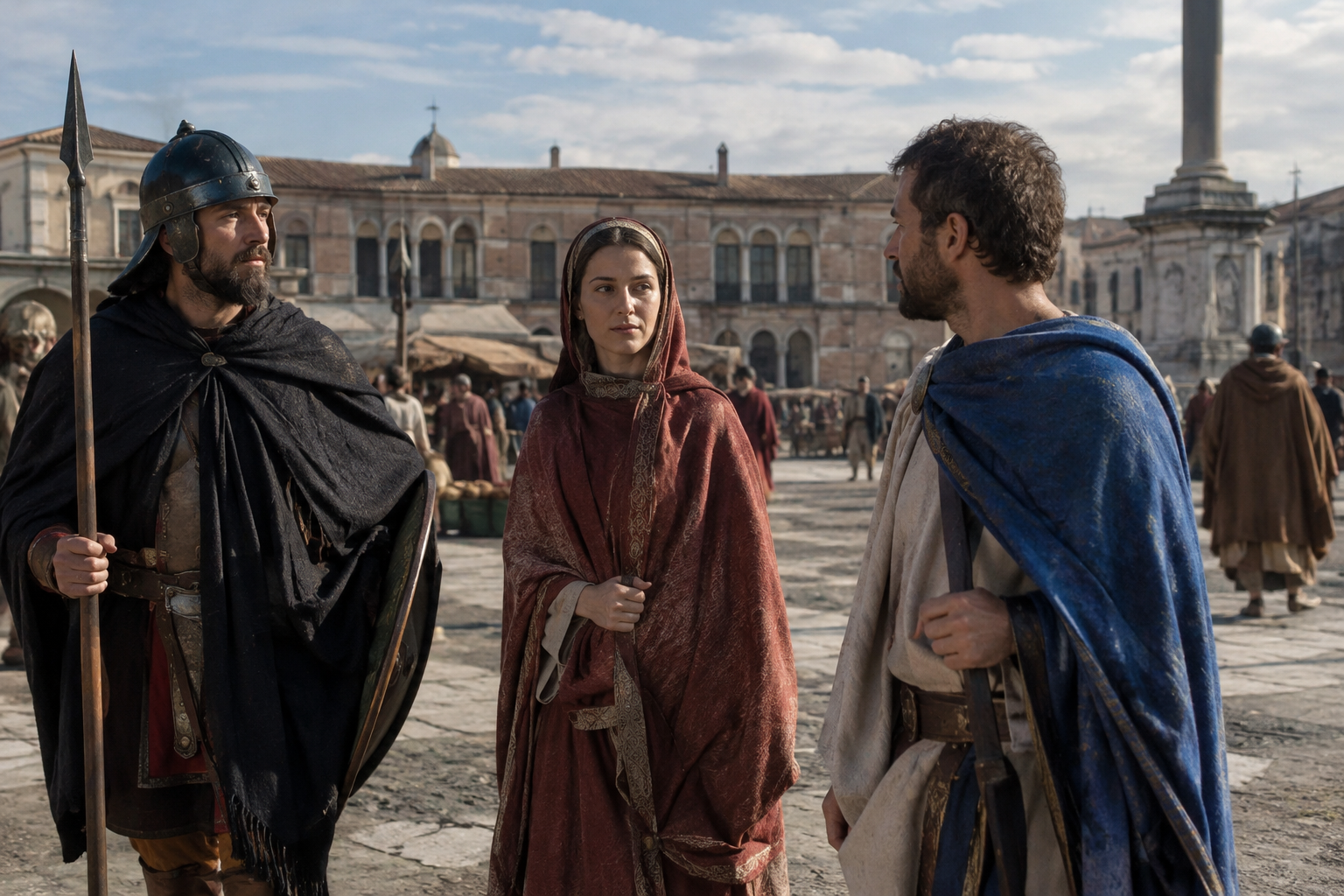
Casenovole belongs to the late Etruscan world, at a time when central Italy was undergoing profound political change under Roman expansion. The old habit was to treat the Etruscans as either mysterious outsiders or a neatly bounded people. Ancient DNA has been much less theatrical and much more interesting. It points instead to substantial local continuity in central Italy across the first millennium BC, alongside cultural change and later demographic shifts.
A landmark study on Etruscan and neighboring populations, published in https://www.nature.com/articles/s41586-021-04287-4, helped clarify that distinction between cultural identity and genetic profile. For this haplogroup article, the important point is not to turn two Casenovole men into spokesmen for all Etruscans. It is that this exact paternal branch appears in late Iron Age Tuscany as part of a settled, local context, not merely on the fringes of Mediterranean history.
Put the evidence side by side and the shape of the story becomes clearer. Around 292 BC, the branch is present at Casenovole in Etruscan Italy. Around 225 BC, it appears in Iron Age Yorkshire at Pocklington. By around AD 700, it is present in northern Norway at Tomeide Nesna. These are not identical societies, nor are they successive political descendants of one another. They are, however, all part of a wider European zone tied together by long-distance contact, war, trade, and family formation.
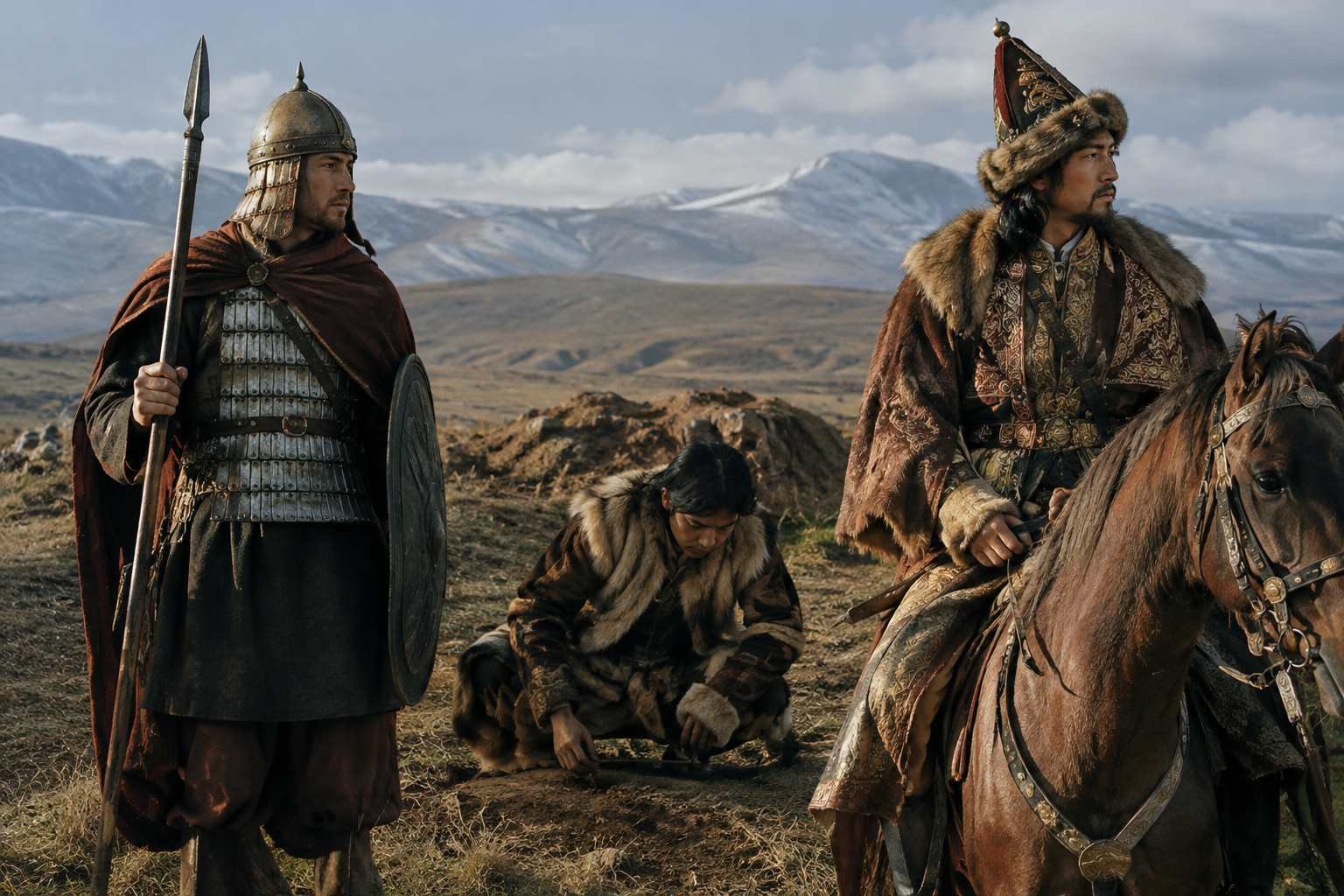
That is why it would be misleading to pin R1b1a1b1a1a2d1a to a single historical label such as "Etruscan," "Celtic," or "Viking." The evidence in hand does not support that. What it does support is a branch embedded in western and northern European male lineages by the later Iron Age, turning up in communities with different languages, political structures, and cultural habits.
There is also a methodological lesson here. A precise terminal haplogroup can feel wonderfully exact, but archaeology keeps spoiling any temptation to oversimplify. The same paternal line can sit inside very different worlds because lineages outlast kingdoms, tribal names, and even languages. A grandson may inherit his Y-chromosome from a paternal line whose earlier bearers lived under another culture entirely.
Roman and early medieval Britain
For someone researching R1b1a1b1a1a2d1a today, the most distinctive thing about the current ancient evidence is not a single origin legend but a pattern of placement. This paternal line appears in an Etruscan site in central Italy, in pre-Roman eastern Yorkshire, and in Viking Age Norway. That is a remarkably broad historical spread for such a specific branch, even if the number of ancient samples is still small.
So the responsible takeaway is a historical one. This looks like a paternal line that had become part of several important European populations by the Iron Age and remained in circulation into the early medieval North. It may connect a modern tester not to one dramatic ancestor, but to the ordinary and durable fact that male lines could move, settle, and reappear across very different archaeological settings over many centuries.
Comments