Haplogroup R1b1a1b1a1a1c2b1b4a

– 4 min read


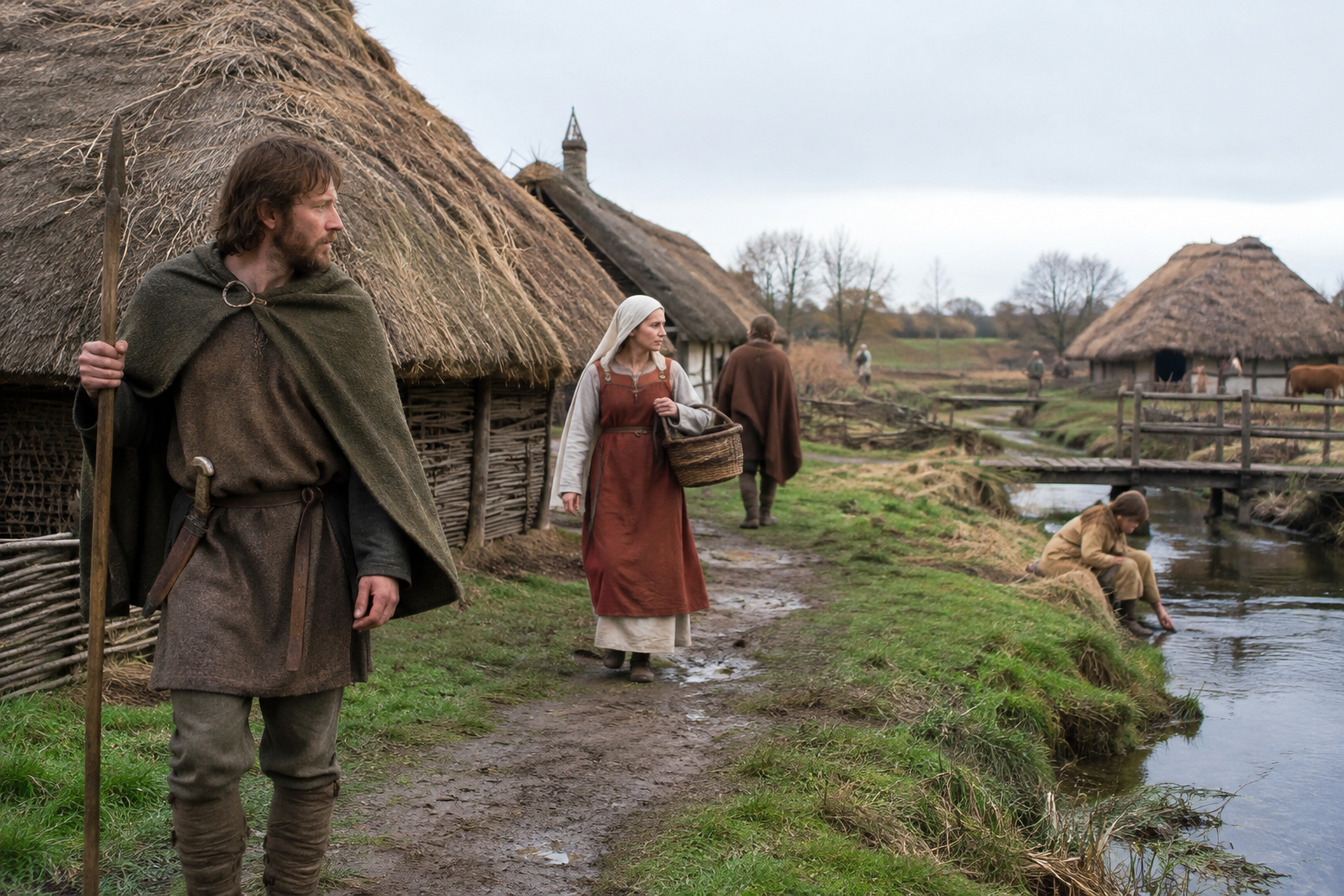
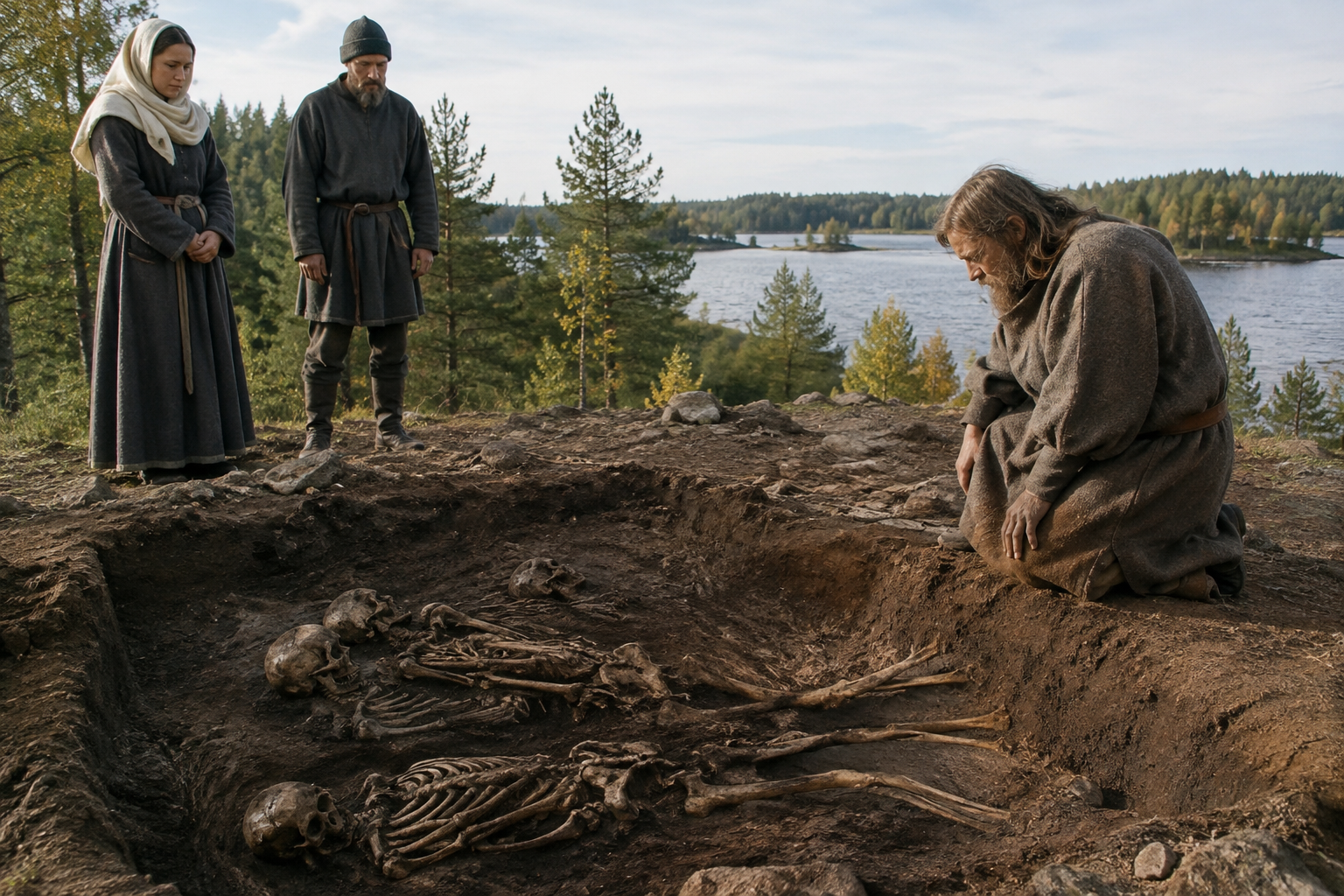
At Melbourn Water Lane in Cambridgeshire, one early medieval burial has become a small but telling witness to the making of England. The individual labelled WLM048, dated to around AD 625, belongs to the period when eastern England was being reshaped by migration, local continuity, new kingdoms, and new social identities. He is associated here with the Y-DNA haplogroup R1b1a1b1a1a1c2b1b4a, a very specific paternal branch detected in an Anglo-Saxon context.
That matters because Y-DNA tracks one direct male line only: father to son across generations. It does not describe a whole person or an entire people. But when a branch like R1b1a1b1a1a1c2b1b4a turns up in a documented early medieval burial, it gives us something wonderfully concrete: not a vague map of "ancient ancestry", but a paternal line anchored to a place, a date, and a real archaeological community in seventh-century Britain.
Melbourn sits in a part of eastern England that was deeply involved in the cultural transformations of the fifth to seventh centuries AD. By the time WLM048 was buried, the old Roman order had long collapsed, but the landscape was anything but empty or static. Communities were farming, burying their dead in recognisably early medieval ways, and participating in the political world of emerging Anglo-Saxon polities.
Cambridgeshire is especially useful for ancient DNA because it lies in a region where archaeologists and geneticists can compare burials, settlement patterns, and wider population change. WLM048 is therefore interesting not because one skeleton can stand for all of England, but because he belongs to a zone where debates about migration and mixture are unusually vivid. A paternal lineage assigned to R1b1a1b1a1a1c2b1b4a in this setting suggests that this branch was present among men living in the Anglo-Saxon cultural world of eastern Britain by the early seventh century.
The long label R1b1a1b1a1a1c2b1b4a places WLM048 within the vast R1b family, one of the major Y-chromosome lineages in western Eurasia. But the important point is scale. The broad parent lineage has a very deep history spread across many regions and periods, whereas this narrow subclade represents a much more specific branch somewhere far down that paternal tree.
So it would be careless to say that this exact branch "belongs" to all Celts, all Anglo-Saxons, or all people in Britain. Ancient DNA does not work like a heraldic badge pinned to an ethnic group. What we can say, more modestly and more usefully, is that one man at Melbourn Water Lane, buried in an Anglo-Saxon early medieval setting around AD 625, carried a paternal line assigned here to this precise branch.
That is already valuable evidence. In public discussions, early medieval England is still too often imagined in blunt categories: natives on one side, incomers on the other. Genetics has made that picture messier, and more historically plausible. Male lines, female lines, and whole-genome ancestry do not always move together, and they do not always align neatly with language or material culture.
The date of WLM048 places him in a particularly charged historical moment. Around the early seventh century, eastern England was experiencing both political consolidation and religious change. This was the age when kingdoms such as East Anglia, Mercia, and their neighbours were becoming more structured, and when Christianity was beginning to establish itself more firmly alongside older traditions.
That wider setting gives extra interest to a burial like Melbourn Water Lane. Even without inventing grave goods or biography, we can place WLM048 in a society that was neither wholly "Germanic newcomer" nor simply a surviving Roman-British remnant. It was a blended, evolving world. Ancient DNA studies of early medieval Britain have repeatedly shown that some communities in the east had substantial continental northern European ancestry, while others show stronger continuity with pre-existing local populations, and many include both.
Research connected to ancient genomes from Britain and nearby regions has helped establish just how varied these communities were. One useful entry point into that broader work is the project associated with this ancient DNA research dataset, which links the Melbourn material to the expanding genomic study of early medieval populations. The real strength of such work is comparative: one grave becomes more meaningful when read beside many others from the same broad period.
Roman to early medieval Britain
There is a temptation, when looking at a very specific haplogroup, to want a grand migration story attached to it at once. But archaeology is often more disciplined, and more interesting, than that. WLM048 matters because he is securely placed in an excavated early medieval English setting. He gives R1b1a1b1a1a1c2b1b4a a documented presence in a real historical landscape rather than in abstract phylogenetic space.
Cambridgeshire has become one of the important testing grounds for how post-Roman Britain changed. Burials from the region have contributed to debates over migration from the North Sea world, local survival after Rome, and the formation of the English gene pool. In that debate, a single paternal line cannot settle large arguments, but it can sharpen them. It reminds us that the making of early England happened through families as well as armies, households as well as kingdoms.
This is also why precise sample identifiers matter. WLM048 is not a legendary ancestor or a surname-founder known from medieval genealogy. He is better than that, in a way: a datable excavated individual from a known place. For anyone carrying the same or a related paternal branch today, that creates a rare kind of connection - not to myth, but to evidence.
If your own Y-DNA falls on or near R1b1a1b1a1a1c2b1b4a, the Melbourn Water Lane burial offers a grounded historical glimpse of that paternal line in early medieval England. It does not prove descent from WLM048 himself, nor does it assign a modern identity a ready-made Anglo-Saxon label. What it does offer is something firmer: evidence that this branch was present in the male population of seventh-century Cambridgeshire, in the complicated world that followed Rome and helped create England.
That is the real fascination of this haplogroup. Its story, for now, is not about royal display or sweeping conquest narratives. It is about one excavated man in Cambridgeshire, one paternal line, and one moment when archaeology and genetics briefly let us see the human structure of an early medieval community.
Comments