Haplogroup R1b1a1a2a1a2c1

– 5 min read


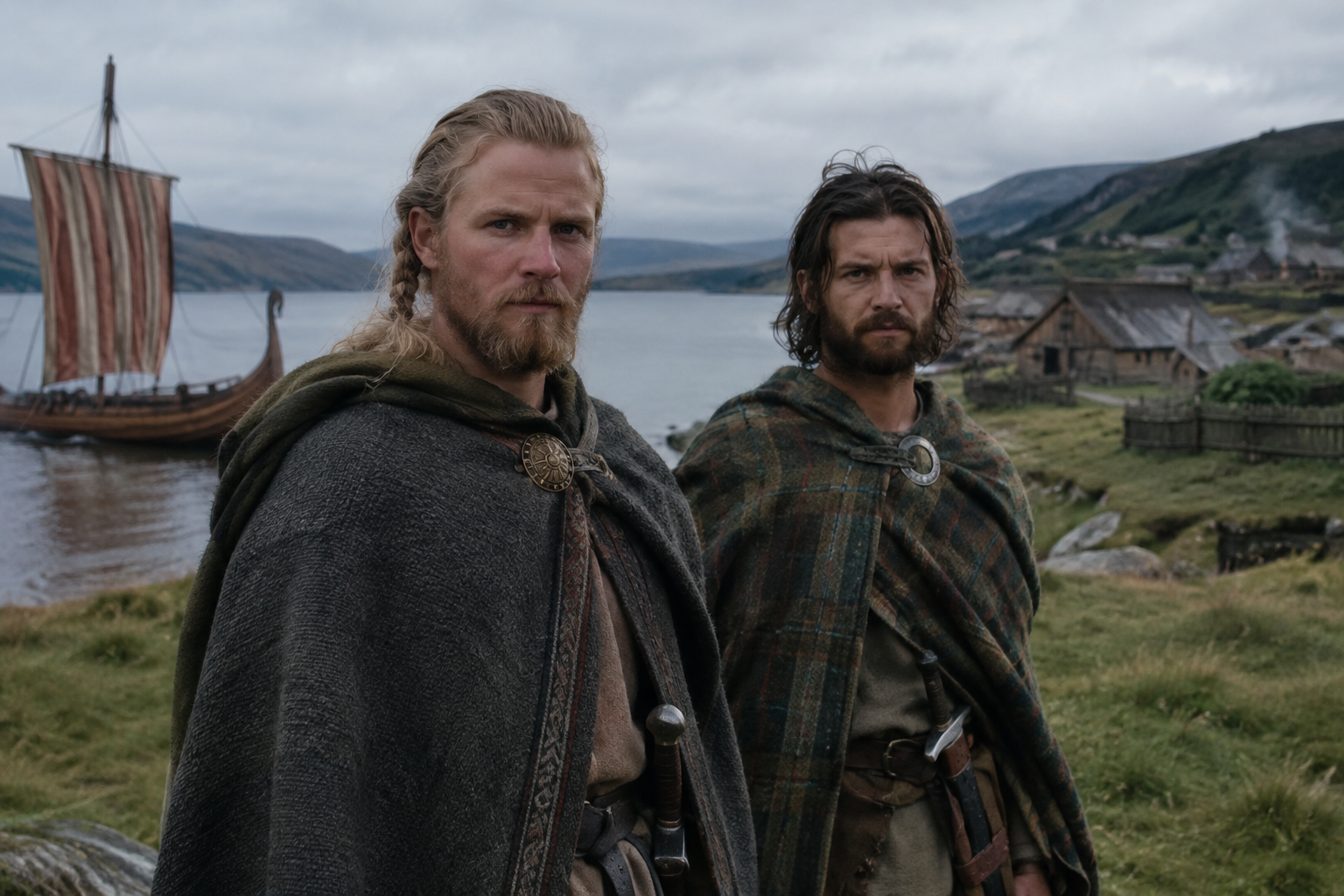
In late 10th-century Sweden, one of the clearest clues to the haplogroup R1b1a1a2a1a2c1 comes from a Viking Age individual at Fjalkinge, recorded as sample fjk363 and dated to around AD 975. That is already enough to make the case interesting. Fjalkinge sits in Scania, a region facing the Baltic and the Danish straits, exactly the sort of place where movement, trade, alliance, and intermarriage would have been part of ordinary life rather than exceptional drama.
The second sample sharpens the picture rather than simply repeating it. nuf002, described as a Viking Celtic Mix individual from Sweden and dated to around AD 935, suggests that this paternal branch turns up in a Scandinavian world that was not sealed off or ethnically tidy. Y-DNA traces one direct male line only, not a whole identity, but these two finds are enough to place this branch inside the mixed and outward-looking human landscape of the Viking Age.
R1b1a1a2a1a2c1 is a very narrow label inside the much larger R1b family, one of the major Y-chromosome lineages found across western Eurasia. That broader family has a long and complicated prehistory stretching far beyond Viking Age Scandinavia. The narrower branch in this article, however, should not automatically be given every migration story ever attached to R1b as a whole.
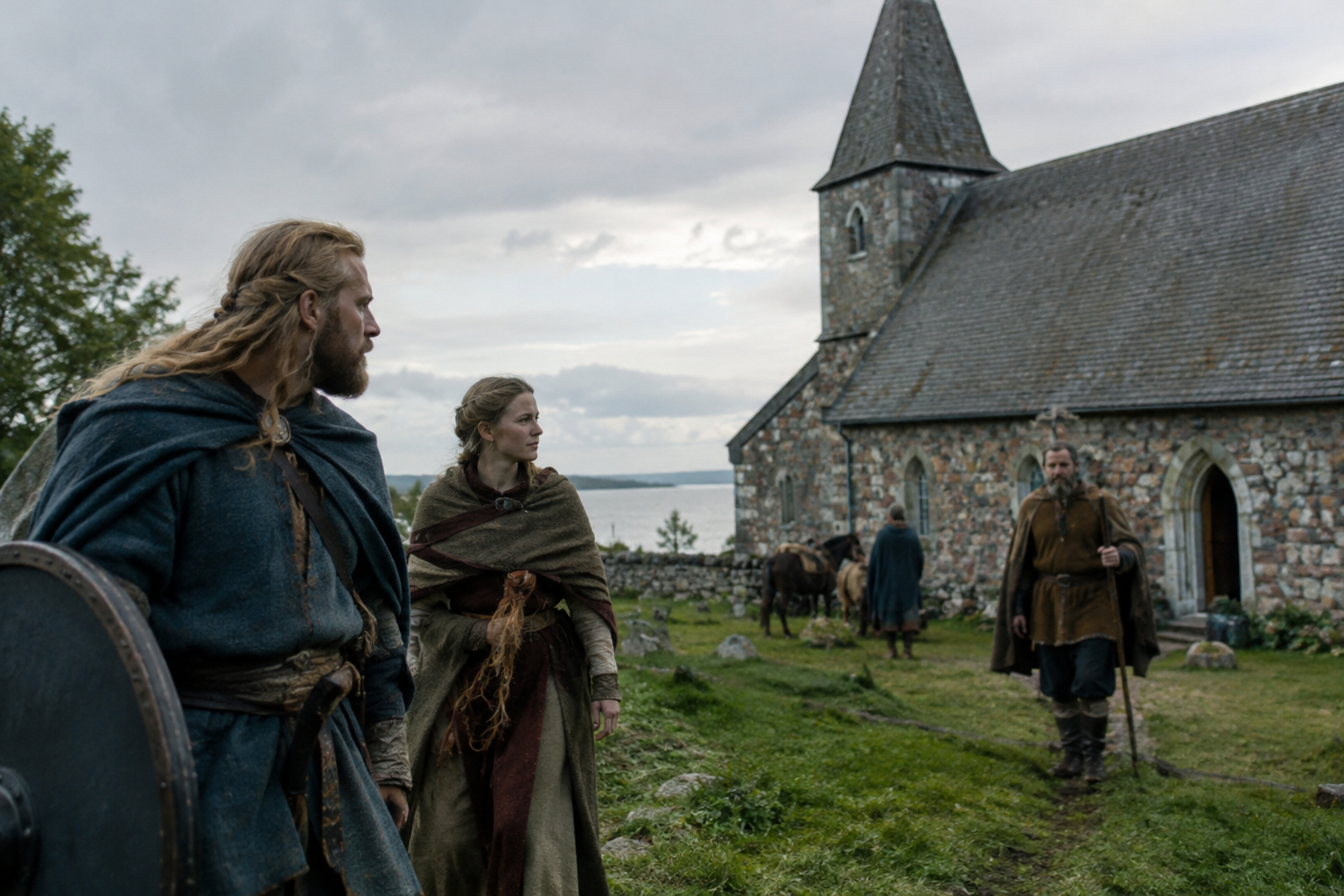
What the ancient evidence here really shows is more modest and more useful. This specific paternal line, or an assignment associated with it, appears among men in Viking Age Sweden. That places it within a historical setting defined by maritime travel, regional power, Christian conversion in some districts, older burial traditions in others, and constant contact across the North Sea and Baltic worlds.
Sample fjk363 comes from Fjalkinge in southern Sweden, dated to around AD 975. Even without inventing details that are not in the record, the location matters a great deal. Scania was not some remote fringe; it was part of a densely connected zone linking southern Scandinavia to Denmark, the western Baltic, and routes leading toward the British Isles and the Continent.
That makes a lineage like R1b1a1a2a1a2c1 especially worth noticing here. In such a setting, a paternal branch could persist locally for generations, arrive through migration, or spread through smaller-scale family movements across nearby coasts. The important point is not to force one grand origin story, but to recognise that late Viking Age southern Sweden was exactly the kind of place where lineages travelled with people, households, and marriage networks.
Research connected to medieval Swedish burials has increasingly emphasized kinship and the social meaning of burial communities rather than treating graves as isolated points on a map. A project on biological and social kinship in medieval Swedish multiple burials reflects that wider shift in approach: ancient DNA is most powerful when placed beside archaeology, place, and community structure.
The other ancient individual, nuf002, is dated to about AD 935 and described as Viking Celtic Mix Sweden. That phrase should be handled carefully. It does not mean that a Y-haplogroup by itself can identify someone as culturally Norse or Gaelic, nor does it prove a single neat biographical story. What it does suggest is that this man belonged to a population shaped by the kind of cross-sea contact that historians of the Viking Age have long described.
By the 9th and 10th centuries, Scandinavian connections with Ireland, Scotland, the Isles, and parts of Britain were intense and sustained. Raiding came first in some places, settlement in others, but soon enough the more ordinary business of family life followed: unions, fosterage, household alliances, trade partnerships, and children growing up in mixed cultural settings. A man in Sweden with a profile described as Viking-Celtic mix fits that world very well indeed.
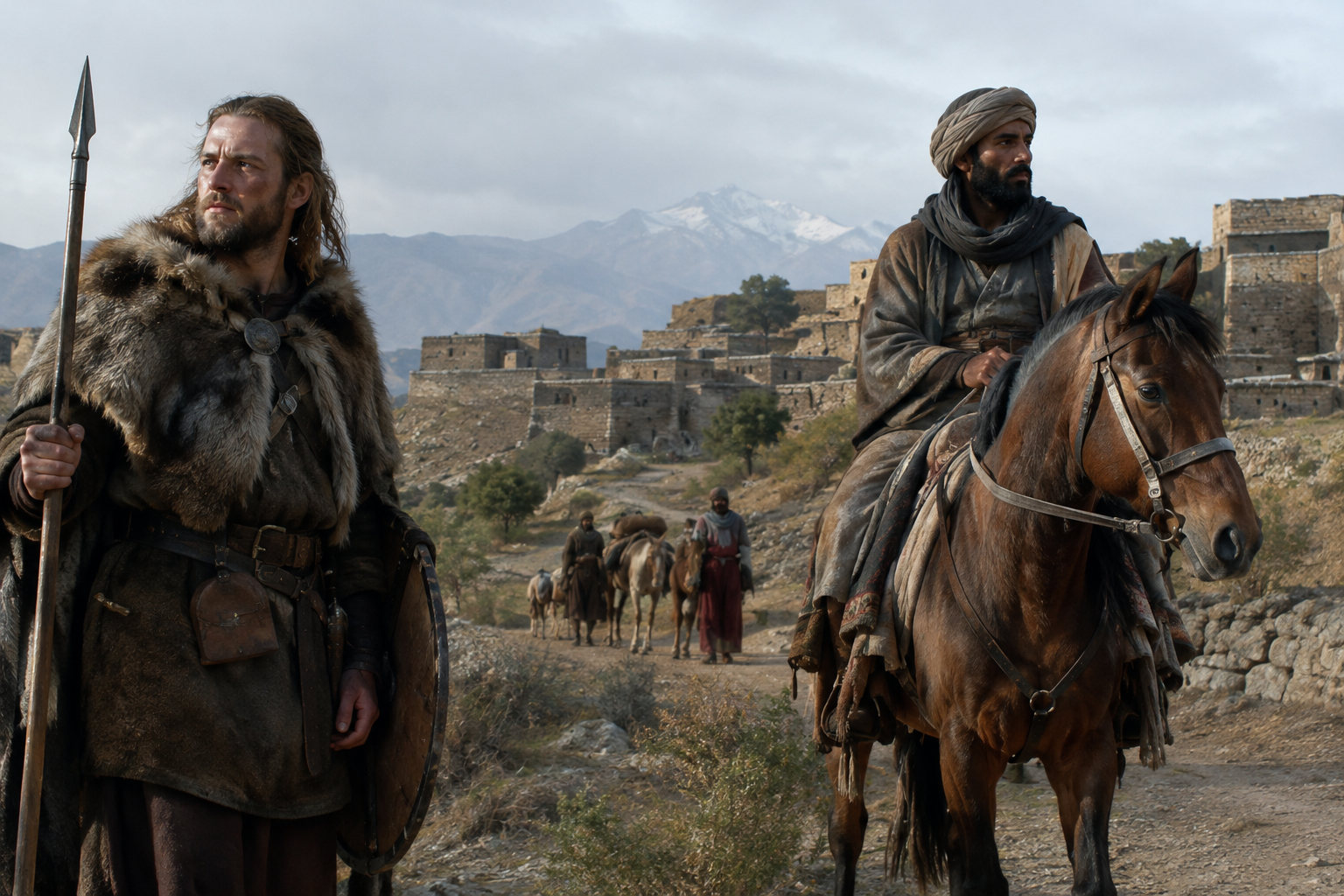
This is where the haplogroup becomes historically interesting. R1b lineages are common in many parts of Atlantic Europe, and Scandinavian contexts showing mixed ancestry remind us that the Viking Age was not simply a story of Scandinavians going outwards; people, genes, and identities also flowed back into Scandinavia. The evidence does not license a romantic tale of one wandering warrior, but it does support a picture of male lines moving within a North Sea network that was anything but closed.
Two Swedish samples may sound slender, but in ancient DNA they are not trivial. A haplogroup becomes historically meaningful when it appears in a real archaeological setting, tied to place and period. Here, that setting is Viking Age Sweden in the 10th century, one sample from Scania and another reflecting a mixed Scandinavian-Celtic context.
The wider historical background makes that pairing particularly apt. Southern and eastern Scandinavia were plugged into several worlds at once: the Danish straits, the Baltic trading sphere, the North Atlantic, and the river routes leading deeper into eastern Europe. Men carrying the same broad paternal family could have had very different lives depending on whether their families were rooted in farming districts, coastal exchange points, military retinues, or mixed communities created by mobility.
An ancient DNA study published in Current Biology helped bring this broader Viking genomic landscape into sharper view, showing that Viking Age populations cannot be reduced to a single uncomplicated ancestry profile. That wider research context makes the appearance of R1b1a1a2a1a2c1 in Sweden less surprising, and more historically intelligible.
There is a temptation, whenever a Y-line turns up in a famous period, to turn it into a tribal badge. That would be a mistake here. A paternal lineage is not the same thing as language, dress, political loyalty, or self-identification. A man carrying R1b1a1a2a1a2c1 in Viking Age Sweden might have belonged to a household that was local for generations, newly arrived, or already shaped by family ties to Britain or Ireland.
Still, the combination of fjk363 and nuf002 tells us something concrete. This branch is present in an environment where Scandinavian and Celtic-linked ancestry could meet, overlap, and become ordinary family history. That is a useful corrective to the old habit of imagining the Viking world as neatly divided into peoples who stayed in their own corners.
For someone whose paternal line falls under R1b1a1a2a1a2c1, these Swedish finds offer a grounded historical point of reference rather than a grandiose claim of descent from one famous people. At the moment, the strongest ancient picture is of this branch appearing in Viking Age Sweden, including one sample from Fjalkinge around AD 975 and another from a Swedish context described as Viking-Celtic mix around AD 935.
That makes this haplogroup especially evocative of the mobile, entangled world around the Baltic and North Sea in the 10th century: a world of local communities, imported connections, and families whose histories did not respect later national boundaries. It is a small but vivid reminder that paternal ancestry can sometimes be found not in a single homeland, but at a crossroads.
Comments