Haplogroup R1b1a1a2a1a

– 5 min read


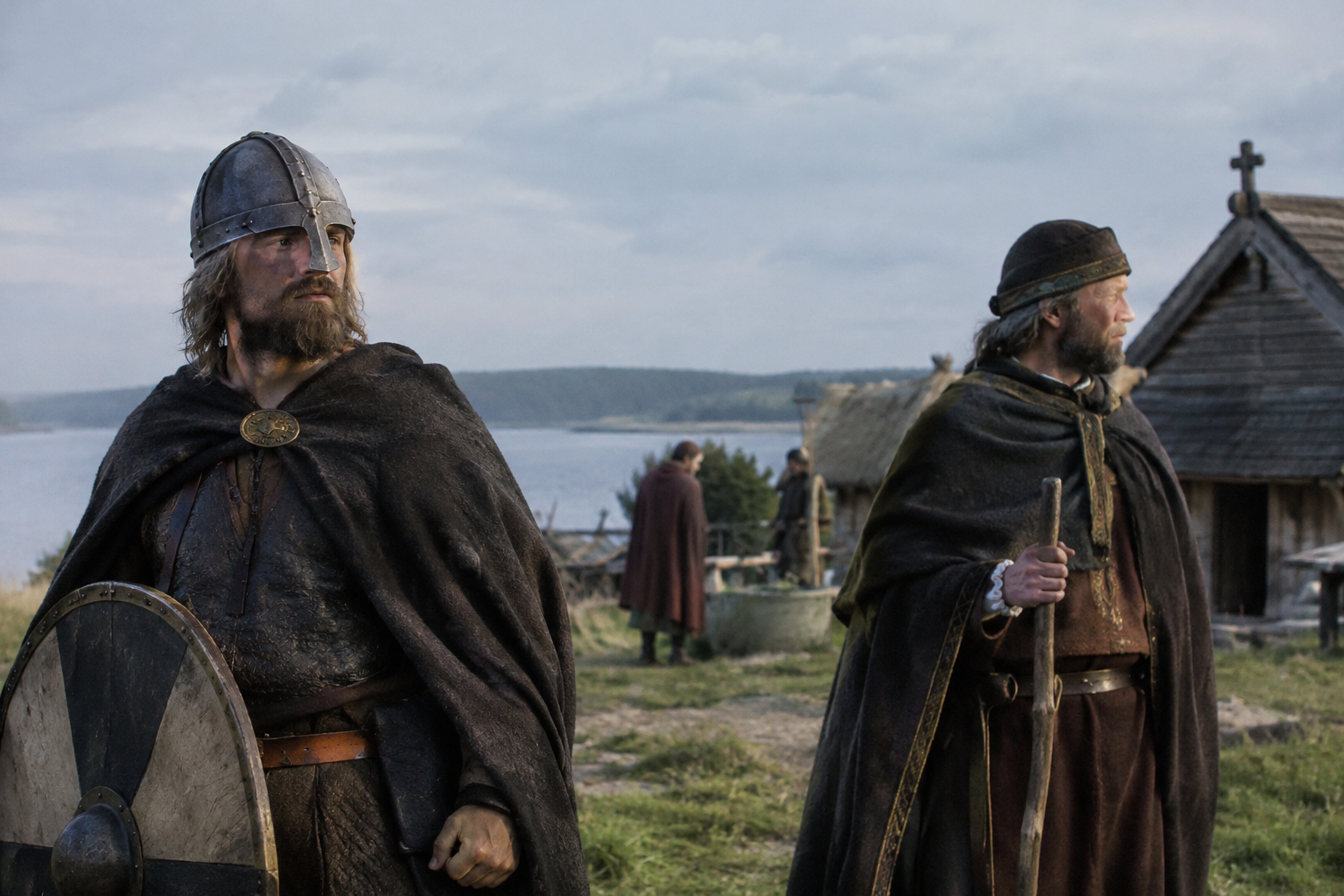
At Vasterhus in Sweden, a medieval cemetery has yielded the kind of evidence that makes ancient DNA feel less like abstraction and more like social history. One of the men from that burial ground, sample mbv290, dated here to around 1313 AD, has been associated with the Y-DNA haplogroup R1b1a1a2a1a. That is a paternal-line marker, tracing one direct male line rather than a person's whole ancestry, but in a churchyard setting it becomes especially interesting: it places a specific paternal branch inside a real Scandinavian community of the High Middle Ages.
The second sample in this small but suggestive cluster comes from much earlier Scandinavia: fjk065, from Viking Age Fjalkinge in Sweden, dated here to around 975 AD. Taken together, these two finds do not prove a dynasty, a migration route, or a single family story. What they do show is that the branch represented as R1b1a1a2a1a appears in two different Swedish settings, one in the Viking Age and another in the medieval Christian world that followed it.
R1b1a1a2a1a sits within the wider R1b family, one of the major Y-chromosome groupings found across much of western Eurasia. But it is important not to smudge the scales. The deep history of broad R1b is not automatically the history of every much narrower downstream branch, and the presence of this lineage in medieval Sweden does not mean it was somehow uniquely "Viking" or uniquely "Swedish."
What Y-DNA does best is something more precise and more modest. It allows us to trace continuity and variety in paternal lines across archaeological contexts. With only two ancient individuals named here, caution matters. Even so, the contrast between a Viking Age burial from Fjalkinge and a later churchyard burial from Vasterhus gives us a useful frame: this was a paternal line present in Scandinavia across a period of major religious and social transformation.
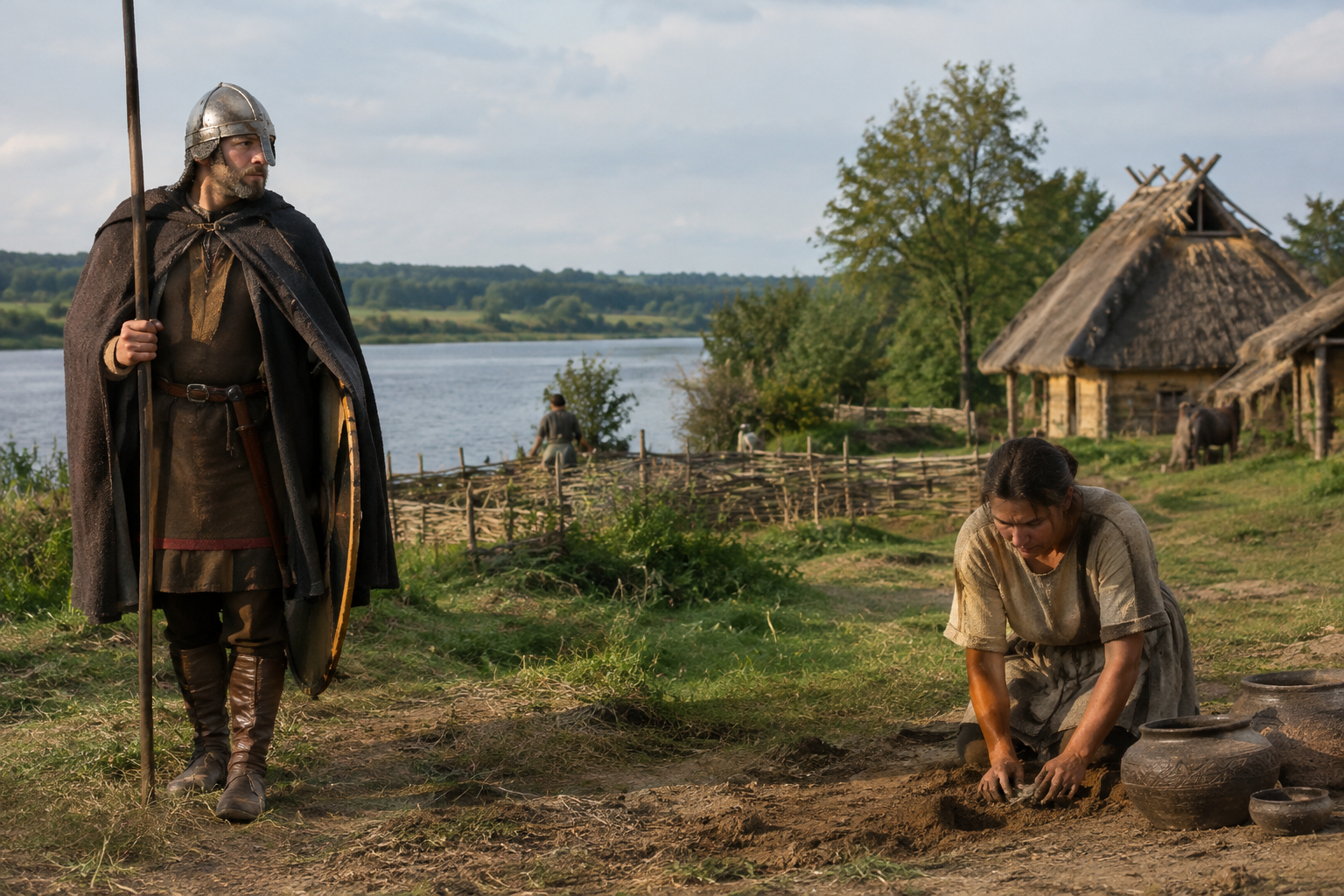
Sample fjk065 comes from Fjalkinge, in Skane, a region that sat close to the busy maritime world linking Denmark and southern Sweden. Around 975 AD, this was not a remote edge of Europe but part of a North Sea and Baltic zone full of movement, exchange, and political change. A Y-line such as R1b1a1a2a1a in this setting belongs in that crowded historical picture rather than in a tidy ethnic box.
By the late 10th century, Scandinavian society was already changing fast. Trade networks were well established, Christianity was advancing unevenly, and political authority was being negotiated at local and regional levels. A paternal lineage found at Fjalkinge may represent local continuity, movement from nearby regions, or older ancestry already embedded in southern Scandinavia. The honest answer is that the sample alone cannot decide between those possibilities.
Still, this is exactly why such evidence matters. Ancient DNA reminds us that the Viking Age was not peopled by a single biological type marching neatly through the sagas. It was a lived landscape of farms, burial grounds, coastlines, and communities in contact with one another, and paternal lines like this one formed part of that human mixture.
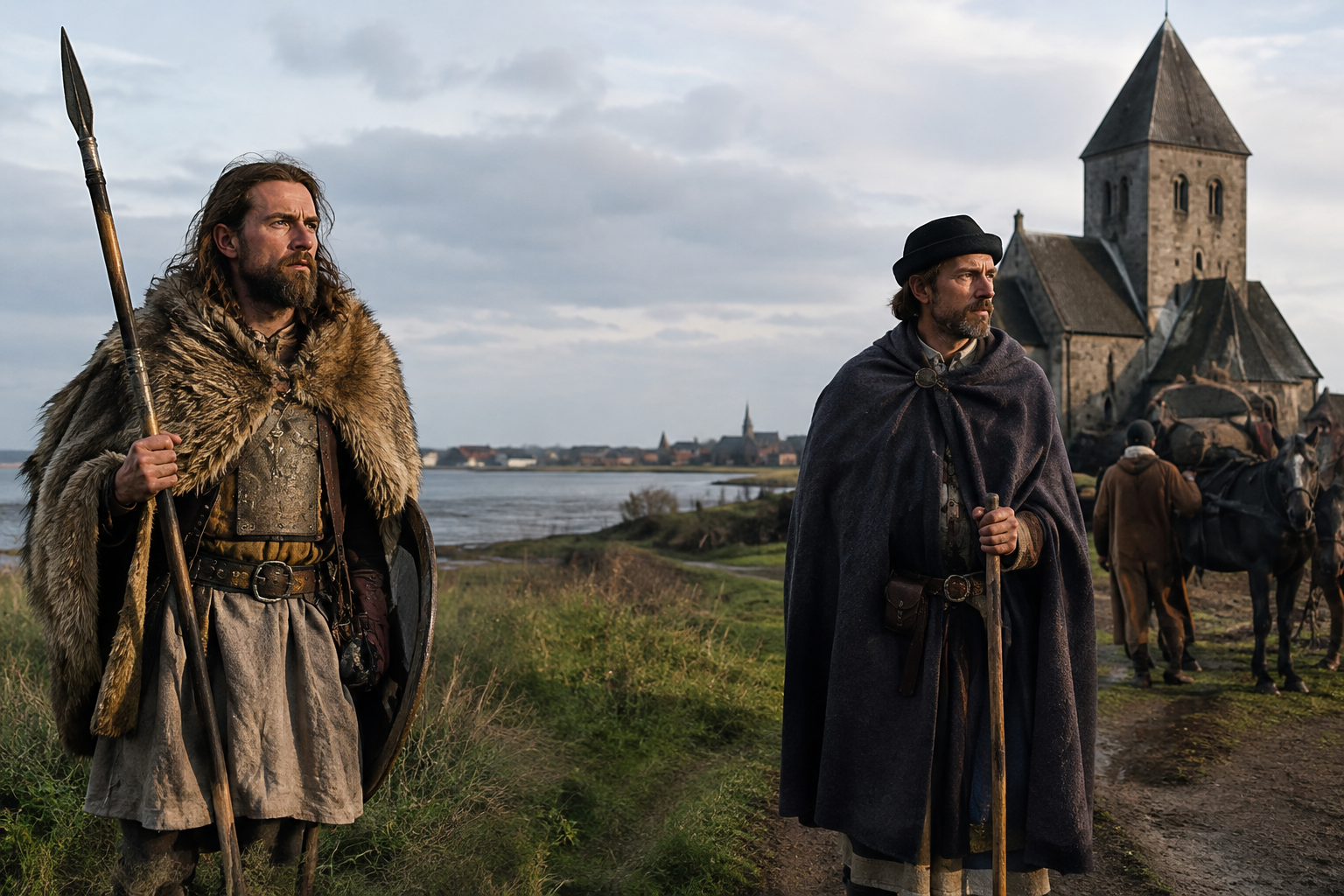
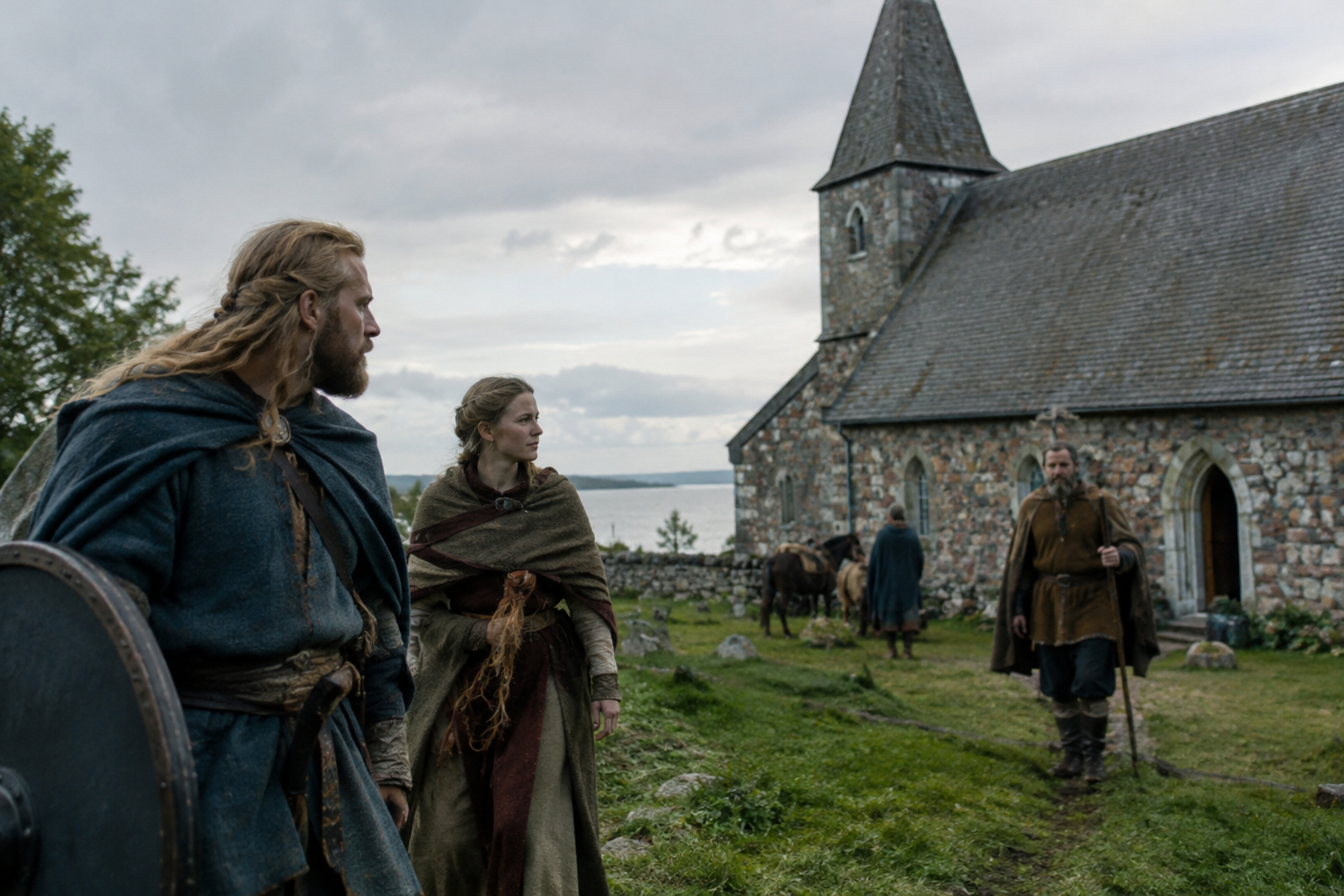
The later sample, mbv290, comes from Vasterhus and is dated here to about 1313 AD. By then, Scandinavia was unmistakably part of medieval Christian Europe. Cemeteries were no longer expressions of Viking Age burial custom but of parish life, ecclesiastical order, and communities structured around church, household, and inheritance.
That makes Vasterhus especially valuable. A paternal branch identified in a medieval cemetery is no longer seen only in the looser frame of Viking Age mobility; it appears inside a settled social world of kinship, landholding, and local memory. A research project on genomes from medieval Swedish multiple burials points to the larger importance of combining archaeology with genetics in such churchyard populations, where biological kinship and social relationships may overlap but are never simply identical.
That last point is worth pausing over. Medieval cemeteries often tempt us to imagine neat family plots and straightforward descent, but real communities were more complicated. Marriage, fosterage, remarriage, servitude, migration, and church practice all shaped who was buried where. So mbv290 gives us a firm paternal marker in medieval Sweden, but not a ready-made family tree.
The real interest of these two samples lies in sequence rather than quantity. fjk065 and mbv290 are separated by roughly three and a half centuries, spanning a period in which Scandinavia moved from the late Viking Age into an established medieval order. The political map shifted, religious life changed profoundly, and burial customs were transformed. Yet a paternal line associated with R1b1a1a2a1a appears in both worlds.
That does not amount to proof of uninterrupted local descent from one named man to another. But it does suggest that this branch belonged to the ordinary demographic fabric of Scandinavian life, not just to transient outsiders or to a single exceptional event. In historical terms, that is often the more interesting result. Grand narratives like invasions and conversions matter, but they only become real through the families and communities who lived through them.
Southern and central Sweden were never genetically sealed compartments. Contacts across the Baltic, with Denmark, with the North Sea world, and within inland Scandinavian networks all helped shape medieval populations. A lineage like this may have deep roots in the region, or it may reflect movements that long predated the two sampled men. Ancient DNA gives us fixed points; history supplies the wider map.
With some haplogroup articles, the temptation is to roam across half of Eurasia making loose comparisons. Here, the better approach is narrower and stronger. Both ancient individuals are Swedish, and both belong to periods when Scandinavia was being remade by long-term historical processes: first the Viking Age world of exchange and regional power, then the medieval parish landscape of Christian burial and local continuity.
That means the significance of R1b1a1a2a1a in this case is not imperial glamour or legendary descent. It is something sturdier: the appearance of the same paternal branch in two well-separated Scandinavian contexts. For people exploring their own Y-line, that kind of pattern is often more useful than grand claims. It suggests that this branch can sit comfortably inside the real population history of Sweden across major social change.
R1b1a1a2a1a emerges here not as a badge of one tribe or one heroic ancestry, but as a documented paternal line present in Sweden in both the late Viking Age and the medieval period. The two samples, fjk065 from Fjalkinge and mbv290 from Vasterhus, show this branch in very different archaeological worlds linked by geography but divided by centuries of religious and social change. If this is your paternal haplogroup, the strongest takeaway is a grounded one: your direct male line belongs to a lineage that is demonstrably part of historical Scandinavia's lived population history.
Comments