Haplogroup R1a1a1b1a1a1c1i
– 4 min read


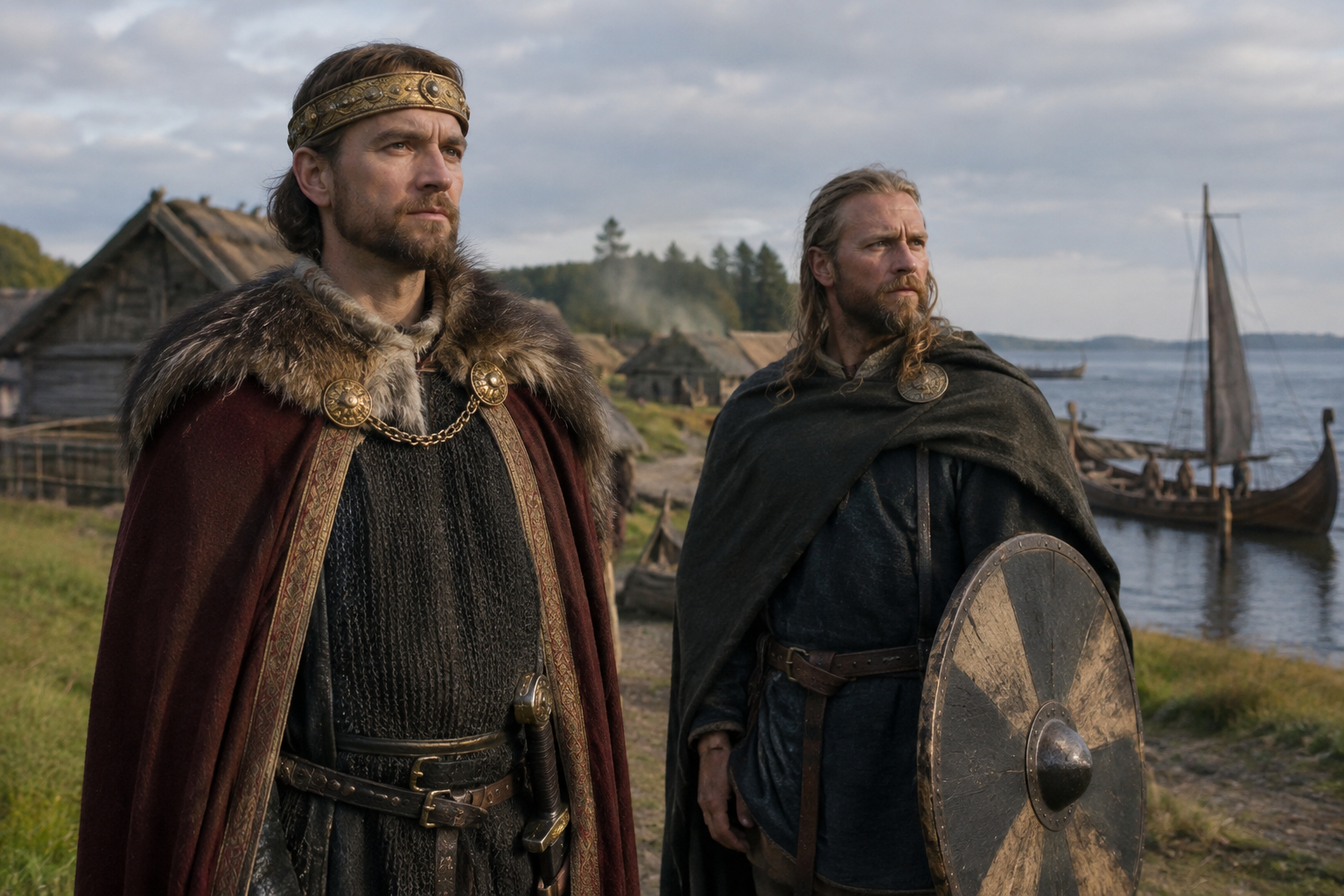
One of the clearest ancient anchors for the Y-DNA haplogroup R1a1a1b1a1a1c1i comes from a medieval Polish ruler: sample PCA0663, a male of the Piast non-Masovian dynasty dated to around 1253 AD. That is already an arresting combination - a named ruling house, a documented medieval context, and a very specific paternal branch. It places this lineage not in a vague prehistoric fog, but in the political world of high medieval Central Europe.
What makes this especially useful is that the same branch also appears in a very different setting: sample VK139 from Galgedil on Funen, Denmark, dated to about 925 AD in the Viking Age. With just these two individuals, the evidence does not tell us the whole history of the branch. But it does show something important: this paternal line turns up in two distinct medieval worlds, one Scandinavian and one Polish, both deeply connected to the shifting power networks of the Baltic and Central European zone.
The Piasts matter because they stand at the beginning of Poland's recorded ruling history. Medieval dynasties often look straightforward in chronicles, as if power simply descended from father to son in a neat line. Ancient DNA tends to make that picture both sharper and more complicated. A direct paternal lineage can sometimes be tracked, but only through the actual tested individuals, not through every person later attached to a famous house.
In this case, PCA0663 is valuable because it connects the branch R1a1a1b1a1a1c1i to a historically important elite context. That does not mean every Piast male carried the same terminal subclade, nor does it magically identify all modern bearers of the branch as Piast descendants. What it does provide is a secure historical setting in which this paternal line was present among medieval Polish dynastic males.
A recent ancient DNA study on medieval Polish rulers and their connections is directly relevant here, particularly for the wider dynastic context in which PCA0663 sits: research on the medieval Piast genetic record. Even without overreaching beyond the evidence, this is the sort of case that shows how Y-DNA can illuminate political history as well as family history.
The second ancient sample, VK139, comes from Galgedil on the Danish island of Funen, around 925 AD. That date places him in the late Viking Age, a period when Denmark was tied into an exceptionally mobile world of sea routes, war bands, trade contacts, and emerging kingdoms. Funen was not peripheral. It sat in the middle of the Danish islands, a strategic landscape within the western Baltic.
The importance of VK139 lies in contrast as much as in continuity. This is not a Piast ruler in a medieval Polish dynastic setting, but a Viking Age man from Denmark. The presence of the same narrow paternal branch in both settings suggests that the lineage belonged to the broader human traffic of northern and eastern Europe before later political borders hardened around it.
That does not prove that VK139 was an ancestor of PCA0663, nor that the branch was specifically "Viking" in any ethnic sense. Y-DNA follows one direct male line only. Still, when the same branch appears in Viking Age Denmark and later among medieval Polish elites, it becomes hard to avoid the larger historical backdrop: the Baltic was a zone of contact, not a wall.
For this haplogroup, the most interesting story is not a mythical single origin tale but a documented medieval geography. Denmark and Piast Poland were linked, directly and indirectly, through trade, raiding, diplomacy, marriage, and mercenary service. The southern Baltic in the 10th to 13th centuries was full of such entanglements: Scandinavian settlers and traders moved eastward, Slavic polities consolidated, and dynasties rose by controlling routes as much as territories.
That historical setting makes the pairing of VK139 and PCA0663 more meaningful than either sample alone. The two men lived in different centuries and different political worlds, but both belonged to a connected northern European sphere. If you carry R1a1a1b1a1a1c1i today, these ancient appearances suggest that your direct paternal line may have been part of those medieval networks that linked the Danish islands, the southern Baltic shore, and the inland kingdoms forming in Central Europe.
There is also a cautionary point worth keeping in view. The branch name here is extremely specific, much narrower than the large parent haplogroup R1a. It would be careless to take every broad statement ever made about R1a across Eurasia and paste it directly onto R1a1a1b1a1a1c1i. What the ancient evidence supports most clearly is a medieval northern-central European presence, not a complete map of the branch's deeper prehistory.
Ancient DNA articles often work with dozens or hundreds of individuals. Yet sometimes two well-placed samples can be historically revealing. PCA0663 ties the branch to a named ruling milieu in medieval Poland. VK139 places it in Viking Age Denmark, in a society famous not just for movement overseas but for reshaping the Baltic itself.
That sort of distribution is especially useful for family historians because it replaces abstraction with context. Instead of a bare alphanumeric haplogroup label, we can point to actual men from real places: a Piast dynastic male in thirteenth-century Poland, and a Viking Age individual from Funen in the tenth century. Those are not legends or retrospective genealogies. They are excavated people.
An earlier large-scale study of Viking Age genomes has been widely used to frame finds like the Galgedil material, and the relevant research trail for that Scandinavian setting includes ancient DNA work on Viking Age populations. Used carefully, such research helps place VK139 within the wider demographic movement of the period without forcing a more precise claim than the evidence allows.
R1a1a1b1a1a1c1i is, in the present state of the evidence here, a branch with credible medieval visibility in both Viking Age Denmark and Piast Poland. That is a striking combination because it belongs to a zone where Scandinavian, Slavic, and dynastic histories overlapped so intensely. The branch does not by itself assign ethnicity, rank, or a royal pedigree. But it does place a direct paternal line inside one of medieval Europe's most connected regions.
For someone researching this haplogroup today, the strongest takeaway is not a fantasy of certain descent from kings or raiders. It is something better: your paternal line belongs to a branch already seen in real medieval individuals from two historically important Baltic worlds, one aristocratic and one Viking Age Scandinavian. That is solid ground on which to build further genealogical and genetic research.






Comments