Haplogroup R1a1a1a1c

– 5 min read


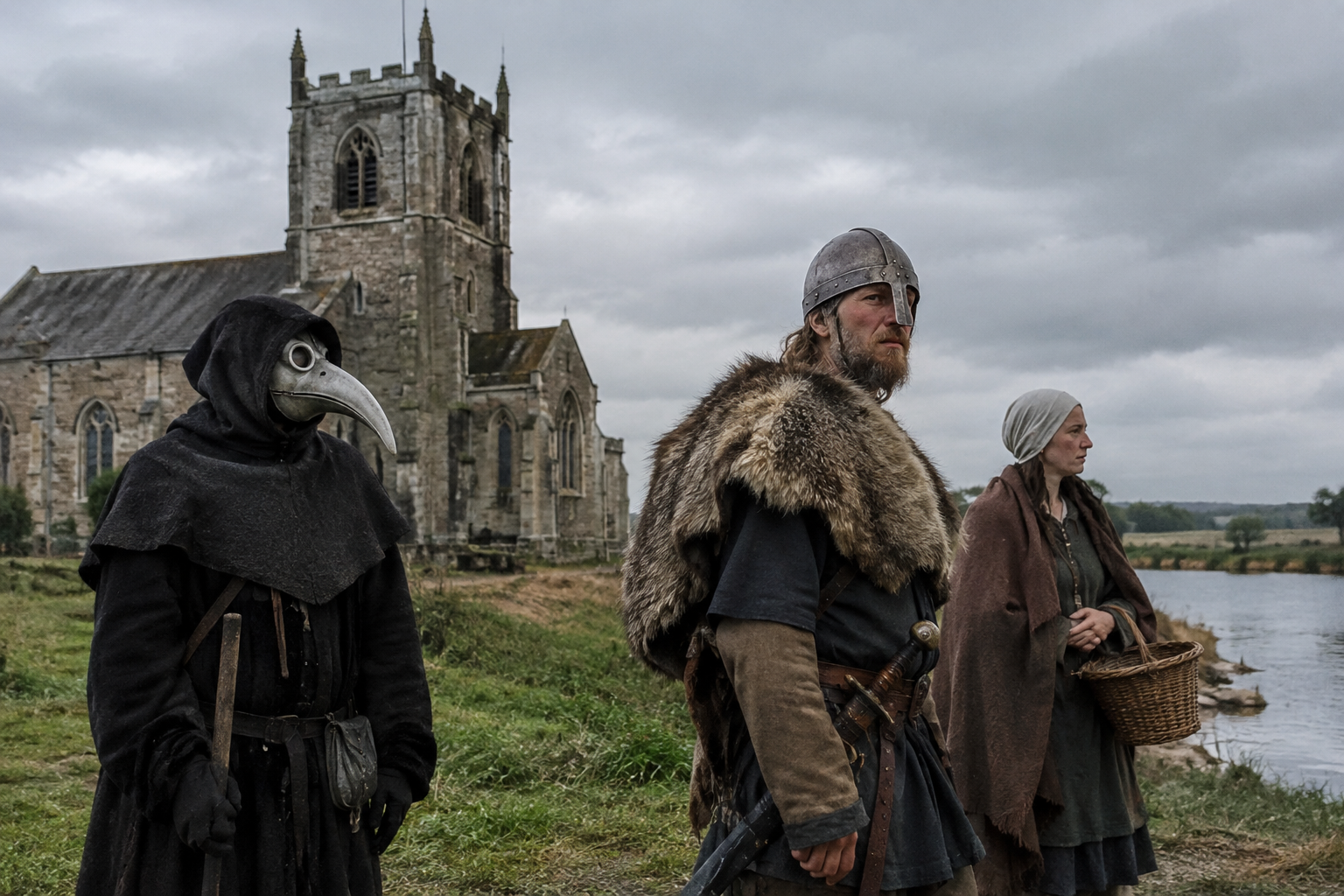
In 1349, as the Black Death tore through Cambridge, one man was buried at All Saints by the Castle. Today he is known in the ancient DNA record as COM042. He was not a king, not a famous knight, and not someone the chronicles cared to name. Yet for anyone interested in Y-DNA haplogroup R1a1a1a1c, he matters because he fixes that paternal line in a brutally specific historical moment: plague-era England, inside a town shaken by one of the worst demographic catastrophes in European history.
That is often where ancient DNA is at its best. It does not simply tell us that a lineage existed somewhere in the past. It places a paternal branch in a real landscape, among real communities, under real historical pressures. In this case, the branch appears again in a very different setting as well: VK30, dated to around AD 1050 at Viking Age Skara Varnhem in Sweden. Put those two samples side by side, and R1a1a1a1c stops looking like an abstraction and starts looking like part of the lived history of medieval northern Europe.
COM042 comes from Black Death Cambridge, All Saints by the Castle, England, dated to AD 1349. Even without embroidered detail, the context is powerful enough on its own. This was a burial from a town caught in the first great wave of plague mortality, when ordinary parish life, labor, inheritance, and family continuity were all under severe strain.
For a Y-chromosome lineage, that setting is especially striking. Y-DNA traces one direct paternal line only, not a person's whole ancestry, but it is precisely the sort of evidence that lets us ask whether male lines persisted through dramatic historical breaks. A man carrying R1a1a1a1c in plague-time Cambridge reminds us that paternal branches associated today with broad northern and eastern European distributions were present in medieval England too, embedded in local populations rather than floating above them as some abstract migration label.
A useful companion to this picture is MyTrueAncestry's piece on medieval Cambridgeshire, which explores how genetics can illuminate the population before and after the plague.
Black Death Cambridgeshire DNA
There is also a methodological point worth making. Plague cemeteries and associated medieval burials have become important not only for pathogen history but for social history through DNA. The same skeletal remains can speak to disease, kinship, mobility, and the survival of paternal lines. A research project associated with these Cambridge-era materials is archived at https://www.ebi.ac.uk/ena/browser/view/PRJEB64346, reflecting the growing scale at which medieval genomes are now studied.
R1a1a1a1c is a narrow branch within the wider haplogroup R1a, one of the major Y-chromosome lineages of Eurasia. That broader family has a long and complicated history stretching across different regions and periods, but it would be a mistake to pour all of that history directly into this one subclade. A precise branch name is not a ready-made ethnic badge, nor a guarantee of one particular migration story.
What the two samples here do show is that a paternal line reported under R1a1a1a1c appears in both medieval Sweden and medieval England. That is a historically meaningful pattern because northern Europe in these centuries was anything but isolated. Trade, marriage, warfare, church networks, seasonal movement, and settlement all tied the North Sea and Baltic worlds together.
The safest reading, then, is not that one sample explains the other, but that this branch belonged to the circulating male-line diversity of medieval northern Europe. The value of ancient DNA is that it anchors that statement in named archaeological contexts.
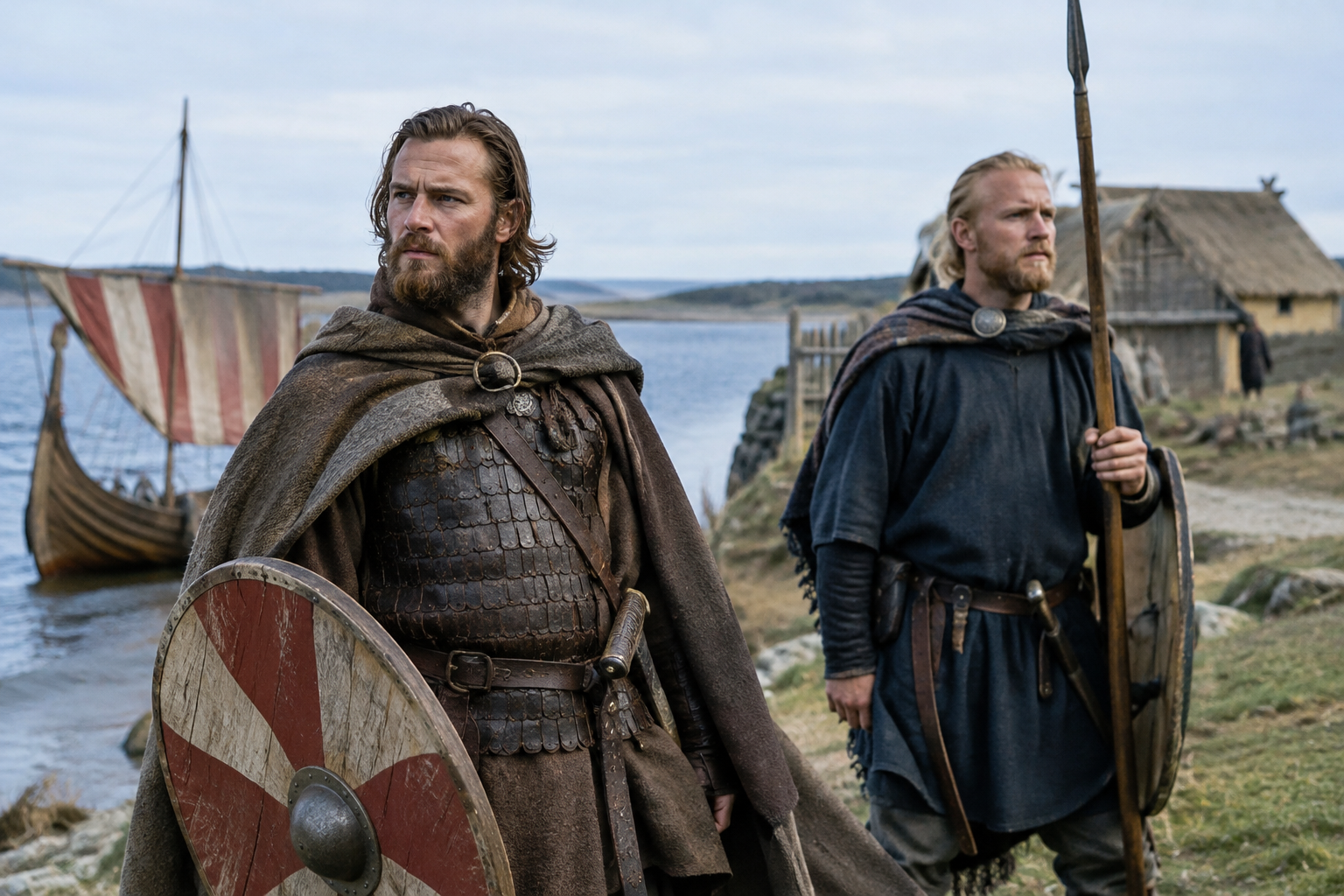
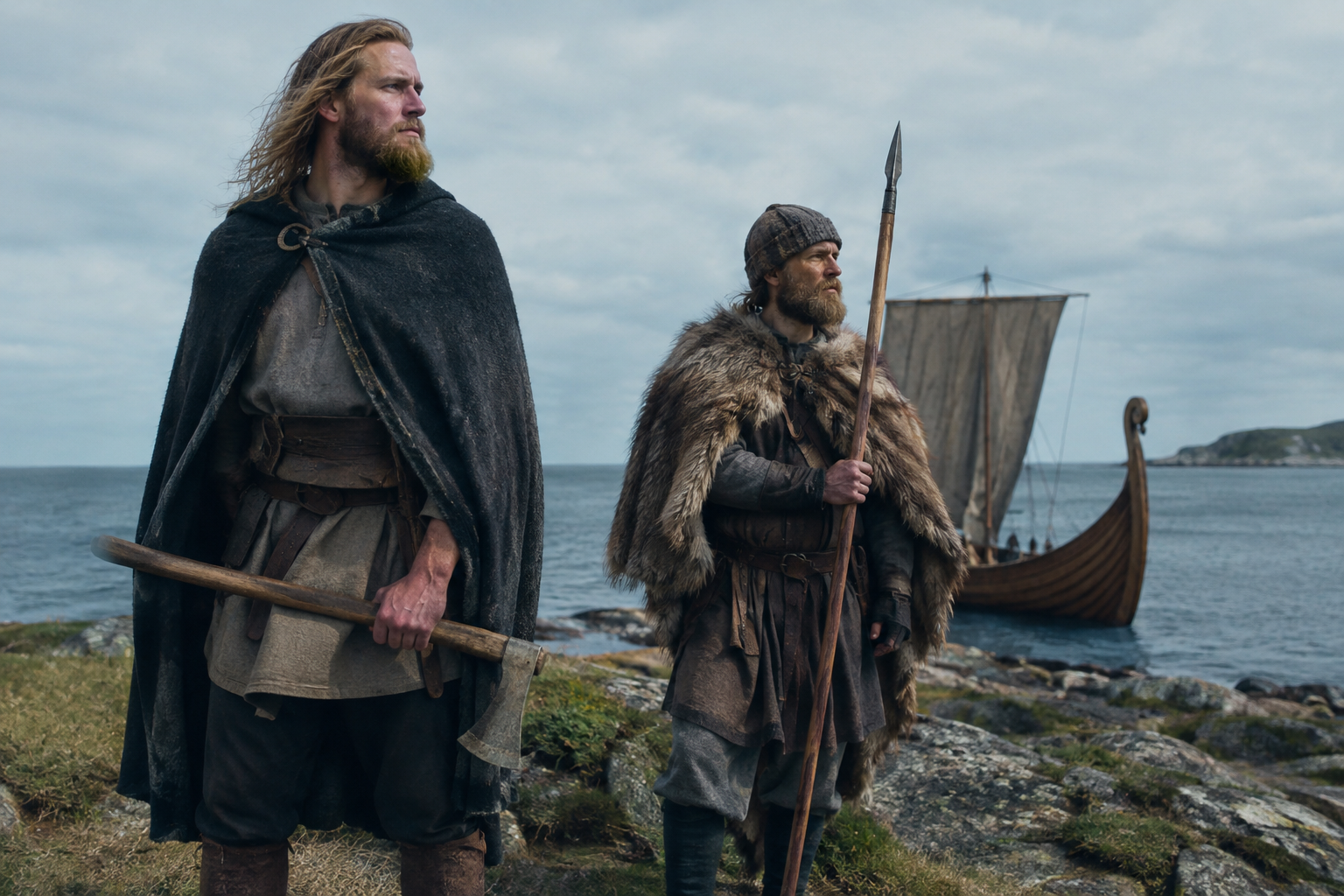
The second sample, VK30, comes from Viking Age Skara Varnhem, Sweden, dated to around AD 1050. That date places him in the late Viking Age, a period when Scandinavia was changing quickly: older raiding-age stereotypes no longer fit neatly, kingdoms were consolidating, Christianity was advancing, and local communities were being folded into wider European institutions.
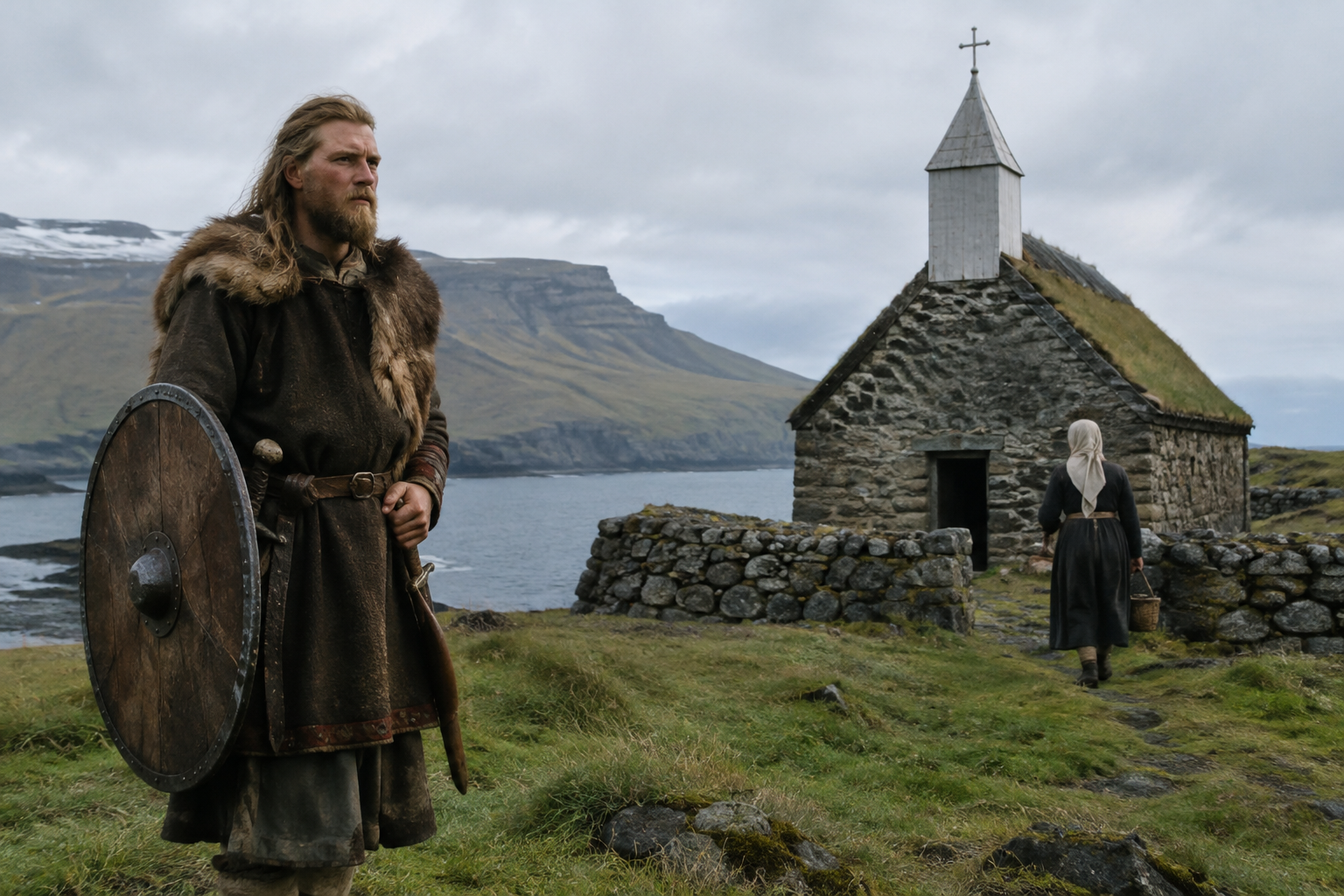
Varnhem is a particularly suggestive place to find such evidence. In medieval Swedish history, Varnhem sits within one of the best-known early Christian landscapes of western Sweden. A man there carrying R1a1a1a1c does not tell us that the haplogroup was uniquely "Viking" in any romantic sense. What it does tell us is that this paternal branch was present among people living through the social world that linked Scandinavian regional power, church organization, and expanding contacts across the Baltic and North Sea.
The broader genomic interest in Viking Age and early medieval Scandinavia has been shaped by studies examining burial communities and kinship patterns, including research circulated at https://www.biorxiv.org/content/10.1101/703405v1. One should be cautious about tying any one paper too tightly to a single sample without full contextual publication in hand, but the wider direction of research is clear: Viking Age cemeteries are not producing a single simple "Viking genotype," but varied local populations with distinct family histories.
For readers interested in how genetics is refining the Scandinavian story beyond old clichés, this related article gives a wider view.
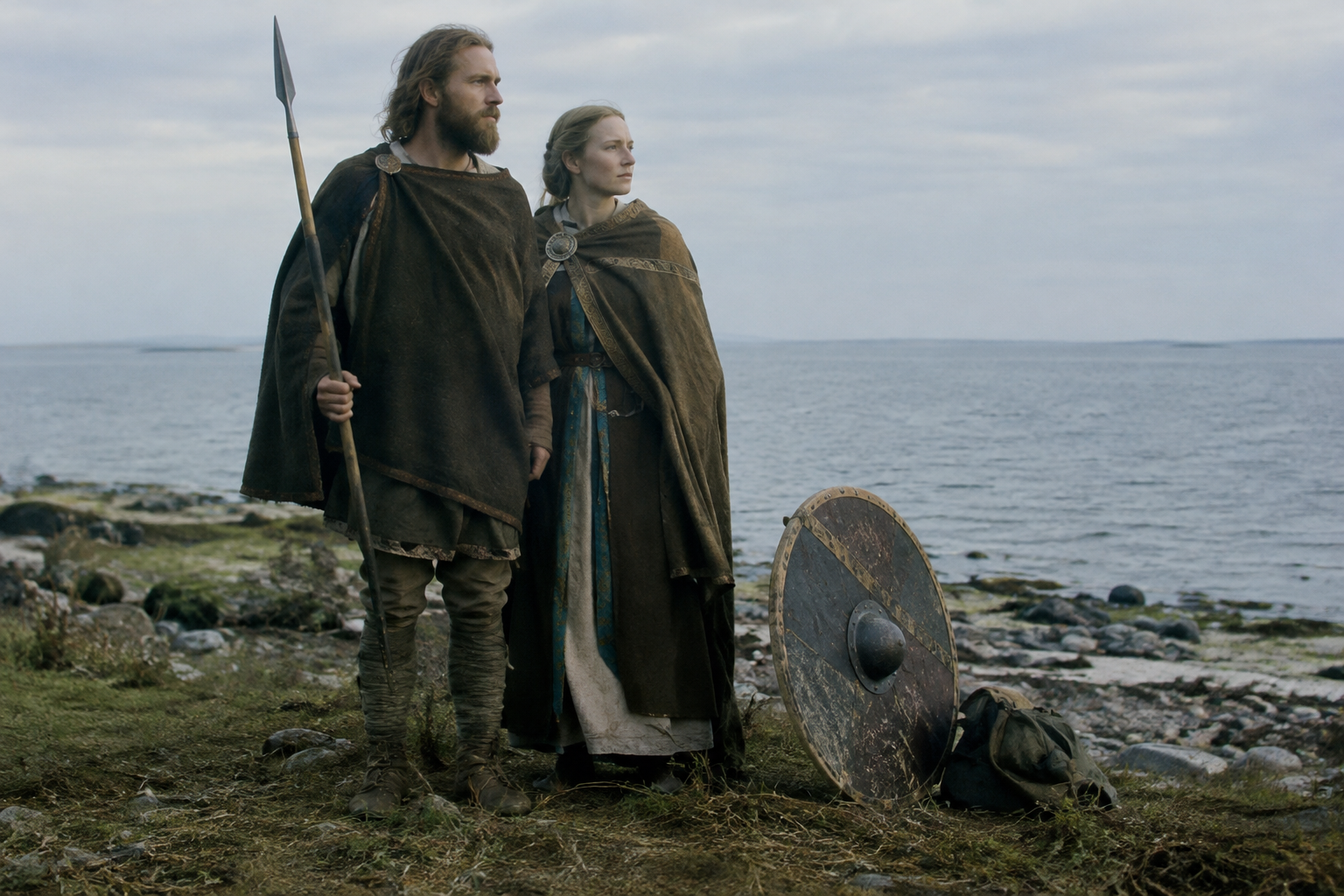
The most interesting thing about these two samples is not simply that they share a haplogroup label. It is that they sit in two connected medieval zones. Around AD 1050, Sweden was part of a Scandinavian sphere tied into routes of movement that reached the British Isles repeatedly over centuries. By AD 1349, England had long absorbed layers of earlier migration and settlement, including Anglo-Saxon, Scandinavian, and Norman-era reshaping.
That does not mean VK30 was an ancestor of COM042, nor that R1a1a1a1c in England must have arrived in one identifiable Viking ship. History is rarely that tidy. But the pairing does fit a larger archaeological reality: medieval Britain and Scandinavia were linked by sustained contact, and paternal lines moved, persisted, and mixed within that world.
In England, this is especially important because Y-lineages often get flattened into oversimplified labels such as "Celtic," "Saxon," or "Viking." Ancient DNA keeps resisting that. A lineage can be present in multiple historical settings, carried by people whose identities were shaped by local language, law, religion, and community rather than by a single deep prehistoric origin story.
That is also why articles on post-Roman and medieval Britain remain so useful for context.
Ancient DNA in Post-Roman Britain
There is a temptation with any R1a branch to leap straight into immense narratives about steppe expansions, language dispersals, or warrior migrations. Those histories matter at the level of the wider parent haplogroup, but this article's evidence is much more local and much more tangible. It concerns one man buried in plague-stricken Cambridge and another living in late Viking Age Sweden.
That apparent modesty is actually a strength. Ancient Y-DNA becomes most informative when it is pinned to a cemetery, a date, and a historical problem. COM042 shows R1a1a1a1c in an English urban community at the moment plague transformed society. VK30 shows the same branch in the late Viking Age Scandinavian world just as older Norse patterns were blending into medieval Christian kingdoms.
For another close look at how Scandinavian burials and genetics intersect in the Christian transition, this article on children's early Christian burials is worth exploring.
Early Christian Scandinavia DNA
If your paternal line falls under R1a1a1a1c, these ancient finds suggest that the branch was part of the male-line diversity of medieval northern Europe, present at least in Sweden around AD 1050 and in England by AD 1349. That is not a promise of direct descent from a Viking or from a plague victim. It is something better grounded than that: a glimpse of your haplogroup in real medieval communities whose history can be studied archaeologically as well as genetically.
In other words, this branch is not just ancient in the abstract. It was there in the churchyard world of Varnhem and in the shadow of the Black Death at Cambridge, carried by men whose names are lost but whose paternal line still has descendants asking questions.
Comments