Haplogroup Q1a
– 6 min read


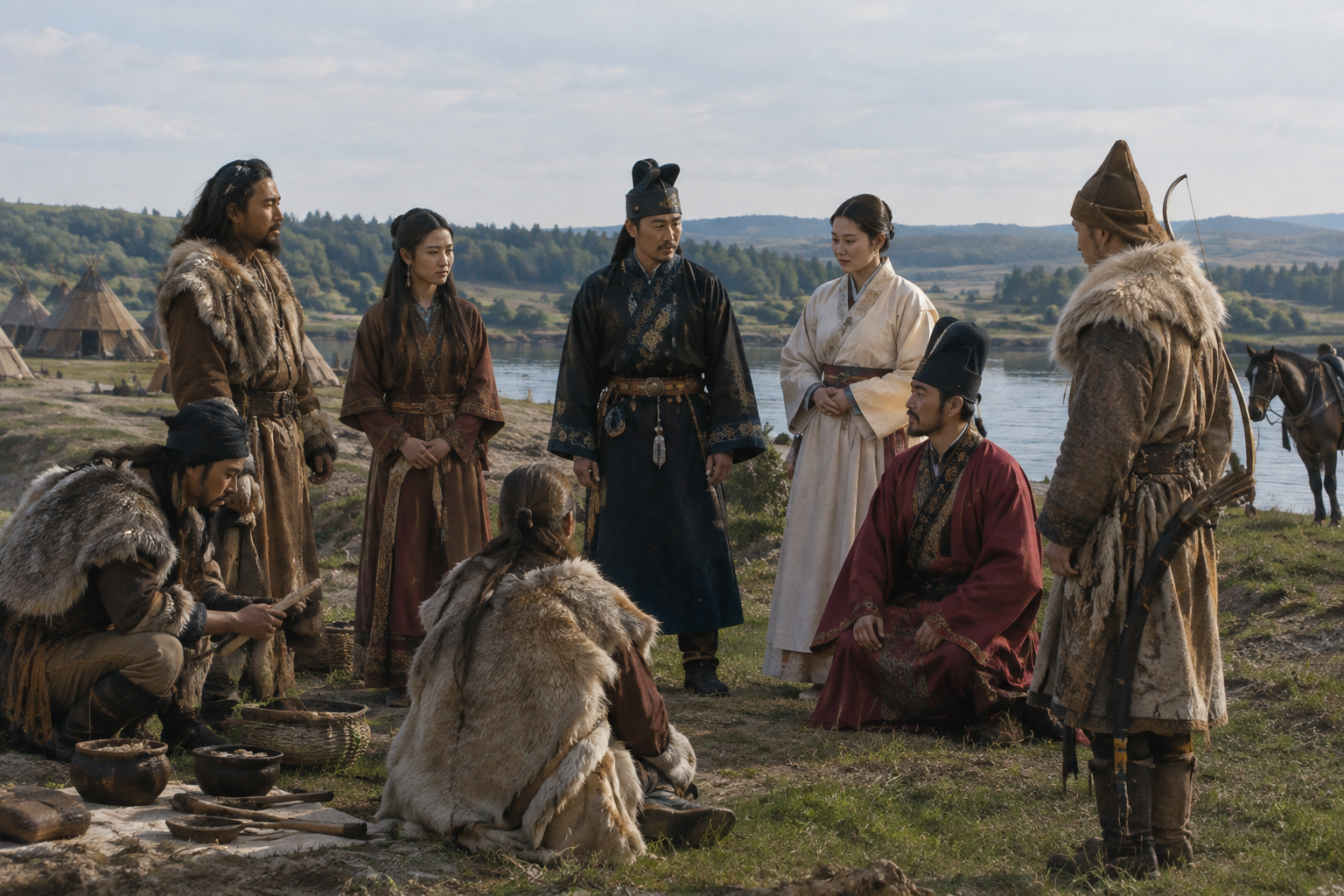
Haplogroup Q1a has one of those histories that reminds us, rather forcefully, that the old map of Eurasia was never neatly divided into separate worlds. In modern popular imagination, paternal lineages are too often boxed into tidy national or ethnic stories. Q1a refuses that sort of simplification. Its ancient appearances stretch across northern Eurasia, and the samples supplied here place it in settings as varied as Neolithic western Siberia, the Baikal region, Iron Age steppe burials, early medieval Korea, and the world of the Hungarian conquerors.
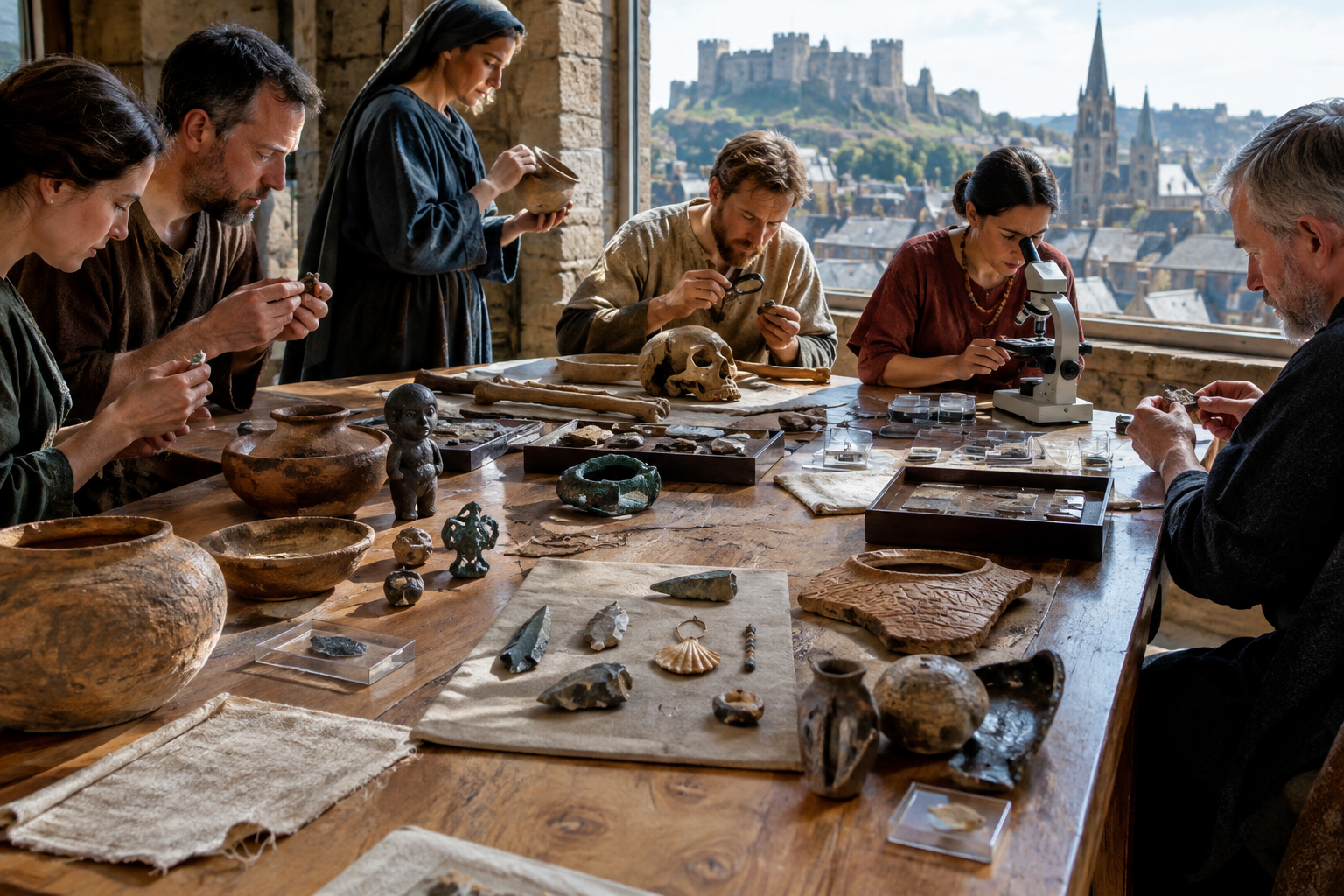
That is precisely what makes Q1a so historically interesting. Y-DNA haplogroups trace a direct paternal line only: father to father to father across time. They do not describe a person's whole ancestry, culture, language, or identity. But when ancient DNA turns up the same broad paternal lineage in very different places and periods, it gives us a rare way of following long-range patterns of male-line continuity, movement, and survival across thousands of years.
Within the Y-chromosome tree, Q1a belongs to the broader haplogroup Q, a lineage of major importance in the population history of northern Asia and, in other branches, the peopling of the Americas. For Q1a itself, the evidence has often pointed toward northern Eurasia and adjoining steppe, forest-steppe, and eastern regions rather than any single compact homeland that can be described too confidently in one sentence.
What matters for the historian is not a simplistic point of origin, but the kind of landscape in which Q1a repeatedly appears: river corridors, hunting and fishing zones, mobile pastoral worlds, and later the great contact zones linking Siberia, the steppe, East Asia, and eastern Europe. That spread suggests not one dramatic migration alone, but a long history in which related paternal lines persisted, split into downstream branches, and became part of many different archaeological populations.
The result is a lineage that helps illuminate the deep human geography of northern Eurasia, where forest foragers, steppe herders, frontier elites, and medieval migrants could all, at different times, carry related paternal ancestry.
The earliest supplied samples place Q1a very far back in prehistory, and very firmly in northern Eurasia. At Ancient Russia Itkul, sample NEO63 is dated to 5107 BC. Close in time are two men from Ancient Russia Omskaya Stoyanka II: NEO75 at 5108 BC and NEO78 at 5003 BC. Even before one starts building grand theories, that cluster is striking. It tells us that paternal lines within Q1a were already present in western Siberia in the 6th millennium BC.
This is not the world of castles, chronicles, or dynasties. It is the world of early communities living along riverine and lake landscapes, where subsistence, mobility, and local networks shaped life more than anything resembling a state. Ancient DNA here does something wonderfully disruptive to our assumptions: it shows that lineages later associated with broad trans-Eurasian distributions were already established in these northern settings millennia before the familiar historical names arrived.
A later sample, NEO917 from Ancient Russia Vengerovo, dated to 3770 BC, extends that picture into the 4th millennium BC. Then DA354 from Early Bronze Age Cis Baikal Russia Kurma XI, dated to 2674 BC, carries the story eastward toward the Baikal zone. Put together, these finds suggest not a sudden appearance but an enduring northern Eurasian presence across a very large space.
That continuity matters. It does not prove that these men were closely related in any recent genealogical sense, and it certainly does not mean that everyone in those populations belonged to Q1a. But it shows that this paternal lineage formed part of the long-term human background of Siberia and adjacent regions.
Read About Baikal Hunter-Gatherers
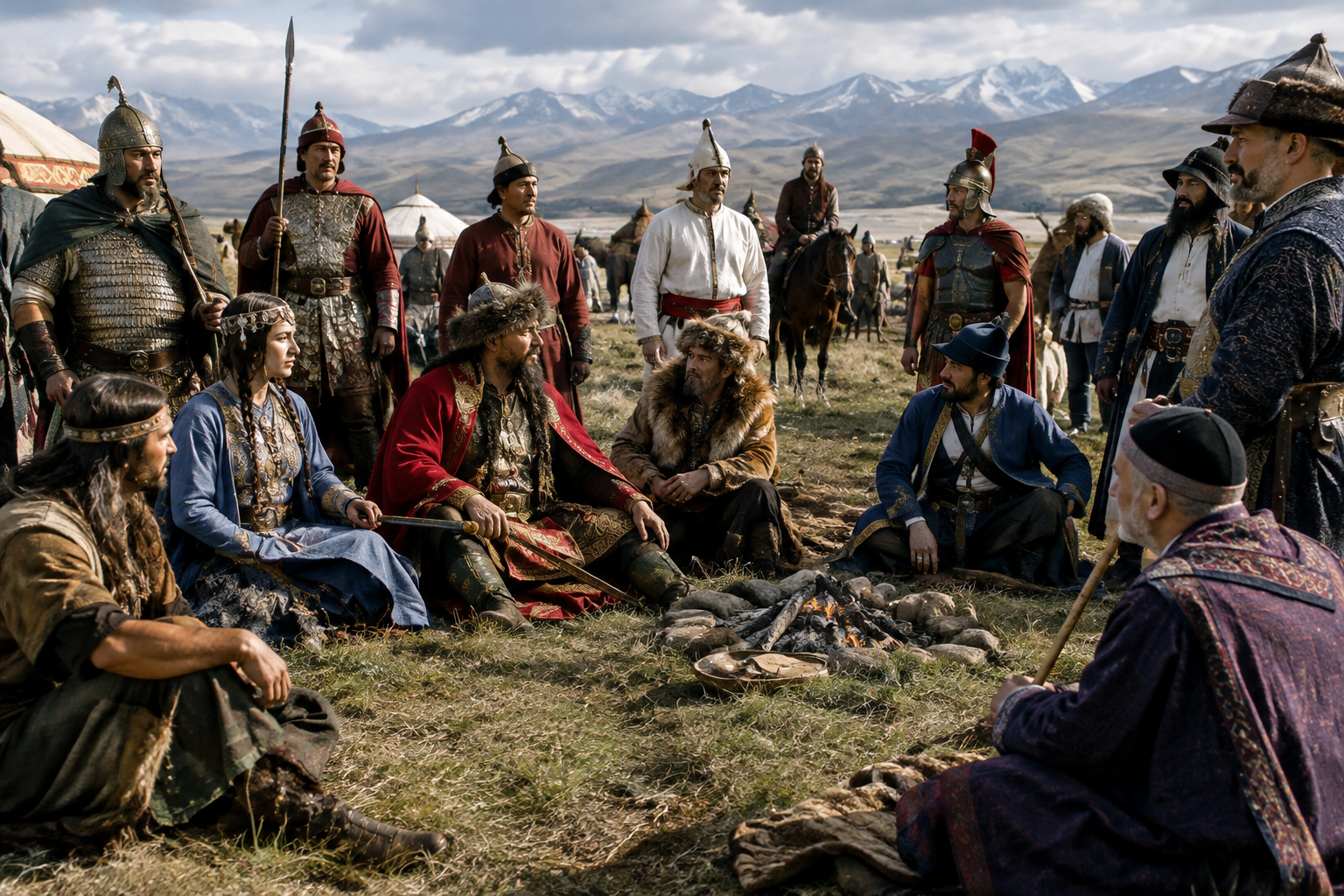
By the Iron Age, Q1a appears in a rather different kind of setting. The sample SHI005 comes from a Saka Scythian Grave Iron Age Shilikty East Kazakhstan, dated to 650 BC. Now we are in the world of mounted elites, kurgans, steppe prestige, and the powerful cultural horizon often labelled Scythian or Saka. Here Q1a sits not in a remote prehistory of fisher-foragers, but in the political and military landscapes of the eastern steppe.
This does not mean Q1a was a "Scythian haplogroup" in any exclusive sense. Iron Age steppe confederations were biologically mixed and historically fluid. But SHI005 is a fine example of how one paternal lineage can persist into entirely new social formations. A male line present in Neolithic Siberia could, in some branches and regions, later be part of Saka society in eastern Kazakhstan.
The eastern reach of Q1a becomes even more intriguing with GUC001a and GUC001b from Three Kingdoms Korea Baekje Dangbuk-ri Gunsan, both dated to 550 AD. These samples place the lineage in the Korean peninsula during the Baekje kingdom. That does not license crude claims about the identity of Baekje as a whole. It does, however, show that paternal ancestry linked to Q1a had become part of the human mosaic of early medieval East Asia. That is exactly the sort of evidence that makes tidy civilizational boxes collapse.
If you want a broader view of these eastern paternal patterns, the MyTrueAncestry community has more to explore on the subject of ancient Y chromosomes and East Asian migrations.
Explore East Asian Paternal History
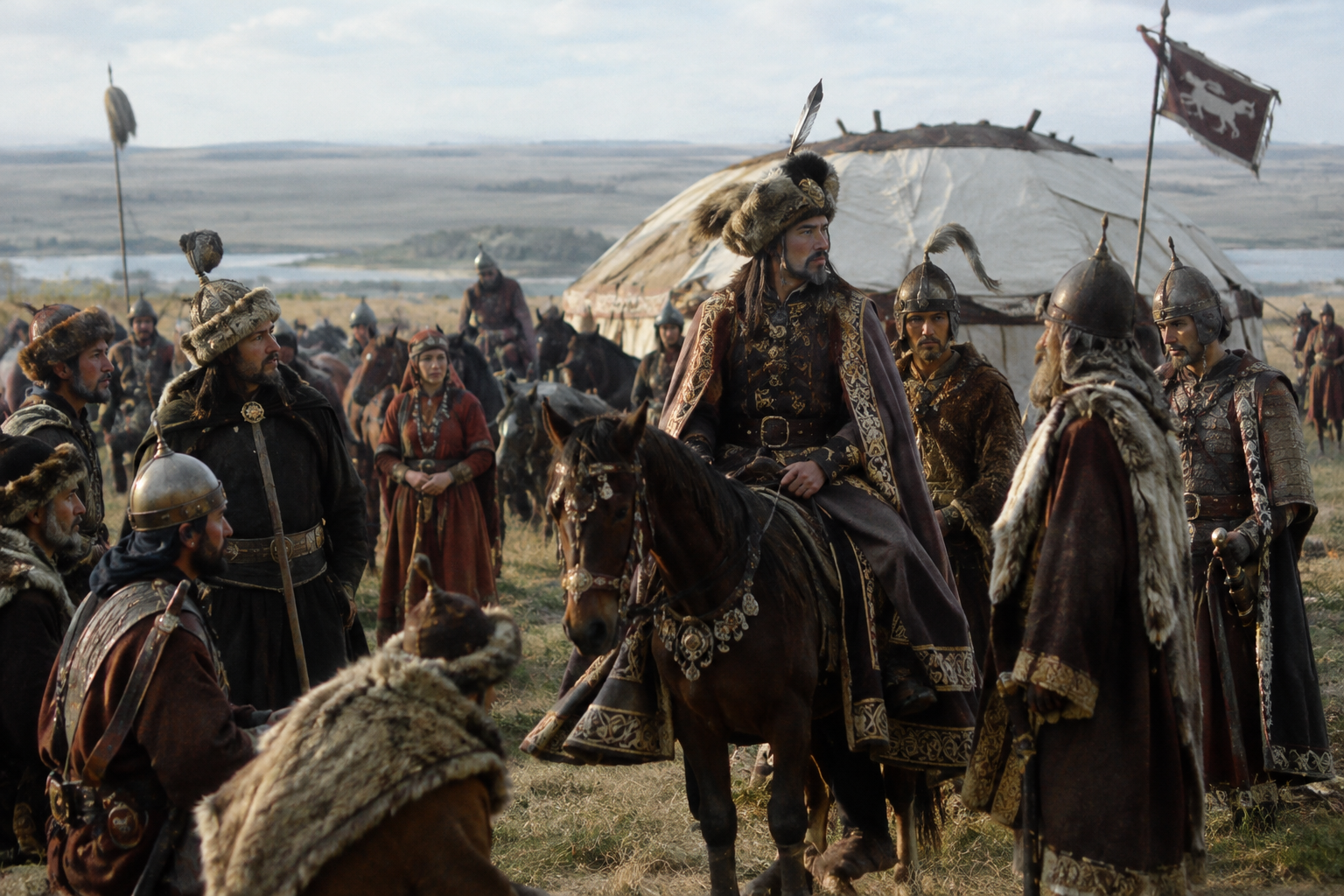
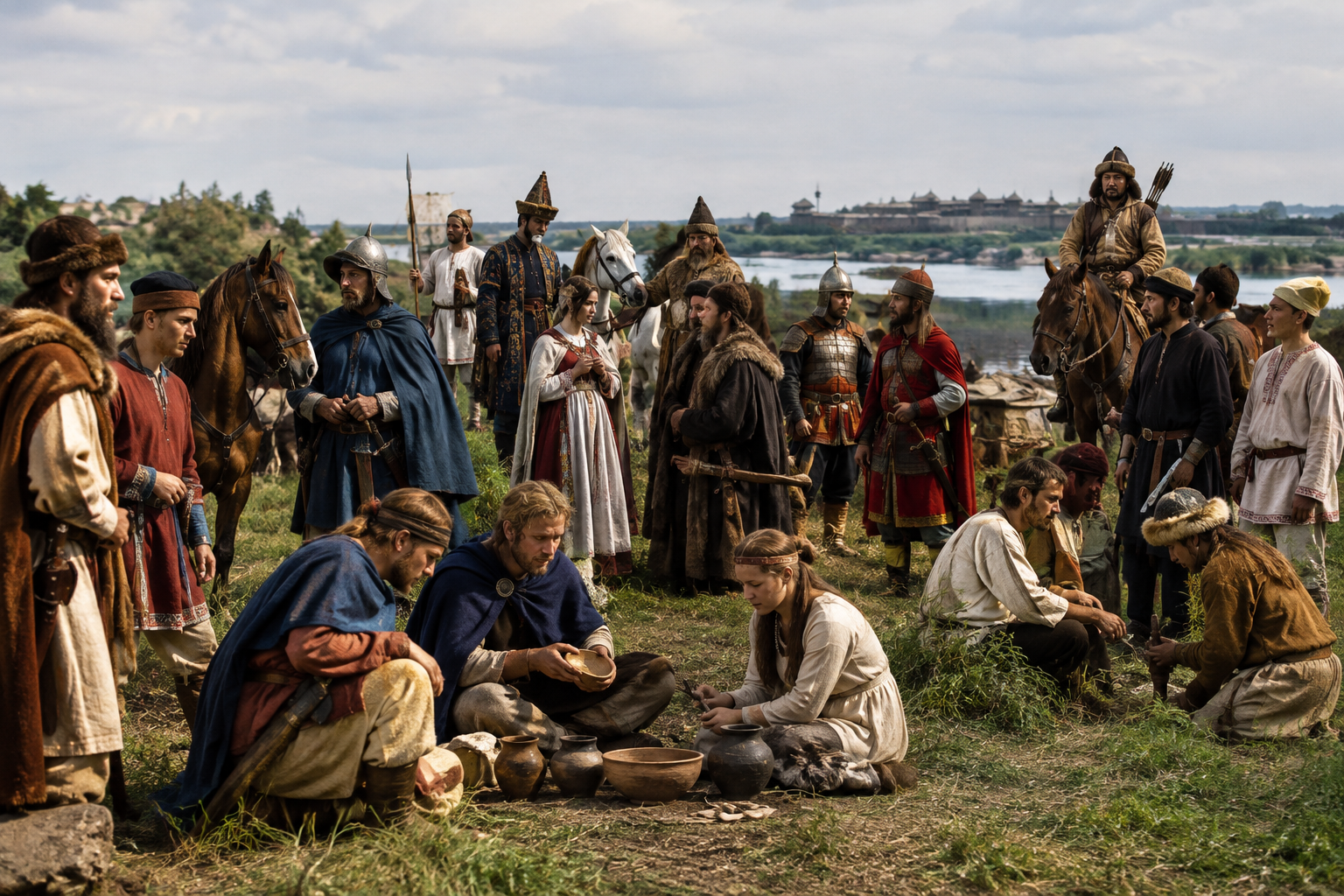
The most westward historically familiar sample in this set is KeF1per10936_GE, from Hungarian Conqueror Kenezlo-Fazekaszug, dated to 900 AD. Here Q1a appears in the context of the Magyar conquest period, when mobile groups from the Eurasian steppe entered and reshaped the Carpathian Basin. This is a setting where archaeogenetics has transformed discussion, because written sources alone tell only part of the story.
The appearance of Q1a among Hungarian conqueror remains fits the broader picture of steppe-linked diversity among the conquering groups. It does not mean that all conquerors carried this lineage, nor that later Hungarian noble houses can simply be assigned to it. But it does show how a paternal line with deep roots across Siberia and the steppe also found a place in the movement of peoples that helped create medieval Hungary.
That is one of the great values of ancient DNA: it gives us an angle that chronicles do not. Chronicles tell us about rulers, raids, and treaties. DNA sometimes tells us about the quieter durability of male lines moving through those events.
Discover the Hungarian Conquest
In this case, the supplied field for associated noble families and castles is effectively empty. That is worth saying plainly, because good history depends as much on restraint as on enthusiasm. We cannot responsibly invent a medieval dynasty, attach Q1a to a castle, and then pretend that stone walls somehow certify a paternal lineage.
Still, the absence of named families is interesting in its own way. Q1a's story, at least from the evidence supplied here, is less about a single famous house and more about the deeper Eurasian background out of which later medieval polities emerged. Before heraldry, before family seats, before genealogists drew neat descent lines, there were already paternal lineages moving through Siberian river basins, Baikal communities, Saka burial grounds, Korean kingdoms, and conquest-period cemeteries in eastern Europe.
If readers are interested in how genetics can later intersect with ruling lineages, the comparison with articles on historically documented dynasties is revealing. The point is not that Q1a can be attached to them here, but that ancient DNA and written genealogy sometimes meet, and sometimes very much do not.
Explore the Royal Arpad Dynasty
Q1a is a splendid reminder that paternal ancestry can preserve a very long memory. In the samples presented here, that memory stretches from NEO75 and NEO63 in 6th-millennium-BC Russia to KeF1per10936_GE in 10th-century Hungary, with important stops in Baikal, East Kazakhstan, and Baekje Korea. Few lineages illustrate the breadth of northern Eurasian connections quite so vividly.
But caution is essential. Sharing a broad haplogroup does not prove direct descent between ancient individuals, and it does not make someone the heir of a particular people, kingdom, or noble family. What it does offer is context. If your Y-DNA belongs to Q1a, ancient DNA suggests that your direct paternal line may connect, at some depth, with populations who lived across the forest-steppe, Siberia, the eastern steppe, East Asia, and the mobile frontier worlds of the early medieval age.
That is a grand historical backdrop, even if it is not a tidy family tree. And perhaps that is the real pleasure of archaeogenetics: not that it flatters us with fantasy titles, but that it places our ancestry into the very large, complicated, gloriously untidy history of real human populations.
Upload your DNA to MyTrueAncestry to explore whether your results show similarities to ancient individuals like NEO63, SHI005, or KeF1per10936_GE, and to place your own ancestry within the wider story of the ancient world. Those matches can offer remarkable historical perspective, even when they do not prove direct descent from any specific ancient person or noble line.
Comments