Haplogroup N1a1a1a1a2a1c

– 5 min read


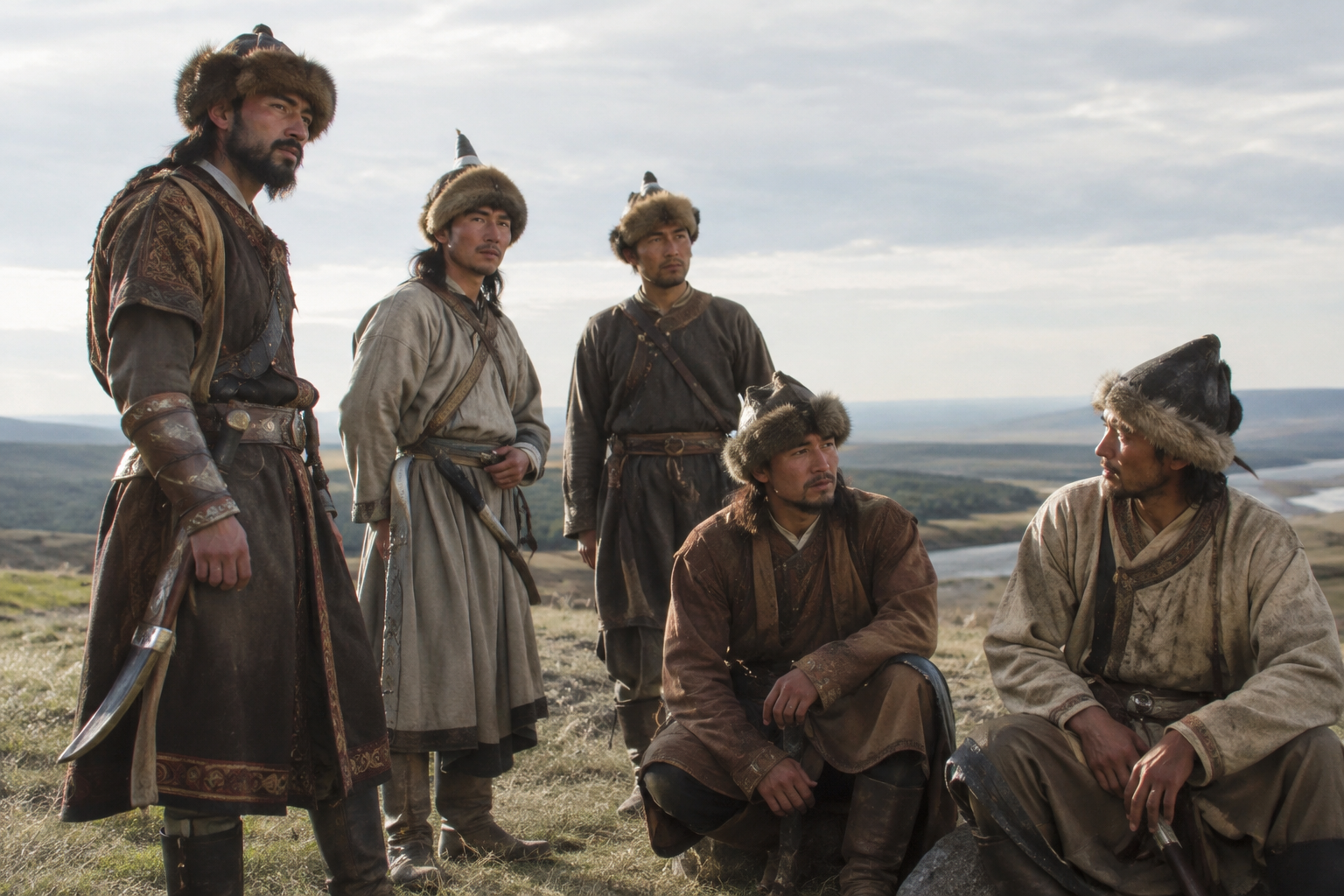
At Sarretudvari-Orhalom in eastern Hungary, one burial from the 10th century stands out in genetic discussions of the conquering Magyar elite: sample SO-5, dated around AD 950. He belongs to the small cluster of ancient men associated here with the Y-DNA lineage N1a1a1a1a2a1c, a very specific paternal branch whose known archaeological appearances point not to a broad swathe of medieval Europe, but to a much tighter story linking the Carpathian Basin to the Trans-Ural world.
That is what makes this haplogroup interesting. Rather than turning up everywhere, it appears in a set of early medieval contexts that are historically loaded: the Hungarian conquest period and the Uyelgi cemetery east of the Urals. Y-DNA traces one direct male line only, not a person's total ancestry, but even that narrow thread can sometimes illuminate larger movements when the same branch appears in carefully dated burials at both ends of a historical corridor.
SO-5 is identified as part of the Hungarian Conqueror elite, and that label matters. The conquest period in the Carpathian Basin was not simply a matter of one people arriving fully formed; it involved mobile groups, alliances, and the settlement of a new political order in the late 9th and 10th centuries. When a paternal lineage like N1a1a1a1a2a1c appears in such a burial, it becomes part of a larger question about who composed those elite networks and where some of their male lines had deeper roots.
Research on medieval Hungarian elites has repeatedly shown that some burials preserve lineages with eastern connections alongside more mixed genome-wide ancestry profiles. That is an important distinction. A man can carry a Y-chromosome branch associated with deeper eastern or Ural-region history while his overall ancestry reflects generations of mixture. In other words, this haplogroup is not a shortcut to ethnicity, but it can be a very useful clue to paternal continuity within historically significant groups.
A particularly relevant line of evidence comes from ancient DNA work on the Hungarian conquest horizon, including a genetic study of conquest-period and related populations that helped clarify links between the Carpathian Basin and communities farther east. Even without forcing one-to-one identifications between archaeology and language, the emerging pattern has made the Trans-Ural connection much harder to dismiss as coincidence.
The strongest part of the case lies at Uyelgi in the Trans-Ural region of Russia, where several individuals from around AD 900 are associated with this same branch: Uyelgi5, Uyelgi7, Uyelgi8, and Uyelgi9. One sample can always be a curiosity. Four samples from the same general cemetery horizon are something else: they suggest that this paternal line was genuinely present, and perhaps locally important, in that community.
Uyelgi has become a key site for discussions of early Hungarian prehistory because it sits in a region long considered relevant to the formation of populations connected with the ancient Magyars. The archaeology and genetics do not collapse neatly into a single ethnic label, and they should not. Still, when multiple males from Uyelgi share a branch that also turns up in a conquest-period elite burial in Hungary, the comparison is historically meaningful.
An earlier ancient DNA investigation of the cemetery, published as research on the Uyelgi population and related groups, helped establish the site's importance for understanding eastern links to the Hungarian conquest era. The value of Uyelgi is not that it gives us a simple origin myth. Its value is that it offers a dated, excavated population in which eastern Ural-region paternal lines can be compared directly with later burials in the Carpathian Basin.
It is worth lingering over the repeated Uyelgi results, because this is where archaeology saves genetics from overstatement. Four men carrying the same narrow paternal branch do not prove a ruling dynasty, and they do not prove that everyone at the site belonged to one people. But they do indicate that N1a1a1a1a2a1c was not a random stray lineage there.
That matters because early medieval mobility across the forest-steppe and steppe zones was messy, layered, and often family-based. Camps, cemeteries, and confederations could include men of different origins while still preserving certain durable paternal lines. A cluster like Uyelgi5, Uyelgi7, Uyelgi8, and Uyelgi9 suggests that this branch was embedded in a real community east of the Urals shortly before or around the era when related populations were appearing farther west.
Southern Urals and the Hungarians
The broader haplogroup N has a long and complicated history across northern Eurasia, and that wider background is often discussed in relation to Uralic-speaking populations. But one must be careful here. The article's branch, N1a1a1a1a2a1c, is far narrower than the parent lineage, and it cannot simply inherit every grand claim ever made about haplogroup N as a whole.
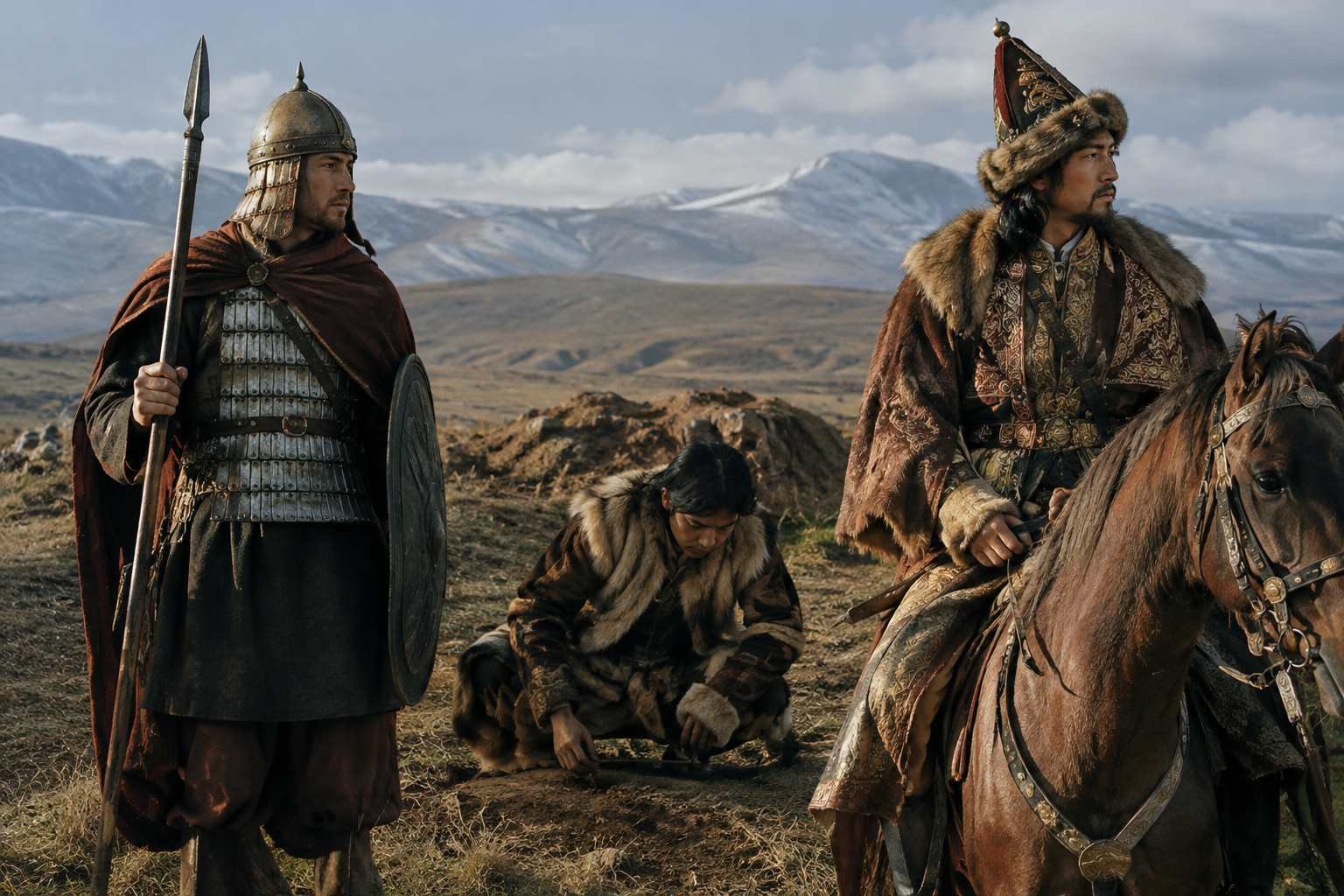
What can be said more responsibly is this: the ancient appearances listed here fit well with a Ural-region and Trans-Ural historical context. The Uyelgi cluster anchors the branch in a concrete early medieval setting east of the Urals, while SO-5 shows that the same paternal thread was present among a conquest-period elite burial in Hungary. That combination gives the lineage a clearer archaeological profile than many rare subclades ever receive.
This is also why such lineages are so valuable in public history. Texts about early Hungarians, steppe confederations, and Uralic connections are often frustratingly indirect. Burials with recoverable DNA are not a magic answer, but they let us test whether old historical models are at least moving in the right direction.
The chronological spacing here is strikingly tight. The Uyelgi individuals are dated around AD 900, while SO-5 belongs roughly to AD 950. That does not prove direct descent from one excavated man to another, of course, but it does place the same narrow paternal lineage on both sides of one of early medieval Europe's most consequential movements within a historically plausible timeframe.
For anyone studying paternal ancestry, that is the real interest of N1a1a1a1a2a1c. It is not merely an abstract branch on a phylogenetic tree. In the ancient record currently associated with it, this lineage sits right beside the archaeology of population movement, elite formation, and east-west connections at the moment the Hungarian conquest reshaped the Carpathian Basin.
There is another useful lesson here. Conquest-period Hungary was not genetically uniform, and no single haplogroup can stand in for the entire Magyar experience. Yet lineages like this one show that some male lines within that world preserved links to communities farther east, helping us see the conquest not as legend, but as a process with recoverable human biographies.
Eastern roots and Uralic links
If your paternal line falls under N1a1a1a1a2a1c, the ancient evidence currently gives it a distinctive early medieval setting: a cluster in the Trans-Urals and a documented appearance among the Hungarian Conqueror elite. That does not make every modern carrier a descendant of a conqueror or of one named burial. It does, however, place your direct male line in a historically vivid zone where Ural-region populations and the making of medieval Hungary intersected in ways archaeology can now begin to trace.

Comments