Haplogroup L1a2a1b
– 5 min read


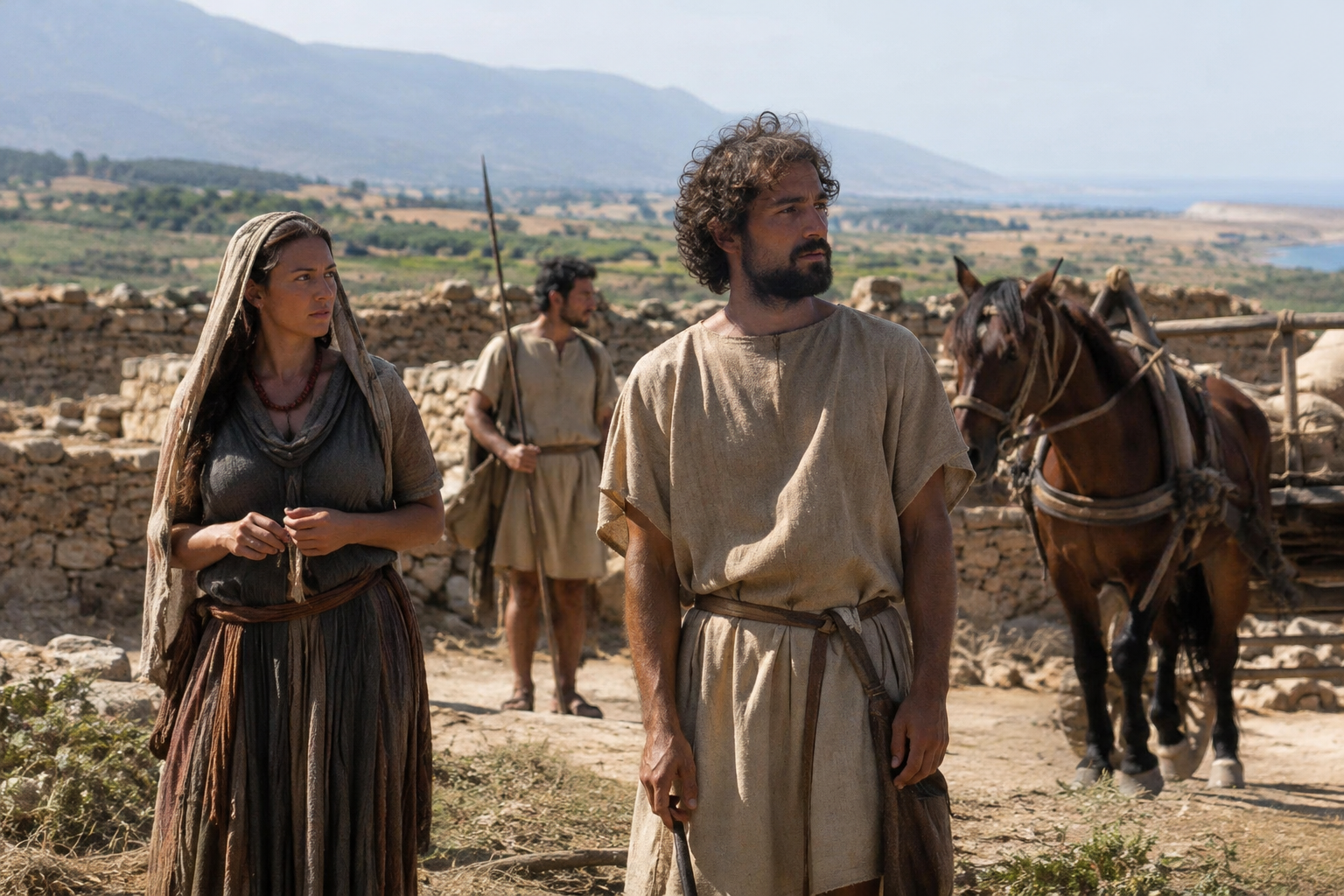
At Aligrama in the Late Iron Age, one man has become unexpectedly important for the history of Y-DNA haplogroup L1a2a1b. He is known in the ancient DNA record as I8220, dated to around 240 BC. That is not much to go on at first glance: a code, a site name, and a period. But in archaeogenetics, a single securely placed ancient male line can be remarkably revealing, especially when the haplogroup in question is better known today from South and Central Asia than from the better-publicized ancient genomes of Atlantic Europe.
The interest here is not that one skeleton can stand for a whole people. It cannot. The interest is that L1a2a1b, a specific branch within the wider Y-chromosome haplogroup L, appears in a real Late Iron Age individual from the Aligrama area. Because Y-DNA traces only one direct paternal line, it tells us something precise but limited: one strand of male ancestry present in that community. Even so, that strand matters. It places this paternal line in a historical landscape shaped by exchange, movement, and regional continuity in the northwestern subcontinent.
Aligrama lies in the Swat region of present-day northern Pakistan, an area that has long fascinated archaeologists because it sits at a crossroads. Mountain valleys, passes, and river routes tied it into wider worlds reaching west toward Iran and Central Asia and east into the subcontinent. By the Late Iron Age, this was not a remote backwater. It was a lived-in, connected region whose communities were participating in large historical changes, even when the individual graves themselves remain modest in the published genetic record.
Sample I8220, dated around 240 BC, belongs to that world. This was a period when the old Achaemenid imperial order had vanished, Hellenistic polities were active to the northwest, and local societies in the greater Swat-Gandhara zone were developing within a dense mesh of cultural contacts. A male lineage such as L1a2a1b appearing here should therefore not be treated as a surprise imported by a single dramatic migration event. It is better understood as part of the complicated paternal background already present in the region.
An ancient DNA study connected with this broader regional material is linked here. On its own, that does not license grand claims about one man's identity, language, or social rank. What it does support is the basic setting: northwestern South Asia was genetically and historically diverse long before later empires wrote their own stories across it.
Haplogroup L is one of those Y-chromosome lineages that tends to vanish from popular conversation simply because it does not fit tidy, old-fashioned migration myths. It is most often associated with populations of South Asia and nearby regions, and ancient examples matter because they help anchor its history in time and place rather than leaving it floating in modern distribution maps.
The key point is that L1a2a1b is not the same thing as the entire haplogroup L story. A broad parent haplogroup can be ancient and widespread, while one narrower branch may have a much more localized or later history. With I8220, the evidence gives us a Late Iron Age occurrence of the article's haplogroup in Aligrama. That is valuable precisely because it is concrete. It tells us that this paternal branch, or a classification associated with it, was present in that archaeological setting by the third century BC.
Readers sometimes want a haplogroup to behave like an ethnic label. Ancient DNA is usually less obliging. A man with L1a2a1b living in the Swat region around 240 BC was not genetically reduced to that lineage, and the lineage does not by itself assign him to a named tribe from classical texts. But it does show that the male ancestry of the region included lineages deeply tied to the subcontinent as well as to its contact zones.
There is a temptation, when evidence is sparse, to hurry past it. In fact, sparse evidence can be especially useful if it is well placed. Aligrama is important because the Swat valley and its neighboring zones have become central to debates about population continuity and change in ancient South Asia. Every securely dated male lineage from this region adds a point of resistance against simplistic narratives in which whole populations are imagined to appear or disappear overnight.
I8220 contributes to that slower, more archaeological picture. By the Late Iron Age, northwestern South Asia already contained layered ancestries built over many centuries. A paternal lineage like L1a2a1b at Aligrama suggests continuity of male lines that fit the region's own demographic history, even while the area remained open to outside influences. This is precisely the sort of finding that helps correct the habit of treating frontier regions as if they were populated only by newcomers.
It is also a reminder that ancient DNA works best when joined to geography. Aligrama was not just a dot on a map. It stood in a valley corridor whose communities had long negotiated movement, settlement, and cultural change. A Y-line found there is not merely "South Asian" in the abstract; it is part of the history of a particular archaeological landscape.
The wider historical setting makes Aligrama more interesting, not less. By 240 BC, the northwest of the subcontinent was a zone where local traditions met influences from the Iranian plateau, the Inner Asian routes, and the expanding political world that followed Alexander's campaigns. That does not mean every grave reflects long-distance migration. It means the region had many ways of producing diversity: trade, marriage, military movement, seasonal mobility, and older local population structure.
In such a setting, the appearance of L1a2a1b in a documented ancient male line is useful because it underscores that local and regional paternal lineages remained part of the human mix. Popular history often notices only the glamorous outsiders: Greeks, steppe riders, imperial administrators. Archaeology is usually less dazzled. Most communities are built from people who lived there, married there, buried their dead there, and absorbed change without ceasing to be local.
That is one reason northwestern South Asia deserves to be discussed alongside better-known ancient DNA frontiers. Like the Black Sea zone or the Roman Rhine, it was a contact region in which population history cannot be reduced to a single wave. The difference is that here the local background lineages, including branches of haplogroup L, are essential to the story rather than incidental.
For someone researching a present-day paternal line, L1a2a1b is a clue to deep ancestry with strong relevance to South Asia and its neighboring regions. The Aligrama individual shows that a lineage associated with this branch existed in the northwestern subcontinent in the Late Iron Age. That is the solid historical kernel.
What it does not do is provide a neat personal biography for every modern tester. It cannot tell you that your direct paternal ancestors belonged to one exact archaeological culture, spoke one exact language, or descended from this one excavated man. Ancient Y-DNA gives anchor points, not tidy pedigrees. But anchor points are precious. Without them, haplogroups risk becoming abstractions; with them, they become part of human history.
So the most responsible reading of L1a2a1b is also the most interesting one. It is a paternal branch with a genuine foothold in the ancient northwest of South Asia, documented at Aligrama by I8220 around 240 BC, in a region famous not for purity or isolation but for durable local populations living amid constant connection. If your own Y-line falls here, that is not a minor footnote. It is a link to one of the great historical crossroads of the ancient world.




Comments