Haplogroup J2b2a1a1a1

– 5 min read


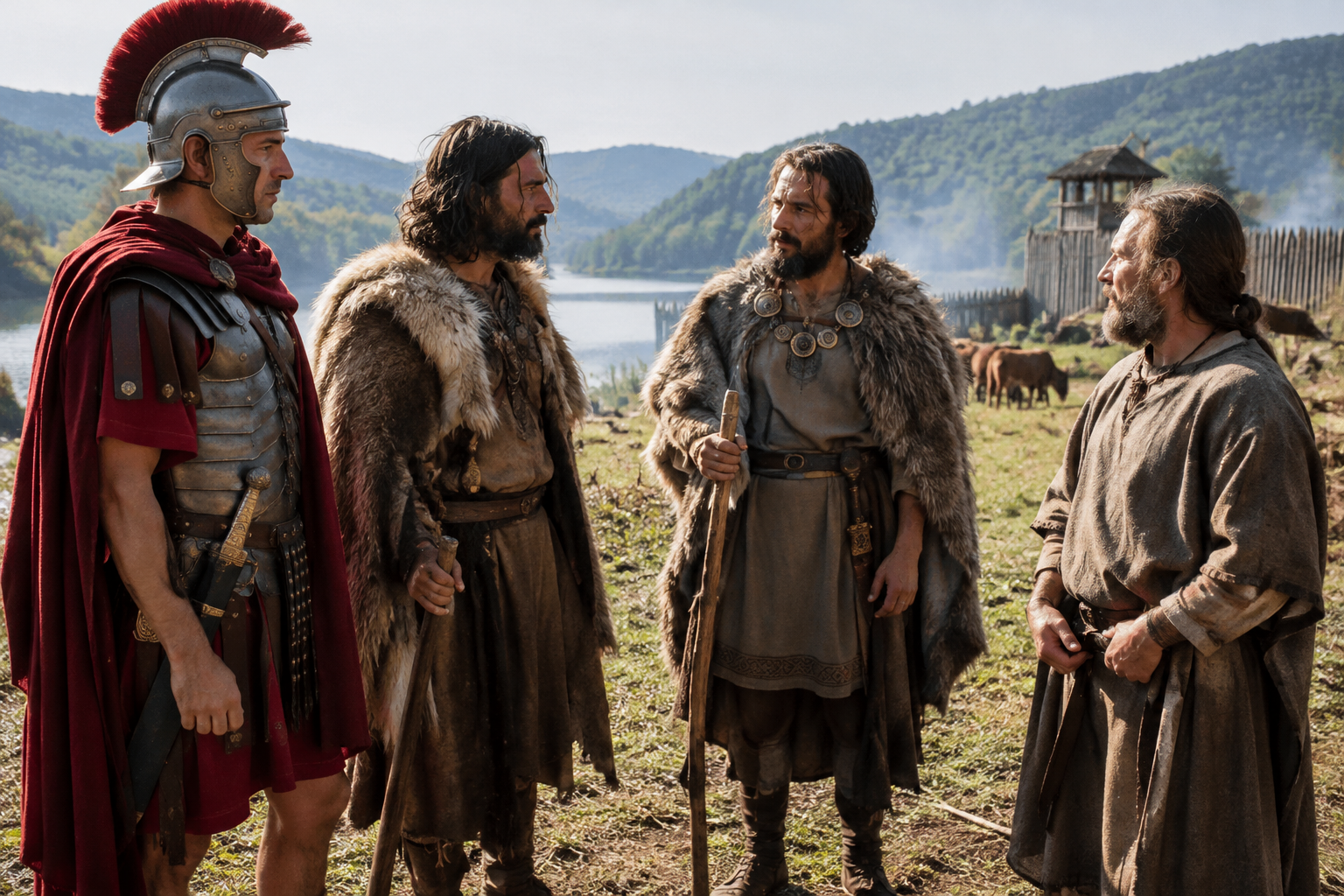
At Karlovac in Roman Croatia, one ancient man dated to around AD 275 - sample BBC019 - offers a particularly sharp glimpse of haplogroup J2b2a1a1a1. He lived in the province of Pannonia Savia, in a part of the empire that sat between the Adriatic world, the Danube frontier, and the Balkan interior. That matters, because this is exactly the kind of landscape where paternal lineages were carried not by a single people or a single empire, but by generations of movement, settlement, and local continuity.
The other ancient finds linked here make the pattern even more interesting. Two much earlier males from Velika Gruda in Montenegro - I13775 and I13777, dated to around 1350 BC and described as Illyrian - and another from Iron Age zagorje ob Savi in present-day Slovenia - I22940, around 420 BC - place this same paternal branch, or a reported association with it, in the western Balkans and adjacent regions over a very long span. Y-DNA tracks one direct paternal line rather than a person's whole ancestry, but even so, this is a striking archaeological trail.
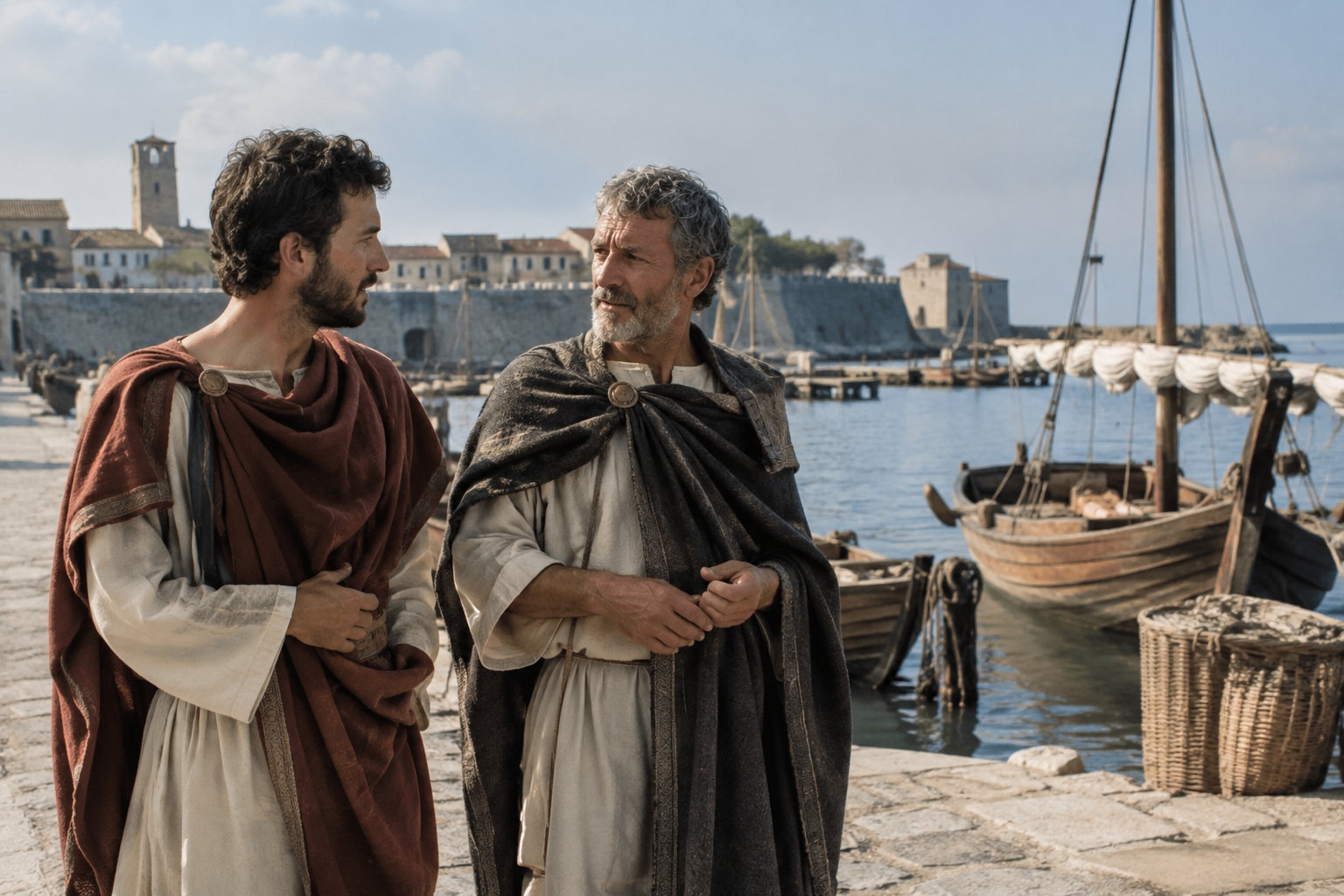
BBC019 belongs to the Roman period, when inland Croatia was part of an imperial system of roads, taxation, military logistics, and local communities that had already been transformed by centuries of contact. A man buried in Pannonia Savia in the late 3rd century AD was living in a world that was Roman in administration, but hardly simple in population history. Roman frontier provinces were full of people with deep local roots alongside soldiers, traders, migrants, and families whose histories crossed several regions.
That is why a lineage like J2b2a1a1a1 is historically useful here. It does not tell us that BBC019 was "Roman" in any ethnic sense, nor that he descended from one neat migration event. What it does show is that this paternal line was present in a provincial Roman community in the western Balkans, in a setting where local and imperial histories overlapped.
Ancient DNA research on the Balkans and nearby regions has increasingly shown that Roman-period communities could preserve substantial local continuity even while participating in much wider networks of mobility. A broader genetic study of southeastern Europe, published in Science, helped underline just how complicated population history in this region was across prehistory and later periods.
The deeper roots of the story lie at Velika Gruda in Montenegro, where samples I13775 and I13777 are dated to around 1350 BC. The label "Illyrian" is often used in regional summaries for later western Balkan populations, but the safest historical description for these men is Late Bronze Age western Balkans. That may sound cautious, but it is exactly the right kind of caution: archaeology, language, and later written ethnonyms do not always line up neatly.
Even with that caution, the significance is plain enough. Two individuals from the same broad site and period associated with this lineage suggest that J2b2a1a1a1 was not some late or isolated arrival in the region. By the Late Bronze Age, this paternal line - or a closely reported branch linked to it - was already established in the Adriatic-facing Balkans.
That helps shift the discussion away from simplistic origin tales. Western Balkan prehistory was shaped by long interaction zones: the Adriatic coast, inland mountain routes, the Danubian basin, and links southward toward the Greek world. A paternal lineage appearing in Montenegro in the 2nd millennium BC and then again farther north and later west in the Roman period looks less like a sudden historical intrusion than like part of a durable regional inheritance.
The Iron Age sample I22940 from zagorje ob Savi in Slovenia, dated to around 420 BC, adds a different piece to the puzzle. This is not the same site, not the same century, and not the same political world as Velika Gruda. Yet it sits in a corridor that mattered enormously in later European history: the routeways between the Adriatic sphere, Alpine zones, and the middle Danube.
Seen alongside the Montenegrin and Croatian evidence, I22940 suggests that this paternal branch was present across a wider western Balkan-north Adriatic zone before the Roman Empire absorbed the region. That does not mean every Iron Age community there shared the same male ancestry, still less that one haplogroup defined an entire people. But it does indicate that J2b2a1a1a1 belongs to a landscape of continuity stretching across several centuries and several archaeological settings.
Research on ancient southeastern Europe published in Nature has helped place such finds into a much larger regional frame, showing how deeply layered Balkan population history really is. The importance of a lineage like this lies precisely in that layering: it appears within local histories that predate Rome, then persists into the imperial age.
Some haplogroups are represented in ancient DNA by a single famous burial. J2b2a1a1a1 is more interesting here for the opposite reason: its evidence is modest in number but strong in historical shape. The samples span roughly 1,600 years, from the Late Bronze Age to the Roman Empire, and they cluster in or near the western Balkans.
That sort of pattern usually points us toward persistence rather than spectacle. It suggests that men bearing this paternal line were part of the long human fabric of the region: present before the rise of classical states, present during the Iron Age transformations of upland and riverine Europe, and still present when Roman administration redrew the political map.
It is also a useful reminder that a very precise modern haplogroup label should not be projected backwards too mechanically. The article haplogroup is J2b2a1a1a1, but ancient assignments can sometimes be reported at broader or narrower resolution depending on coverage and later phylogenetic updates. So the safest reading is that these individuals are reported as belonging to, or associated with, this branch within the wider J2b paternal family.
There is a temptation, whenever a lineage turns up in Roman archaeology, to explain it through empire alone. But the three earlier finds here make that difficult. Before legions, provinces, and Latin inscriptions, the paternal line was already moving through the archaeology of Montenegro and Slovenia. Rome may have reorganized the region, but it did not create its population history from scratch.
That makes J2b2a1a1a1 particularly valuable for members with Balkan, Adriatic, or nearby Central European paternal roots. Its ancient record here does not promise descent from a named tribe or a famous dynasty. What it does suggest, more soberly and more usefully, is a male line with demonstrable antiquity in the western Balkan world - one that can be glimpsed in Bronze Age, Iron Age, and Roman settings alike.
If J2b2a1a1a1 has a distinctive message in the ancient record, it is this: some paternal lines are best understood not as badges of a single historical identity, but as survivors of long regional histories. From Velika Gruda to zagorje ob Savi to Roman Karlovac, this branch appears in places shaped by exchange, local continuity, and repeated political change. For someone researching this haplogroup today, that is the real fascination - not a myth of one founder, but evidence of a paternal line rooted in the western Balkans long before, and well into, the Roman age.
Comments