Haplogroup J2b2

– 5 min read


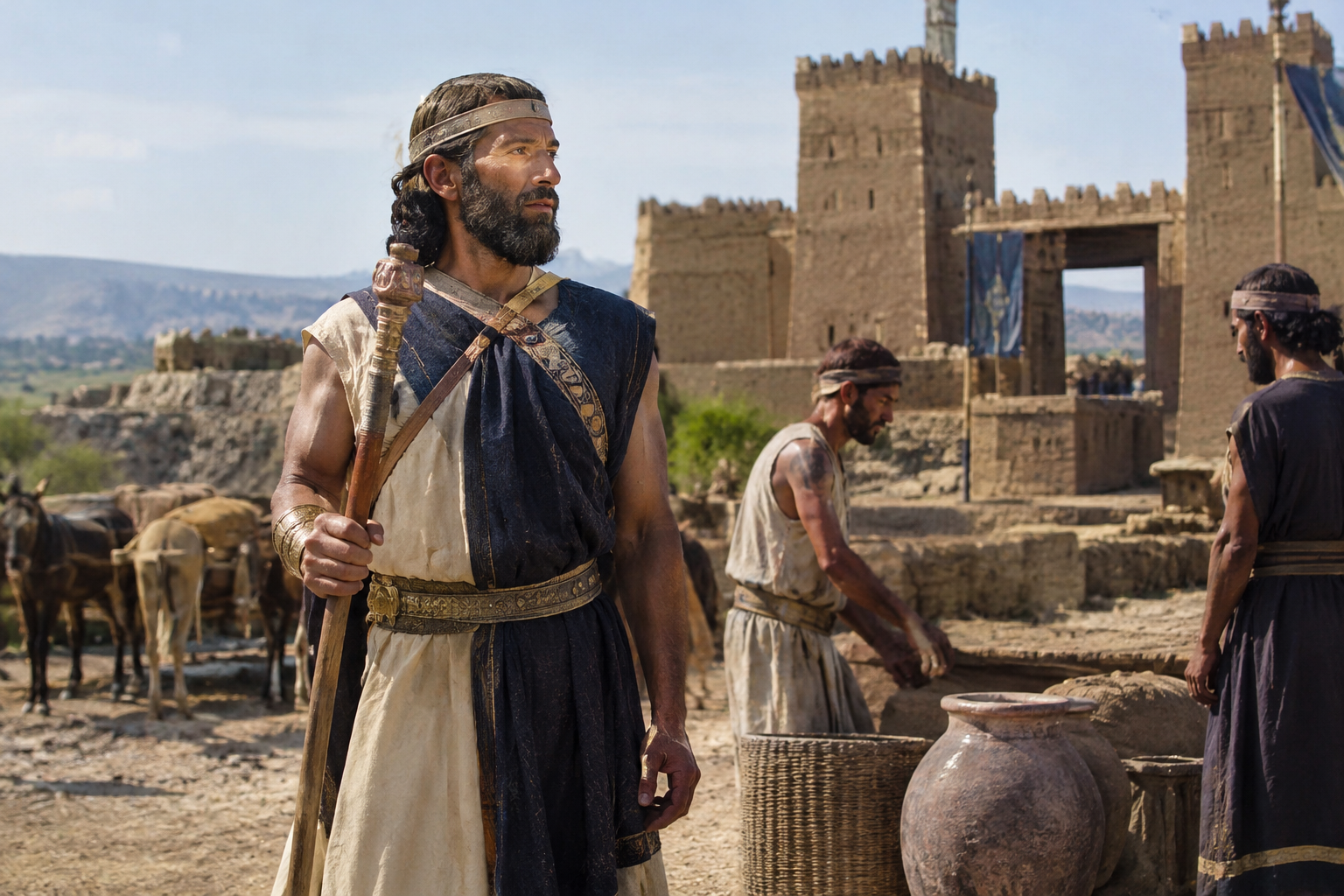
One of the clearest ancient signposts for Y-DNA haplogroup J2b2 in this set of evidence comes from ALA095, an individual from Alalakh dated to around 1830 BC. That is a useful place to begin, because Alalakh was not some remote village at the edge of history. It was a Bronze Age city in the Amuq plain, in what is now southern Turkey near the Syrian border, tied into the traffic of merchants, officials, migrants, and diplomats moving around the eastern Mediterranean and Near East.
So when a paternal lineage such as J2b2 turns up there, the finding matters less as a badge of identity than as a clue to movement and connection. Y-DNA follows one direct male line only, but at a site like Alalakh that single line sits inside a much larger human story: urban life, regional mobility, and the mixing of populations in one of the great crossroads of the Bronze Age.
Alalakh, ancient Tell Atchana, flourished in a landscape full of political competition and commercial opportunity. In the early second millennium BC it belonged to a network of cities linking northern Mesopotamia, inland Syria, Anatolia, and the Levantine coast. Texts from the broader region speak of rulers, envoys, traders, and displaced people; archaeology shows a city shaped by all of that traffic.
Within that setting, ALA095 is valuable because he anchors J2b2 in a documented Bronze Age urban community. We should be careful here: one man does not represent the whole population of Alalakh, nor does a haplogroup by itself tell us what language he spoke or what legal status he held. But his presence shows that this paternal branch was part of the male-line diversity circulating in a major Near Eastern center nearly four thousand years ago.
An ancient DNA study examining burials from Alalakh and nearby contexts helped frame that wider picture of mobility and population structure in the region: research on Bronze Age Alalakh and its connected world. Even without over-reading one lineage, the larger lesson is plain enough. Cities like this were not static ethnic boxes. They were places where ancestry, kinship, and movement met.
Bronze and Iron Age Mesopotamia
J2b2 is a branch within the broader Y-haplogroup J family, a major paternal lineage with deep roots in western Asia and long associations with populations of the eastern Mediterranean, the Balkans, Anatolia, and parts of the Near East. But that broad background should not be mistaken for a neat migration map of the narrower branch. The important point is that J2b2 is more specific than J, and any responsible history has to keep that distinction in view.
For someone tracing this haplogroup today, ALA095 does not identify an "origin point" in the simplistic sense. What it does show is that one line belonging to J2b2, or reported as associated with that branch, was present in a Bronze Age city whose inhabitants lived in a highly connected world. In historical terms, that makes J2b2 part of the story of urbanization, exchange, and local continuity mixed with outside arrivals.
There is a temptation, whenever a Y-line appears in antiquity, to turn it into a heroic route marching across the map. Alalakh invites a subtler reading. This was a place where ordinary life already depended on movement: marriages between communities, craft specialists arriving from elsewhere, merchants carrying goods and news, and political upheavals pushing people around the landscape.
That is exactly why a lineage like J2b2 appearing here is so interesting. It suggests not an isolated founder, but participation in a dense social world. A paternal line could persist locally for generations, arrive from a neighboring district, or be folded into the city through family alliances and migration. Archaeogenetics is strongest when it helps us imagine those overlapping possibilities rather than flattening them into a single tribal label.
This wider caution also matters because Bronze Age labels can be misleading. A city resident at Alalakh may have been culturally local, politically entangled with larger kingdoms, and ancestrally mixed in ways that do not line up with modern national or ethnic categories. J2b2 is one thread in that evidence, not the whole fabric.
The significance of ALA095 becomes clearer when we place Alalakh in its proper geographical setting. The Amuq plain sits at a hinge point between Anatolia and Syria. Routes from the Euphrates, the Levantine coast, and inner Anatolia all converged nearby. In other words, if you wanted to find a place where paternal lines from different backgrounds might appear together, this is precisely the sort of city you would choose.
That does not mean every male line at Alalakh was foreign, nor that J2b2 itself must have arrived there shortly before ALA095 lived. Quite the reverse: one of the hallmarks of the Bronze Age Near East is that long-established local populations and incoming individuals are often hard to separate cleanly. The city's population likely included both. The real historical value of the sample is that it places J2b2 within this mixed but structured environment.
Readers interested in how ancient DNA is sharpening these questions of movement and settlement across the broader region may also want to compare work on neighboring lands and later periods.
It is worth lingering on what ancient Y-DNA can and cannot do. In a city cemetery or burial population, paternal lineages often reveal diversity that written history either ignores or compresses into the names of kingdoms. ALA095 reminds us that ancient urban communities were built from families, and families do not always fit tidy political narratives.
In that sense, J2b2 is historically revealing precisely because it is ordinary evidence rather than royal propaganda. No dynastic inscription tells us that a man with this lineage stood at the edge of a Bronze Age city's life. Genetics does. And because Alalakh was connected to so many neighboring regions, the sample adds weight to a broader pattern seen again and again in archaeogenetics: major settlements accumulate people, lineages, and histories.
That broader perspective also helps when comparing eastern Mediterranean findings with later evidence elsewhere in Europe and western Asia. Ancient DNA studies repeatedly show that paternal lines can endure through cultural change, move with small groups rather than mass populations, or appear in new settings without any simple one-to-one link between lineage and language.
For members of the MyTrueAncestry community, the most useful takeaway is not that J2b2 points to one ancient people, but that it is already visible in the urban eastern Mediterranean by the early second millennium BC. Through ALA095 at Alalakh, this haplogroup is linked to a real archaeological setting: a Bronze Age city shaped by trade, politics, and mobility. That is a stronger and more interesting history than any tidy legend of a single origin.
If your paternal line is J2b2, the ancient evidence here suggests a connection to the complicated human world of Near Eastern and eastern Mediterranean interaction, where local continuity and movement existed side by side.
Comments