Haplogroup J2b1a

– 5 min read


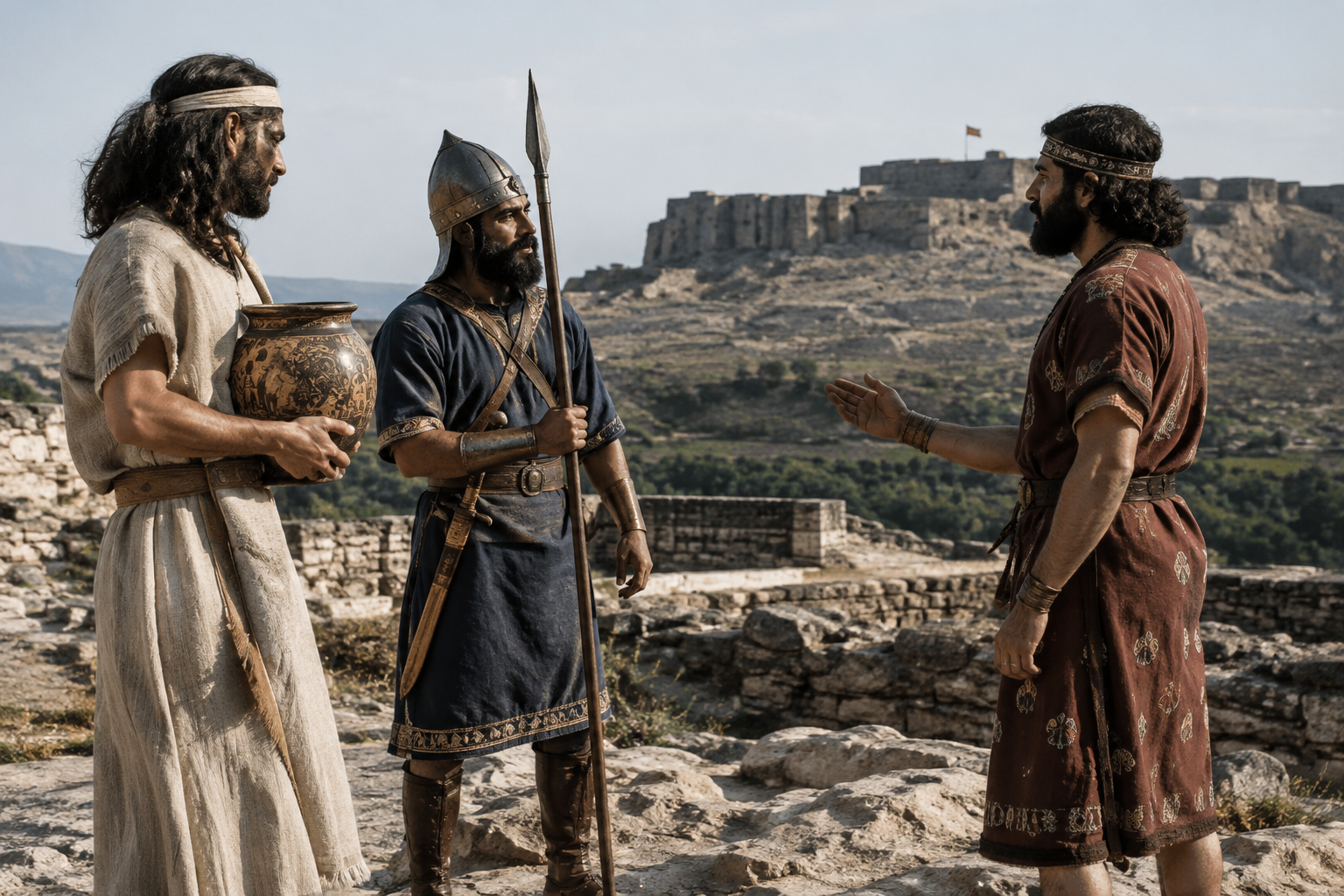
At Harjis in Armenia, an individual dated to around 1100 BC, sample I18237, brings J2b1a into sharp archaeological focus. This was the late Bronze Age world shading into the Urartian horizon: a highland zone of fortified places, shifting polities, and long-distance contacts linking the South Caucasus to Anatolia, northern Mesopotamia, and beyond. A Y-chromosome result cannot tell us everything about the man himself, but it does preserve one direct paternal line, and in this case that line places J2b1a in a landscape where mobility and local continuity were constantly interacting.
That is what makes this haplogroup interesting in ancient DNA. Rather than appearing as a single neat ethnic badge, J2b1a turns up in very old and very different Near Eastern settings: Neolithic and Bronze Age Jordan, Middle to Late Bronze Age Syria, and the highlands of Armenia in the later Bronze Age. The pattern is not one of a sudden appearance in one famous empire, but of a paternal branch moving through, or persisting within, the connected societies of the Levant and its northern neighbours.
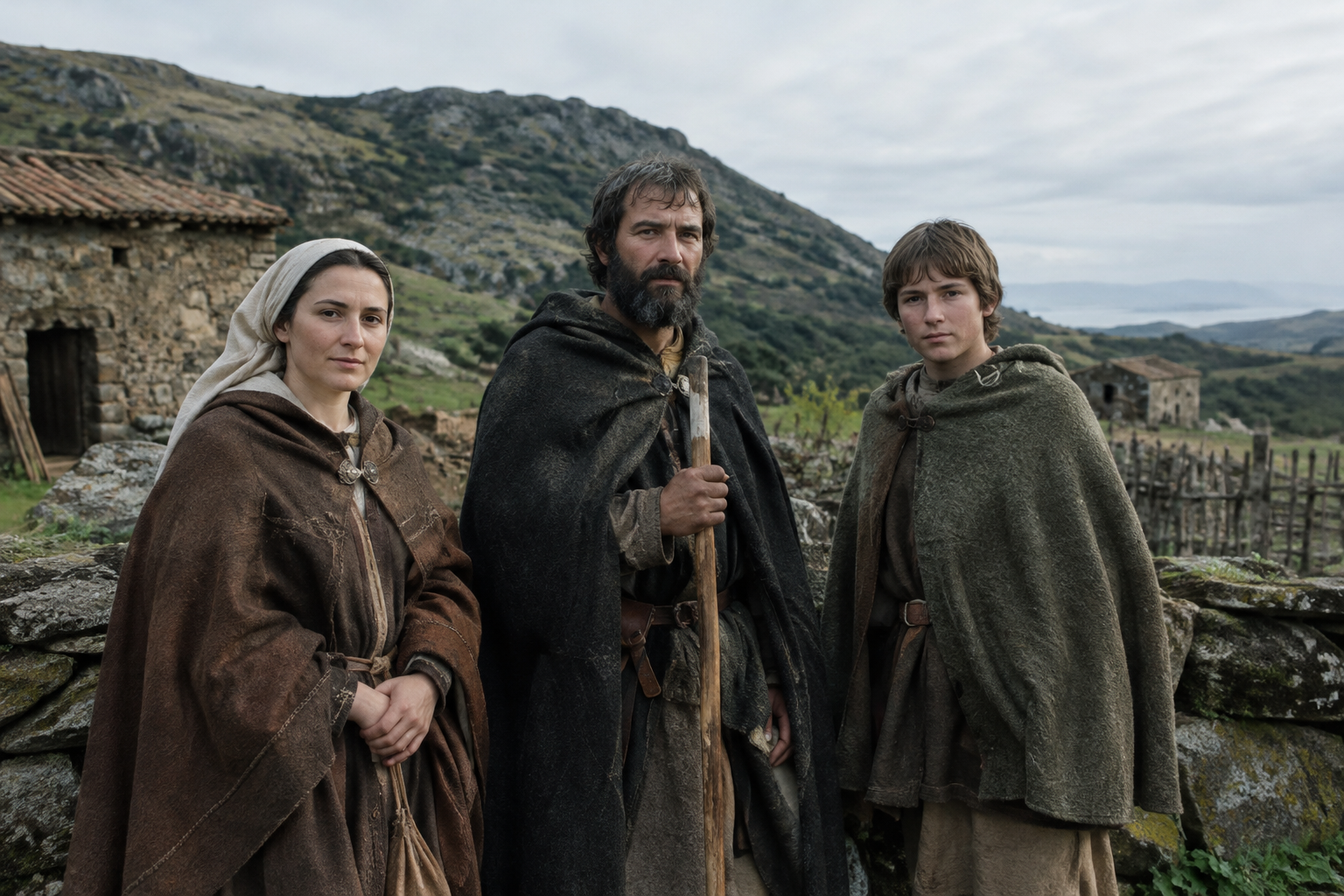
The oldest sample in this group is I1730x from Ain Ghazal in Jordan, dated here to around 2426 BC. Ain Ghazal is, of course, far older and better known as one of the great Neolithic sites of the Levant, but later occupation and burial activity mean that the name spans a very long archaeological history. That matters, because when a later individual from such a place carries J2b1a, we are not looking at a timeless "Ain Ghazal people," but at one man living in a settlement mound already heavy with millennia of memory.
Even with limited personal detail, the value of this sample is clear. It places the lineage in the southern Levant by the third millennium BC, in a region that sat at the crossroads of caravan movement, village farming, and urban influence from larger Bronze Age centres. A broad ancient DNA study of the Near East and adjacent regions helped establish just how dynamic these populations were over time, with ancestry shifting through local continuity and repeated outside contact rather than simple replacement alone: research on ancient genomes from West Asia and neighbouring regions has been central to that wider picture.
Levant burials and early villages
For anyone carrying J2b1a today, Ain Ghazal is therefore not a claim to one specific ancient culture. It is something more sober, and more interesting: evidence that this paternal line was already present in the southern Levant within the Bronze Age world that grew out of much older farming landscapes.
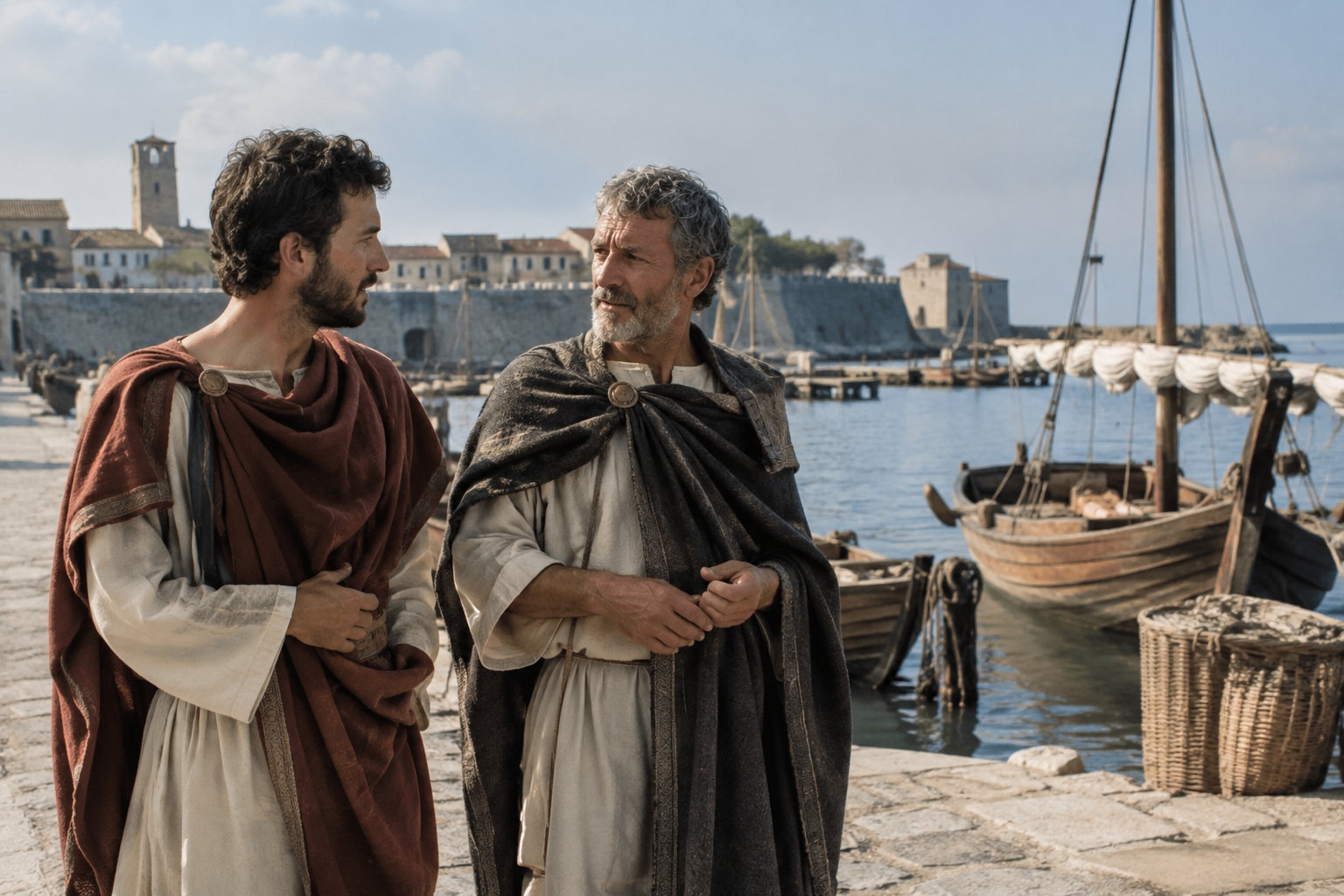
The sample ALA014, dated to around 1685 BC, comes from Alalakh in the Amuq Valley, usually associated in this context with the Amorite-era city. Alalakh was no obscure village. It was an urban centre tied into the political and commercial networks of northern Syria, with connections running toward Anatolia, Mesopotamia, and the Levantine coast. In other words, this is exactly the sort of place where paternal lineages might appear not as isolated curiosities but as part of dense human traffic.
What does J2b1a mean here? It would be careless to turn one Y-line into an "Amorite haplogroup." Ancient states were not biological blocs, and city populations were often mixed. But ALA014 does show that this branch had reached, or persisted in, one of the important Bronze Age urban societies of inland Syria. That is historically useful because Alalakh was part of a zone where personal movement, marriage alliances, trade, slavery, military service, and diplomacy all linked communities across linguistic and political frontiers.
An ancient DNA study examining burials from Alalakh and nearby regions has been especially important for showing how much individual mobility could exist inside these Bronze Age societies without turning every site into a population free-for-all. The broader archaeological lesson is subtle: some people were local, some were not, and lineages such as J2b1a belong within that lived complexity rather than inside a single heroic migration tale.
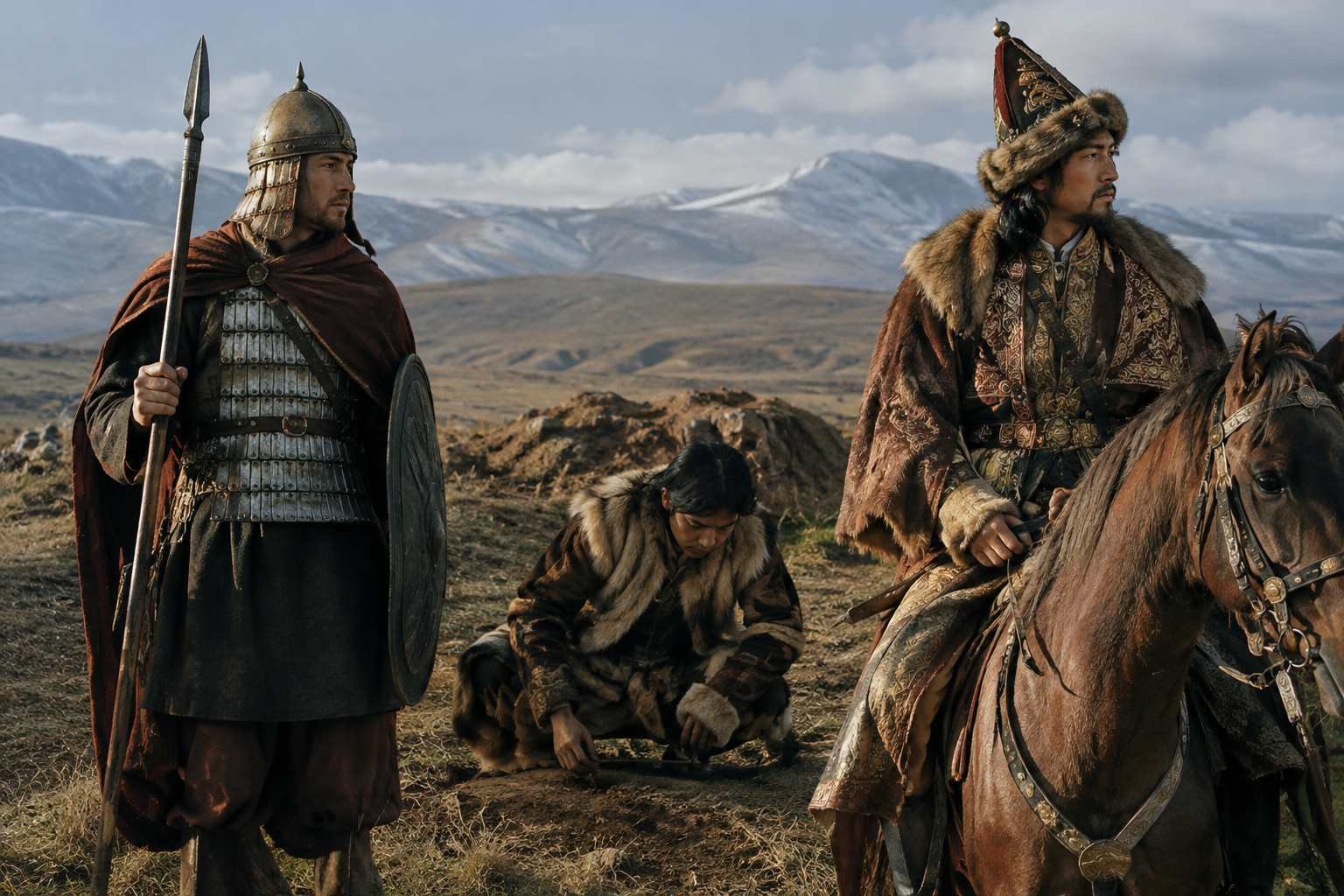
By the time we reach I18237 at Harjis around 1100 BC, the setting has shifted north into the Armenian highlands. This is a particularly intriguing point in time. The late Bronze Age order in many parts of the Near East had fractured, while new regional powers and identities were taking shape. Urartu would soon become one of the major kingdoms of the highlands, drawing together fortresses, agricultural hinterlands, and long-distance political ambitions.
That makes Harjis a useful reminder that J2b1a was not confined to lowland Levantine or Syrian urbanism. Here the haplogroup appears in a highland setting tied to the South Caucasus, where local populations had long histories of their own, yet remained deeply entangled with the wider Near East. A large-scale genetic study of the region, published on ancient population history in the South Caucasus, has helped show that this was no isolated mountain redoubt. The Caucasus repeatedly absorbed, filtered, and reshaped influences from the steppe and the Near East alike.
So Harjis adds something the earlier sites do not. Ain Ghazal shows deep southern Levantine presence; Alalakh shows the lineage in a Bronze Age urban network; Harjis shows J2b1a in a northern highland world at a moment of major political reorganization. Taken together, the samples suggest breadth of placement rather than a single narrow homeland that can be mapped with false precision.
South Caucasus genomic history
There is a temptation, whenever a lineage appears in several ancient places, to convert distribution into destiny: a tribe, a conquering clan, a named people in a textbook. J2b1a does not reward that sort of laziness. The evidence here is thinner, but more revealing. It points to a paternal branch present across a chain of societies that were connected by geography and exchange, yet clearly distinct in language, political structure, and local tradition.
It is also worth being careful about the label itself. J2b1a is a specific branch within the broader J2 family. One should not simply inherit every sweeping claim ever made about J2 as a whole and paste it onto this narrower lineage. The ancient individuals here support a grounded claim instead: J2b1a was present in the ancient Near East and adjacent South Caucasus across multiple Bronze Age contexts, from Jordan to Syria to Armenia.
That modesty is not a weakness. Quite the reverse. It allows the archaeology to breathe. We are looking at real men from real places, not a fantasy map of pure bloodlines marching under modern flags.
Individually, each sample is just one paternal line. Together, they form a useful triangle. I1730x places J2b1a in the southern Levant; ALA014 places it in a major Bronze Age Syrian centre; I18237 places it in the Armenian highlands at the edge of the Urartian world. That spread suggests that the lineage belonged to the long human story of interaction between the Levant, northern Syria, and the South Caucasus.
It does not mean every carrier of J2b1a descends from one Bronze Age merchant, one warrior band, or one royal house. It means the branch was already part of the population fabric of western Asia's connected societies. If your own paternal line falls within J2b1a, these ancient finds give it historical depth in places where farming, towns, kingdoms, and mountain strongholds all met and overlapped.
Neolithic expansion in the eastern Mediterranean
The strongest insight from these J2b1a finds is not glamour but continuity across connected regions. From Bronze Age Jordan to Amorite-period Alalakh and late Bronze Age Armenia, this paternal line appears within societies that were different from one another, yet linked by trade, movement, and deep shared history. For modern researchers, that makes J2b1a less a badge of one ancient people than a sign of belonging to the old human networks of the Near East and the South Caucasus.
Comments