Haplogroup J2a1a2b2a2b2

– 4 min read


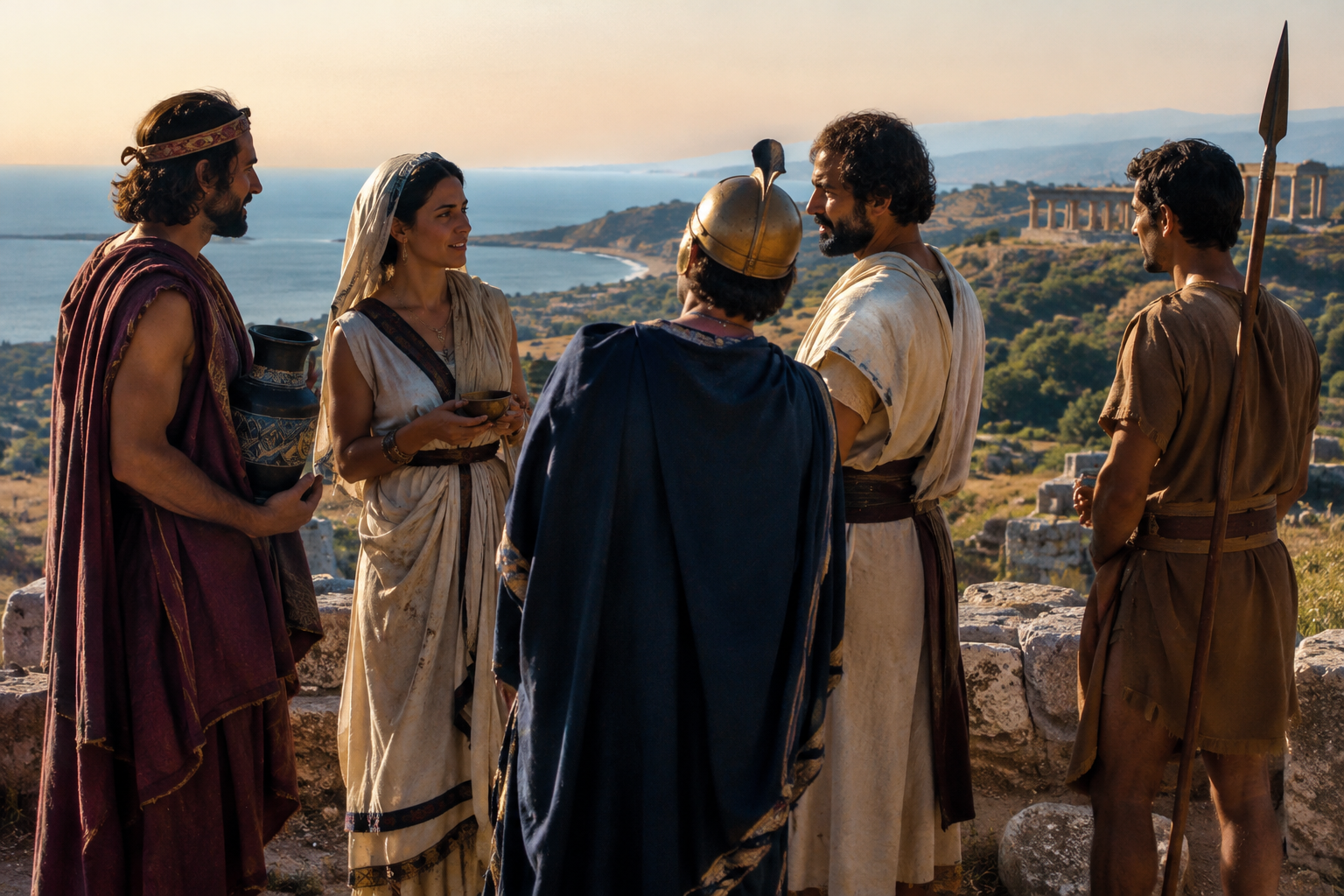
At Selinunte on the southwest coast of Sicily, one ancient male from the Manuzza area, sample I21853, offers a neat little puzzle. He is dated to around 514 BC, in a city famous for being Greek in foundation yet deeply entangled with Phoenician and Punic worlds. In the MyTrueAncestry record, he is associated with the Y-DNA haplogroup J2a1a2b2a2b2, a very specific paternal branch whose story here is less about one people marching neatly across a map and more about the crowded maritime life of the ancient Mediterranean.
That becomes clearer when Selinunte is set beside three other ancient men linked to the same branch assignment: I24047 from Kerkouane in Tunisia, dated around 542 BC; I16709 from Mycenaean Kolikrepi-Spata in Attica, dated around 1410 BC; and I13579 from Mycenaean Delphi in Phokis, dated around 1260 BC. Y-DNA traces one direct paternal line rather than a person's whole ancestry, but even so, this is a striking distribution. It places the branch in Mycenaean Greece long before it turns up in two famously connected first-millennium BC coastal worlds: Punic North Africa and Sicily.
The oldest anchors in this set are the two Mycenaean-era individuals from mainland Greece. Sample I16709, from Kolikrepi-Spata in Attica and dated to about 1410 BC, places this paternal line in the Aegean during the Late Bronze Age. So does I13579 from ancient Delphi in Phokis, dated to about 1260 BC. Whatever the deeper prehistory of J2 as a wider haplogroup may be, these two men matter because they pin this specific article branch, or at least its reported association, to the Mycenaean Greek world.
That is important historically. The Mycenaean period was not an isolated village age but a time of palaces, regional elites, craft exchange, and maritime links that connected the Greek mainland to the islands, Anatolia, Cyprus, and beyond. A genetic study of Bronze Age and historical Mediterranean populations, published in Science, helped show just how interconnected these regions could be, while still preserving strong local continuities. For a branch like J2a1a2b2a2b2, the Greek samples do not prove a point of origin on their own, but they do show that this paternal line was already present in the Aegean centuries before the rise of the great Phoenician and Greek colonial networks in the central Mediterranean.
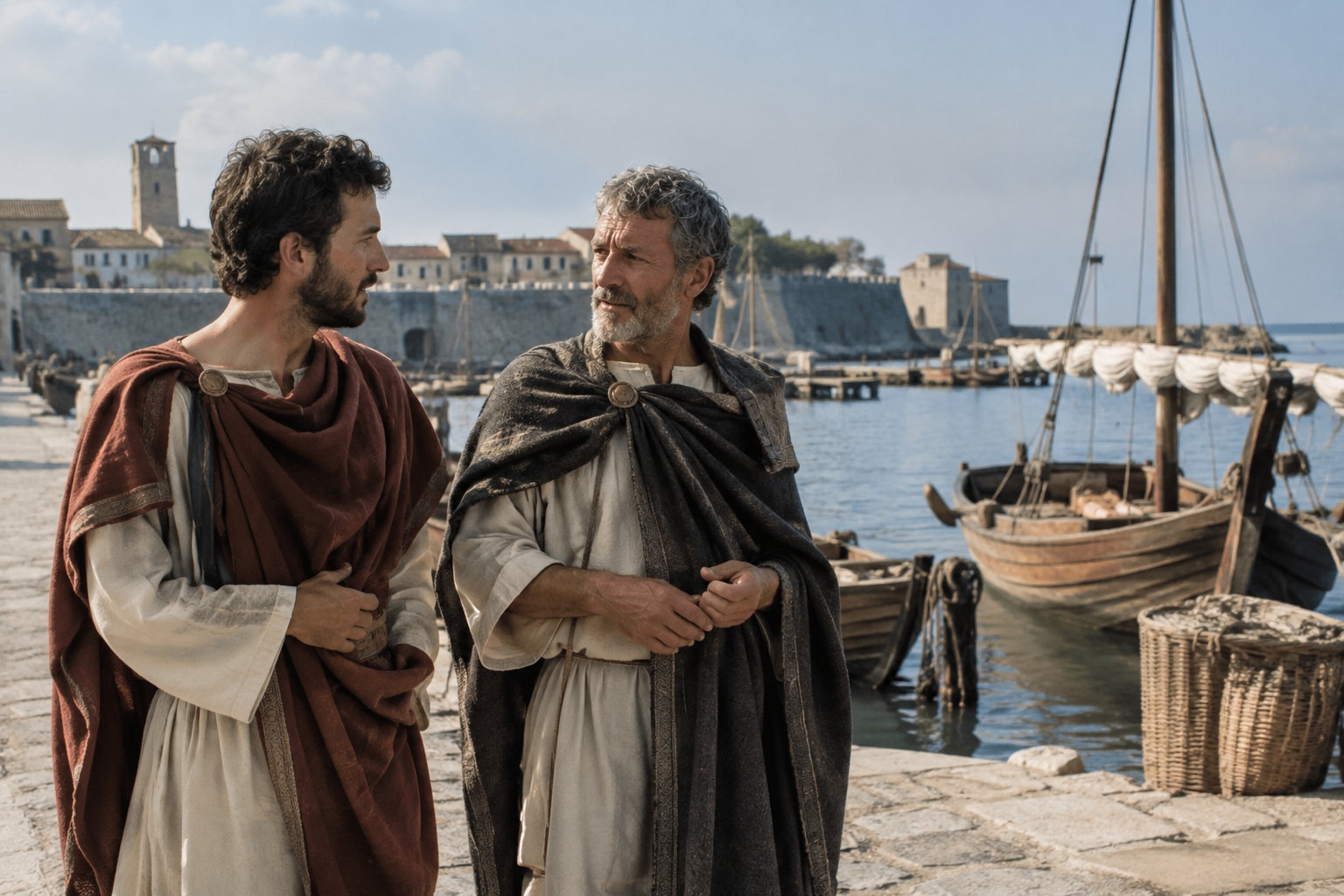
Then we come back to I21853 at Selinunte. Founded as a Greek colony, Selinunte sat in a part of Sicily where Greek, indigenous, and Phoenician-Punic interests pressed closely against one another. By the late sixth century BC, when this man lived, western Sicily was not some tidy ethnic chessboard. It was a zone of trade, rivalry, intermarriage, political realignment, and constant contact.
That is why the Selinunte result is so suggestive. A paternal line associated here with J2a1a2b2a2b2 appears in an urban landscape shaped by Greek settlement but also by the wider central Mediterranean system. One should not leap from a haplogroup to language or identity; a man buried at Selinunte could belong culturally to the city's Greek sphere while still carrying a paternal ancestry with a broader eastern Mediterranean history. The value of the evidence lies precisely in that complexity.
Research on ancient Italian island populations, including Sicily, has increasingly emphasized this layered picture rather than any fantasy of purity. That wider background is reflected in MyTrueAncestry's own coverage of Paleogenomics of Ancient Italian Islands, where island history appears as repeated contact rather than isolation.
The other first-millennium BC sample, I24047 from Kerkouane in Tunisia, dated to around 542 BC, sharpens the pattern. Kerkouane is one of the great Punic sites of North Africa, a settlement tied to the Carthaginian world and extraordinary precisely because it gives archaeologists a fairly direct view of Punic urban life. To find the same reported paternal branch there and at Selinunte is not evidence of one family spanning the sea, but it is evidence fully at home in a world of ships, ports, colonies, and mixed populations.
A recent ancient DNA study on Punic and neighboring Mediterranean populations, published in Nature, has pushed this point strongly: Punic communities were not simple biological extensions of a single homeland. They were diverse, mobile, and regionally entangled. In that context, J2a1a2b2a2b2 at Kerkouane and Selinunte looks less like an anomaly and more like the sort of paternal continuity one might expect to encounter in connected coastal societies drawing people from overlapping Mediterranean networks.
This matters because popular imagination still likes to divide the ancient Mediterranean into hard blocks: Greeks here, Phoenicians there, natives elsewhere. The DNA keeps irritating that old scheme, which is one of the pleasures of the subject. Ports are untidy places, and ancient ports were untidy in exactly the same human way.
So what sort of article is this haplogroup really demanding? Not a heroic tale of one tribe conquering the sea, certainly. The better reading is that J2a1a2b2a2b2, as represented by these records, appears in a chain of evidence running from Late Bronze Age mainland Greece to Iron Age Tunisia and Sicily. That is a pattern rooted in the eastern and central Mediterranean, especially in places shaped by seaborne contact.
It would be wrong to use four men to define the whole history of the branch. It would be equally wrong to ignore the obvious historical setting they illuminate. Two Mycenaean Greek individuals show an Aegean presence well before the classical age. Two later individuals from Punic-connected coastal settings show the same paternal thread in the bustling western Mediterranean of the sixth century BC. That does not tell us everything about where the branch began, but it does place it firmly in some of the most interconnected societies of the ancient sea.
For someone researching a present-day paternal line, that is the useful takeaway. If your branch falls within J2a1a2b2a2b2, the ancient evidence currently highlighted here points not to one narrow ethnic label, but to the old Mediterranean corridor linking the Aegean, Sicily, and North Africa through trade, settlement, and long familiarity across the water.
Comments