Haplogroup J2a1a2b2

– 5 min read


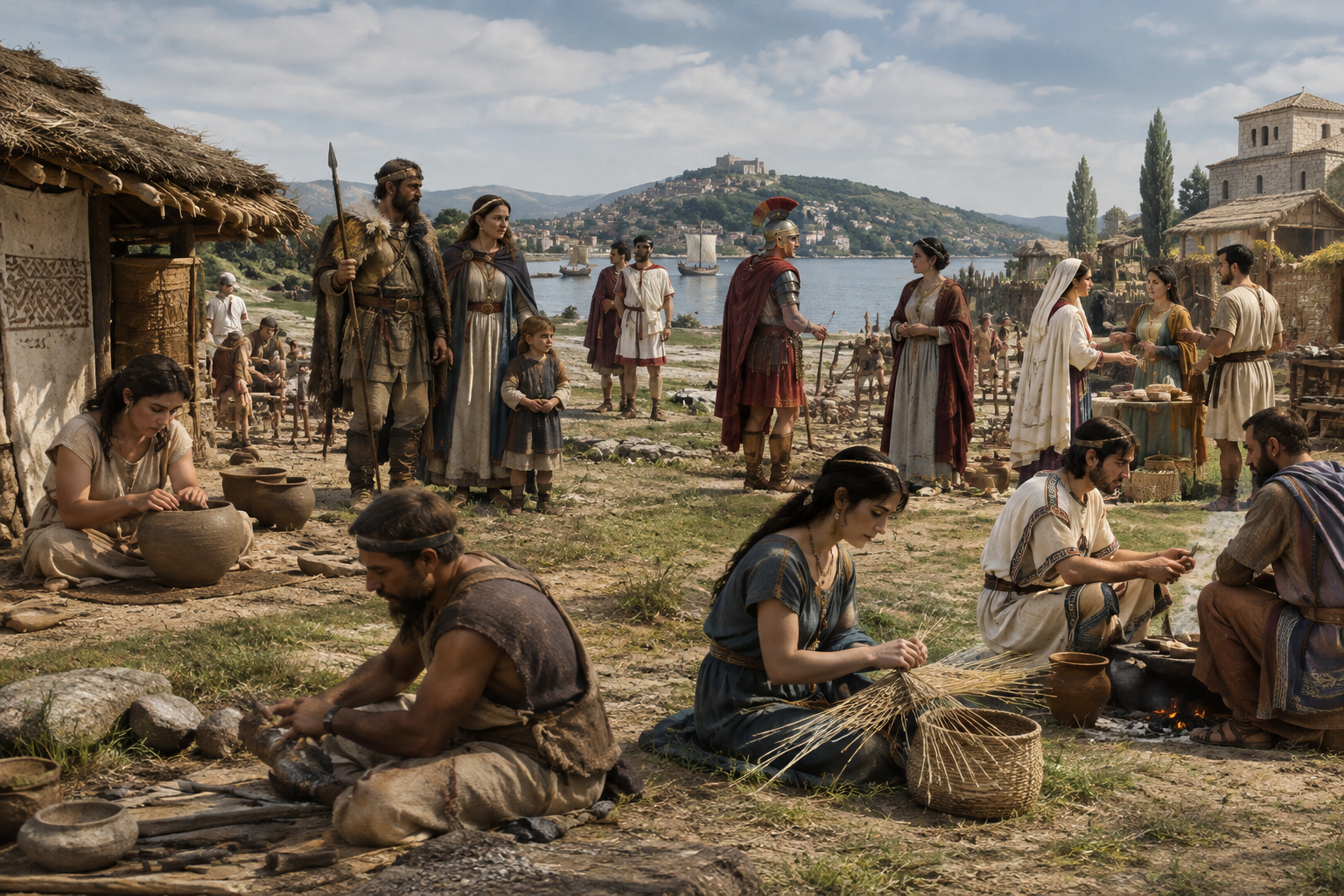
Haplogroup J2a1a2b2 sits inside one of the best-known paternal lineages of western Eurasia: haplogroup J2, a branch often discussed in connection with the ancient Near East, the Aegean, and the Mediterranean world. That does not mean every story ever told about J2 can be laid straight on top of this narrower subclade. Quite the opposite. The interest of J2a1a2b2 is that it seems to appear, in the evidence supplied here, across a long arc from Neolithic Anatolia into the Balkans and onward into Roman and early medieval southeastern Europe. It is a reminder that very specific Y-DNA branches can survive through huge cultural changes while the people carrying them become part of very different societies.
As ever with Y-DNA, we are looking at only one line of descent: the direct paternal line, father to son to son. That can be historically revealing, but it is not the same as a person's whole ancestry. Still, when ancient DNA places related paternal branches in settlements, cemeteries, and frontier towns, it gives us something precious: not mythic origins, but snapshots of real men living in real places over thousands of years.
The broad background of J2 is often linked with populations of the Near East and adjacent eastern Mediterranean, especially in the long age of early farming and the worlds that grew from it. For a subclade such as J2a1a2b2, the safer approach is not to overstate a single homeland, but to notice where the evidence in hand places it: first in Anatolia, then in the Balkans, and later in the Roman and post-Roman middle Danube zone.
That pattern fits a larger historical possibility. Early farming spread from Anatolia into southeastern Europe, and with it came not just crops and animals, but families, kin groups, and paternal lines. Over later millennia, the Balkans became one of the great crossroads of Eurasia: Greek colonies, Thracian and Illyrian communities, Macedonian kingdoms, Roman armies, merchants, settlers, and the shifting populations of late antiquity and the early Middle Ages all passed through or settled there. A lineage such as J2a1a2b2 may therefore reflect both deep local roots and repeated incorporation into new social worlds.
Explore Neolithic Expansion in the Aegean
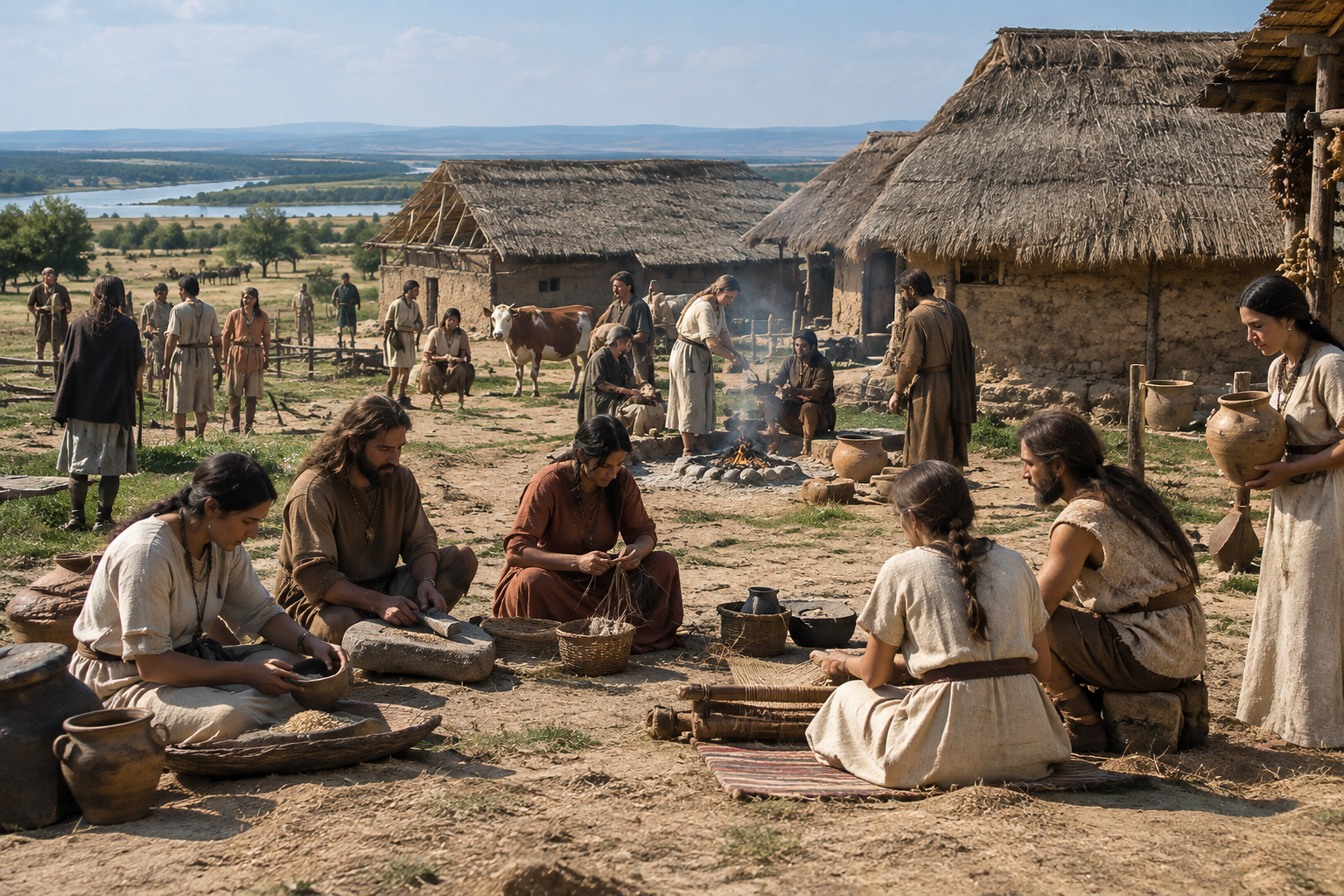
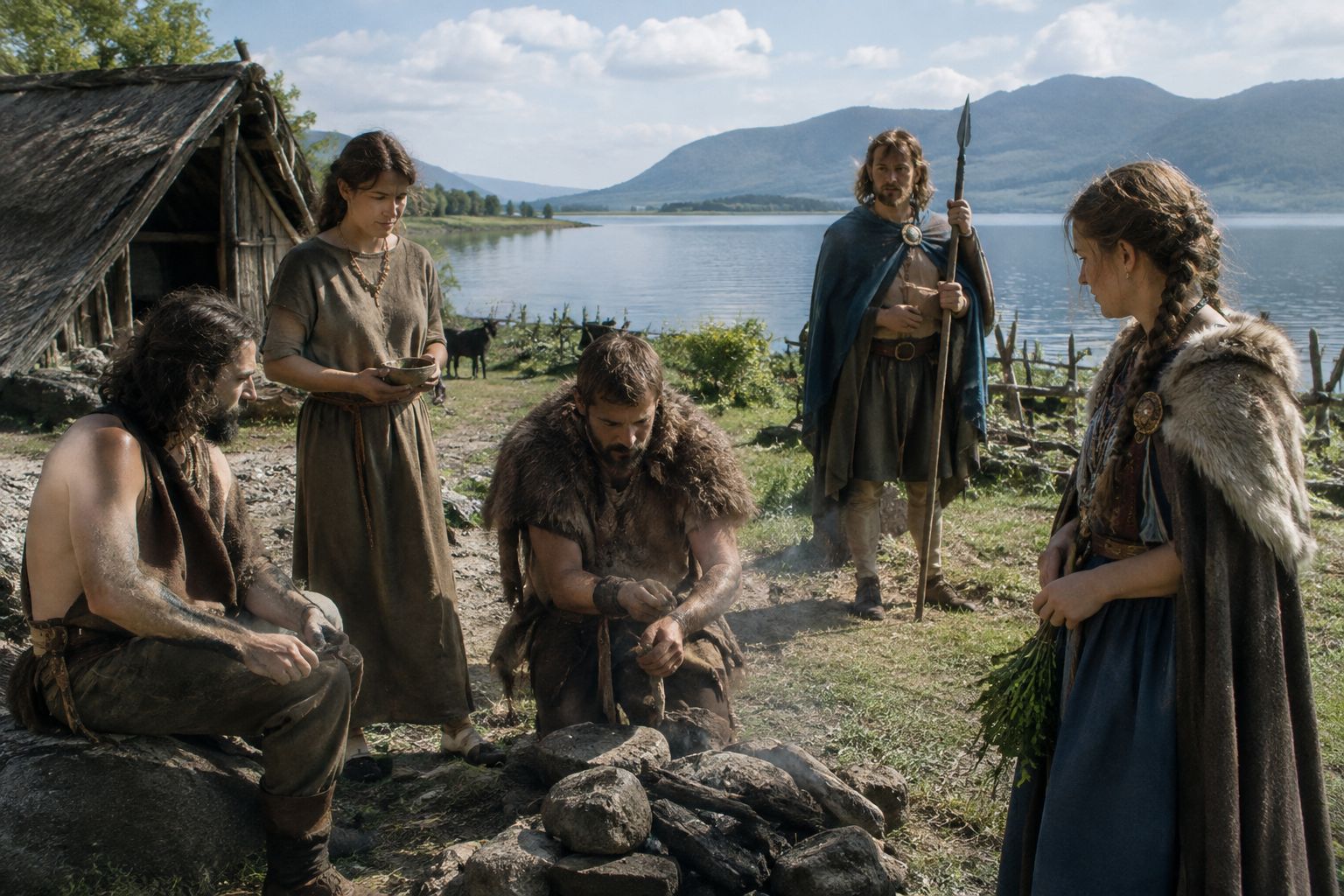
The earliest supplied sample is cch134 from Late Neolithic Anatolia Catalhoyuk, dated to 5200 BC. Catalhoyuk hardly needs embellishment: it is one of the great archaeological names of early settled life. A paternal line connected with J2a1a2b2 appearing there places this branch in a landscape of mudbrick houses, farming, ritual practice, and densely packed community life. That does not prove where the subclade originated, but it does anchor it very early in Anatolia.
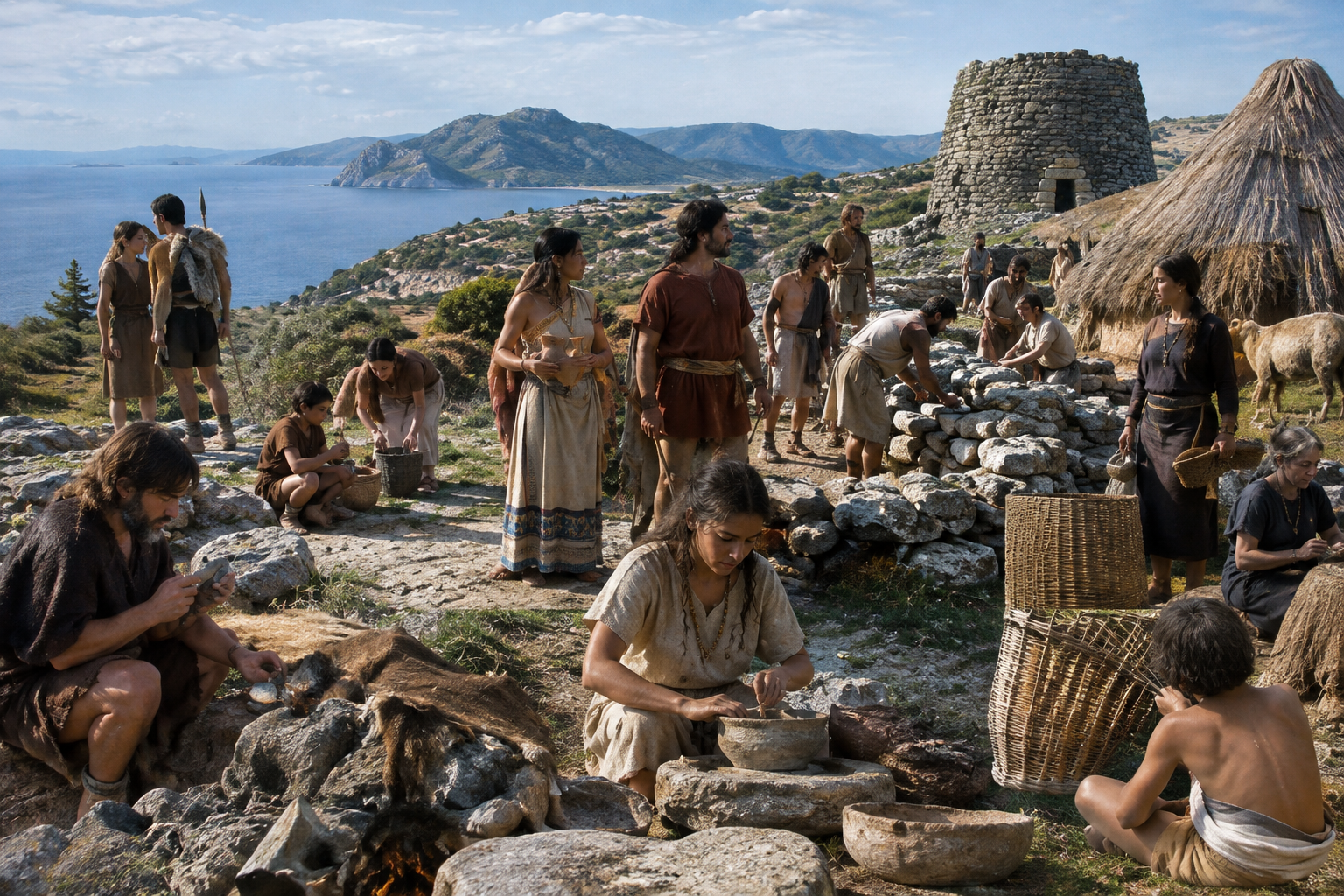
From there, the record broadens into southeastern Europe. I20806 from Chalcolithic Urziceni Romania, dated to 4000 BC, and YUN026 from Early Bronze Age Bulgaria Yunatsite, dated to 3120 BC, suggest that related paternal ancestry was present north and west of the Aegean well before classical antiquity. These are especially useful samples because they span the Copper Age to the Bronze Age, exactly the periods when Balkan societies were changing through new exchange networks, metallurgy, and expanding regional contacts.
Then come two striking Iron Age appearances: I10388 from Ancient North Macedonia Plaosnik-Ohrid, dated to 650 BC, and I10384 from the same site dated to 600 BC. Two nearby individuals carrying the same paternal signal in ancient Ohrid is the sort of detail that makes the past suddenly less abstract. This is not one isolated man turning up by chance; it hints at a local or regional male-line presence in the ancient Macedonian sphere.
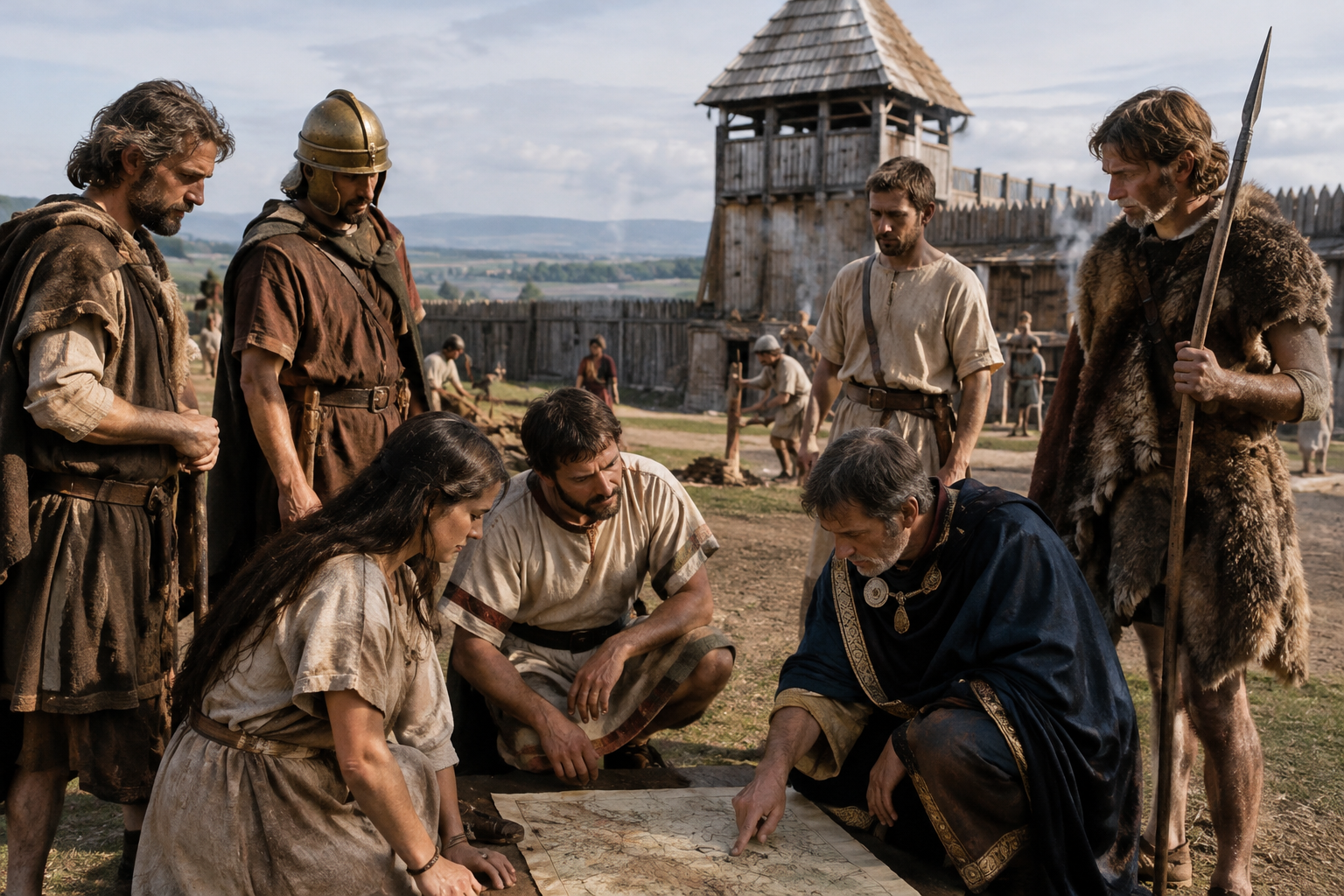
By the Roman period, the lineage is still visible. I26775 from Imperial Roman Era Zadar Croatia, dated to 150 AD, places it on the eastern Adriatic, one of Rome's most connected maritime zones. RKF273 from Late Roman Hungary Rakoczifalva Szolnok, dated to 250 AD, takes the story inland to the Danube world. Neither sample proves uninterrupted descent from earlier Balkan carriers, but together they show that this paternal branch remained part of the population mix in Roman southeastern Europe.
Follow the DNA Road from Anatolia to Rome
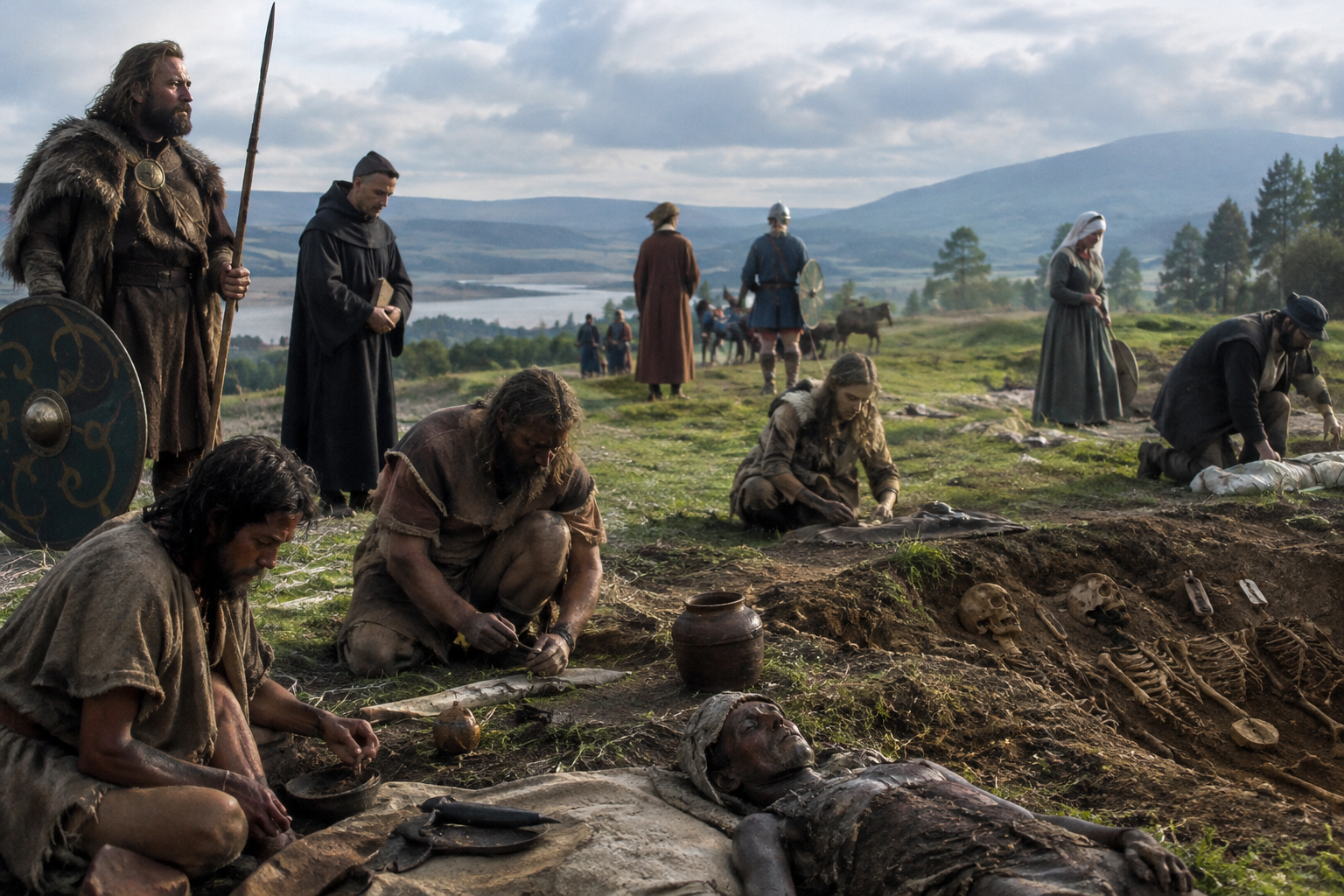
The Rakoczifalva material becomes even more interesting in the centuries after Rome. Two supplied individuals, RKF244 and RKF268, are listed as Germanic Migration Period Hungary Rakoczifalva and Migration Period Hungary Rakoczifalva, both dated to 650 AD. This is where ancient DNA does something written labels often cannot. "Germanic" in an archaeological description may reflect material culture, burial custom, or historical context; it does not mean everyone in the cemetery shared the same ancestry or paternal background.
Here, a J2a1a2b2-associated paternal line appears in a Migration Period setting in Hungary, far from any simple stereotype of what a "Germanic" lineage ought to look like. In other words, the period's communities were mixed, mobile, and socially assembled. Men with different paternal backgrounds could belong to the same political or cultural formation. That should not surprise us, but the DNA makes it plain.
The later sample I15543 from Medieval Era Serbia Timacum Kuline Ravna Village, dated to 900 AD, carries the story forward into the medieval Balkans. Timacum in eastern Serbia stands in a region where Roman, Byzantine, and Slavic-era histories overlap. Again, this is not proof of one uninterrupted family line from Catalhoyuk to medieval Serbia. It is something more modest and, in a way, more valuable: evidence that this paternal branch remained part of the human geography of the Balkans across immense historical change.
Discover Post-Roman DNA in Hungary
In this case, the supplied field for associated noble families and castles is effectively empty, and that absence matters. It would be very easy, and very wrong, to fill the silence with invented dynasties, supposed Balkan lords, or castles chosen merely because they stand near the sample sites. We should resist that temptation.
What we can say is that the geographical corridor marked by these ancient samples later became a landscape of fortresses, bishoprics, noble estates, and contested frontiers. From Ohrid to Zadar, from the Danube basin to eastern Serbia, medieval power was expressed through strongholds and landed families. If later noble houses in those regions are sometimes discussed alongside J-lineages in broader genealogical circles, that still does not allow us to claim a specific genetic continuity here without direct evidence.
That distinction is crucial. A haplogroup can persist in a region for millennia; a medieval family may arise in that same region; but geography is not genealogy. Ancient DNA gives context, not automatic pedigree.
Explore Deep Balkan Roots and Medieval Admixture
What makes J2a1a2b2 worth attention is not a single grand claim of origin, but its persistence across several of the most important transformations in European history. It appears in Neolithic Anatolia, in Chalcolithic and Bronze Age southeastern Europe, in Iron Age North Macedonia, in Roman Dalmatia and Hungary, and in medieval Serbia. That sequence points toward a paternal lineage at home in the eastern Mediterranean and Balkan-connected world for a very long time.
It also shows how badly simplistic ethnic thinking fails. The same paternal branch can sit in a Neolithic farming settlement, an Iron Age Balkan burial, a Roman Adriatic context, and a Migration Period cemetery in Hungary. Languages changed. States changed. Burial customs changed. Religions changed. But the paternal line remained part of the population story.
For genealogists, this is the useful lesson. If you belong to J2a1a2b2 today, your Y-DNA does not make you "a Roman," "a Macedonian," or "a man from Catalhoyuk." What it does is connect your direct paternal line to a branch that ancient DNA has already placed in some of the most important historical landscapes between Anatolia and the Balkans. That is not a family tree in the documentary sense. It is a deep historical setting for one line of your ancestry.
MyTrueAncestry lets you explore that setting in a far more tangible way: by comparing your DNA to ancient individuals and historical populations. Those matches do not automatically prove direct descent from any one ancient person or membership in a noble house, but they can reveal remarkable historical connections and place your ancestry inside the human story archaeology is uncovering every year.
Comments