Haplogroup J2a1a1a2b2a3b1b

– 5 min read


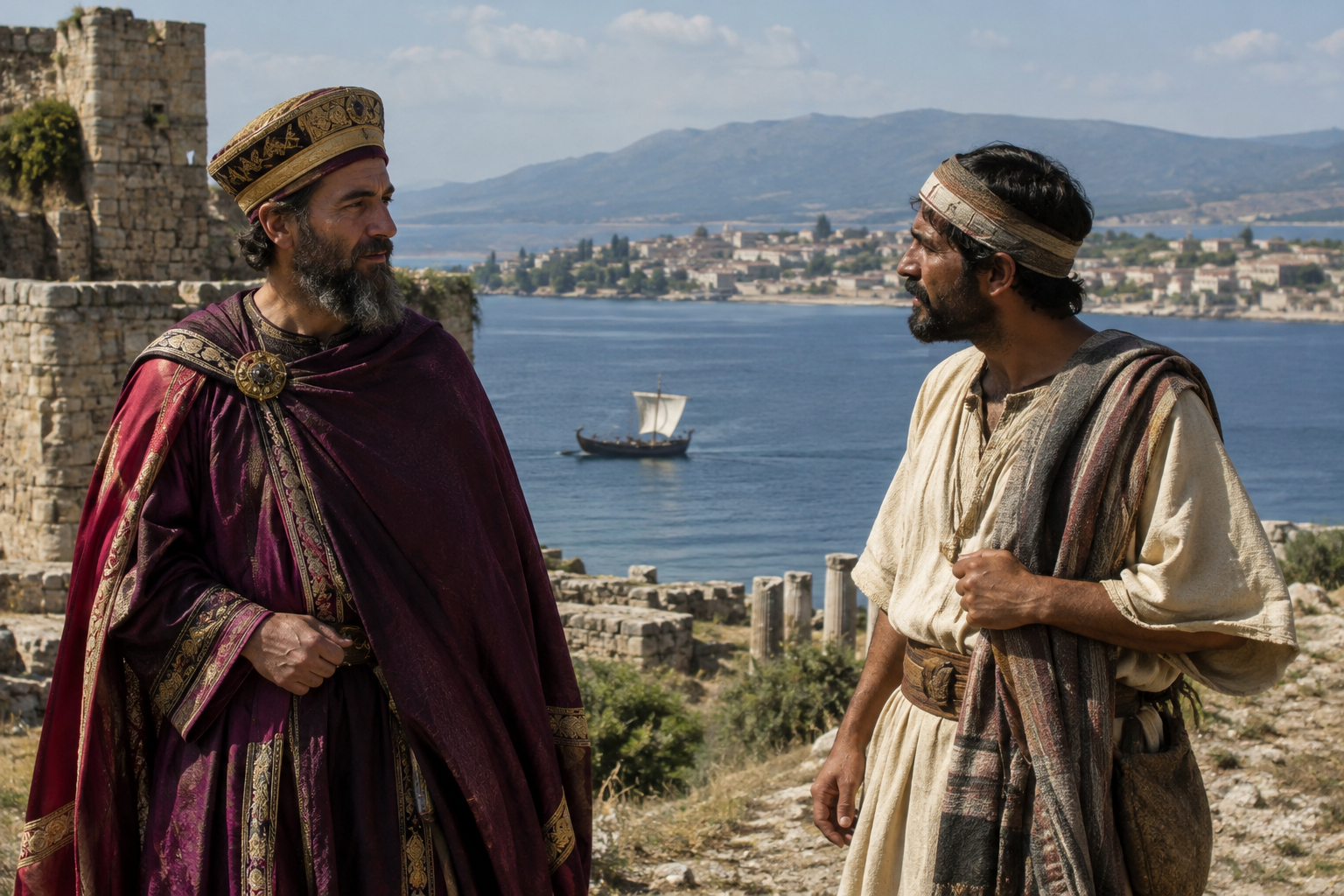
At Iznik in the Marmara region, one ancient male identified as I14833 was buried in the Byzantine period, around AD 550. That date places him in a world that was still Roman in law and administration, but unmistakably eastern Mediterranean in language, religion, and everyday life. For anyone carrying the Y-DNA haplogroup J2a1a1a2b2a3b1b, this is a striking anchor point: a paternal line turning up in a major Late Antique town of northwestern Anatolia, at the hinge between the Aegean and the wider Near East.
There is another clue much further back in time. An ancient individual from Alalakh, the Amorite-period sample ALA011, dates to around 1730 BC. The jump between these two men is huge, of course, and one must not pretend that two samples amount to an unbroken family story. But together they place this paternal branch, or a very close related line, in two places that matter enormously for the history of the eastern Mediterranean: Bronze Age northern Levantine urban society and Byzantine Anatolia.
J2a1a1a2b2a3b1b is a very fine-grained Y-DNA label. Y-DNA traces one direct paternal line only: father to son, back through time. That makes it powerful for following a specific male lineage, but it does not describe a person's whole ancestry, language, culture, or identity. In practice, the deeper historical meaning often comes from the broader J2a family, which appears repeatedly in ancient DNA from parts of Anatolia, the Aegean, the Caucasus, Iran, and the Levant.
What is especially useful here is not some grand claim about a single migration, but the setting of the finds. Both Iznik and Alalakh were places of contact, administration, trade, and movement. A paternal line found in such places belongs to the sort of history archaeologists actually know well: cities connected by sea lanes, empires, merchants, soldiers, farmers, scribes, and households moving around the eastern Mediterranean over very long periods.
The Byzantine sample I14833 comes from Iznik, ancient Nicaea, one of the most important cities of northwestern Anatolia. By around AD 550, this was a Christian imperial landscape. Councils had met there, roads and lake routes connected it to Constantinople, and the region sat within the orbit of the great transformations of Late Antiquity: plague, war, rebuilding, and persistent movement of people around the Aegean and Marmara worlds.
That matters because a Y-line such as J2a1a1a2b2a3b1b appearing here fits a historical setting in which Anatolia was not peripheral but central. Northwestern Anatolia linked the Balkans, the Aegean islands, inner Asia Minor, and the capital itself. So this is not simply "a man in Turkey"; it is a man in one of the best connected zones of the early Byzantine world.
A major ancient DNA study on populations around the Mediterranean and western Eurasia, published in Science, helped sharpen this broader picture of mobility and continuity across Roman and post-Roman settings. Without forcing this one individual into a simplistic ethnic box, the larger lesson is clear enough: paternal lines linked to J2a remained part of the eastern Roman population landscape well into the first millennium AD.
There is also a pleasing historical irony here. Nicaea is often remembered for theology and emperors, but ancient DNA drags us back to ordinary biological history. Beneath the grand councils were generations of men whose paternal lines tied the city to much older eastern Mediterranean populations.
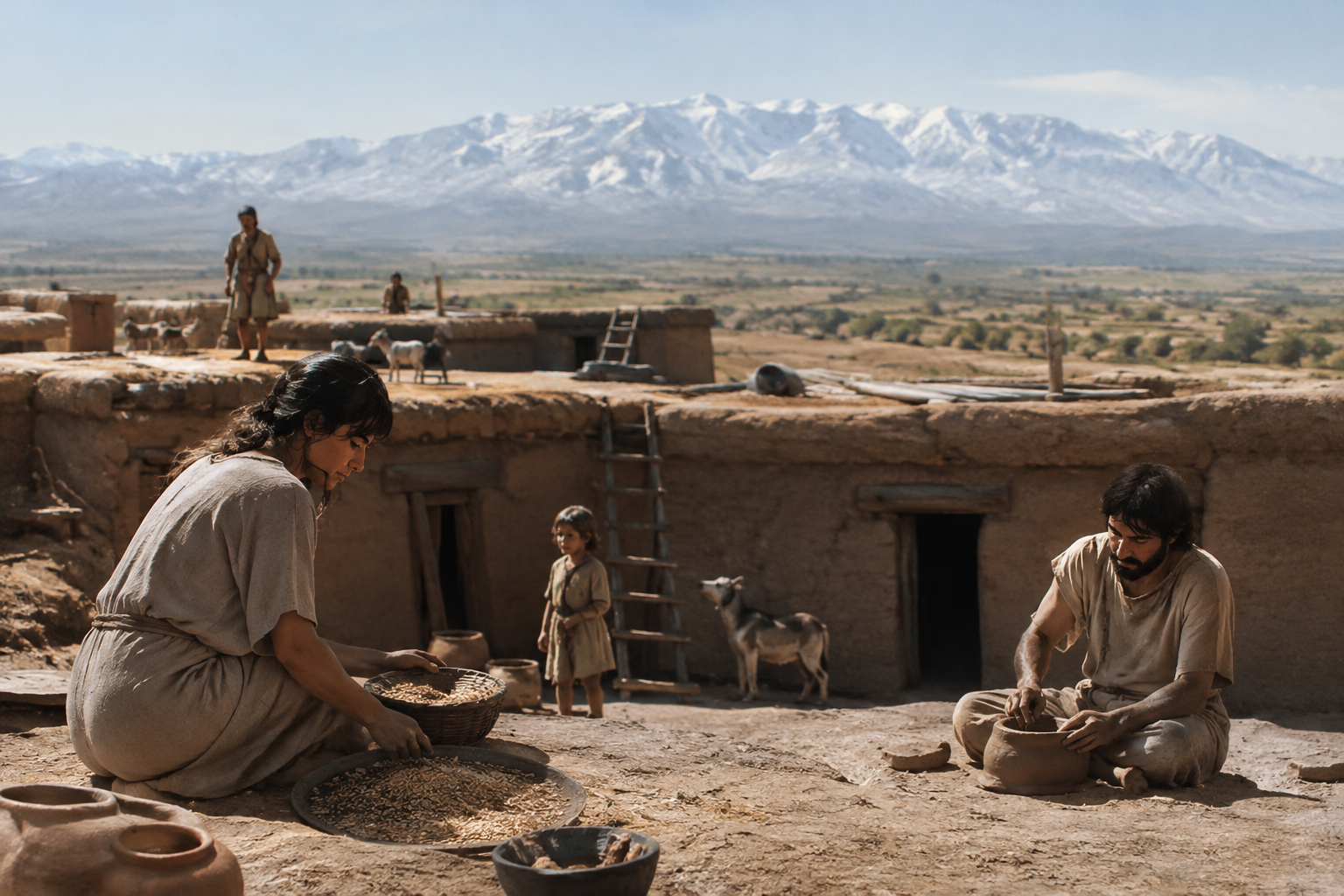
The earlier sample, ALA011, belongs to Alalakh in the Amuq plain, dated to around 1730 BC and associated with the Amorite world of Bronze Age Syria. Alalakh was no isolated village. It was an urban center plugged into the politics of Mesopotamia, Anatolia, and the Levant, with archives, diplomacy, and trade. If you wanted a place to look for durable paternal lineages moving through connected Bronze Age societies, this would do very nicely.
Now, one must be careful with labels like "Amorite." That is a historical and cultural designation, not a Y-DNA haplogroup. Still, the presence of this line in a Bronze Age Levantine urban context is significant because it places the ancestry of the branch in precisely the sort of world from which many later eastern Mediterranean male lines could have spread, persisted, or diversified.
Research on ancient individuals from Alalakh and the wider region, including work published in Cell, has been especially important for showing how connected these Bronze Age communities were. The old image of tidy, bounded peoples gives way to something more realistic: urban populations shaped by local continuity, regional marriage networks, and occasional long-distance movement. ALA011 belongs in that complicated human landscape, not in a neat arrow on a migration map.
If one ancient sample sits in Bronze Age Alalakh and another in Byzantine Iznik, the temptation is to draw a straight line between them. History, maddeningly, is never so obliging. Yet the geography is suggestive. Northern Syria and Anatolia were bound together for millennia by trade routes, imperial expansions, military campaigns, and family migration. Hittite influence, Neo-Assyrian pressure, Hellenistic kingdoms, Roman rule, and Byzantine administration all reused, in one way or another, the same broad corridors.
That is why these two finds matter together. They do not prove direct descent from ALA011 to I14833, but they do place this paternal ancestry in a zone of long-term continuity and exchange. It is exactly the sort of pattern one often sees with J2-related lineages: not a single spectacular migration, but repeated survival in urban and agriculturally rich regions of the eastern Mediterranean.
For modern testers, this can be more illuminating than romance. A paternal line in J2a1a1a2b2a3b1b may reflect deep roots in societies where Greek, Anatolian, Semitic, Roman, and Byzantine histories overlapped. The archaeology points less to one tribe than to a long habit of belonging to connected settled populations.
There is another point worth making. Both Alalakh and Iznik are not merely dots on a map; they are places where states concentrated people, labor, and institutions. Urban centers are excellent places to detect lineages that endured through administrative change because cities accumulate ancestry. They attract newcomers, but they also preserve local families across centuries.
So the archaeological importance of J2a1a1a2b2a3b1b here lies partly in context. A Bronze Age Levantine city and a Byzantine Anatolian city are very different political worlds, yet both belong to the same larger belt of eastern Mediterranean civilization. The paternal signal is therefore historically coherent even when the exact genealogical steps remain unknown.
This is also why Anatolia so often turns up in discussions of ancient population history. It was not just a bridge to somewhere else. It was one of the main theatres in which Near Eastern and Mediterranean ancestries mixed, settled, and reappeared across different eras.
The best-supported picture for J2a1a1a2b2a3b1b is not one of sudden appearance, but of endurance across the eastern Mediterranean world. With ALA011 at Alalakh around 1730 BC and I14833 at Iznik around AD 550, this branch is glimpsed in two deeply historical landscapes shaped by cities, trade, empire, and regional continuity. For someone researching this paternal line today, that is the real value of the evidence: not a fantasy pedigree, but a plausible connection to the long-settled societies of the Levant and Anatolia.
Comments