Haplogroup J2a1a1a2

– 6 min read


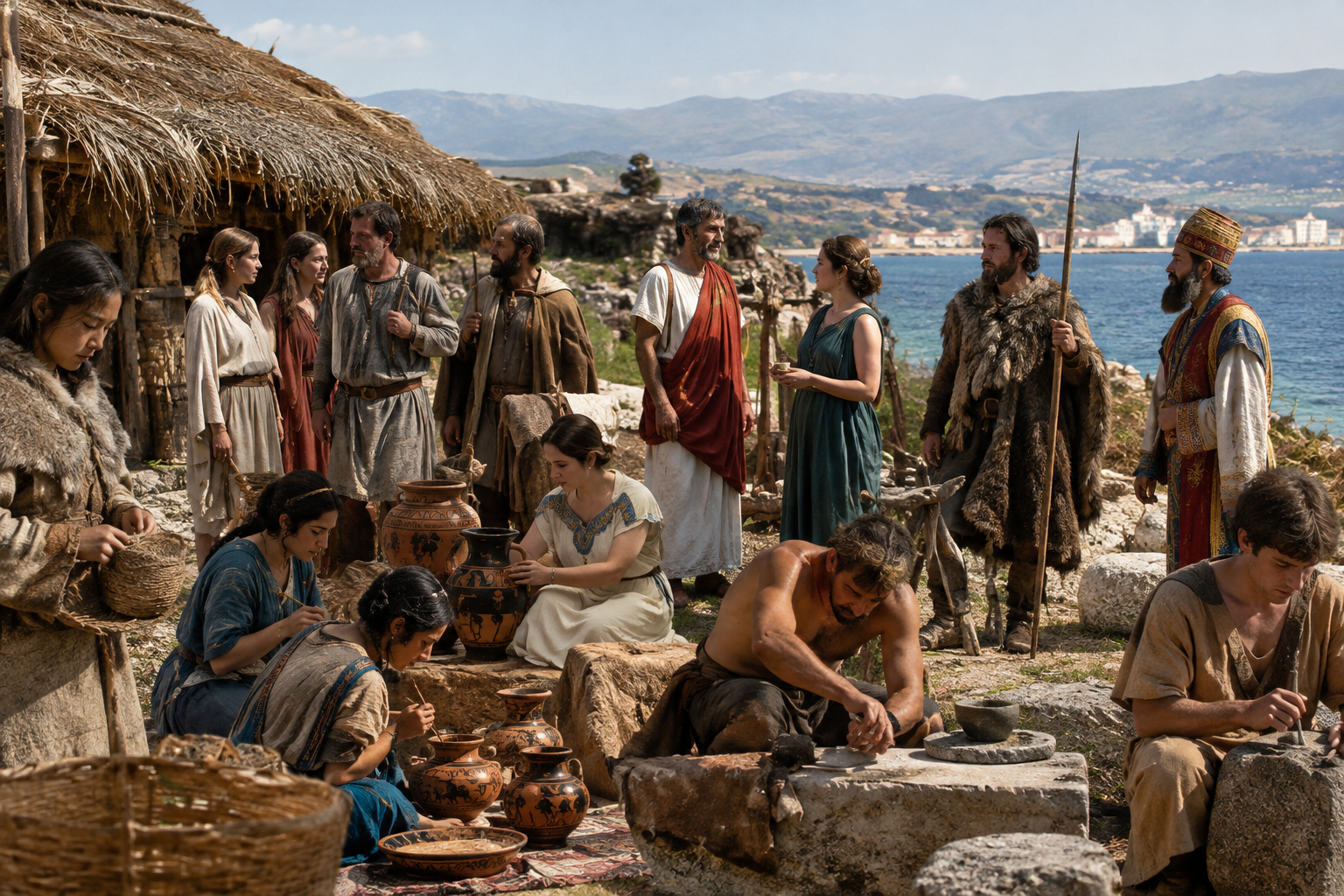
Haplogroup J2a1a1a2 is the sort of Y-DNA lineage that reminds us how misleading tidy historical boxes can be. It belongs to the wider J2 branch, a paternal line often associated in broad terms with the eastern Mediterranean, Anatolia, the Aegean, and parts of the Near East. But once we narrow down to a more specific subclade such as J2a1a1a2, the story becomes much more particular and much more interesting. Instead of one grand civilizational label, we find a line appearing in Neolithic Crete, Minoan burials, Bronze Age Armenia, Classical Anatolia, Roman Italy, and post-Roman Pannonia.
That is exactly why this haplogroup matters. Y-DNA traces one direct paternal line only - your father's father's father, and so on - not your whole ancestry. Yet when ancient DNA places a lineage like J2a1a1a2 in very different archaeological settings over thousands of years, it gives us a rare way to follow one strand of male-line history through farming villages, palace worlds, imperial networks, and frontier societies. It does not tell us that everyone in those places was related, still less that later noble families descend from any one excavated man. But it does let us see how paternal lines can persist, move, and settle in ways that written history alone could never show.
The broader J2 family is widely discussed in connection with early agricultural expansions and later movements around the Mediterranean and western Asia. For a downstream branch such as J2a1a1a2, caution is essential: we should not simply pour the entire history of J2 into this smaller lineage. Even so, the ancient samples supplied here strongly suggest that this branch, or very close paternal relatives of it, was already established in the world of the Aegean and neighboring regions deep in prehistory.
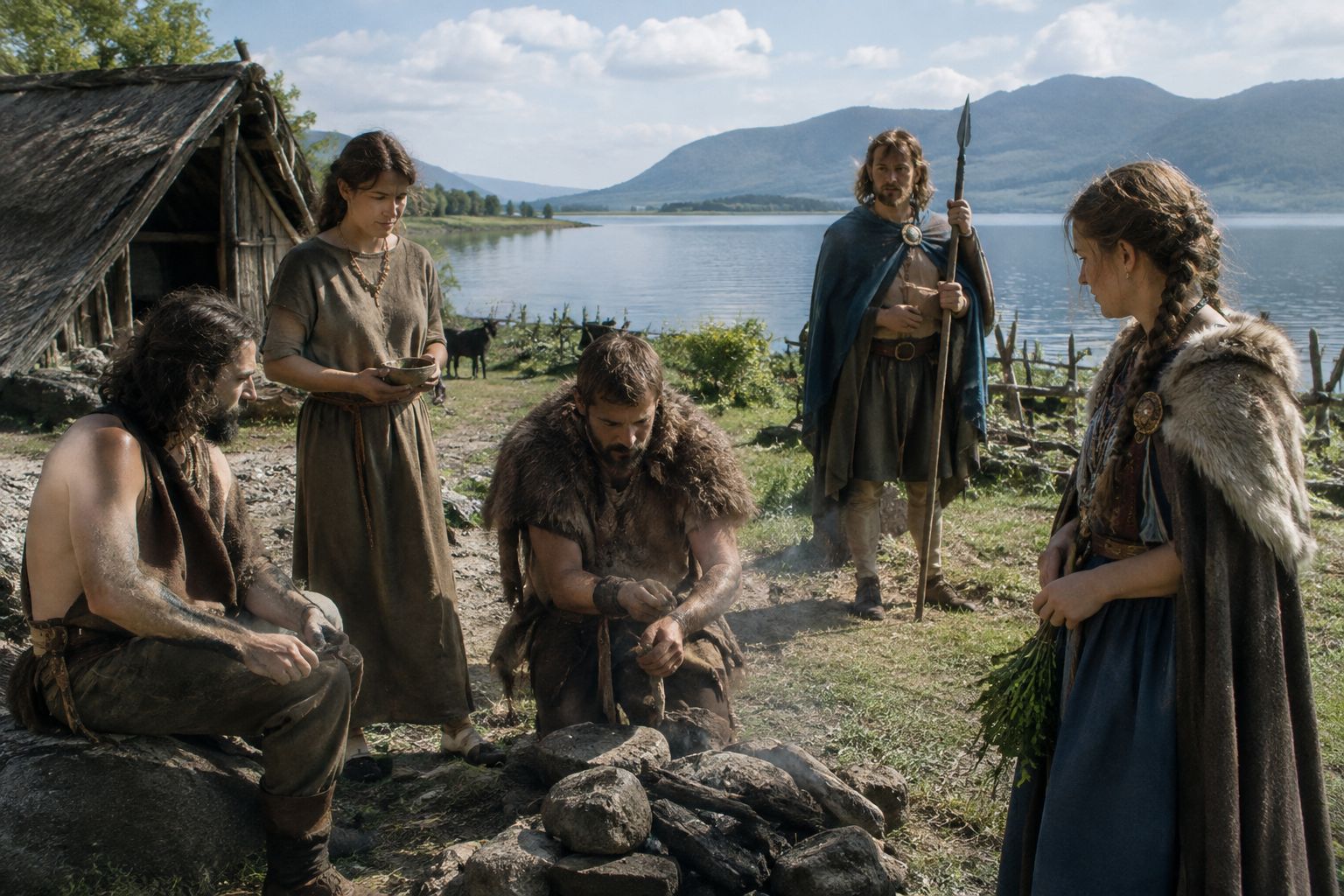
Two particularly striking early finds come from Neolithic Aposelemis, Crete: APO023 and APO025, dated to 4500 BC. These men belong to the earliest horizon in this dataset and place the lineage in an island setting tied to the spread of farming into the Aegean. Crete was never just a passive recipient of influences from the mainland. It was a place where seaborne communities, farming lifeways, and local traditions met and took root. A paternal line present there this early immediately tells us that J2a1a1a2 has a serious antiquity in the region.
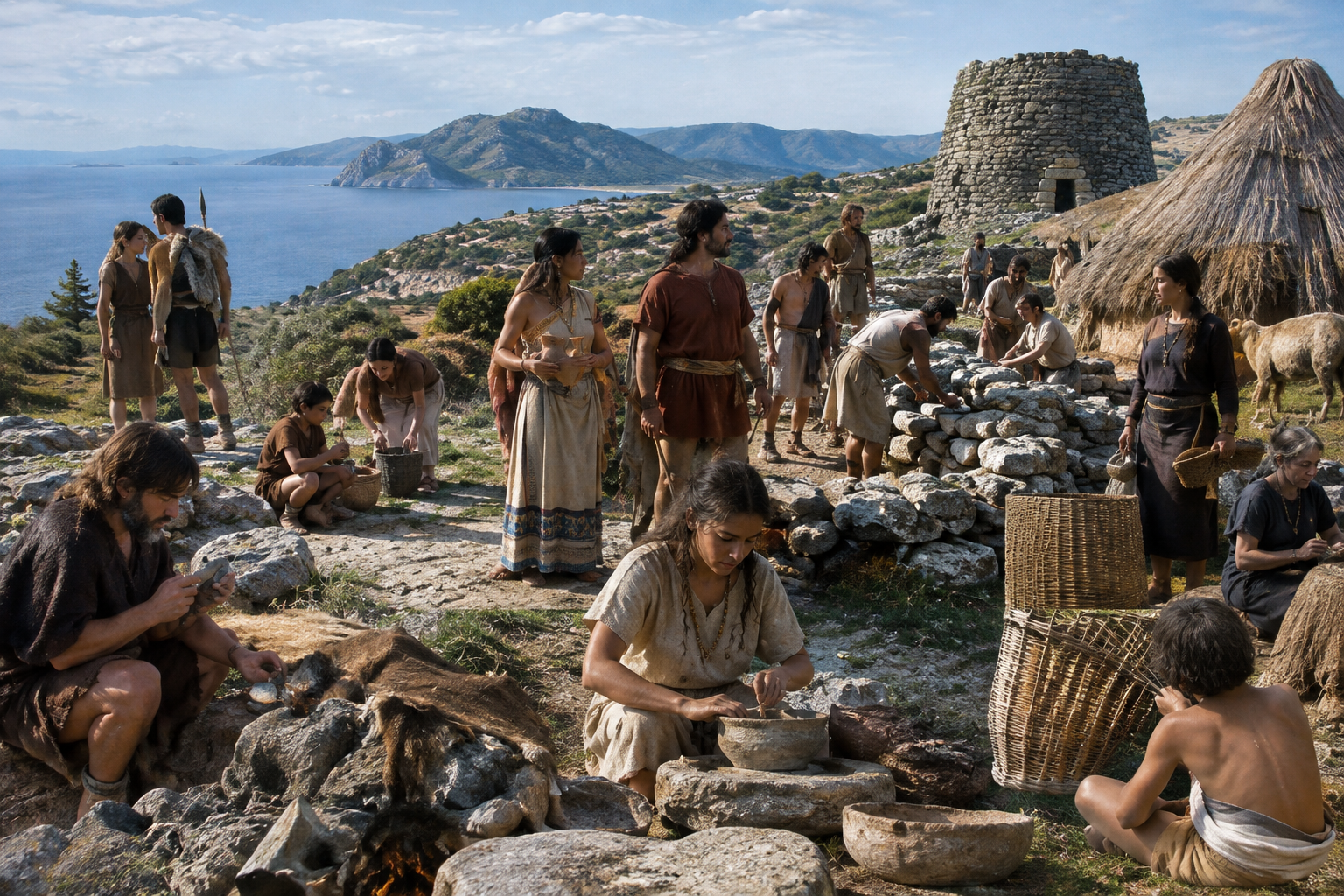
That picture becomes even richer in Minoan Crete. At Hagios Charalambos Cave, four individuals - HGC032, HGC036, HGC015, and HGC027 - are dated to 1900 BC. This is no longer the world of first farmers, but of the Minoan Bronze Age: complex communities, craft specialization, and long-distance exchange. The repeated appearance of this paternal line in the same broad island world, from Neolithic Aposelemis to Minoan Crete, hints at regional continuity across a very long stretch of time, even while culture and society changed dramatically.
For readers interested in that bigger Aegean background, MyTrueAncestry has a useful companion piece on the wider setting of these early island populations.
The line does not stay on Crete. A later sample from the South Caucasus, I19349 from Karashamb Cemetery, Armenia, dated to 1075 BC, places this paternal ancestry in the Late Bronze Age world of Armenia. That matters because the Caucasus was one of antiquity's great crossroads, linking highland societies with Mesopotamia, Anatolia, and the steppe. A lineage like J2a1a1a2 appearing there fits a landscape of movement and local continuity rather than a single simple migration story.
Then there is I5228, from Classical Era Amisos, Black Sea Anatolia, dated to 200 BC. Amisos sat on one of the most connected shorelines in the ancient world. The Black Sea was not a remote fringe; it was a highway of merchants, soldiers, colonists, and local dynasts. J2a1a1a2 in this setting suggests that the lineage belonged comfortably within the wider Anatolian and eastern Mediterranean sphere by the Classical period.
We can then follow it westward into Italy with TAQ020 from Imperial Roman Tarquinii, dated to 163 AD. Tarquinii, with its deep Etruscan past and later Roman life, is a fitting reminder that Roman Italy was peopled by lineages with many different backgrounds. A Y-line found in Anatolia, the Aegean, and Armenia turning up in imperial Italy is not surprising in itself; what is valuable is having an actual excavated individual who proves it.
If you want to think more about how Anatolian and eastern Mediterranean ancestry could move into Roman settings, this related article is worth a look.
Follow the Anatolia to Rome Connection
The most dramatic shift in setting comes in the fifth and sixth centuries AD, in post-Roman Pannonia. At Balatonszemes, Hungary, dated to 475 AD, we find Bal_143X and Bal_143. At Scarbantia Hegyko Barbaricum, Hungary, dated to 525 AD, there are HMU065 and HMU006. Here J2a1a1a2 appears not in island caves or classical towns but in the unstable borderlands of a former Roman province.
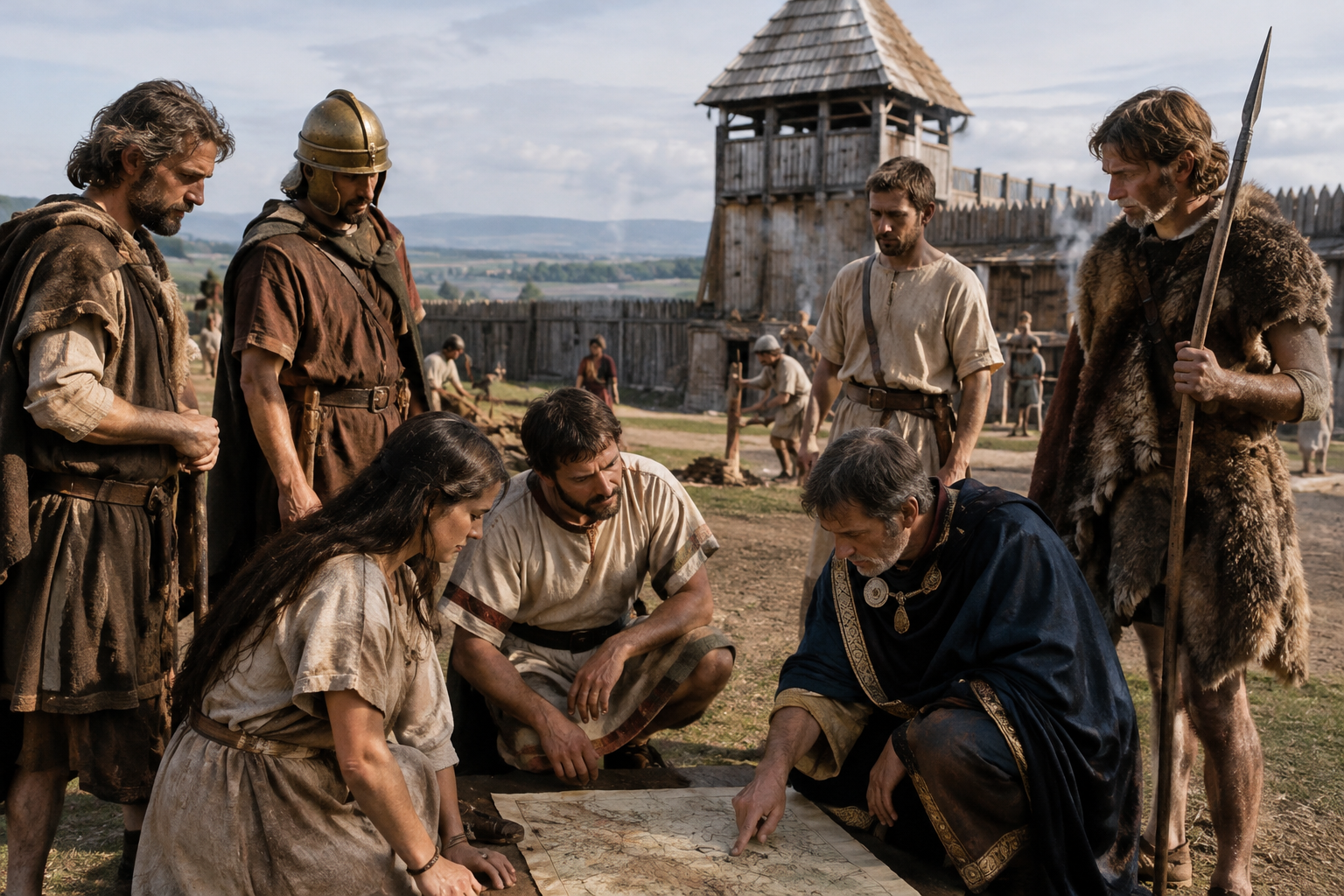
This is the world after imperial structures in the west had begun to fragment, when Pannonia became a place of regrouping, migration, military service, and local survival. These Hungarian samples do not prove a single directional trek from Crete or Anatolia into Central Europe. But they do show that men carrying this paternal line were present in post-Roman frontier society. That is historically important, because it underlines how mixed and mobile these communities could be. Old Roman provincials, incomers from the Balkans, steppe-linked groups, and people with eastern Mediterranean connections could all end up in the same regional landscape.
MyTrueAncestry readers who want a fuller picture of that setting should see the dedicated piece on this very region.
One sample stands apart geographically: NAT002b from Ancient Japan, Okhotsk, Rebun Island, dated to 500 BC. Because this lies so far outside the main Mediterranean-Central European pattern, it deserves special caution. It may reflect a very complex history of classification, deep ancient dispersals, or lineages whose present labeling masks a more intricate phylogenetic story. What it certainly does not justify is a breezy claim that this haplogroup was somehow straightforwardly "Japanese" in origin. Instead, it is best treated as a reminder that ancient Y-chromosome history can surprise us, and that unusual placements demand careful interpretation rather than easy headlines.
The noble family field supplied for this article is effectively blank, and that in itself is worth saying plainly. Sometimes the honest historical answer is that we do not have a documented noble house, clan tradition, or castle securely tied to the haplogroup in the evidence provided here. It would be very easy to smuggle in a romantic castle or attach this lineage to some Mediterranean dynasty merely because J2 is common in parts of southern Europe and western Asia. That would be bad history and worse genetics.
Still, the absence of a named noble family does not make the story thinner. In some ways it makes it sharper. J2a1a1a2 appears first not in heraldry but in burials: a Neolithic Cretan, a Minoan cave burial, a Bronze Age Armenian cemetery, a man from Black Sea Anatolia, an individual in Roman Tarquinii, and men in post-Roman Hungary. Those are the real foundations of the story. Castles, when they enter the historical record centuries later, preserve family memory and regional power. Ancient DNA preserves something different: the long, uneven survival of paternal lines before surnames, before coats of arms, before chroniclers bothered to write anything down.
That contrast is one of the most useful lessons of archaeogenetics. Written genealogy starts late and usually from the top of society. Ancient DNA often begins with ordinary or at least unnamed people. Occasionally the two can be linked, but usually they are complementary rather than identical forms of evidence.
For a broader look at how genetics and medieval dynastic history can meet - and where the limits lie - this article on a documented royal case makes an illuminating comparison.
Read About Hungary's Royal DNA
What, then, does J2a1a1a2 reveal? First, that this paternal lineage belongs to a world centered, at least in the evidence here, on the Aegean, Anatolia, the South Caucasus, Italy, and later Central Europe. Second, that it is visible across very different kinds of societies: early farming communities, Bronze Age island populations, Classical urban networks, Roman imperial life, and post-Roman frontier settlements. Third, that ancient DNA is at its best when it shows continuity and movement together, not as opposites but as the normal condition of human history.
For anyone who carries J2a1a1a2 today, the important point is not to force that into a single identity label. It does not make someone "Minoan," "Roman," or "Armenian" in any simple sense. What it does offer is a direct paternal thread that has been found in some remarkably important historical landscapes. That is both more modest and more intriguing than the fantasy of a single named ancestor.
If you would like to explore whether your own DNA shows links to ancient individuals such as APO023, HGC032, I19349, TAQ020, or the post-Roman men of Pannonia, MyTrueAncestry can help place your results beside real archaeological discoveries. Those matches do not prove direct descent from a specific excavated individual or membership in any noble family, but they can open a vivid window onto the ancient populations connected to your deeper past.
Comments