Haplogroup I2a1b2a2
– 5 min read


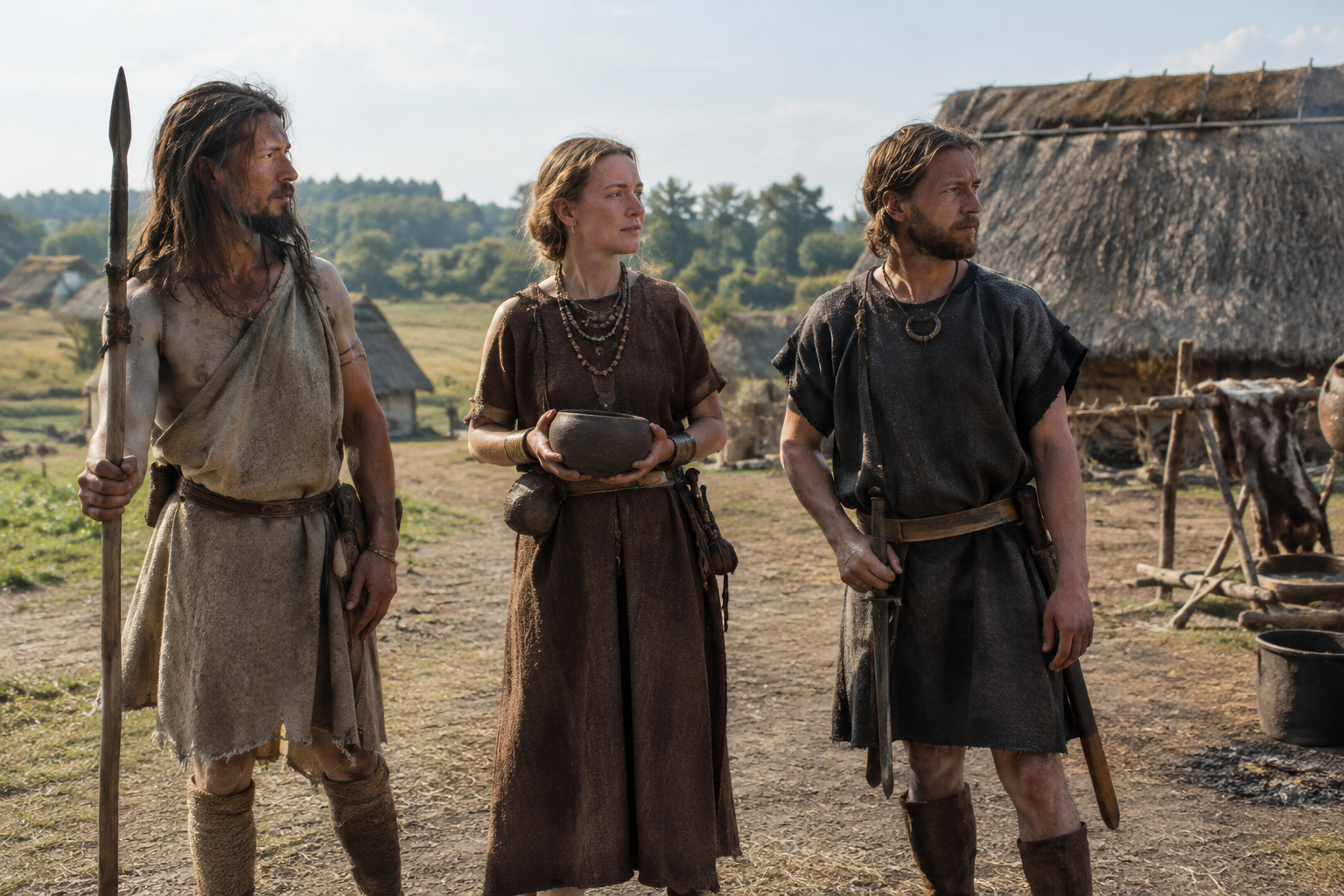
At Karczyn in Lower Silesia, one man from around 1750 BC carries an unexpectedly durable clue to Central Europe's paternal past: sample poz498, associated here with Y-DNA haplogroup I2a1b2a2. On its own that might sound like just another laboratory label. But set beside a second Bronze Age man from nearby Pielgrzymowice, poz720, dated to about 1375 BC, and then a later Iron Age individual from Prague in Central Bohemia, I17327, around 300 BC, a pattern begins to emerge.
It is a modest pattern, but a meaningful one. Rather than turning up in one spectacular royal burial or a single famous migration event, I2a1b2a2 appears here in ordinary archaeological contexts spread across centuries in the heart of Central Europe. That makes this branch interesting precisely because it hints at continuity through change: the same paternal line turning up in Bronze Age Silesia and later Iron Age Bohemia, in regions that saw major shifts in burial custom, material culture, and wider political worlds.
The earliest of the three samples, poz498, comes from Bronze Age Karczyn in Lower Silesia, dated to about 1750 BC. Lower Silesia sits in one of those very busy European corridors where routes from the north European plain, the Odra basin, and the uplands to the south all meet. Archaeologically, that matters: this was never an isolated backwater, but part of a landscape where communities were connected by exchange, marriage, and movement.
For a Y-chromosome lineage such as I2a1b2a2, the significance is not that it identifies an ethnicity or a language. It does not. Y-DNA traces one direct paternal line only. What it can do, though, is show that a particular male line was present within Bronze Age societies of southwestern Poland at a fairly early date.
A broader ancient DNA study on Central and eastern European population history has helped place prehistoric individuals from this wider region into long-term context, showing how local populations often combined deep regional ancestry with later Bronze Age transformations rather than being simply replaced in one sweep. That is the sort of background against which a sample like poz498 makes historical sense.
Late Bronze Age Central Europe
The second appearance is especially useful because it is nearby but not identical in date. poz720 comes from Bronze Age Silesia, at Pielgrzymowice, grave 669, around 1375 BC. That places it several centuries after the Karczyn individual. We are not looking at the same burial ground or a single moment frozen in time, but a recurrence in the same broad region.
This is where archaeology becomes more interesting than a bare haplogroup map. Silesia in the second millennium BC was part of a changing world of communities whose mortuary practices, exchange networks, and local identities did not stand still. A paternal line appearing in more than one setting may suggest that it belonged to men embedded in these local populations across generations, rather than to one short-lived incoming group.
A radiocarbon study focused on collective burials in east-central Europe helps underscore how careful dating matters in this period, because second-millennium BC burial evidence can compress very different phases into what looks, at first glance, like one cultural horizon. That caution is worth keeping in mind when comparing men like poz498 and poz720: they show recurrence, but not necessarily one simple uninterrupted family story.
The wider haplogroup I is one of Europe's long-established Y-chromosome families, with deep roots on the continent long before the Bronze Age. But that broader background should not be carelessly projected onto every sub-branch. I2a1b2a2 is a much narrower designation, and the evidence here is not enough to assign it a single tidy origin myth, still less a neat ethnic badge.
What these samples do suggest is that this branch was present among prehistoric male lines in Central Europe by the Bronze Age, and that it persisted into later periods. That matters because so much popular discussion of ancient Y-DNA focuses on dramatic expansions and sweeping replacements. Yet Europe's paternal history was never only about one lineage supplanting another. Some branches endured locally through centuries of social and cultural change, even when the archaeological surface looked quite different.
The third sample, I17327, comes from Iron Age Prague in Central Bohemia, dated to about 300 BC. That is a very different historical setting from the Bronze Age Silesian burials. By this time Central Europe was part of the Late Iron Age world often associated with expanding regional identities, intensified trade, and, in some areas, communities later described in classical sources as Celtic.
Still, one must be careful. A burial in Iron Age Prague is not automatically proof that its occupant belonged to any named tribe from ancient texts, and the Y-chromosome alone cannot settle questions of language or political identity. What it does show is that the paternal line linked here with I2a1b2a2 did not vanish after the Bronze Age. It remained present west of Silesia, in Bohemia, centuries later.
That spread is historically plausible. Southwestern Poland and Bohemia are neighboring zones, connected by river routes, upland passes, and long-term cultural contact. So the Prague sample does not require a grand migration tale to explain it. It may instead point to the sort of regional continuity and reshuffling that archaeologists often see in Central Europe: populations changing, mixing, and reconfiguring without every older lineage disappearing.
Central Europe and Celtic Origins
Any one of these men would be interesting but limited. Together, they give I2a1b2a2 a firmer archaeological shape. The evidence clusters in Central Europe, begins in Bronze Age Silesia, and later appears in Iron Age Bohemia. That is not enough to draw a family tree across a millennium, but it is enough to say that this paternal branch belonged to real communities living in the region over a long stretch of prehistory.
There is also a methodological point here. Ancient DNA often works best not when it hands us a grand answer, but when it lets us test whether older assumptions about complete population turnover were too simple. In this case, the repeated appearance of one paternal branch across changing periods is a reminder that continuity can sit beneath cultural change. New pottery styles, new burial rites, and new exchange systems do not necessarily mean every local male line was replaced.
That perspective fits well with a growing body of MyTrueAncestry work on Central Europe, where mobility and continuity often sit side by side rather than cancelling each other out.
For someone exploring haplogroup I2a1b2a2 today, the most responsible takeaway is not a claim to one tribe, one kingdom, or one famous ancestor. It is something subtler and, in many ways, more historical: this branch is attested in prehistoric and protohistoric Central Europe, with known appearances in Bronze Age Silesia and Iron Age Bohemia. That places it in a landscape of long-lived local populations, repeated regional contacts, and centuries of cultural reinvention. If your paternal line belongs here, its ancient story may be less about a single dramatic migration than about endurance in the middle of Europe.






Comments