Haplogroup I2a1b1a1b1a

– 5 min read


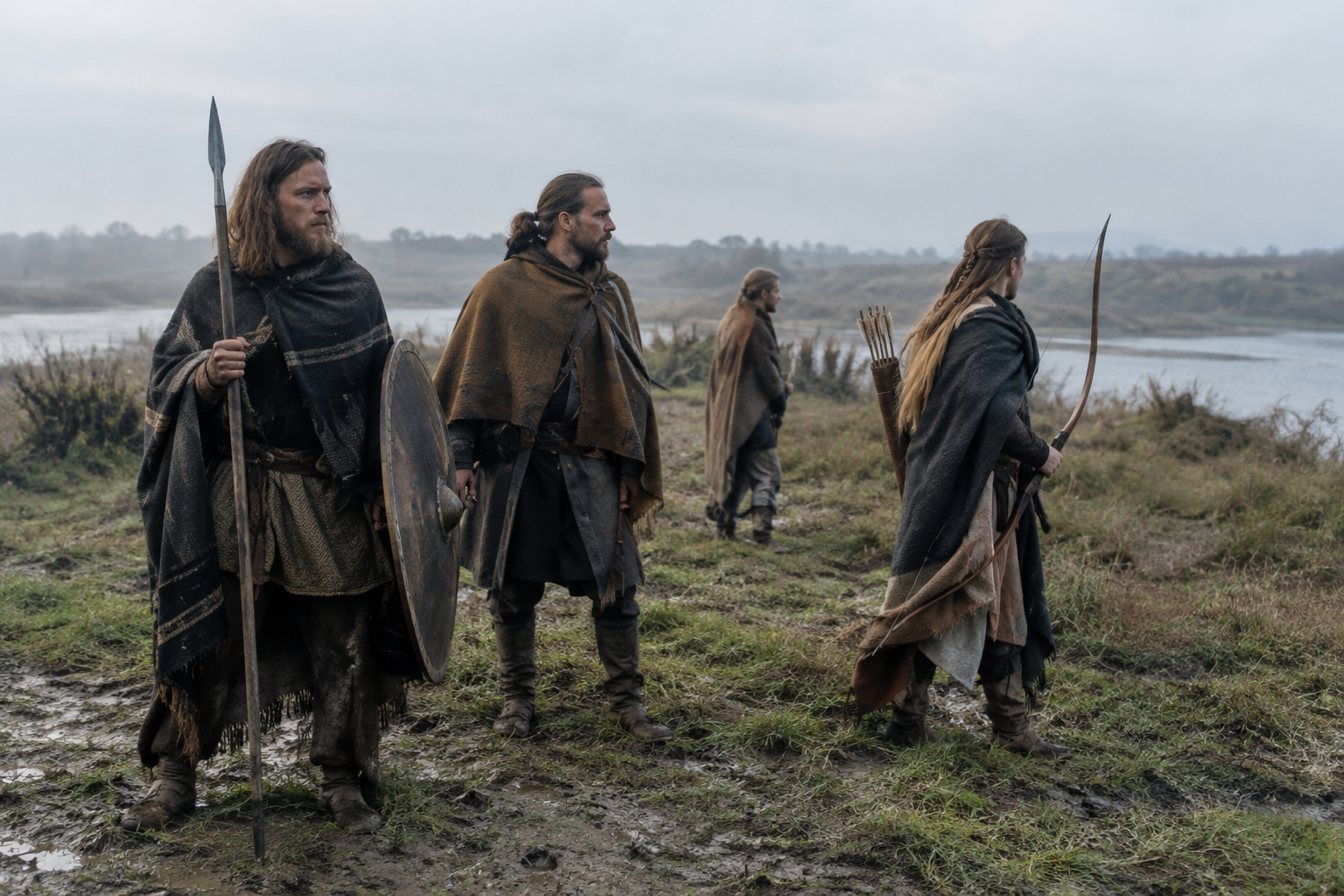
At Tollense Valley in Mecklenburg-Vorpommern, archaeologists uncovered one of Bronze Age Europe's most arresting discoveries: the scattered remains of men caught up in a large violent confrontation around 1250 BC. Among the individuals identified there are samples WEZ39 and WEZ64, both associated here with the Y-DNA haplogroup I2a1b1a1b1a. That matters because Tollense is not just any prehistoric site. It is a battlefield, and battlefields show people in motion: not idealized "cultures" in textbooks, but actual men drawn into a dangerous moment in northern Europe's Late Bronze Age.
That immediately gives this haplogroup a more interesting setting than a bare map dot ever could. I2a1b1a1b1a is a direct paternal-line marker, tracing one thin line of descent from father to son, not a person's whole ancestry. But when that paternal line appears in more than one Late Bronze Age context, as it does here in northern Germany and in Bohemia, it begins to place the branch inside a real historical landscape of mobility, conflict, and regional continuity in central Europe.
The Tollense Valley site has become famous because it pushed scholars to rethink the scale of warfare in Bronze Age northern Europe. This was no isolated duel and no tidy burial mound. Human remains, weapons, and horse bones were recovered across the valley, pointing to a large, chaotic event involving many participants. Research on the site, including an ancient DNA study of these remains, helped show that the dead were not all from one narrow local family group, but part of a wider human story tied to the Late Bronze Age world of central and northern Europe.
Within that setting, WEZ39 and WEZ64 are especially useful because they place the haplogroup I2a1b1a1b1a in a sharply defined context: around 1250 BC, in a zone where river crossings, movement, and organized violence intersected. That does not mean every carrier of this haplogroup was a warrior, nor that the lineage belonged to one side in a single ethnic sense. But it does show that this paternal branch was present among the men caught up in one of the best known violent episodes of Bronze Age Europe.
A useful wider discussion of the period can be found in this MyTrueAncestry article on Late Bronze Age central Europe, which explores how burials, isotopes, and DNA together illuminate continuity and change.
Late Bronze Age Central Europe
For Tollense itself, the strongest point is not romance but clarity. A lineage found on a battlefield is anchored to a moment when communities were under pressure, networks were active, and some men were moving through landscapes far larger than a single village horizon. That is a far richer historical setting than treating haplogroups as static tribal labels.
The deeper parent haplogroup I2 has a long history in Europe, with branches appearing in very different prehistoric and historic populations. But it is important not to lazily pour all of that older history into the much narrower label I2a1b1a1b1a. A subclade this specific represents a later twig on a much older paternal tree. The relevant evidence here is therefore not the entire prehistory of I2, but the documented appearance of this branch in Late Bronze Age central Europe.
In practical terms, that makes this article less a tale of origins in the abstract and more a story of attestation. We can say that this haplogroup is represented by ancient males from Tollense and by another Late Bronze Age individual from Bohemia. We should be much more cautious about claiming where the branch first formed, what language its carriers spoke, or which later ethnic groups "belonged" to it. Archaeology and genetics are at their best when each is allowed to do its proper job.
One of the studies associated with this material, published in Current Biology, helped establish the importance of Tollense for understanding Bronze Age conflict and the people drawn into it. Even without squeezing more from the evidence than it can safely bear, that is already enough to place this lineage within a major archaeological debate.
The third ancient individual tied here to I2a1b1a1b1a is sample I14481 from Late Bronze Age Brvany in Bohemia, dated around 900 BC. If Tollense gives us a dramatic context, Brvany gives us something equally valuable: geographical spread within the same broad era. Bohemia sits in a different but closely connected part of central Europe, and by 900 BC this was a world shaped by dense exchange networks, local traditions, and regional cultural shifts rather than isolation.
That is precisely why Brvany matters. One sample cannot stand for all of Bohemia, still less for all central Europe, but it shows that the branch was not confined to a single northern battlefield horizon. Instead, I2a1b1a1b1a appears in more than one Late Bronze Age setting across the central European zone. That pattern is modest, but solid: not fantasy migration arrows, but a real spread of evidence.
A broader ancient DNA study of central and eastern European population change, published in Nature, has helped frame just how dynamic these later prehistoric populations could be. The point is not that every site tells the same story, but that Late Bronze Age communities were linked by movement, exchange, and shifting social worlds in which paternal lines could persist locally while societies around them changed.
Life and Mobility in Late Bronze Age Europe
By the centuries represented by Tollense and Brvany, central Europe had already been transformed many times over. Farming had long since spread. Earlier steppe-linked ancestry had entered much of the region during the 3rd millennium BC. Local populations had mixed, adapted, and reorganized across generations. The people living in 1250 BC or 900 BC were not simple stand-ins for some single primordial population.
That is worth stressing because Y-DNA can tempt people into over-neat historical myths. The recurring appearance of I2a1b1a1b1a in these Late Bronze Age individuals suggests paternal continuity within central Europe, but continuity does not mean sameness. Communities changed their alliances, technologies, exchange networks, and probably their social identities many times while some male lines endured.
Seen this way, the lineage fits rather neatly into what archaeology increasingly shows for the Bronze Age: stability and upheaval living side by side. A branch may survive through centuries of cultural change, while the men who carry it inhabit very different local worlds - one dying in a northern battlefield assemblage, another turning up in inland Bohemia generations later.
For readers following how broader population shifts and language questions are being debated, this related article is especially relevant.
Central Europe and Celtic Origins
Three ancient samples are not a dynasty, not a tribe, and certainly not a complete map of this haplogroup's history. Yet they do something more useful. They place I2a1b1a1b1a in a specific archaeological corridor: Late Bronze Age central Europe, from the Tollense Valley in the north to Bohemia farther south and east. That makes the branch historically legible.
For someone exploring a present-day paternal line, that is often the crucial first step. Not a fantasy of direct descent from a famous king, but a grounded sense that this branch belonged to real men living through the unsettled centuries of later Bronze Age Europe. Their world included conflict, mobility, and regional ties stretching across the heart of the continent.
Another useful comparison is this article on broader Bronze and Iron Age kinship work in Europe, which helps show how paternal lines fit into the larger picture of ancient communities.
The most distinctive thing about I2a1b1a1b1a, on the evidence here, is that it is not floating free in prehistory. It is tied to actual Late Bronze Age men from central Europe, including two from the Tollense Valley battlefield and one from Brvany in Bohemia. That gives the lineage a historically vivid setting: a world of river crossings, violence, movement, and enduring local paternal lines within changing societies. If this is your Y-DNA branch, the safest takeaway is not a single named people, but a credible connection to the human landscape of Late Bronze Age central Europe.






Comments