Haplogroup I2a1b1a1a1
– 6 min read


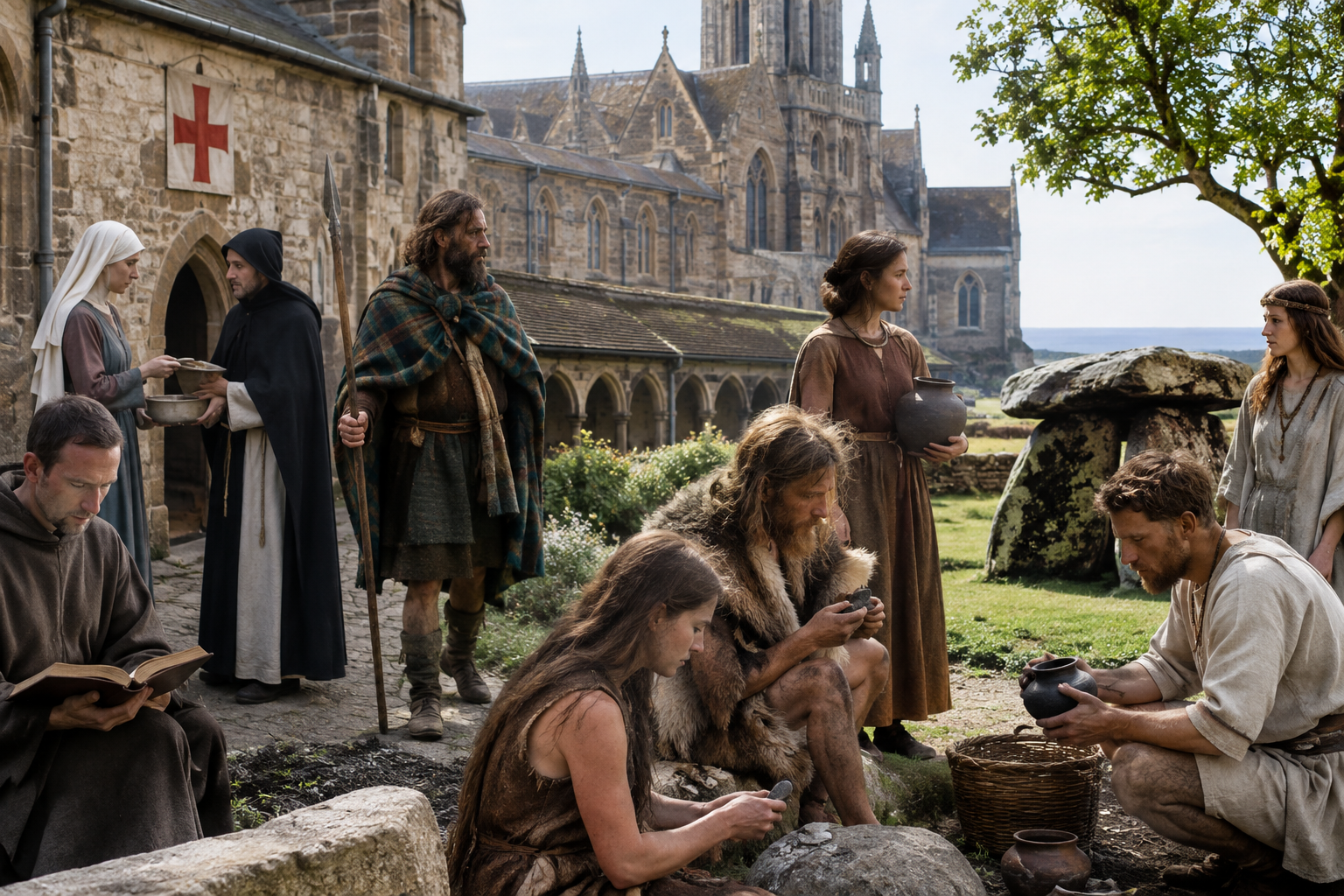
Haplogroup I2a1b1a1a1 is the sort of paternal lineage that reminds us how misleading neat historical labels can be. What looks, at first glance, like a technical code from a laboratory chart turns out to open onto a very human story: cave burials in Scotland, Neolithic Wales, Bell Beaker graves in southern England, Iron Age communities in Britain, medieval friars, and plague-era Paris. It is a lineage that appears, from the evidence supplied here, again and again around the Atlantic edge of western Europe.
That is worth lingering over. Y-DNA haplogroups trace one very specific line of ancestry: the direct paternal line, father to son to son. They do not represent a person's whole ancestry, culture, language, or identity. Still, they are remarkably useful for showing how certain male-line branches persisted, spread, disappeared in some places, and survived in others. In the case of I2a1b1a1a1, the ancient DNA record offered here suggests a story deeply tied to Britain, Ireland, and nearby parts of medieval France and England, with roots reaching back into prehistory.
I2a1b1a1a1 belongs within the broader Y-chromosome haplogroup I, one of the old European paternal macro-lineages. The wider I family has deep prehistoric roots in Europe, but that broad fact should not be lazily pasted onto every tiny downstream branch. A narrow subclade like I2a1b1a1a1 has its own later history, and often a much more regional one.
From the sample set here, that regional pattern matters. Rather than turning up across the whole of Eurasia, these finds cluster strikingly in the British Isles, especially western and northern zones: Wales, Scotland, Ireland, and England. That does not prove this branch "belongs" to any one people in an ethnic sense. But it does suggest that, by later prehistory, this paternal line was well established among communities living in those landscapes.
Anyone interested in the bigger archaeological background to early western European populations may also enjoy this broader look at Neolithic movement and settlement:
The earliest anchors in this story are wonderfully archaeological. One of the oldest supplied individuals is I2657, from MacAurthur Cave, Oban, Argyll and Bute, Scotland, dated to 3850 BC. Cave sites have a habit of compressing time: human remains, ritual use, reuse, and memory all layered together. A paternal lineage found in such a context tells us that branches associated with I2a1b1a1a1 were present in Atlantic Scotland very early indeed.
Not far behind comes car004 from Ancient Carrowmore, Ireland, dated to 3567 BC. Carrowmore is one of those places where prehistory feels architecturally ambitious: tombs, monuments, community investment, and a long relationship with the dead. Then there is I4949, from Bell Beaker Wiltshire Upavon, England, dated to 3467 BC, and I16491 from Neolithic Wales Orchid Cave, Denbighshire, dated to 2780 BC.
Taken together, these do not show one single uninterrupted family tree; that would be far too much to claim. But they do show that closely related paternal lines associated with this haplogroup were present across a broad western seaway world: Ireland, Wales, western Scotland, and southern England. That matters because the sea connected these places as much as it divided them. The Irish Sea was not a barrier so much as a corridor.
For readers interested in how kinship and burial practice intersect in this northern Atlantic setting, this article adds valuable context:
Discover Neolithic Tomb Kinship
By the Iron Age, the picture becomes even more intriguing because the lineage is still there. I14866, a Celtic Briton from Cliffs End Farm, England, dated to 285 BC, places this paternal branch in a society that archaeologists would recognise as late prehistoric Britain, with all the regional identities and exchange networks that implies. Likewise I16418 from Iron Age East Lothian, Scotland, dated to 102 BC, shows the lineage again, this time in the eastern Scottish lowlands.
One should be careful here. Sharing a Y-lineage does not make these men members of one "tribe," and genetics cannot by itself tell us which language they spoke or what loyalties they held. But these finds do suggest continuity of some paternal branches across very long spans of time in Britain, from the Neolithic into the Iron Age. That is one of the most arresting things ancient DNA can do: it reveals that behind changes in pottery, metalwork, burial style, and political structure, some paternal lines kept going.
If you want a wider perspective on how genetics is helping reshape discussion of later prehistoric Britain, this is a natural companion read:
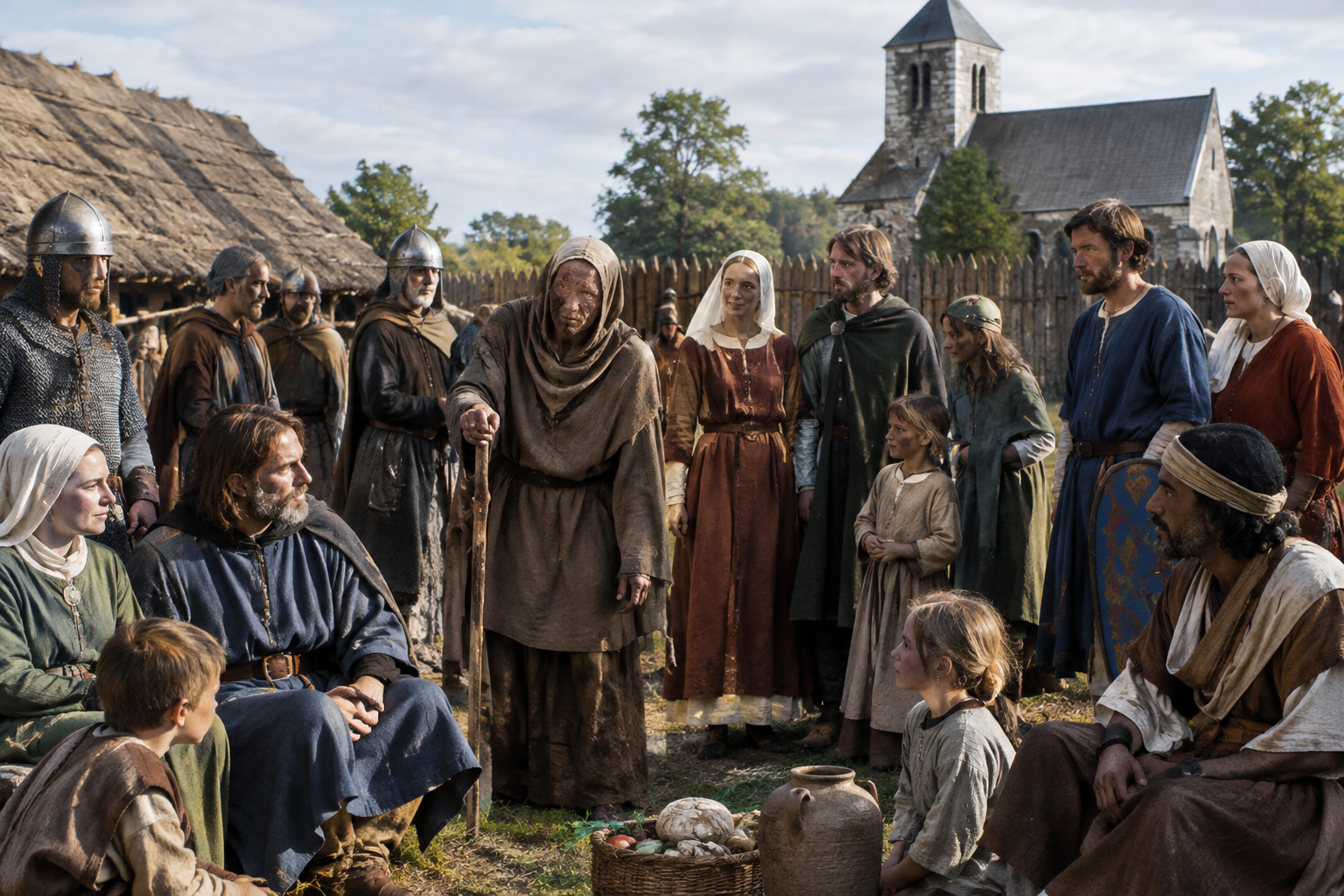
The medieval evidence brings this lineage out of prehistory and into the documentary world. ATP_PSN_527, from Medieval England Augustinian Friars, dated to 1290 AD, places I2a1b1a1a1 within a religious community in medieval England. This is a useful reminder that Y-DNA lineages did not vanish when literacy arrived. The same paternal branches that once appeared in cairns and caves could later turn up in friaries, parish grounds, and urban cemeteries.
Then we have PRS010a and PRS010b, both from Medieval France Paris Hopital de la Croix de la Reine, dated to 1337 AD. Paris in the fourteenth century was not some quaint static medieval city; it was crowded, mobile, vulnerable to disease, and tied into kingdoms, trade, church networks, and war. A western European paternal lineage appearing there is hardly surprising, but it is historically valuable. It shows how lineages with prehistoric visibility in the Atlantic world also formed part of the population fabric of medieval urban France.
This kind of evidence also guards against romantic oversimplification. A haplogroup is not a badge of "Celtic purity" or a stamp of tribal ownership. By the Middle Ages, lineages had passed through countless social transformations: Roman rule, post-Roman rearrangements, Christianization, lordship, migration, intermarriage, and urbanization.
The supplied noble-family field appears empty here, so there is no responsible way to tie I2a1b1a1a1 to any specific dynasty, clan, or castle. That absence is important in itself. Genetic history works best when it resists the temptation to fill gaps with fantasy. We do not need to invent a baron, a fortress, or a coat of arms to make this lineage interesting.
What we can say is that the geography of the ancient samples overlaps with regions later famous for powerful lineages, lordships, and enduring local identities: Ireland's ritual landscapes, the Welsh cave country, Argyll and Bute, East Lothian, and the old kingdoms and counties of England. In other words, the paternal line belongs to the long human prehistory of places that would eventually acquire castles, monasteries, noble families, and written pedigrees.
That is often the most illuminating way to connect genetics and history. Ancient DNA does not usually identify "the founder of House X." Instead, it reveals the deeper biological background of the regions in which those houses later rose to power.
For a broader look at how ancient and later British populations connect across time, this article is especially relevant:
Explore Post-Roman Britain DNA
So what does haplogroup I2a1b1a1a1 reveal? First, it offers a good example of a paternal lineage with a strongly western European, and especially British-Irish, ancient DNA footprint in the material supplied here. Second, it shows that direct paternal lines can persist through dramatic cultural change: from Neolithic burials to Iron Age communities to medieval religious and urban settings.
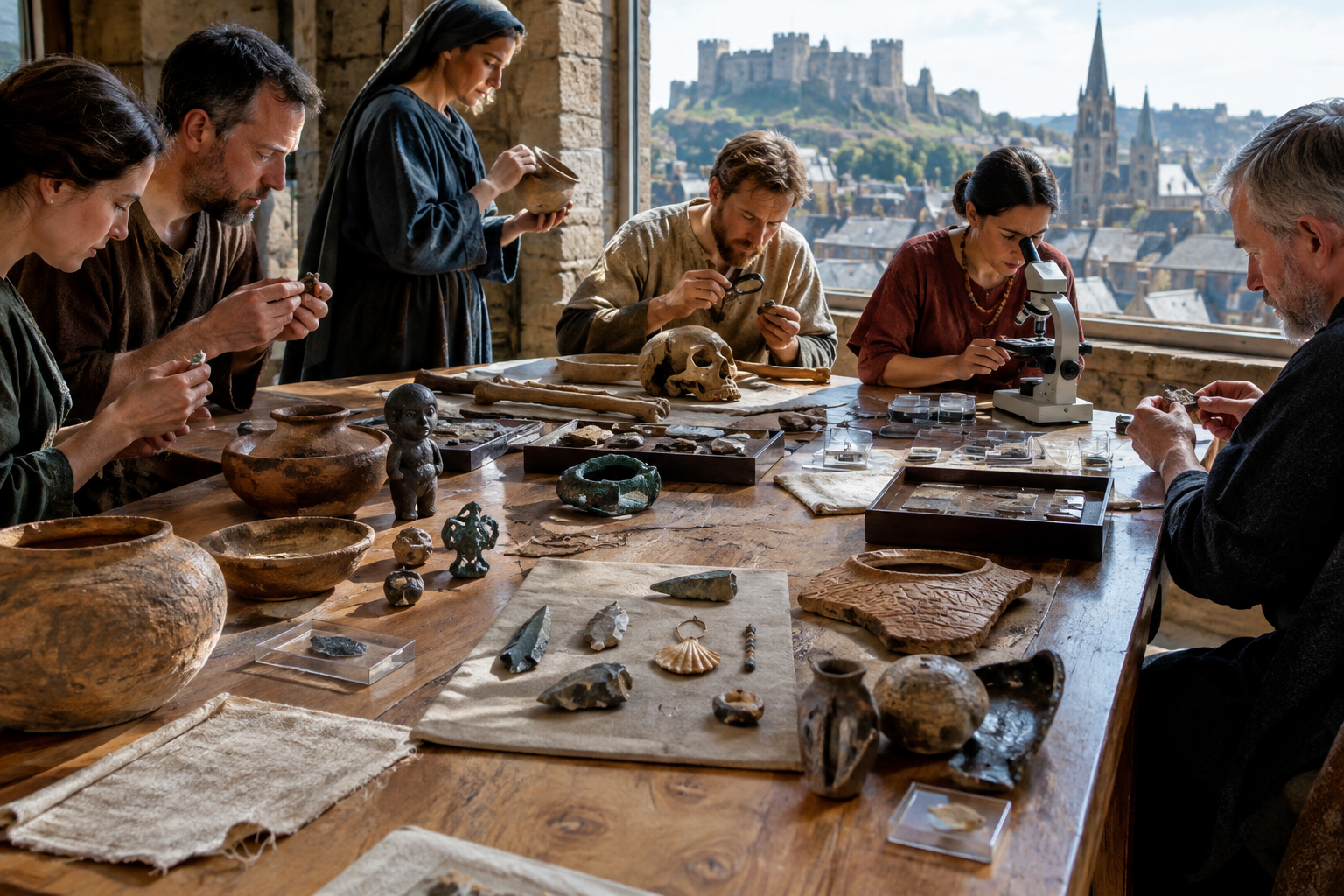
And third, it demonstrates why ancient DNA is so useful alongside archaeology. Pottery styles, tomb architecture, and medieval written sources all tell different stories. Y-DNA adds one more line of evidence: not the whole story, certainly, but a very distinctive one. It can show that beneath the bustle of history, some male-line branches remained rooted in the same broad regions for thousands of years.
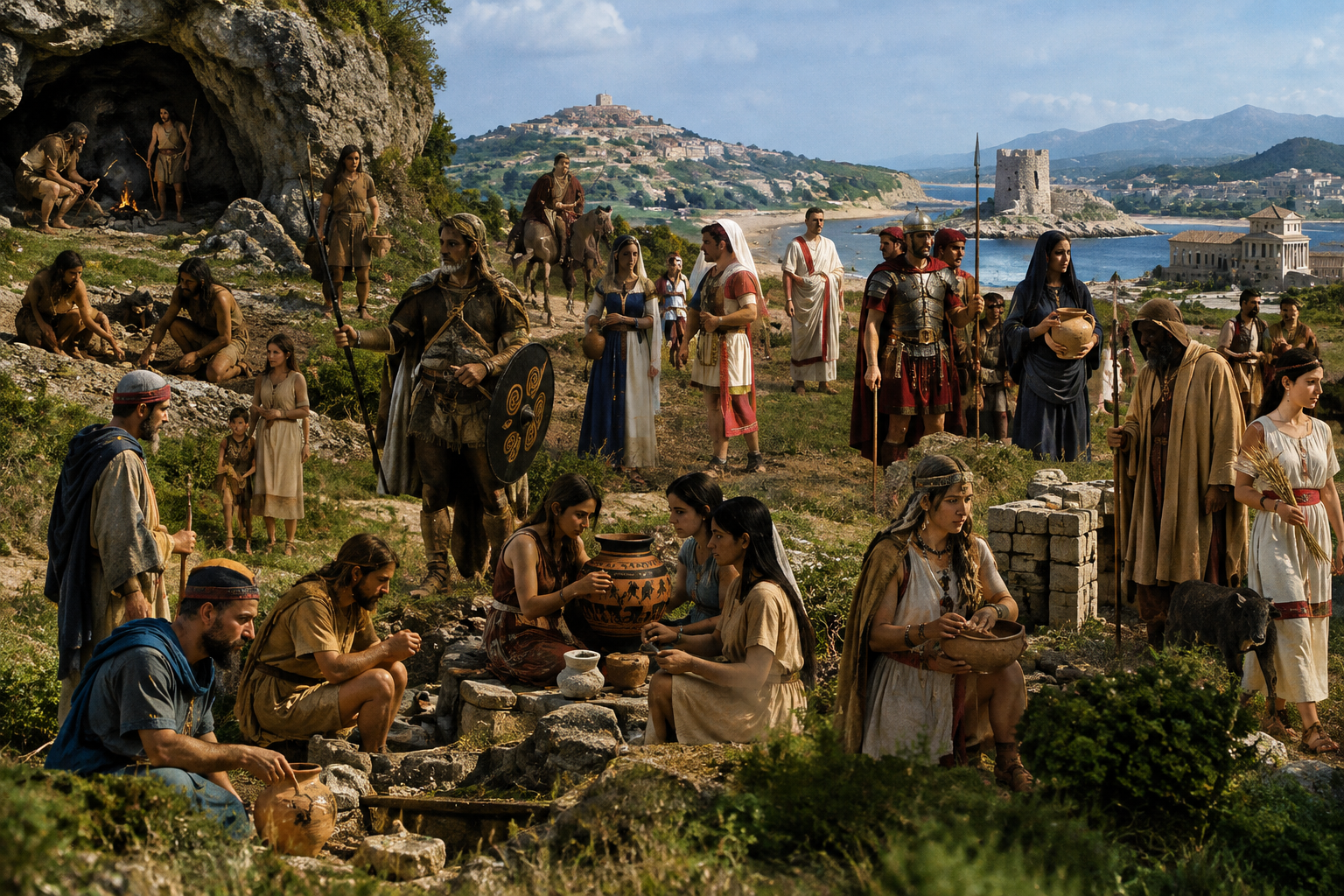
That does not prove direct descent from any one excavated individual, nor does it make anyone a member of a noble house merely because they share a distant haplogroup branch. But it does give a rare sense of continuity. Men carrying related paternal lines stood in caves in Oban, moved through Neolithic Wales, were buried in Ireland, lived in Iron Age Britain, entered an Augustinian house in medieval England, and died in fourteenth-century Paris. That is quite enough history for one haplogroup.
If your own Y-DNA belongs somewhere near this branch, MyTrueAncestry can help place it beside real archaeological discoveries like I2657, car004, I4949, I16491, I14866, I16418, ATP_PSN_527, PRS010a, and PRS010b. Those matches do not prove direct descent, but they can offer a fascinating view of how your paternal line fits into the deeper human history of Europe.
Comments