Haplogroup I2a1a1a1a1a1

– 4 min read


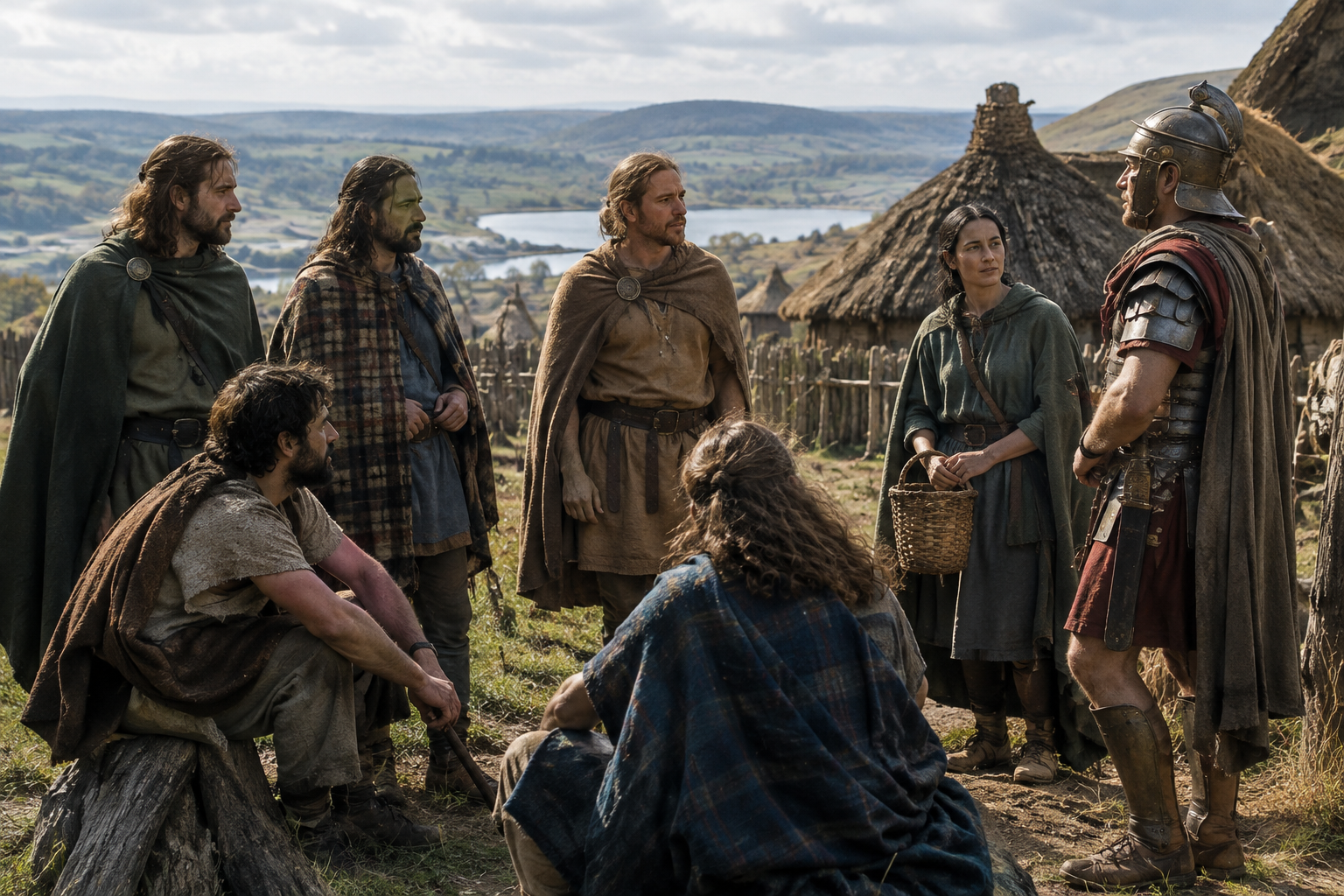
At Les Moidons and Parancot in eastern France, several men buried around the 5th century BC have been associated with the Y-DNA haplogroup I2a1a1a1a1a1. The sample cluster is unusually striking not because it gives us a single famous chieftain, but because it shows the same paternal branch appearing again and again in a tight Iron Age landscape linked to the Sequani region. In this case, the interest lies in repetition: CGG023687, CGG023691, CGG023692, and CGG023709 from Les Moidons, alongside CGG023678, CGG023698, and CGG023723 from Parancot.
That matters because Y-DNA follows one direct paternal line only. It is not the whole ancestry of these men, still less a simple badge of ethnicity. But when the same lineage turns up repeatedly in neighboring Iron Age cemeteries, it gives us a rare glimpse of continuity among local male lines in Celtic Gaul, in a region that later classical writers would know as part of the world of the Sequani.
The strongest evidence in this article comes from the Jura area of eastern France. At Les Moidons, individuals dated to around 500-450 BC include CGG023691, CGG023687, CGG023692, and CGG023709. At nearby Parancot, around 455 BC, the same branch is reported for CGG023678, CGG023698, and CGG023723. Even without embellishment, that is a notable pattern: multiple male burials from closely related places and dates apparently falling within the same very narrow paternal line.
Archaeologically, this is the world of later Hallstatt and early La Tene Gaul, when communities in eastern France were tied into wider exchange networks stretching across temperate Europe. We should be careful not to turn a handful of graves into a tribal census. Still, repeated Y-chromosome continuity in one local zone suggests that at least some paternal lines endured through generations there, rather than every cemetery being composed mainly of recently arrived men from entirely different backgrounds.
A recent ancient DNA preprint on Celtic population history is directly relevant to this broader question of how lineages and language spread across Iron Age Europe, even if any one sample's exact terminal placement should be handled cautiously: research on ancient DNA and Celtic-speaking regions.
The label I2a1a1a1a1a1 is a very specific twig on a much older European Y-chromosome tree. The wider I haplogroup has deep prehistoric roots in Europe, but that does not mean every later sub-branch shares the same story in any simple way. A man carrying this branch in Iron Age Gaul was not a living fossil from the Mesolithic; he was an Iron Age person shaped by the social world, marriages, mobility, and ancestry mixtures of his own time.
What the Gaulish cluster does suggest is that this particular paternal line was established in at least one local population of eastern France by the 5th century BC. That is already useful for family historians. If your paternal line falls on this branch, the evidence points to one documented ancient foothold in Iron Age Celtic territory, not as a guaranteed homeland for every modern carrier, but as a real and datable chapter in the branch's history.
The Sequani are known historically as a people of eastern Gaul, though the genetic samples themselves should not be made to carry more certainty than the archaeology allows. A cemetery in their later historical region is not the same thing as a named passport. Even so, the geography is meaningful. Eastern France sat between the Rhine world, the Swiss plateau, and the interior of Gaul, which made it a lively corridor rather than an isolated pocket.
That is one reason these repeated I2a1a1a1a1a1 identifications are so interesting. They appear not at the edge of the Celtic world, but in one of its connected heartlands, where exchange and movement were real but local family lines still seem visible. Similar questions about mobility, local continuity, and burial communities have been explored in nearby regions of Iron Age Europe, including Celtic Switzerland.
The other ancient individual in this set takes us to Roman-period Britain: sample I12931, from late Iron Age or early Roman Gloucestershire, dated around AD 125. This is a very different setting from the 5th-century-BC cemeteries of eastern Gaul. By this date Britain had long been interacting with the continent, and the Roman conquest had added new layers of movement, military presence, trade, and cultural change.
Yet the appearance of the same haplogroup branch here is a reminder that paternal lines do not obey the neat boundaries of our textbook chapters. A lineage seen in Iron Age Gaul can also appear in Britain centuries later without requiring a melodramatic migration story for one specific man. He may represent older cross-Channel connections, regional continuity in western European male lines, or movement within the Roman orbit. The safe point is the important one: I2a1a1a1a1a1 was present in both Celtic Gaul and Roman-period Britain.
For Britain, the best context comes from wider genome studies of Roman and early medieval populations rather than from the Y-line alone. One major study showed just how varied ancestry could be in Britain across this period, and how local continuity existed alongside newcomers from elsewhere in the empire and beyond: ancient DNA research on Roman and post-Roman Britain.
Roman and early medieval Britain
Single ancient Y-DNA results are useful; clusters are better. When one branch appears once, we can say it existed. When it appears several times in neighboring cemeteries of roughly the same date, we can begin to talk about structure: perhaps enduring local kindreds, perhaps a community in which certain paternal lines were especially successful, perhaps simply the ordinary demography of burial grounds used by related households over time.
That does not mean the men from Les Moidons and Parancot were all close relatives in the genealogical sense, and it certainly does not mean every Sequani man belonged to the same line. But it does push us away from the old temptation to imagine Iron Age populations as faceless masses. These were communities with family histories, and sometimes the Y chromosome lets us see a sliver of that persistence.
For haplogroup I2a1a1a1a1a1, the most distinctive point here is not royal glamour or a legendary founder. It is something more archaeological, and in many ways more valuable: a compact cluster of Iron Age men in eastern France, paired with a later appearance in Britain, showing this paternal branch moving within the real human geography of later prehistoric and Roman western Europe. If this is your Y-line, the ancient record places one documented strand of it among Celtic-era communities in Gaul and another in Britain under Rome's shadow.






Comments