Haplogroup I1a2a1b1

– 5 min read


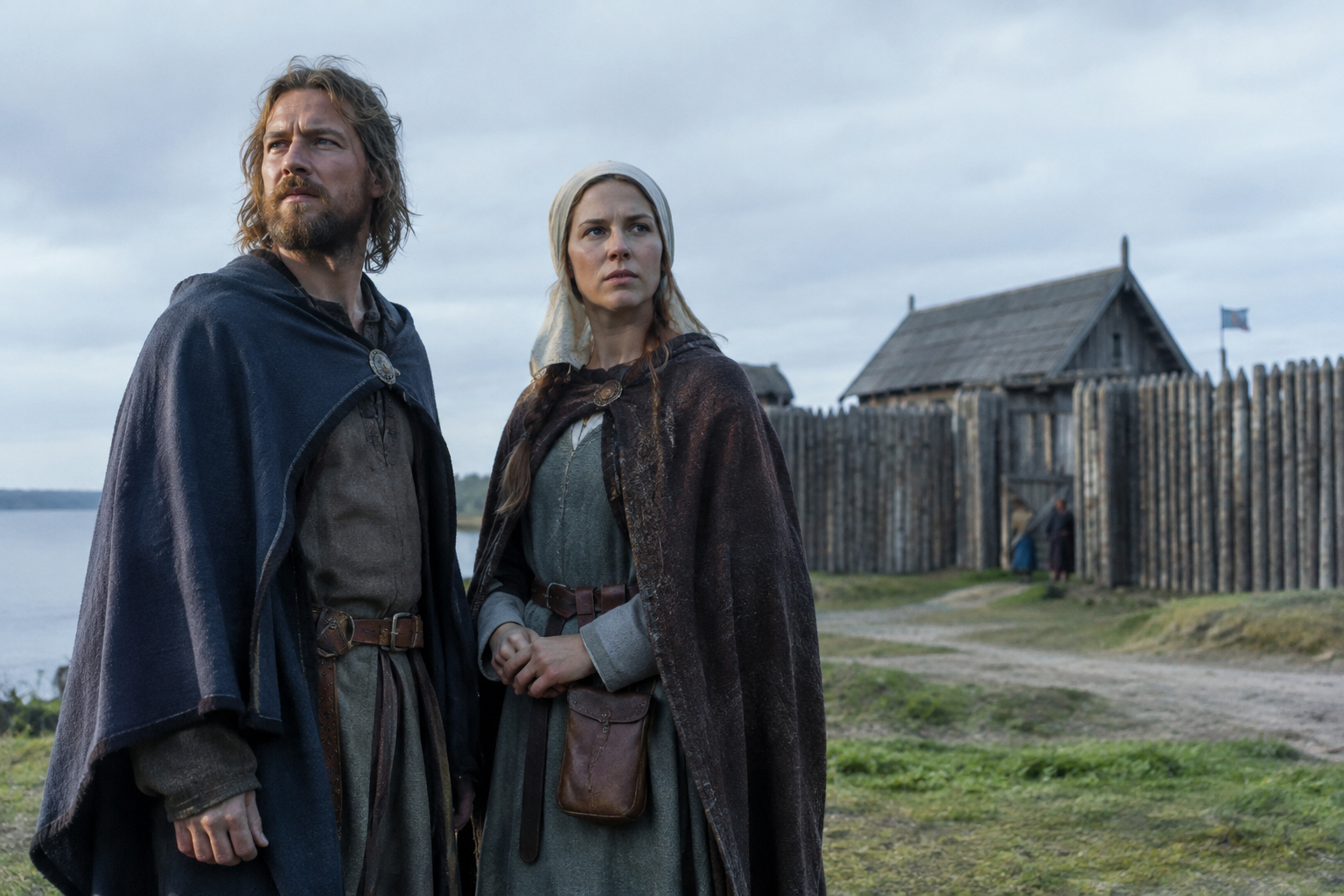
At Vasterhus in Jamtland, central Sweden, two medieval men dated to around AD 1313, identified as mbv310 and mbv160, help anchor the otherwise rather elusive story of Y-DNA haplogroup I1a2a1b1. That may sound like a forbidding string of letters and numbers, but archaeology has a way of making such codes human again. Here, the interest lies not in a famous king or a saga hero, but in ordinary medieval burials from a northern Scandinavian churchyard that can still speak to paternal continuity.
The branch name matters because Y-DNA follows one direct paternal line: father to son to son, across generations. It does not describe a person's whole ancestry, language, or social identity. Even so, when the same branch appears in securely dated medieval Swedish remains, it gives us something precious: a documented place and period where this paternal line was living, buried, and becoming part of the written Christian world of Scandinavia.
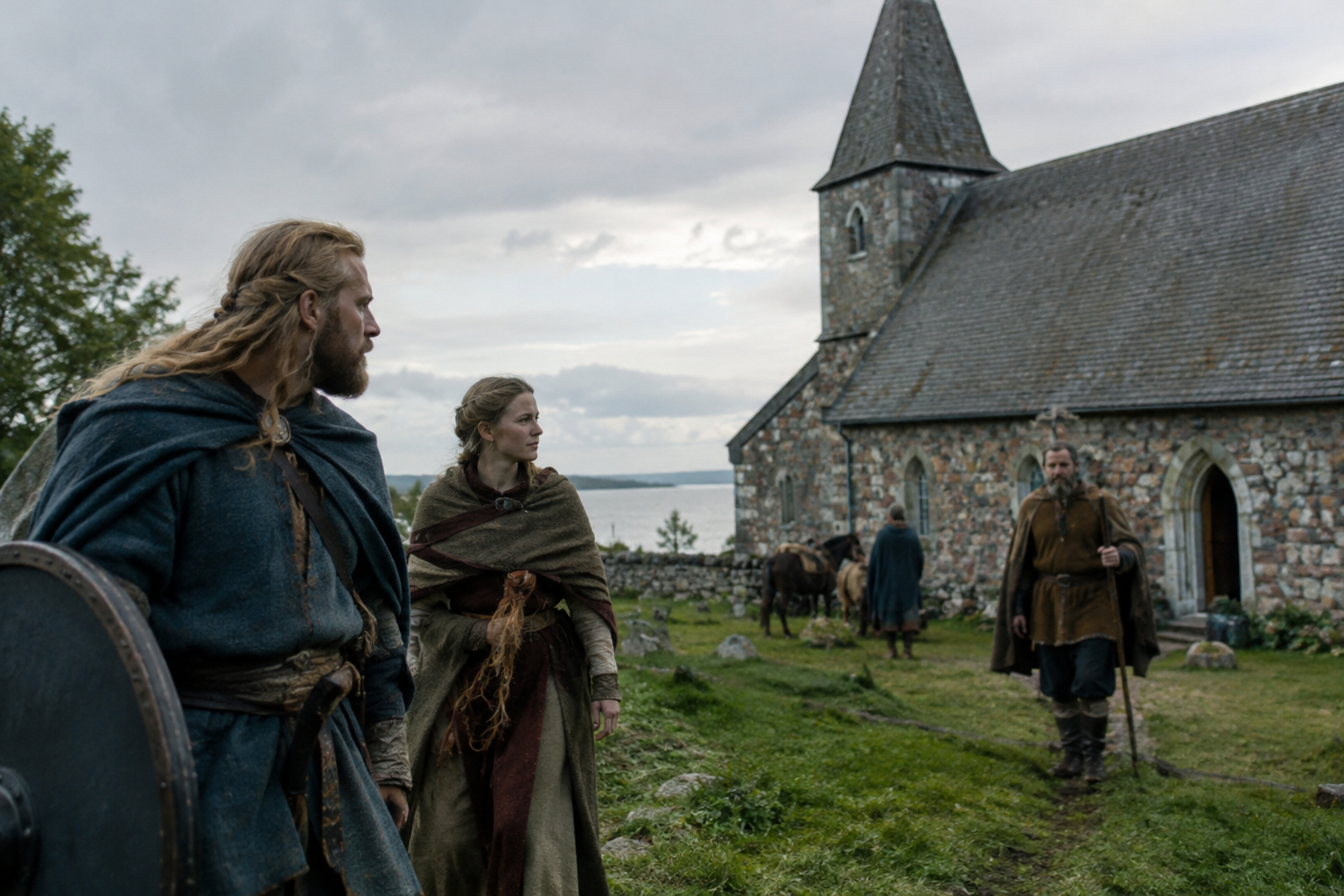
Vasterhus is best known as a medieval burial ground, and that context is important. By the early 14th century, this was not the pagan Scandinavia of popular imagination, but a Christian landscape of parishes, churchyards, and local communities whose dead were laid to rest within an organized ecclesiastical setting. The two sample IDs associated here, mbv310 and mbv160, belong to that settled medieval environment.
That alone tells us something useful about haplogroup I1a2a1b1. Whatever its deeper prehistoric roots inside the wider I1 family, by the High Middle Ages this paternal line was present in a Scandinavian population living under established medieval institutions. In other words, this is a lineage found not only in dramatic migration-era narratives, but in the quieter continuity of local society.
A research initiative focused on genomes from medieval Swedish multiple burials has highlighted exactly this kind of question: how biological kinship and social burial practice intersected in medieval Scandinavia. The project overview can be found here: https://www.rj.se/en/grants/2016/biological-and-social-kinship-reflected-in-genomes-from-medieval-swedish-multiple-burials/. That does not, by itself, license grand claims about every individual, but it does show the larger scholarly setting in which burials like those from Vasterhus are being studied.
Medieval Swedish graves and kinship
The haplogroup in this article is I1a2a1b1, a downstream branch within the broader Y-DNA haplogroup I1. I1 as a whole is strongly associated with northern Europe, especially Scandinavia, in both modern and ancient genetic discussions. But it is important not to smudge the lines: the broad history of I1 cannot automatically be assigned in full detail to every narrower descendant branch.
So what can we say responsibly? First, the Vasterhus men show that this particular paternal line, or a classification reported within this branch, was present in medieval Sweden. Second, that appearance fits comfortably within a larger Scandinavian setting where I1-related paternal lines are often found. What we should not do is pretend that two medieval samples can by themselves map the exact origin, migration path, or social rank of the whole subclade.
That may seem cautious, but it is also what makes archaeogenetics useful. The best work comes from placing each lineage in a real archaeological context rather than turning it into a mythic tribal badge. In this case, the context is northern medieval Sweden, not an invented saga pedigree.
When ancient DNA turns up once, it is interesting. When it turns up more than once in the same place and period, it begins to look like population history rather than accident. The presence of both mbv310 and mbv160 at medieval Vasterhus suggests that haplogroup I1a2a1b1 was not a one-off curiosity in this community.
That does not mean the two men were close relatives, still less members of some local ruling dynasty. Shared Y-DNA can unite men separated by many generations. But repeated occurrence at one site does strengthen the basic historical point: this paternal lineage belonged to the lived genetic fabric of medieval Scandinavia.
For readers tracing a modern paternal line, that kind of evidence is more valuable than fantasy connections. It places a branch in an actual burial ground, at an actual point in medieval history, among ordinary people whose lives unfolded within the social transformations of Christian Sweden.
Post-Viking Christian Scandinavia
Vasterhus also sits in an interesting region. Jamtland was not some sealed-off corner of the north. In the Middle Ages it lay in a zone shaped by Scandinavian movement, shifting political influence, trade routes, and ecclesiastical connections. That makes the Vasterhus evidence valuable beyond the graveyard itself, because it belongs to a region where local continuity and wider Nordic interaction met.
A paternal lineage like I1a2a1b1 in this setting should be imagined not as a passport stamp for a single migration event, but as part of a long-settled northern population history. Medieval Scandinavia was mobile, certainly, yet it was also deeply local. Churchyards such as Vasterhus preserve exactly that balance: people were part of a broader world, but they were buried in their own community.
This is one reason Scandinavian ancient DNA keeps complicating older, simpler stories. Not every northern lineage belongs to a raider, settler, or elite founder. Many belong to villagers, parishioners, and families rooted in place over centuries.
Although these two individuals are medieval, their significance becomes clearer when placed against the longer Scandinavian record. Sweden has yielded ancient DNA from Neolithic, Bronze Age, Iron Age, Viking Age, and medieval contexts, and that accumulating record shows both change and continuity over long stretches of time. Different ancestries, cultural practices, and political worlds came and went, but some paternal lines remained part of the population through those shifts.
The Vasterhus samples therefore belong to a larger northern European pattern in which medieval communities often preserve lineages with deeper regional roots, even when the surrounding society has changed religion, law, and political organization. The passage from pre-Christian Scandinavia to medieval Christian Sweden was immense historically, but it did not wipe the slate clean biologically.
If you want a wider Swedish backdrop for how ancient DNA illuminates burial communities, kinship, and regional population history, the growing body of Scandinavian work is worth following closely. It is often in these well-dated churchyards and cemeteries, rather than only in princely tombs, that population history becomes clearest.
Swedish kinship across deep time
On present evidence, haplogroup I1a2a1b1 can be placed securely enough in medieval Sweden through the Vasterhus individuals mbv310 and mbv160. That is the most distinctive point here. It ties this paternal branch to a real Scandinavian community in the early 14th century, in a Christian burial setting far from the cliches of horned helmets and invented dynasties.
For someone researching this haplogroup today, the strongest responsible takeaway is regional and historical rather than romantic: this is a paternal line attested in medieval Scandinavia, specifically in inland Sweden. That does not make every modern carrier Swedish, nor does it promise descent from a famous house. But it does place the branch inside a documented northern European past, which is exactly the sort of firm footing good archaeogenetics ought to provide.
Comments