Haplogroup I1a2a1a1d2a1a
– 5 min read


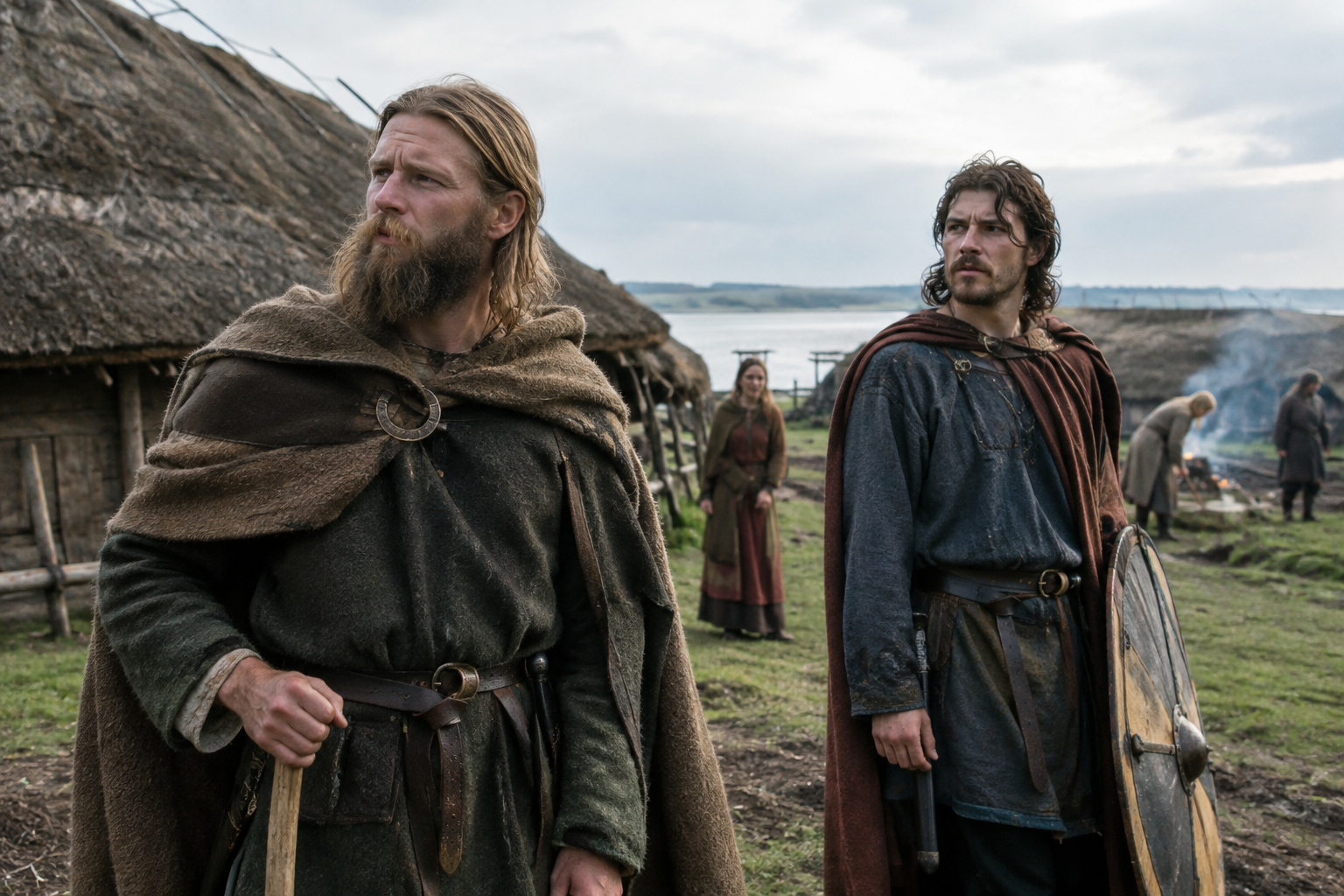
At Bjornstrupgaard on Funen, an ancient man dated to around 89 BC carries one of the clearest clues in this small record for the Y-DNA branch I1a2a1a1d2a1a. He appears in the late pre-Roman Iron Age of Denmark, on an island that sat in the middle of Baltic and North Sea traffic long before the Viking Age made Scandinavia famous. That matters because I1 is often discussed in very broad, almost mythical terms; here, by contrast, we are looking at something much more grounded: a very specific paternal branch appearing in southern Scandinavia before the Roman period and then again in eastern Denmark centuries later.
The second sample is just as suggestive. At Engbjerg on Sjælland, an individual identified in the record as connected with the Danii, sample CGG019090, is dated to about AD 362. Taken together with the Funen individual CGG019645, the pattern is not one of sudden arrival or imperial glamour, but of regional persistence. Y-DNA traces a direct paternal line only, not a person's whole ancestry, yet even that narrow line can be historically revealing when it turns up in the same wider region across several centuries.
Funen is one of those places that can look quiet on a modern map and yet loom large archaeologically. It sits between Jutland and Sjælland, with sea lanes in every direction, and in the Iron Age it was part of a world of farms, local elites, exchange networks, and shifting political landscapes. A man from Bjornstrupgaard, sample CGG019645, dated around 89 BC, places this paternal line in Denmark before Rome had much direct say in the north.
That date is important. It means this lineage was present in southern Scandinavia in an era before the better-documented upheavals of the Roman Iron Age and Migration Period. We should be careful not to load too much onto a single burial, but it does give us a firm archaeological foothold for the branch in a Scandinavian setting.
A genetic study focusing on ancient Scandinavian material is linked through this research preprint. Even without forcing conclusions beyond the visible sample data, the broader implication is straightforward: some highly derived branches now found by modern testers were already embedded in local Iron Age populations, not floating abstractly in a map of "northern Europe."
The Engbjerg individual on Sjælland, sample CGG019090, is dated to about AD 362 and described in the record with the label "Danii Tribe." That label needs to be handled with a little discipline. It may reflect a regional or historical association rather than a neat ethnic identity in the modern sense, and archaeology has taught us repeatedly that tribe names, burial communities, language, and Y-chromosome lineages are not interchangeable.
Still, the setting is historically rich. Fourth-century eastern Denmark belonged to the world from which later Danish polities would emerge: a landscape of local power centers, maritime links, and contacts reaching south toward the Roman frontier and east across the Baltic. Finding the same narrow paternal branch in this setting as well as earlier Funen hints at continuity through the long Iron Age rather than a brief episode.
That continuity is exactly the sort of thing Y-DNA can illuminate well. Not because it tells us everything about population history - it does not - but because it lets us follow one paternal thread through communities that otherwise survive only as graves, fragments, and place-names. In this case, the thread stays stubbornly Danish.
I1a2a1a1d2a1a is not the same thing as haplogroup I1 in general. That distinction matters. I1 as a wider paternal haplogroup has a well-known concentration in northern Europe, especially Scandinavia, but a very specific terminal branch like this one represents only one much narrower offshoot within that larger family.
So the safe historical claim is a modest one: the records supplied here associate this precise branch with Iron Age and Late Antique Denmark. That is valuable in itself. It gives modern testers with this haplogroup a tangible archaeological horizon in southern Scandinavia, but it does not automatically prove that every bearer of the branch descends from one famous tribe, one kingdom, or one historically named dynasty.
In fact, the attraction of these two samples lies in their ordinariness. They are not kings in saga literature. They are not retrofitted into heroic legend. They are two ancient men from Denmark, separated by roughly four and a half centuries, whose paternal lines point in the same direction.
There is also a geographical lesson here. Funen and Sjælland are islands, but not isolated ones. In Scandinavian archaeology, islands are often connectors rather than barriers. They sit within networks of movement: livestock, amber, metals, marriage alliances, political authority, and eventually armies and fleets.
If a paternal branch appears on both Funen and Sjælland across different periods, that fits well with what we know of Danish island geography as a framework for continuity and interaction. It does not mean the two ancient men were close relatives, and it does not let us draw a family tree across centuries. What it does suggest is that this branch belonged to a population world that was deeply at home in the Danish archipelago.
That broader background also helps explain why later Scandinavian expansions should not be read backward too hastily. A branch present in Denmark in 89 BC and again around AD 362 was already old in the region before the Viking Age. For some modern descendants, the paternal story may therefore reach into a pre-Viking Scandinavian past rather than beginning with the better-known medieval raiders and settlers.
Two samples are not a population census. That is the first rule. But two samples from the same wider region, at different dates, can still be historically meaningful when they align so neatly with what we would expect from a Scandinavian-centered paternal lineage.
The real strength of this evidence is temporal depth. Bjornstrupgaard gives us a foothold in the late pre-Roman Iron Age; Engbjerg shows the line again in Late Antiquity. That sequence makes I1a2a1a1d2a1a feel less like a modern testing label and more like part of a long-settled northern European paternal history rooted in Denmark's island world.
For anyone researching this haplogroup today, the responsible takeaway is not a fantasy pedigree but a setting: southern Scandinavia, with ancient lives anchored in Funen and Sjælland, and a paternal line that seems to have persisted there across centuries of change.
The distinctive feature of I1a2a1a1d2a1a in this evidence is not royal drama but durable regional presence. From CGG019645 on Funen around 89 BC to CGG019090 on Sjælland around AD 362, the branch is tied to the Danish Iron Age world in a way that is archaeologically specific and historically plausible. For modern descendants, that offers something better than legend: a direct paternal line with visible roots in ancient Denmark.

Comments