Haplogroup I1a1b1b2

– 4 min read


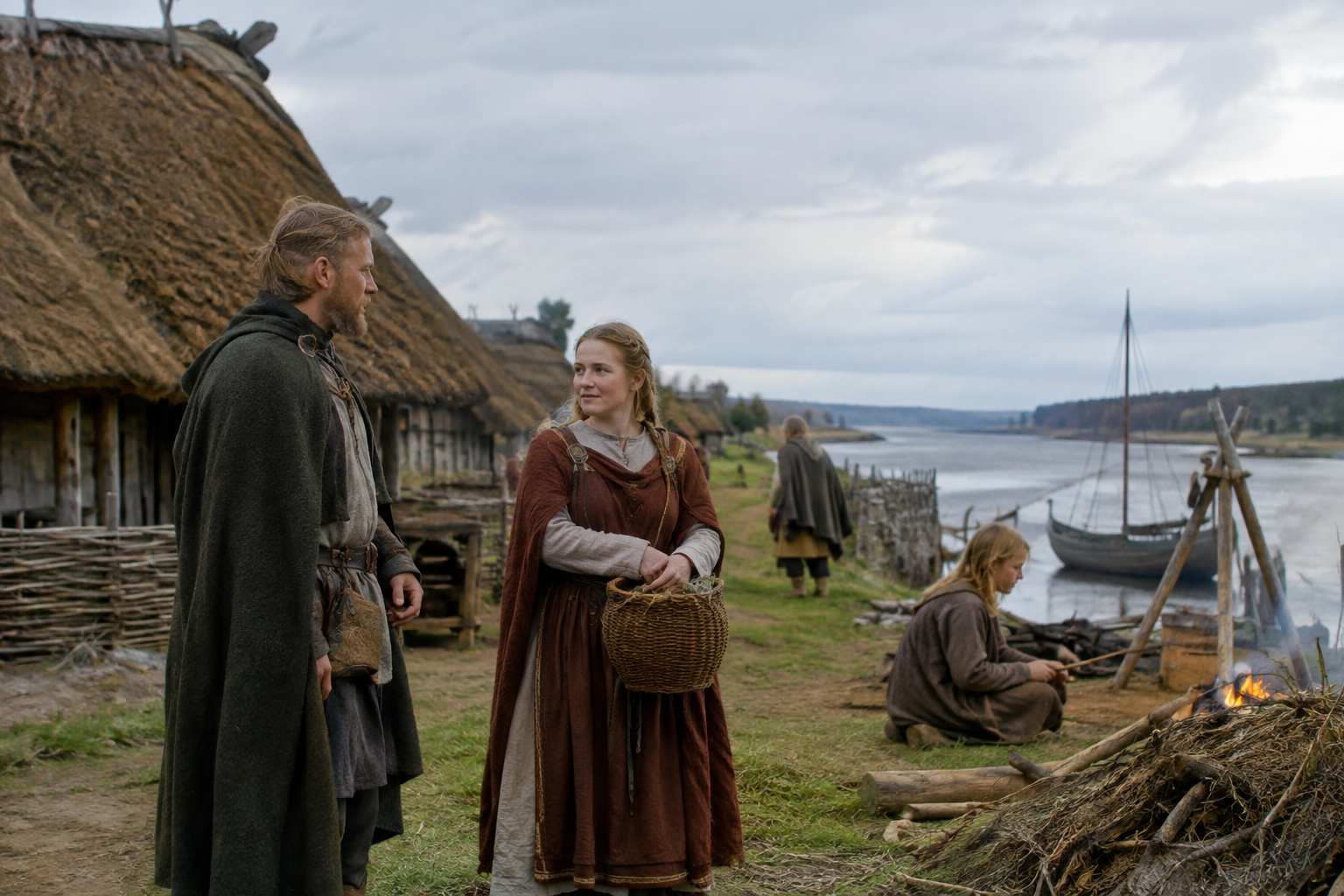
In around AD 1050, a man later catalogued as CGG100683 was buried at Tjaerby near Randers in Jutland, Denmark. He lived at the far end of the Viking Age, in a landscape that was no longer simply "Viking" in the saga sense, but increasingly tied to royal power, parish organization, and Christian burial custom. For anyone carrying the Y-DNA haplogroup I1a1b1b2, that is an arresting point of contact: not a mythic raider on the prow of a ship, but a real man from an excavated Scandinavian setting at the moment when northern Europe was being remade.
The immediate caution is important too. Y-DNA tracks one direct paternal line only - father to son to son - and does not sum up a person's whole ancestry, language, or identity. Still, paternal lines can be historically revealing when they appear in securely dated archaeological contexts. In this case, the evidence places the branch I1a1b1b2 within a wider lineage, I1, that is strongly associated with Scandinavia and later Germanic-speaking populations, while the individual from Tjaerby anchors this particular article's branch in late Viking Age Denmark.
Tjaerby sits in eastern Jutland, not far from Randers, in a part of Denmark that mattered enormously in the transition from the Viking Age to the medieval kingdom. By the 11th century, Jutland was threaded into wider North Sea networks of trade, war, kingship, and conversion. This was the world after Harald Bluetooth's famous claim to have made the Danes Christian, and around the time of Cnut's North Sea empire and its aftermath.
That makes CGG100683 especially useful as evidence. He belongs to a period when older Scandinavian customs and newer Christian institutions overlapped. Ancient DNA from such burials helps pin paternal lineages to real communities rather than to modern assumptions about "Viking blood." A broad ancient genomic study of the Viking world, published in Nature, helped show just how mobile, varied, and regionally complex Viking Age populations could be, even when some paternal lines were especially common in Scandinavia.
With only one named ancient sample here, it would be careless to turn him into a stand-in for all Danes, all Vikings, or all men of haplogroup I1. But one excavated individual can still tell us something solid. He shows that a paternal line associated with I1a1b1b2 was present in Denmark in the 11th century, at precisely the period when Scandinavian men were not only moving outward across the North Atlantic and British Isles, but also becoming subjects of a more settled and documented medieval order.
The larger haplogroup I1 is one of the best-known paternal lineages in northern Europe, especially in Scandinavia. That does not mean every sub-branch has the same history, nor that every medieval or modern carrier comes from one identifiable Viking family. The narrower label I1a1b1b2 points to a more specific twig on that paternal tree, but with the evidence given here, the safest historical claim is modest: this branch is represented by a man from late Viking Age Denmark.
That distinction matters because popular genealogy often slides too easily from a broad parent lineage into a very precise historical narrative. In reality, a branch like I1a1b1b2 may have passed through many different households, regions, and social settings over centuries. A single Y-chromosome can persist while languages change, kingdoms rise, cemeteries shift, and families move. What the ancient sample does is keep us anchored. Whatever later history this branch had, one documented bearer was living in Jutland around AD 1050.
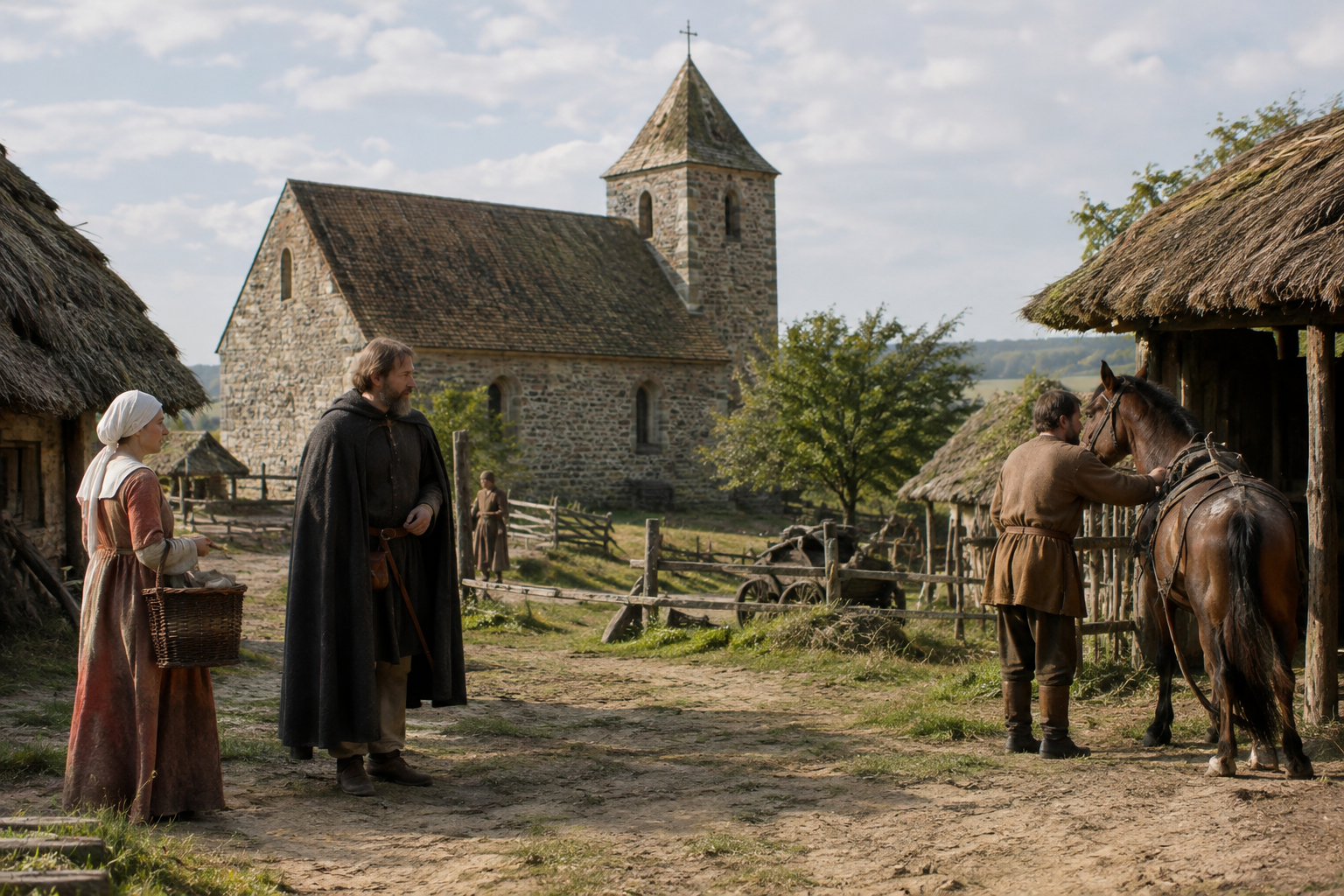
There is a tendency, especially in public history, to imagine Scandinavian paternal lines only through the age of raids, ships, and heroic violence. But AD 1050 is already a subtly different chapter. Denmark was part of a Christianizing and increasingly centralized world. Burial grounds, settlement organization, and political loyalties were changing. So the presence of I1a1b1b2 in this period is a reminder that the famous Viking centuries did not simply end; they flowed into medieval society.
That is archaeologically more interesting than a simple label like "Viking haplogroup." Men carrying I1 branches did not vanish when longship expeditions became less dominant in the historical record. They remained in the farming districts, market towns, and parish landscapes of Scandinavia, passing paternal lines into the era of churches, law codes, and dynastic kingship. CGG100683 belongs to that threshold moment.
Post-Viking Christian Scandinavia
It also helps explain why a Danish sample can matter well beyond Denmark. Much of the later spread of Scandinavian-associated paternal lineages took place through exactly these late first-millennium and early second-millennium processes: settlement, inheritance, local continuity, and regional expansion around the North Sea. Not every movement was a raid, and not every descendant story needs a warship in it.
Jutland was never an isolated peninsula at the edge of Europe. It was a hinge: between the North Sea and the Baltic, between continental Europe and the islands of Denmark, and between older local communities and new long-distance political worlds. A paternal lineage found there in the 11th century sits in a historically strategic zone. That does not prove where an earlier ancestor lived centuries before, but it does place the line in one of the key theatres of Germanic and Scandinavian expansion.
For modern testers, this is often the real value of ancient DNA. It turns a string of letters and numbers into a historically located human connection. Haplogroup I1a1b1b2 is not just an abstract descendant of a deeper northern European branch; it is linked here to an individual from late Viking Age Jutland, living in a society tied to the great transformations of the North Sea world.
That wider setting also helps avoid a common trap. A Scandinavian-associated Y-line is not the same thing as a fixed ethnic essence. North Sea history is full of mixing, migration, fosterage, marriage, warfare, and cultural borrowing. The paternal line is only one thread. But it is a thread running through one of the most influential regions in early medieval Europe.
With the current evidence, the strongest story for I1a1b1b2 is precise rather than extravagant. It is a paternal branch within the broader Scandinavian-heavy I1 lineage, and it is attested in a documented ancient individual, CGG100683, from Tjaerby in Jutland around AD 1050. That places the line in Denmark at the close of the Viking Age, in a world where old Scandinavian patterns and new medieval institutions overlapped.
For someone researching this haplogroup today, that does not guarantee descent from a famous Viking, a royal house, or a single ancient clan. What it does offer is something better grounded: a real paternal connection to the historical landscapes of Scandinavia, and specifically to late Viking Age Denmark, where archaeology and genetics meet in one identifiable man.
Comments