Haplogroup I1a1b1a1a1

– 5 min read


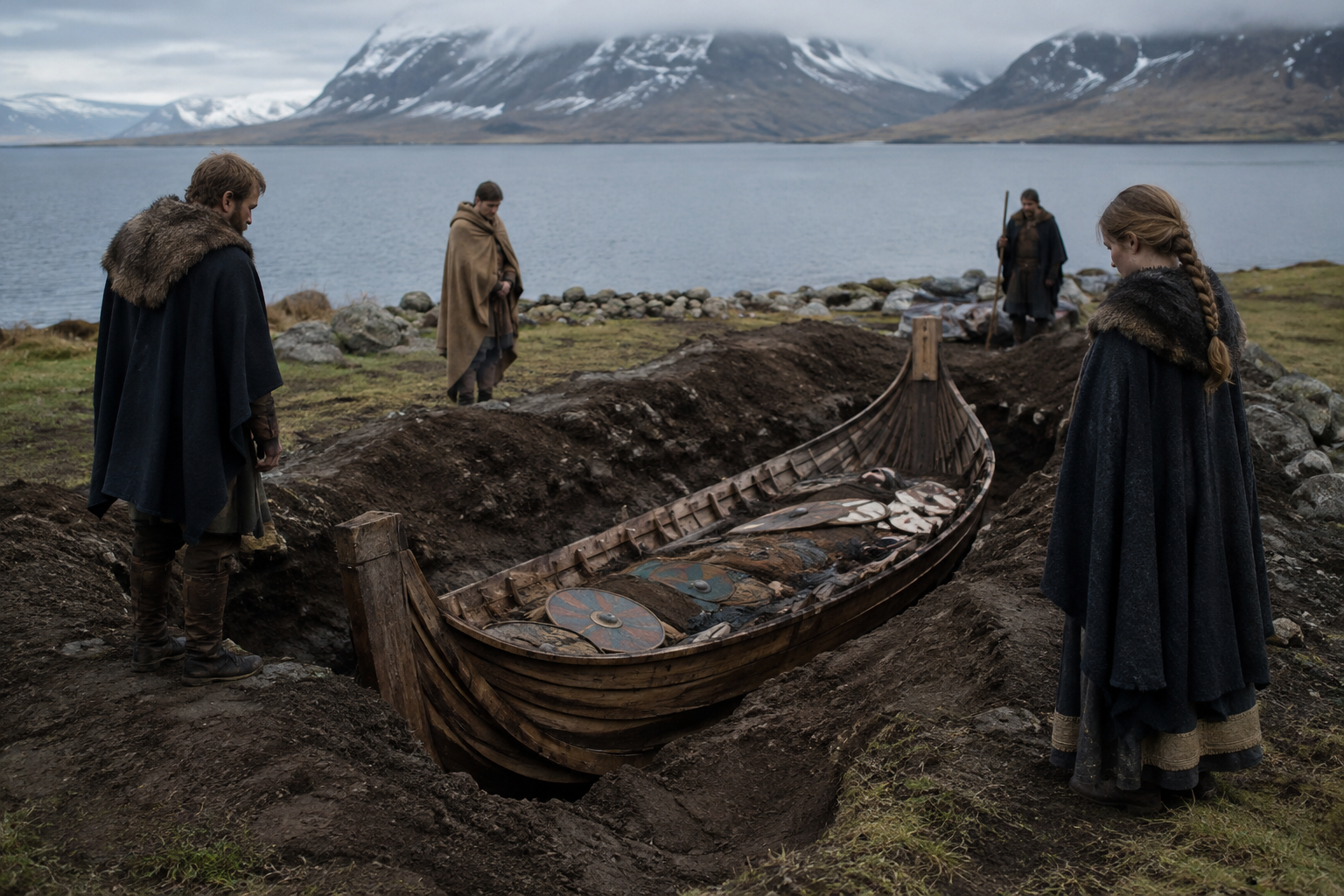
In around AD 925, a man buried in a Viking boat grave in Iceland entered the archaeological record with a striking combination of place, date, and paternal lineage. The sample, identified as VDP-A5, is associated here with Y-DNA haplogroup I1a1b1a1a1, a branch within the broader I1 lineage that is especially important in Scandinavian and North Atlantic history. That does not make this one man a spokesman for all Vikings, still less for all Icelanders. But it does place a very specific paternal line inside one of the most famous episodes of medieval expansion: the settlement of Iceland.
Iceland is a particularly revealing setting for Y-DNA because the island was colonized within historical memory. By the late 9th and early 10th centuries, people from Norway and the wider Norse world were establishing farms, kin networks, and burial grounds across a landscape that had previously lacked permanent human settlement. A boat burial from that moment is not just picturesque archaeology. It is evidence from the generation that helped create a new society in the North Atlantic.
The importance of VDP-A5 lies partly in its context. A boat burial is a highly recognizable form of Viking Age funerary display, though it was never the norm for everyone. In Iceland, such graves connect the island directly to broader Scandinavian mortuary habits, while also reminding us that settlers did not arrive as an undifferentiated mass. They brought customs, identities, and family lines with them.
When a Y-chromosome assignment like I1a1b1a1a1 appears in this setting, it tells us about one direct paternal line only: father to son, and so on back through time. That is a narrow but useful thread. In a colony founded during the Viking Age, paternal lineages can help show how settlement drew on Scandinavian male ancestry, even while the total ancestry of individuals and communities was much more mixed.
A major ancient DNA study of Viking Age populations, published in Science, helped underline exactly this point on a wider scale: the Viking world was connected, mobile, and genetically varied. Iceland fits that pattern well. Its early cemeteries and settlements were part of a maritime world stretching from Scandinavia to the British Isles and beyond.
The wider haplogroup I1 is one of the best-known paternal lineages in northern Europe, especially in Scandinavia. The article haplogroup here, I1a1b1a1a1, is a much narrower branch within that bigger family tree. That distinction matters. It is sensible to say that this branch belongs inside a lineage strongly associated with northern European and especially Scandinavian paternal history; it would be careless to assign the full prehistoric story of all I1 directly to this exact subclade without more specific evidence.
Still, the Icelandic find is historically telling. By the 10th century, a branch like this was already present among people participating in Norse expansion across the North Atlantic. That is a concrete, dated anchor. It places this paternal line in the world of ships, seasonal movement, colonization, and the formation of one of medieval Europe's most text-rich frontier societies.
The fascination of Iceland is that texts and archaeology sit unusually close together there. The sagas were written later and cannot be treated as straightforward eyewitness accounts, but they describe a society intensely concerned with ancestry, land claims, kinship, and remembered founders. Y-DNA cannot identify saga heroes. What it can do is show that early Iceland really was peopled by distinct paternal lines rooted in the Scandinavian world.
Early Iceland was never simply "Norway overseas." Archaeology, isotopes, and DNA all point to a more entangled reality, with strong links not only to western Scandinavia but also to the British Isles. This makes any Icelandic Viking Age Y-lineage interesting for two reasons at once: it may reflect Scandinavian paternal descent, and it also belongs to a population formed in a contact zone where ancestry, language, and identity did not line up neatly.
That broader pattern is well worth keeping in mind for VDP-A5. A Scandinavian-associated paternal line in Iceland does not mean every ancestor of this person was Scandinavian. Quite the reverse: Viking Age island communities often combined male and female ancestries from different shores of the North Atlantic. The Y chromosome gives one line of descent, not a complete ethnic label.
This is one reason Iceland has been so central to population history. It preserves, in unusually sharp form, the results of a medieval founding event. A sample like VDP-A5 is valuable not because it is grander than other graves, but because it belongs to that formative horizon when families were establishing themselves on a new island and carrying old lineages into a new landscape.
Boat burials have a habit of overshadowing everything around them, and one can see why. They are visually powerful and closely associated in the popular imagination with Viking identity. But archaeologically they are more useful when treated carefully. They do not automatically indicate royal blood, and they do not represent all Norse burial practice. What they do show is the persistence of a cultural language in which ships, mobility, and social display mattered deeply.
For a man linked with I1a1b1a1a1, burial in a Viking boat grave in Iceland suggests that this paternal line was present not at the fringes of the Norse world, but in one of its most characteristic ceremonial settings. That is significant because it ties the lineage to a documented historical moment and a recognizable archaeological form. It turns an abstract haplogroup label into something much more tangible: a person laid to rest in the young colony of Iceland around the early 10th century.
There is also a useful caution here. Because only one ancient sample is available in this case, we should resist turning a single burial into a population average. One grave can illuminate presence, context, and chronology. It cannot by itself define the full spread, rank, or frequency of the branch across Viking Age Iceland.
If I1a1b1a1a1 appears in an early Icelandic boat burial, the simplest historical explanation is that this paternal branch was part of the wider Scandinavian-derived pool carried west during the settlement era. That fits the known history of Iceland's colonization in the late 9th and 10th centuries. It also fits the general picture emerging from ancient DNA studies of the Viking world: mobile groups, regional variation, and repeated crossings of the North Sea and North Atlantic.
To understand that background more broadly, it helps to place Iceland alongside neighboring island societies shaped by Norse expansion and seaborne contact. The Faroe Islands, for example, preserve a comparable story of migration, founder effects, and mixed ancestry in the North Atlantic world.
Iceland's early settlers were making something new, but not from nothing. They carried with them social habits, legal traditions, household practices, and lineages formed elsewhere. A haplogroup such as I1a1b1a1a1, found in this setting, belongs to that process of transplantation. Its story is not one of timeless essence. It is one of movement, settlement, and adaptation in a very specific medieval frontier.
What makes I1a1b1a1a1 distinctive here is not a long chain of speculative claims, but one clean archaeological fact: this branch is associated with an early Viking Age individual, VDP-A5, from a boat burial in Iceland dated to about AD 925. That places the lineage firmly in the Norse North Atlantic at the moment Icelandic society was taking shape. For someone researching this paternal line today, the responsible takeaway is not a promise of descent from a famous raider or saga family, but a solid historical connection to the Scandinavian world that seeded medieval Iceland.
Comments