Haplogroup H1a1a

– 4 min read


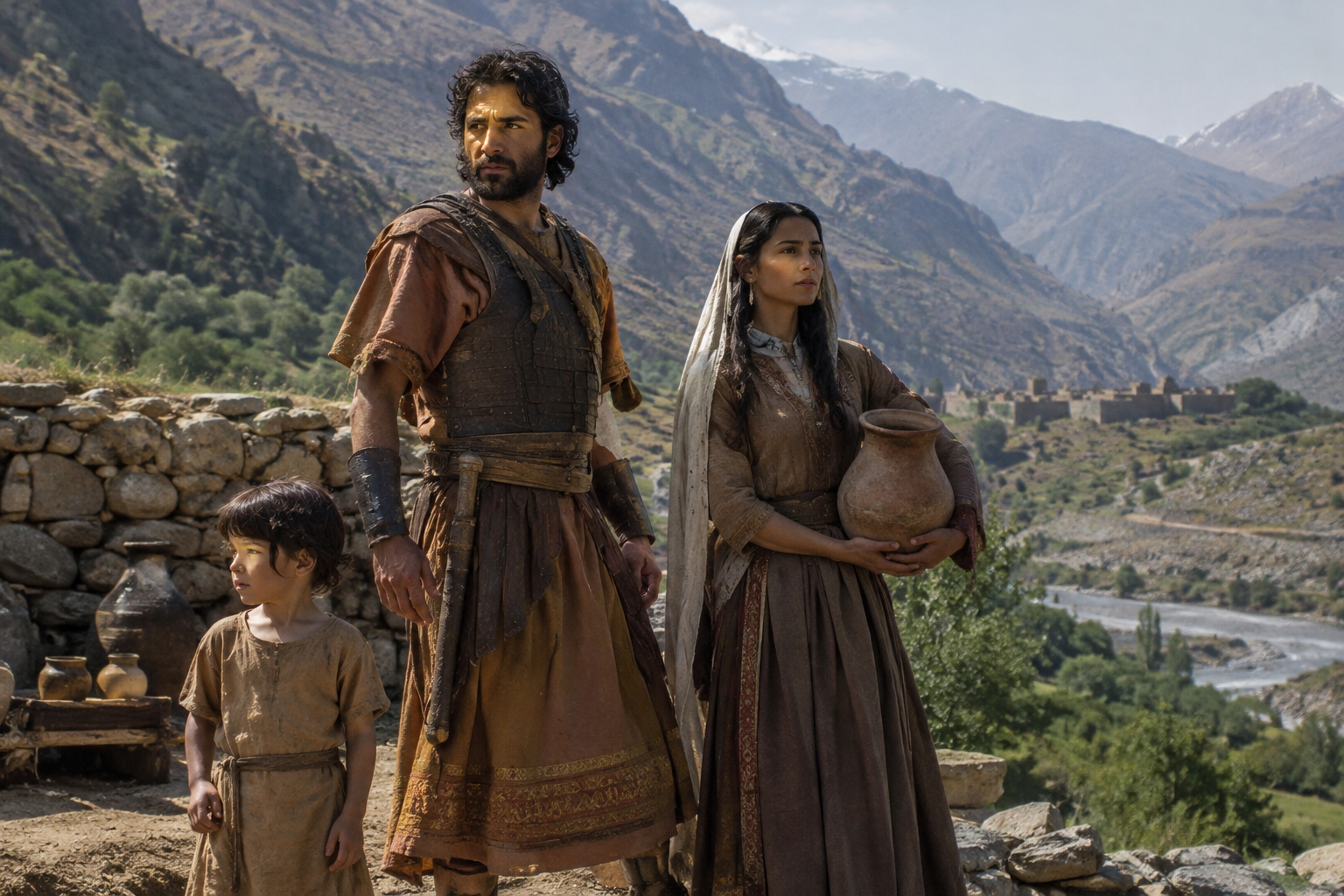
At Barikot in Pakistan's Swat Valley, one Iron Age male identified as I6548, dated to around 850 BC, offers a small but arresting clue to the long history of Y-DNA haplogroup H1a1a. It is only a single ancient individual in the material provided here, but that is precisely what makes him interesting: instead of a sweeping cloud of claims, we have one man, one valley, one period, and a chance to place a paternal lineage inside a real archaeological landscape.
That landscape matters. The Swat Valley was not an isolated mountain pocket. In the early Iron Age it sat in a corridor linking the northwestern subcontinent with highland Inner Asia and the Iranian world. When a lineage like H1a1a appears here, it should not be treated as a grand ethnic label or a shortcut to identity. Y-DNA traces one direct paternal line only. But in the case of I6548, it does show that this branch belonged to the male population living in or moving through the Swat region during a formative period of South Asian and trans-Himalayan history.
Barikot is one of the best-known ancient sites in the Swat region, an area with a deep archaeological sequence and a strategic position between upland and lowland worlds. By the first millennium BC, communities in Swat were participating in patterns of settlement, exchange, and cultural change that later historians would associate with the broader northwest of the subcontinent. The importance of I6548 is not that he was a king, conqueror, or founder figure. It is that he was present in this particular place at this particular time.
Ancient DNA has been especially valuable in regions like Swat because texts arrive late, unevenly, and often from outside observers. Genetics does not replace archaeology, but it can anchor people to sites that are otherwise discussed in broad cultural terms. A research dataset on ancient individuals from this region, available through this ancient DNA study material, helped bring the Swat Valley into wider discussions of prehistoric and early historic population history.
H1a1a belongs to the wider Y-DNA haplogroup H, a paternal lineage with deep roots in South Asia. That broad background is useful, but it must be handled carefully. The wider haplogroup and the narrower branch are not the same thing historically. One cannot simply take everything ever said about haplogroup H and pin it onto H1a1a as though nothing changed over time.
For that reason, I6548 is best read as evidence for the presence of H1a1a, or a reported association with that branch, in Iron Age Swat rather than as proof of where every later bearer of H1a1a came from. Ancient Y-DNA assignments vary in resolution depending on preservation and coverage. With many ancient samples, the broad lineage may be more secure than the finest terminal position. The safe historical point is that a paternal line connected to H1a1a was part of the human reality of Swat around the middle of the first millennium BC.
It is tempting to imagine mountain valleys as refuges, cut off and static. Archaeology usually tells a messier story. Swat was a frontier zone in the proper historical sense: not merely an edge, but a meeting ground. People, objects, crops, ideas, and probably marriage networks moved through it. That is one reason a lineage found there is so valuable. It belongs to a place where local continuity and outside contact could coexist.
This matters especially for H1a1a because South Asian paternal history cannot be reduced to one migration or one founding event. Some lineages show long regional depth; others appear in contexts shaped by movement and mixture; many do both over enough centuries. A single Iron Age man from Barikot does not solve that whole puzzle, but he does give us a fixed point: H1a1a was not merely a modern pattern on a testing map. It had ancient bearers in a historically connected valley of the northwest.
Readers sometimes expect ancient DNA to work best when there are dozens of men from the same paternal branch lined up neatly across time. Of course that is ideal. But archaeology rarely behaves so obligingly. Often, the first importance of an ancient sample is not statistical weight but historical placement. I6548 places H1a1a in an early Iron Age setting in the Swat Valley, and that alone sharpens the conversation.
It also reminds us that paternal lineages can survive through very ordinary men whose names are lost. The great irony of genetics is that royal pedigrees are often less informative than burial populations. A single excavated male from an ancient settlement zone may tell us more about the actual lived geography of a lineage than centuries of later family legend.
The northwest of the subcontinent has long been one of Eurasia's great contact regions. Long before the better-documented empires of the historic period, communities here were already positioned between ecological and cultural worlds. Any paternal lineage recovered from Swat therefore sits within a wider conversation about how South Asian populations formed, persisted, and interacted with neighboring regions.
That does not mean H1a1a should be recast as a marker of every population that passed through the mountains. It means something subtler and more useful: the branch was compatible with life in this crossroads region during the Iron Age. For people researching the lineage today, that is a grounded insight. It connects a modern paternal branch to an ancient population in a real archaeological corridor rather than to a vague civilizational slogan.
For someone who belongs to Y-DNA haplogroup H1a1a, the most defensible lesson from I6548 is not prestige but depth. This branch, or a closely reported form of it, was present in the Swat Valley by around 850 BC, in a region that linked South Asia to highland and transregional networks. That does not identify a tribe, language, caste, or dynasty by itself. But it does place the lineage in an ancient and historically important setting where local roots and wider connections met.
That is often the best kind of archaeogenetic evidence: modest in scale, precise in place, and rich in implication.
Comments