Haplogroup G2a2b2b1a1a2

– 5 min read


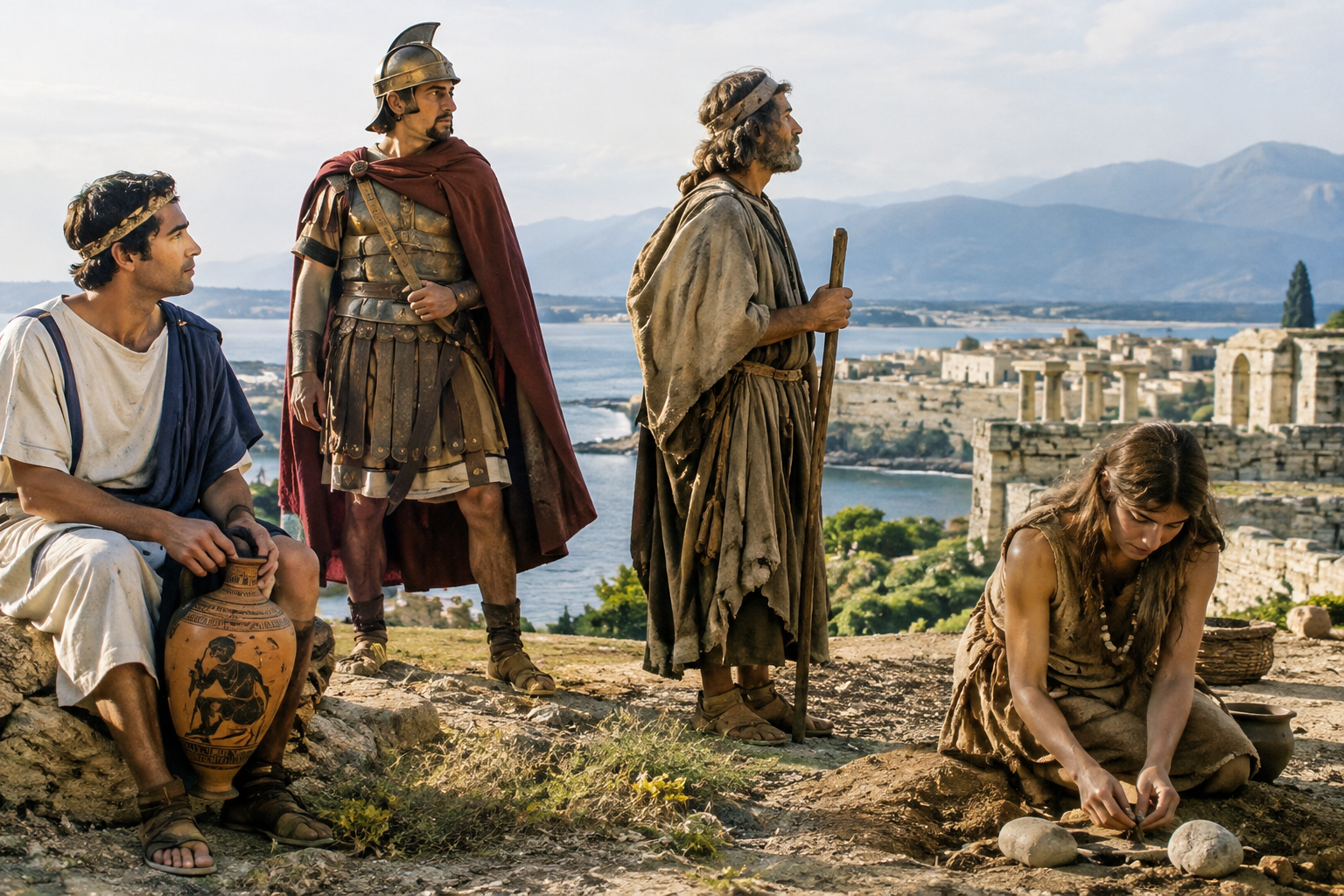
At Viminacium in Serbia, a late Roman city on the Danube frontier, one man buried around AD 350 has become an unexpectedly useful guide to the history of Y-DNA haplogroup G2a2b2b1a1a2. The sample, VVG2706, belongs to a world that was unmistakably Roman in institutions and military geography, yet never neatly Roman in ancestry. That is precisely why this lineage is interesting here: it turns up not in one sealed ethnic box, but across several very different Mediterranean and Balkan settings.
The other ancient matches supplied for this branch make the point even more sharply. We see it in a citizen of the Greek colony of Himera in Sicily (I17878, around 450 BC), in a Mycenaean-period individual from Phokis near Delphi in Greece (I13577, around 1250 BC), and in a much earlier Neolithic individual from Đakovo-Franjevac in Croatia (I20502, around 4000 BC). Y-DNA tracks one direct paternal line rather than a person's whole ancestry, but even that narrow line can be historically revealing. In this case, the pattern suggests a branch with deep roots in the farming populations of southeastern Europe and a long later history within the Aegean and central Mediterranean.
Viminacium was one of the great urban and military centers of the Roman Balkans, positioned in what is now Serbia along routes that linked the Danube frontier with the interior of the empire. A man such as VVG2706, dated to around AD 350, lived in an age when the region was full of movement: soldiers, merchants, officials, local families with long roots in the Balkans, and newcomers from elsewhere in the empire all passed through or settled there.
That matters for interpreting this haplogroup. A G2a-derived paternal line in late Roman Viminacium does not automatically mark a migrant from one specific homeland, nor does it prove uninterrupted descent from any single prehistoric community. What it does show is that a lineage associated more broadly with early European farmers and later Mediterranean populations was still present in a major Roman provincial setting many millennia after its first appearance in the archaeological record.
Research on ancient populations in the Balkans and neighboring regions has repeatedly shown that the Roman world did not erase older local genetic layers; rather, it added to them. In that sense, VVG2706 is historically valuable because he sits at the meeting point between imperial history and much deeper regional continuity.
Croatia: continuity and shifting lineages
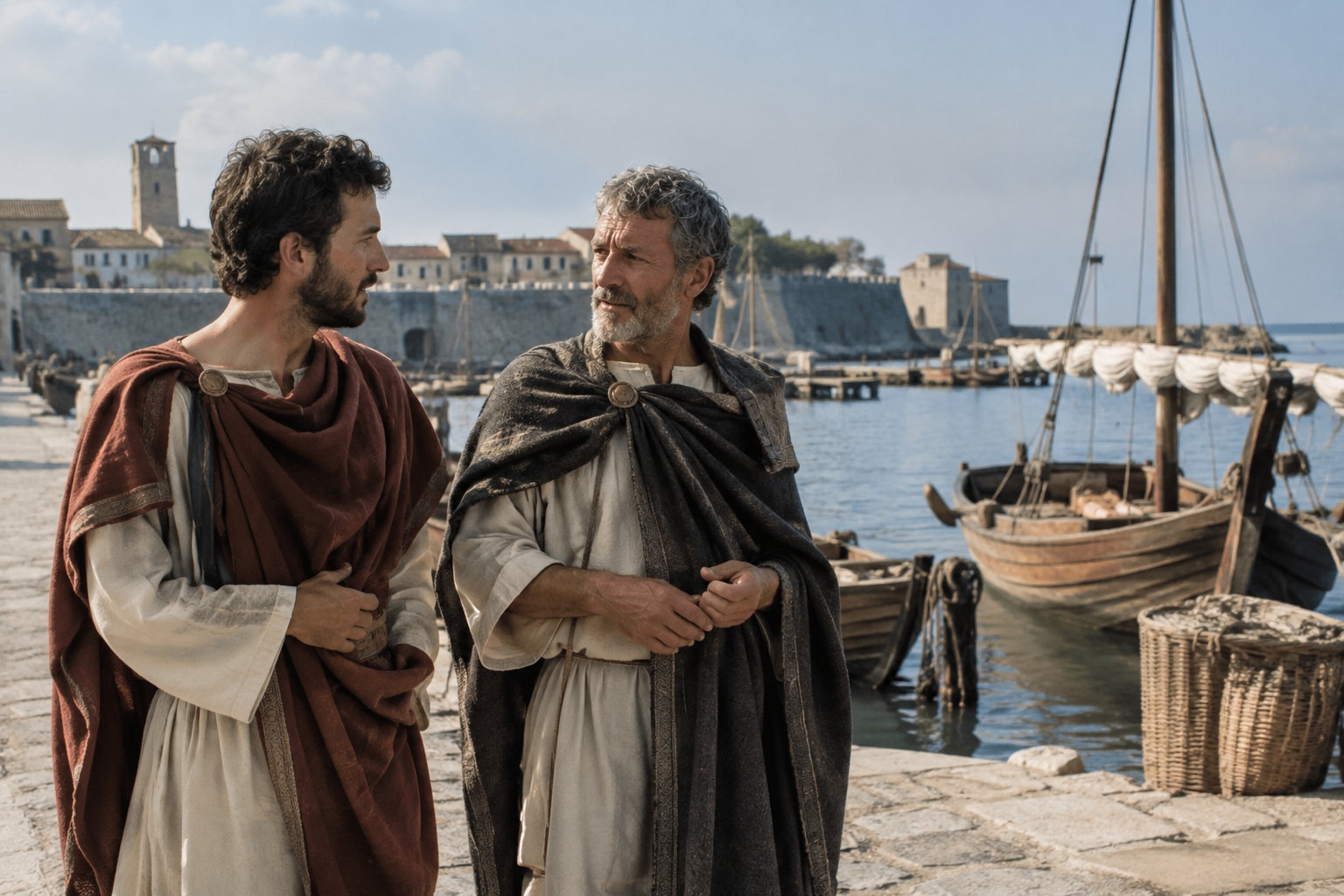
The Sicilian sample I17878, dated to around 450 BC and described as an ancient citizen of the Greek colony of Himera, places this paternal branch in another setting altogether: the western Greek world. Himera, on Sicily's north coast, was one of the places where Greek colonization created new communities that were never simply extensions of the mainland. They were colonial settlements, yes, but also contact zones shaped by indigenous Sicilian populations, wider Mediterranean exchange, and shifting political alliances.
So a Y-line like G2a2b2b1a1a2 in Himera should not be reduced to a slogan about "Greek DNA." Colonies were social and biological mixtures from very early on. Still, this sample is important because it shows the branch in a historically documented Mediterranean urban world centuries before the Roman individual at Viminacium. That helps bridge the gap between Bronze Age Aegean evidence and later classical and imperial populations.
For Sicily in particular, such a lineage fits a wider picture of long-term complexity. The island has repeatedly absorbed new populations without losing all earlier ones. A related MyTrueAncestry discussion of ancient Italian island paleogenomics is useful background for understanding why paternal lines in Sicily can appear both local and trans-Mediterranean at once.
The sample I13577, from Mycenaean-period Phokis near Delphi and dated to around 1250 BC, gives this haplogroup one of its most informative anchors. Here the branch appears in the Late Bronze Age Greek mainland, in the cultural world we call Mycenaean. That does not mean every bearer of the lineage was "Mycenaean" in some timeless ethnic sense; it means that this paternal line was present among the populations living within that archaeological horizon.
This is especially useful because the Aegean Bronze Age sits between the first farming expansions into southeastern Europe and the later classical Greek and Roman worlds. If a branch appears in Neolithic Croatia, then in Mycenaean Greece, then in classical Sicily and late Roman Serbia, the simplest historical reading is not a single dramatic migration tale but long survival and redistribution across connected regions.
An ancient DNA study of Bronze Age Aegean populations, published in Science, helped sharpen the broader genetic picture of Mycenaean-era communities. Without forcing this one sample into a larger claim than the evidence allows, I13577 sits comfortably within the now familiar view that Bronze Age Greece was neither isolated nor genetically uniform, but part of an interconnected eastern Mediterranean world.
The earliest sample here is I20502 from Đakovo-Franjevac in Croatia, dated to around 4000 BC. This is the sort of evidence that stops us from telling the story backwards. Long before Greek colonies, long before Mycenaean palaces, long before Roman frontiers, paternal lines within the wider G2a family were already established among Europe's early farming populations.
That broader association is one of the best-known themes in European archaeogenetics. It does not mean that every later G2a sub-branch can simply be projected unchanged back to the first farmers, and one must be careful here: the article's branch is a very specific subclade, while the Neolithic story often concerns wider parent lineages. But I20502 does make an important historical point. The southeastern European and Balkan zone was not merely a corridor through which people passed; it was one of the landscapes in which these paternal lines were rooted very early.
Research on Neolithic and Bronze Age southeastern Europe has increasingly emphasized that the Balkans were central to Europe's demographic formation. That makes a Croatian Neolithic occurrence especially significant for anyone exploring this haplogroup's older background.
A broader genetic study relevant to these early Balkan and Mediterranean developments was published in PNAS. Even where a paper is not being used here as proof for every sample-level assignment, this kind of regional work helps explain why a lineage can appear in multiple later historical societies without needing a fresh long-distance origin story each time.
Neolithic expansion in the Aegean
Taken together, these four samples do not point to one empire, one language, or one people. They point instead to continuity through change. G2a2b2b1a1a2 appears here in a Neolithic farming context in Croatia, a Mycenaean context in mainland Greece, a classical Greek colonial setting in Sicily, and a late Roman city in Serbia. That is a remarkably coherent geographical arc around the Balkans and the central-eastern Mediterranean.
The temptation, of course, is to turn that into a single neat migration map. History is rarely so obedient. What the evidence more responsibly suggests is that this paternal branch belonged to populations deeply involved in the making of southeastern European and Aegean history, and that descendants of those lines could later be absorbed into very different cultural worlds without losing the continuity of the Y chromosome.
For members of the MyTrueAncestry community, the most distinctive thing about haplogroup G2a2b2b1a1a2 in this evidence set is not prestige or rarity, but duration. It is a paternal line that can be followed from early farming Croatia into the Bronze Age Aegean, then onward into classical Sicily and the late Roman Balkans. If this is your branch, the strongest supported picture is one of long Mediterranean and southeastern European depth, with survival through many cultural transformations rather than attachment to a single famous people.
Comments