Haplogroup G2a2b2a1a1b1a

– 6 min read


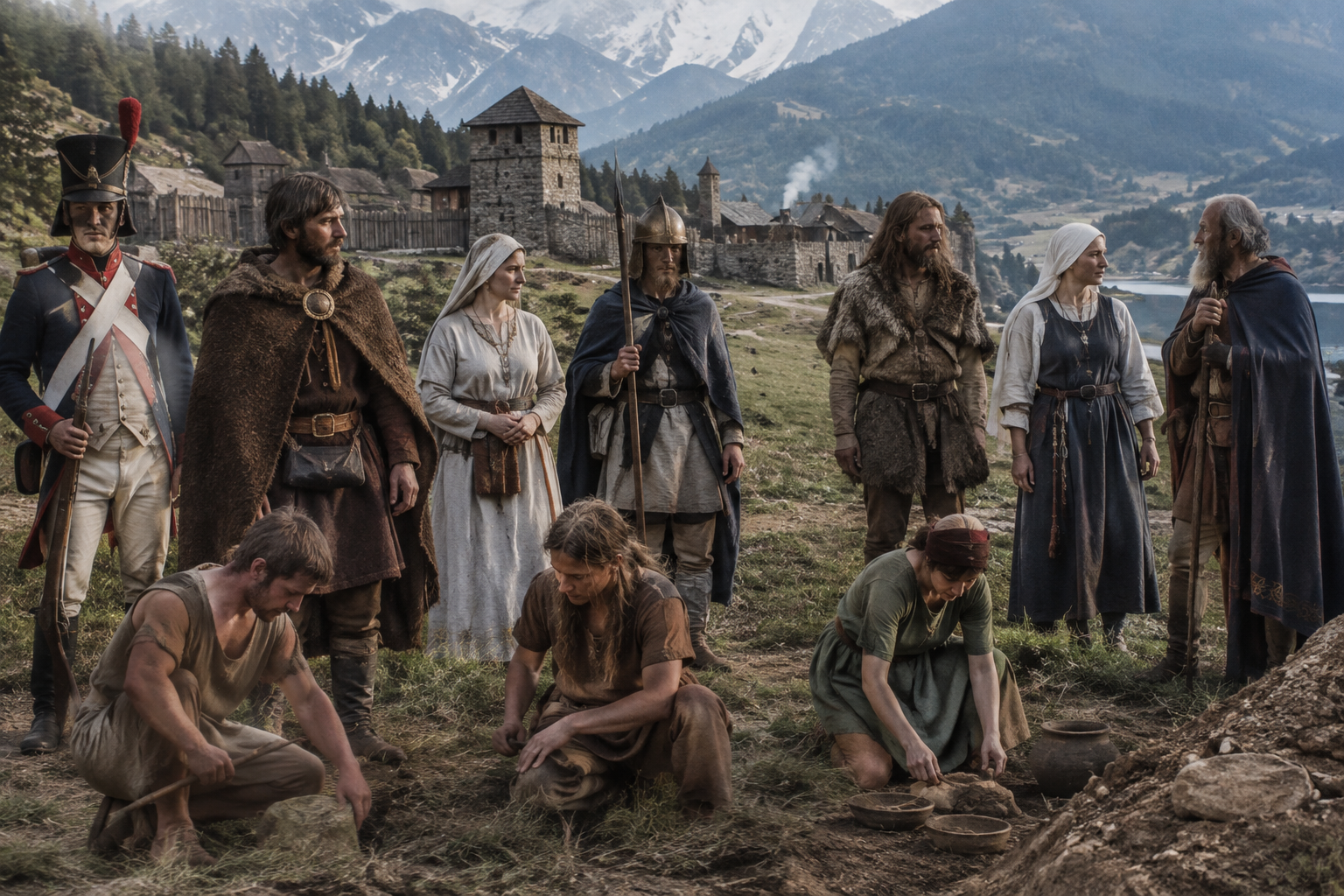
Some Y-chromosome lineages seem to sit still in the historical record. Others appear, disappear, and then turn up somewhere entirely different, like a familiar surname in a parish register three counties away. Haplogroup G2a2b2a1a1b1a belongs to a wider paternal family with very old roots in prehistoric Europe, and what makes this particular branch interesting is not imperial glamour or a single famous dynasty, but its habit of surfacing in strikingly different settings: Copper Age Alpine communities, Iron Age Gaul, Late Roman frontier cemeteries, Viking and post-Viking Scandinavia, and even the frozen catastrophe of Napoleon's 1812 campaign.
That is exactly why Y-DNA can be so useful and so often misunderstood. A Y-DNA haplogroup traces one direct paternal line only: father to father to father. It does not describe a person's whole ancestry, culture, language, or identity. Still, when ancient DNA places the same paternal branch in graves spread across centuries and regions, it gives us something written sources cannot: a long view of male-line continuity, movement, and survival.
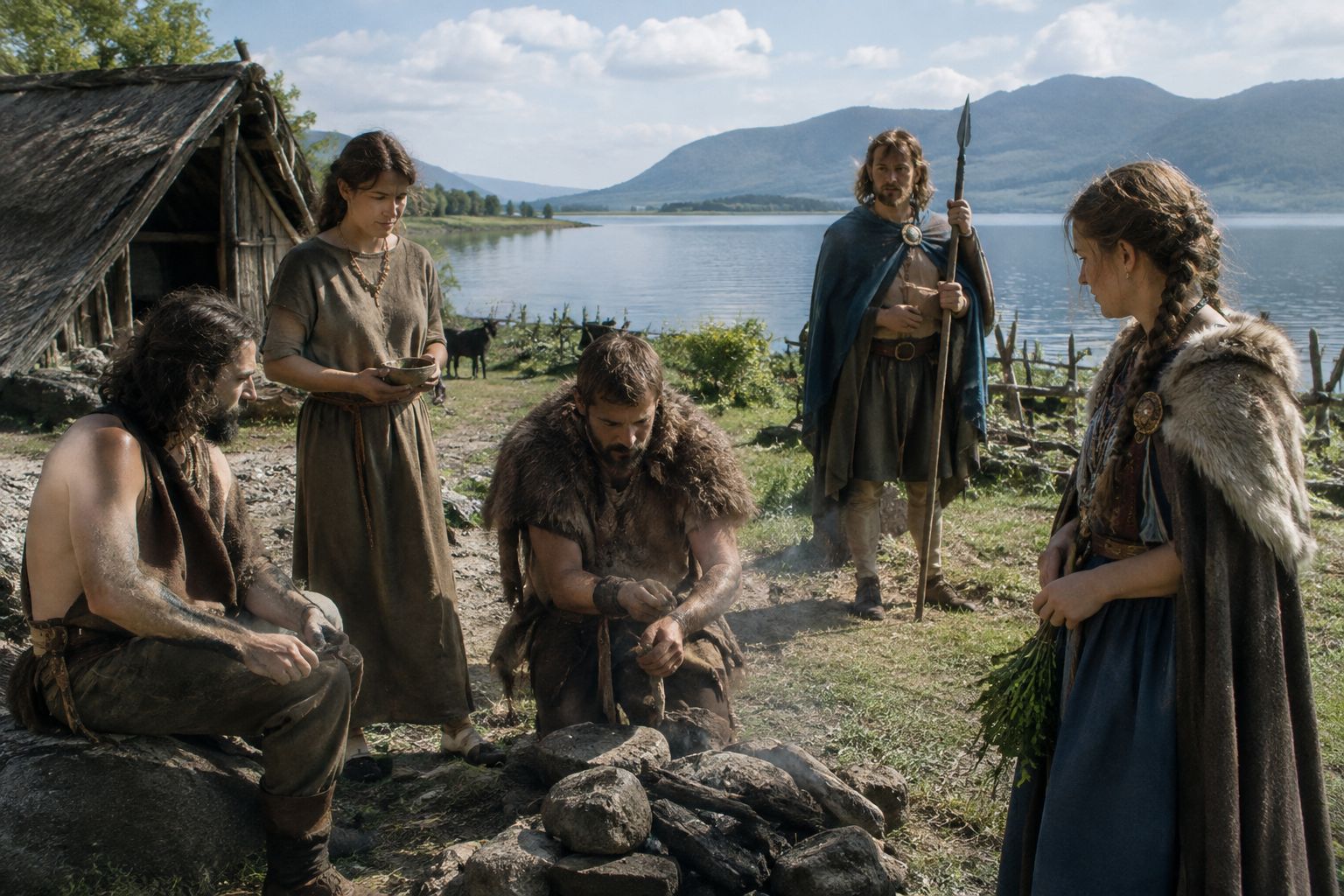
The broader haplogroup G is well known in archaeogenetics because branches of it appear prominently among early farming populations in Europe. That does not mean every narrow descendant branch followed exactly the same path, nor that every later bearer of G2a2b2a1a1b1a should be read simply as a "Neolithic farmer." But the background matters. This lineage sits within a paternal family deeply entangled with the spread of agriculture, especially in parts of southern and central Europe.
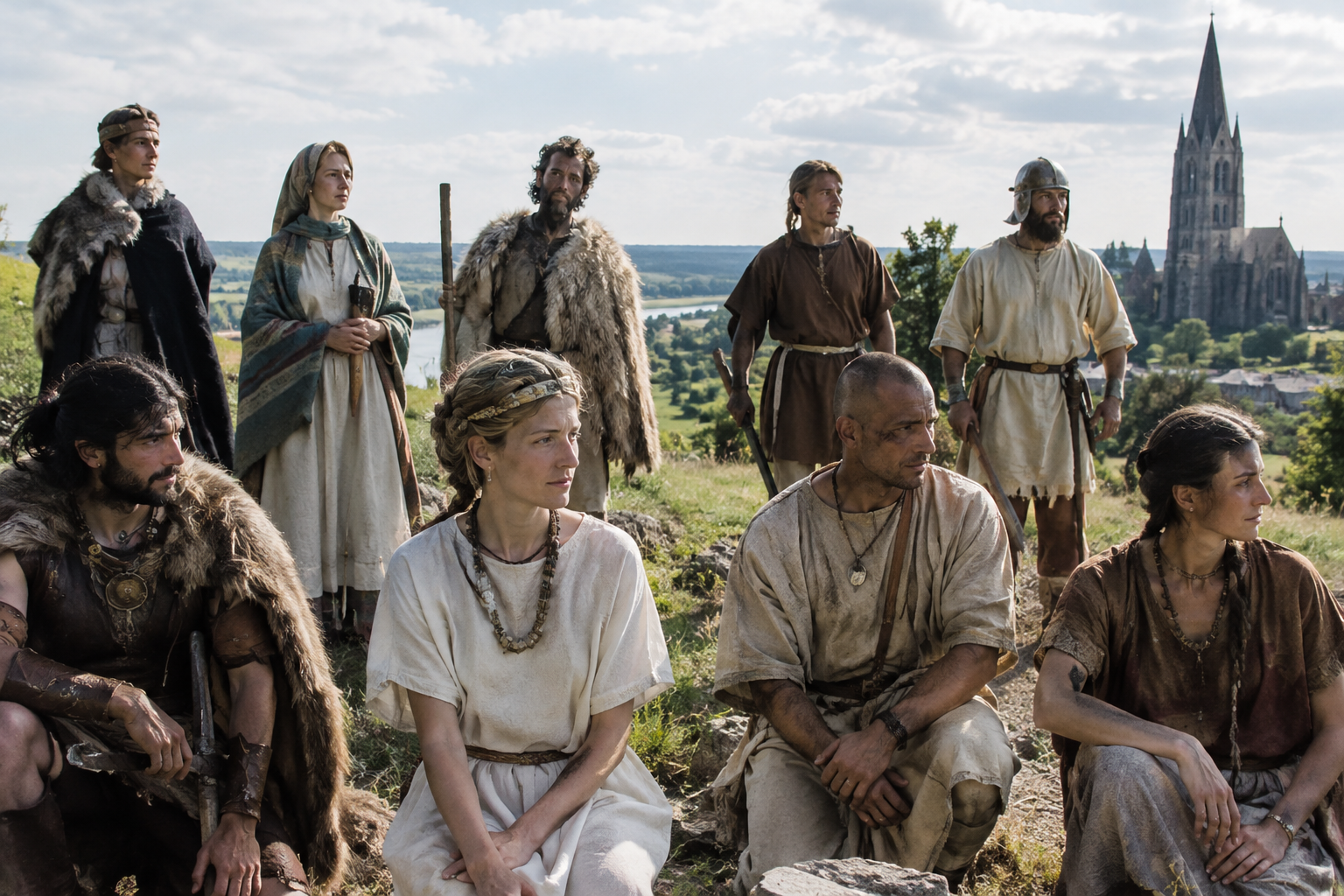
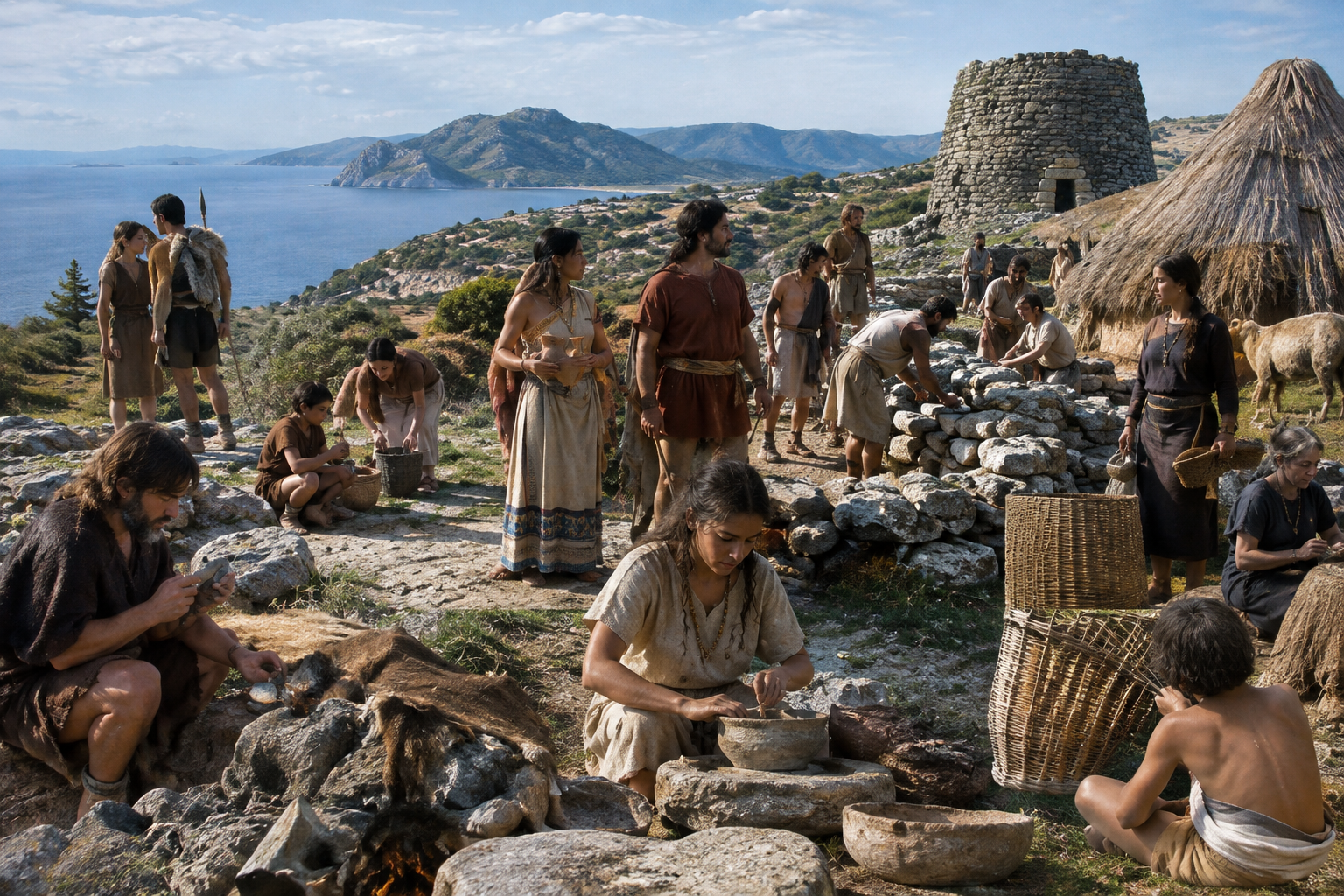
In the evidence supplied here, the Alpine zone stands out at once. Several early samples linked to this branch or its close context come from northern Italy: Trento Romagnano, Paludei di Volanoo, and Nogarole. That cluster suggests that, whatever the precise branching sequence, this paternal line was present in the Alpine world across a long stretch of prehistory. These were not static backwaters. The Alps were barriers, certainly, but also corridors: routes for herders, miners, traders, marriage alliances, and cultural exchange between the Italian peninsula and temperate Europe to the north.
That is a useful corrective to old-fashioned history. We too easily imagine that big movements happen only with armies and kings. Ancient DNA keeps reminding us that much of Europe's demographic story was built by smaller, repeated acts of mobility over generations.
Explore Europe's Neolithic Expansion
The earliest anchors for this story are the Copper Age and Bronze Age individuals from Alpine Italy. At Trento Romagnano, samples ROM308 and ROM309, both dated to 2488 BC, place this paternal signature in a very early mountain-valley setting. Nearby, PAL01 from Trento Paludei di Volanoo, dated to 2148 BC, and the Nogarole samples NOG201 (2182 BC), NOG302 (1705 BC), and NOG301 (1481 BC) show that related paternal continuity in this region lasted far beyond a single burial phase.
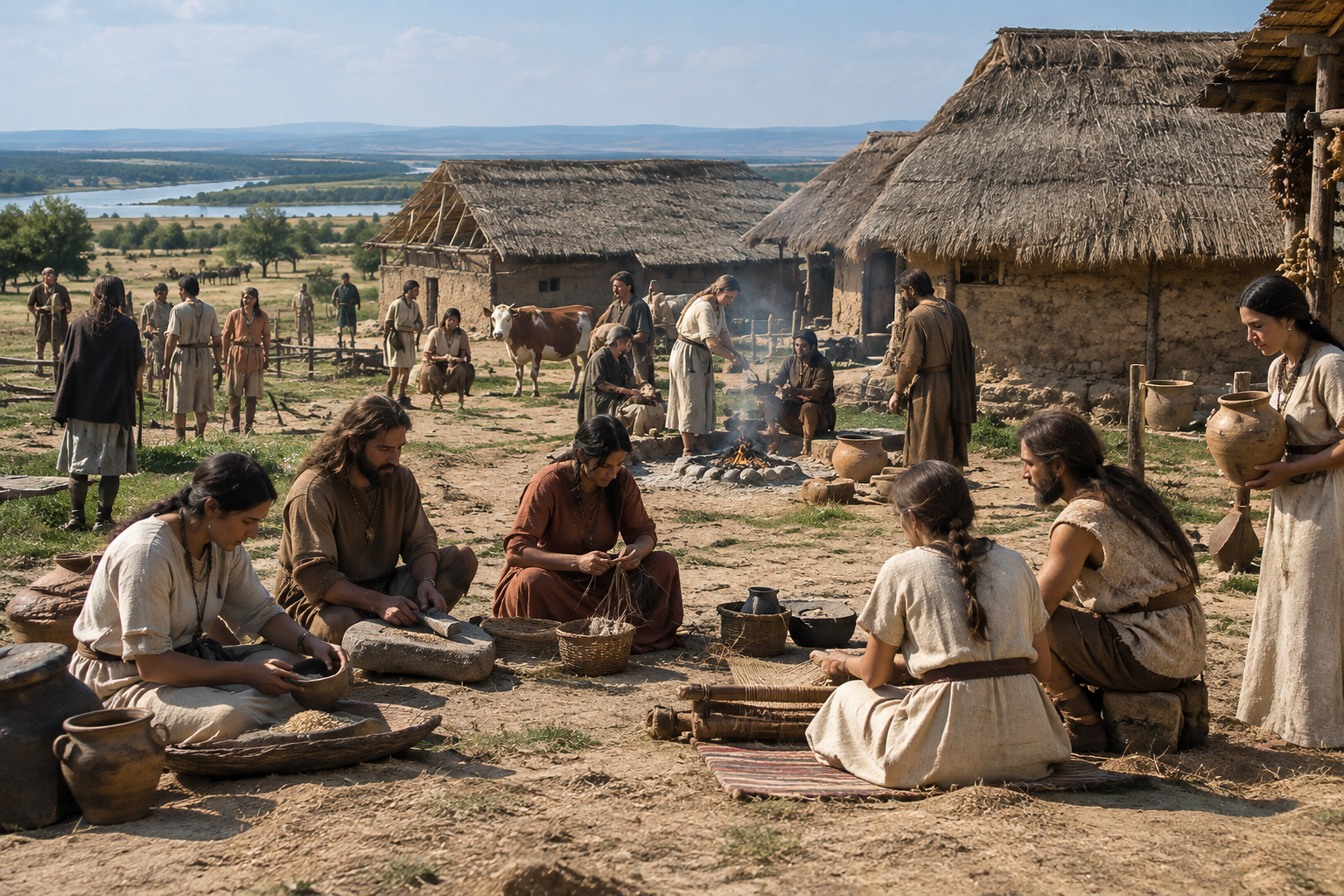
That continuity is historically important. It suggests that this was not just a fleeting arrival but part of the male-line makeup of Alpine communities over many centuries. Archaeologically, these were societies living through enormous change: metallurgy, shifting exchange networks, and new regional identities. Yet one paternal thread remained visible.
By the Iron Age, the same broad lineage appears further west in what we would call Celtic Europe. The sample BUCH48-1, described as a Gallic Tribe Bucheres France individual dated to 350 BC, and ERS83-2, a Nemetes Tribe Erstein Alsace France individual dated to 250 BC, show the branch or its close relatives in Gaul and the Upper Rhine world. This does not prove a single tribal identity for the haplogroup; that would be far too simple. What it does show is that the paternal line had become part of Iron Age communities well beyond the Alpine core.
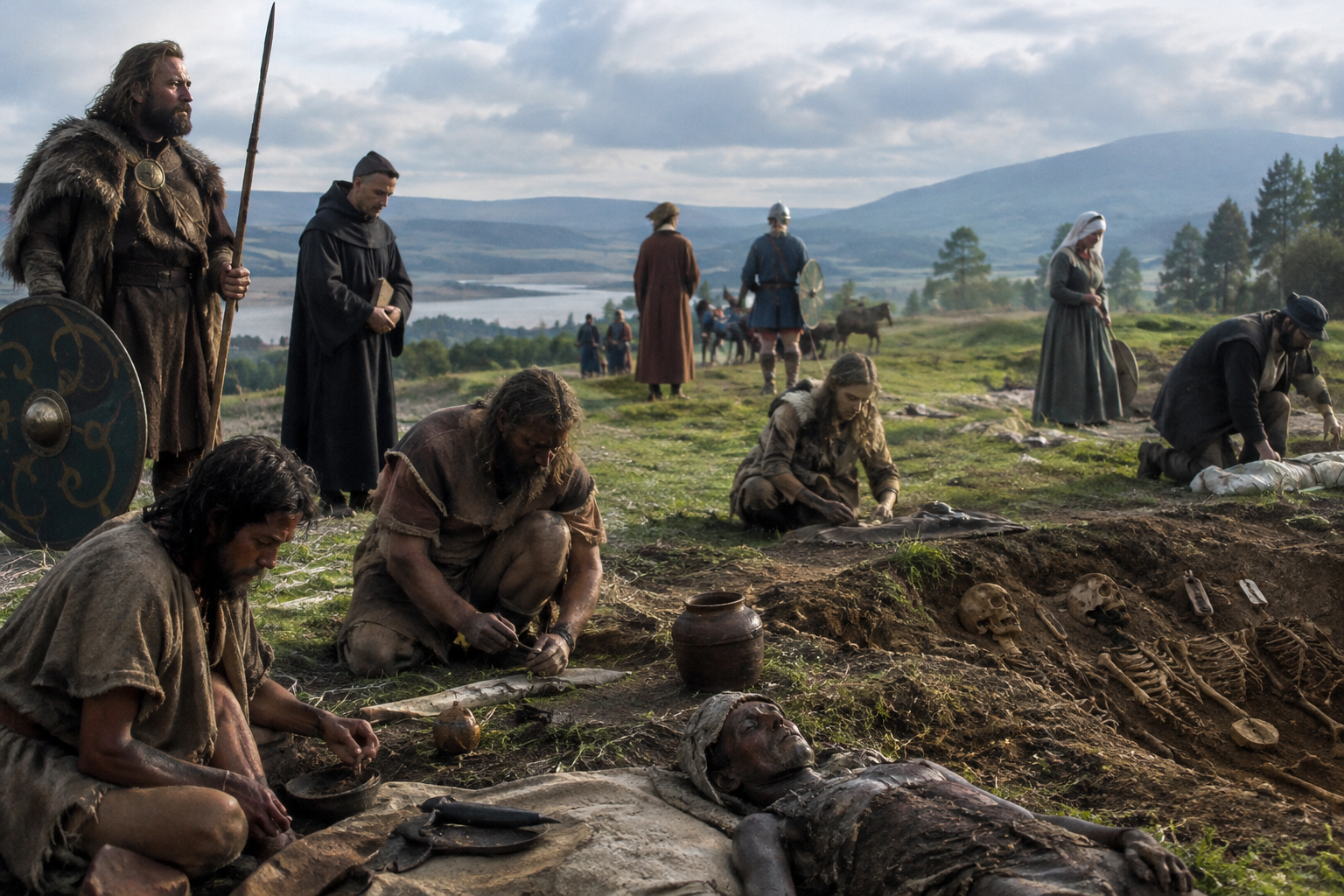
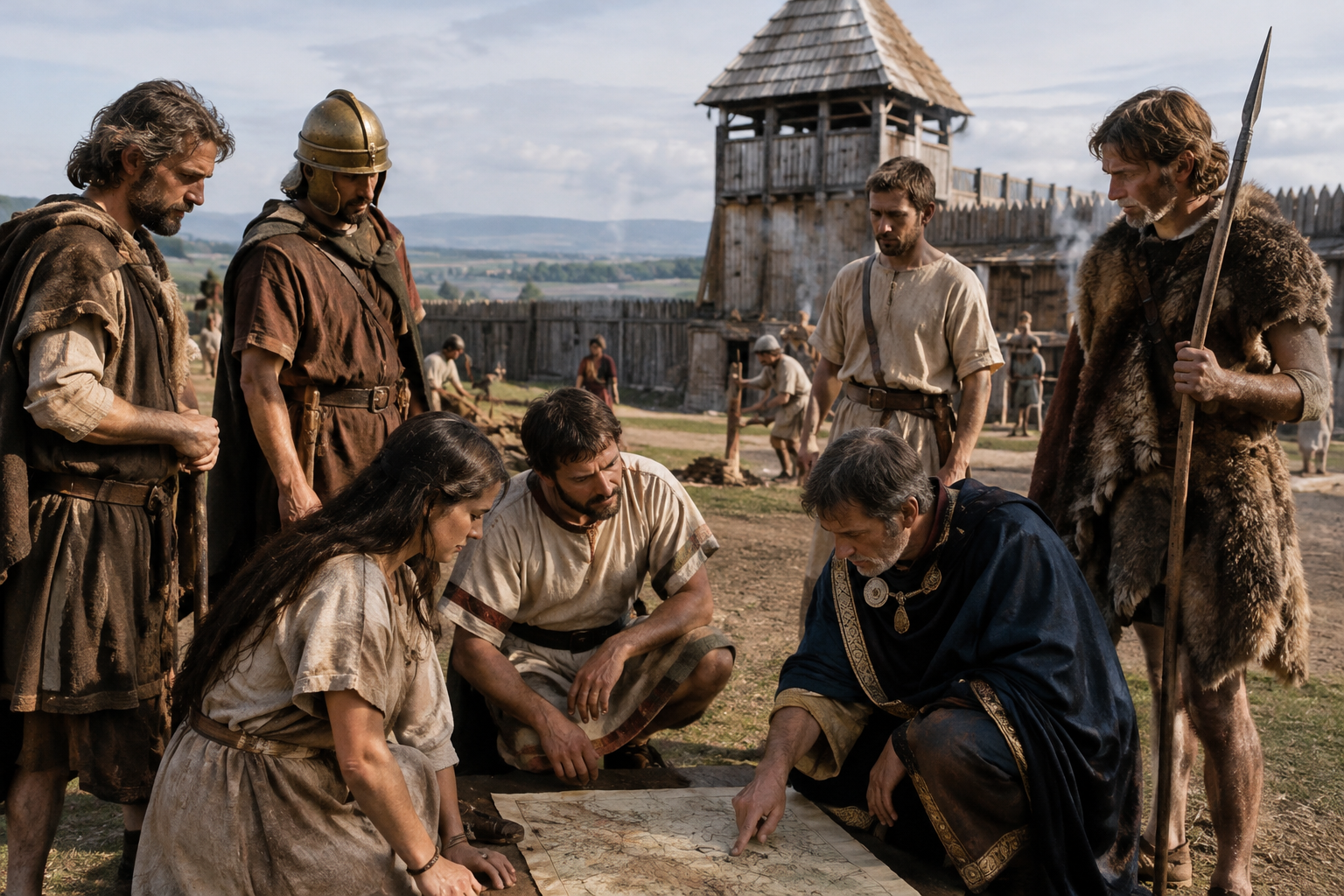
Then comes the Roman frontier, that great mixer of soldiers, settlers, local families, merchants, and displaced peoples. At Sarrebourg in France, the Marxberg Necropolis and Pons Saravi burials provide two especially revealing examples: R11552, described as a Germanic Tribe Late Roman Period Marxberg Necropolis Sarrebourg France individual dated to 400 AD, and R11560, from Late Roman Period Marxberg Necropolis Pons Saravi Sarrebourg France, dated to 413 AD. Here the old paternal line appears in a borderland world where "Roman" and "barbarian" were often less clear on the ground than textbooks suggest.
And from Italy itself, sample 2427, from Dark Ages Italy South Tyrol Malles Burgusio Santo Stefano, dated to 450 AD, brings the story back into the Alpine region during the unsettled centuries after imperial rule in the West began to fragment. South Tyrol is precisely the kind of place where continuity and movement meet: mountain strongholds, church foundations, local communities, and passing powers.
The story does not stop in the Roman world. A post-Viking sample, KPN011, from St Clemen Zealand Denmark, dated to 1100 AD, places the lineage in Christian medieval Denmark. Another, VK39, from Viking Age Skara Varnhem Sweden, dated to 1050 AD, shows it in Sweden at the close of the Viking Age. These finds are fascinating not because they make the haplogroup "Viking" in any simplistic sense, but because they show how one paternal branch could become woven into very different regional histories over time.
This is one of the pleasures of ancient DNA: it punctures lazy ethnic labels. A lineage present in Copper Age Alpine Italy can later appear in Gaul, on the Late Roman frontier, and in medieval Scandinavia. That does not mean all these men shared a common culture. It means paternal lines travel through adoption, migration, marriage, military service, settlement, and sheer survival.
Perhaps the most haunting sample of all is YYY085B, described as a Soldier of Napoleon Grande Armee Mass Grave Vilnius Latvia, dated to 1812 AD. Whatever the geographical wording in the supplied record, the historical setting is unmistakable: Napoleon's disastrous retreat. By then this paternal line had long ceased to belong to any one region or people. It had become part of the tangled human material of Europe itself, carried by a soldier into one of the continent's most infamous military catastrophes.
Read About Napoleon's 1812 Retreat
In this case, the supplied field for associated noble families and castles is empty, and that is worth saying plainly. It would be very easy, and very wrong, to dress the article up with borrowed dynasties, invented heraldry, or a convenient castle perched on a hill somewhere in Alsace or Tyrol. But responsible genetic history has to know when the archive falls silent.
What we can say is that the regions where this haplogroup appears in ancient DNA are exactly the sorts of landscapes later dominated by lordships, monasteries, fortified sites, and hereditary families. South Tyrol, Alsace, Sarrebourg, Zealand, and Varnhem all became part of medieval political worlds in which noble houses and ecclesiastical institutions shaped memory and landholding. Yet shared geography is not the same thing as proven descent.
That distinction matters enormously. A noble family may be historically associated with a region where an ancient Y-DNA lineage is found, but that does not demonstrate that the family carried that haplogroup, still less that every branch of that family did. Genetics and genealogy can illuminate one another, but they are not interchangeable.
Explore DNA from Roman and Early Medieval Italy
G2a2b2a1a1b1a is a good reminder that European history cannot be reduced to neat blocks called Neolithic, Celtic, Roman, Germanic, Viking, or modern. Real paternal lines pass through all of them. In the evidence here, this branch is seen in Alpine prehistory, Iron Age France, Late Roman frontier cemeteries, Dark Ages northern Italy, medieval Scandinavia, and the Napoleonic era. That is not a tidy national story. It is a continental one.
And this is where ancient DNA is at its most revealing. Written pedigrees usually begin late and focus on elites. Archaeology gives us places, objects, and graves. Genetics adds another layer: a way to watch one direct male line appear in very different social worlds across more than three millennia. Not proof of direct descent from any particular ancient individual, and certainly not proof of noble ancestry, but a remarkable historical perspective all the same.
If your own Y-DNA falls near this branch, the most interesting question may not be "Which tribe was I?" but "Through how many worlds did this paternal line travel before it reached me?"
Upload your DNA to MyTrueAncestry to explore ancient matches, compare your results with archaeological samples like ROM308, NOG201, R11552, or VK39, and see how genetics can place your family history into a far bigger human story. Those connections do not by themselves prove direct descent from an ancient individual or a medieval noble house, but they can open a fascinating window onto your deep ancestry.
Comments